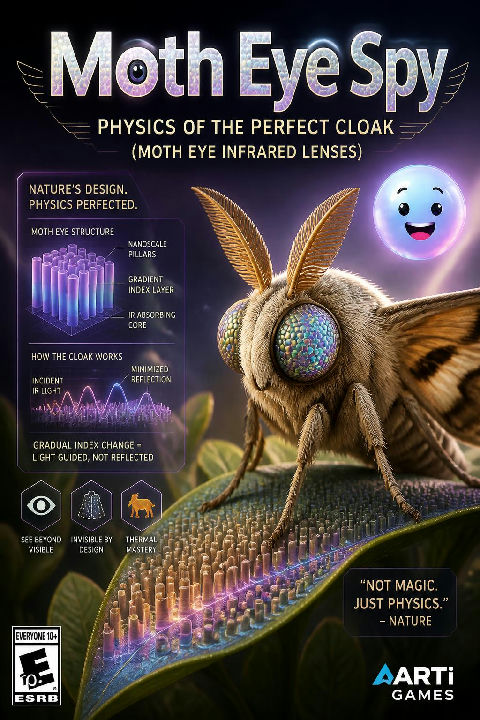
The secret of the night flyer
Physics of the perfect cloak
Night vision and deep space
YOUR GOAL
Master of How moth eyes revolutionized the way we see in the dark
007skaty Moth-Eye Metasurface Cloak
Out of sight, out of sight, Moth-eye cones guide the light.
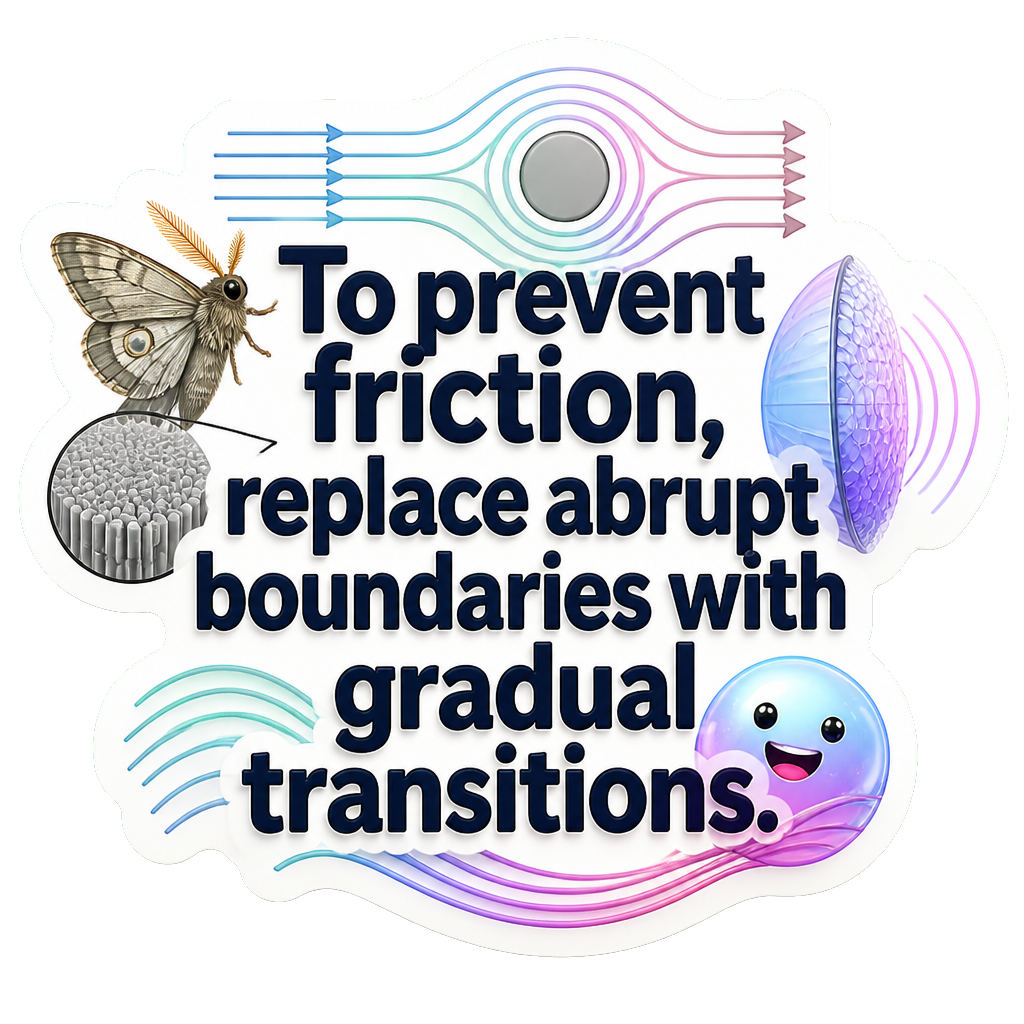
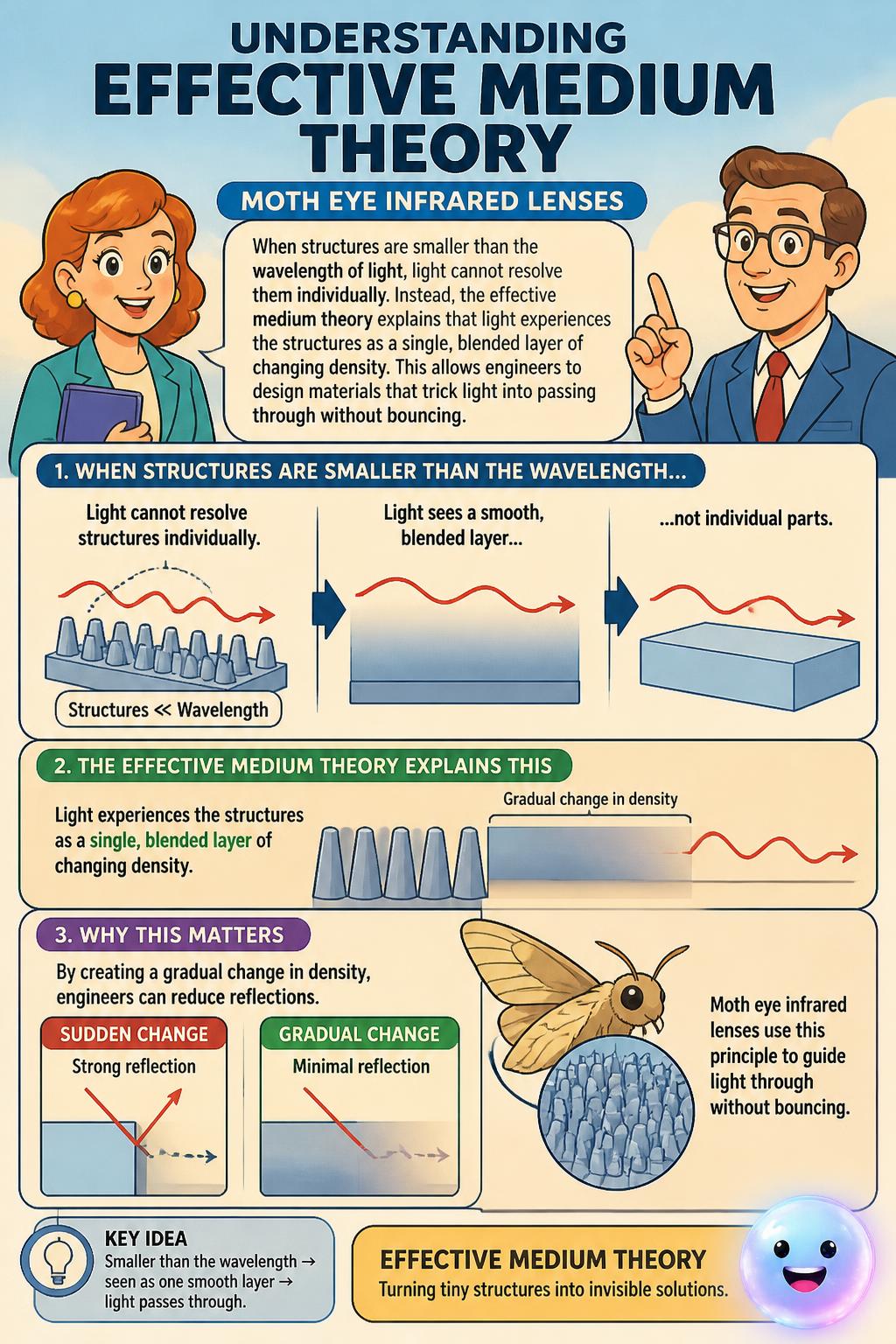
007skaty Moth-eye infrared lenses use effective medium theory to blend tiny structures into a single layer, letting light pass
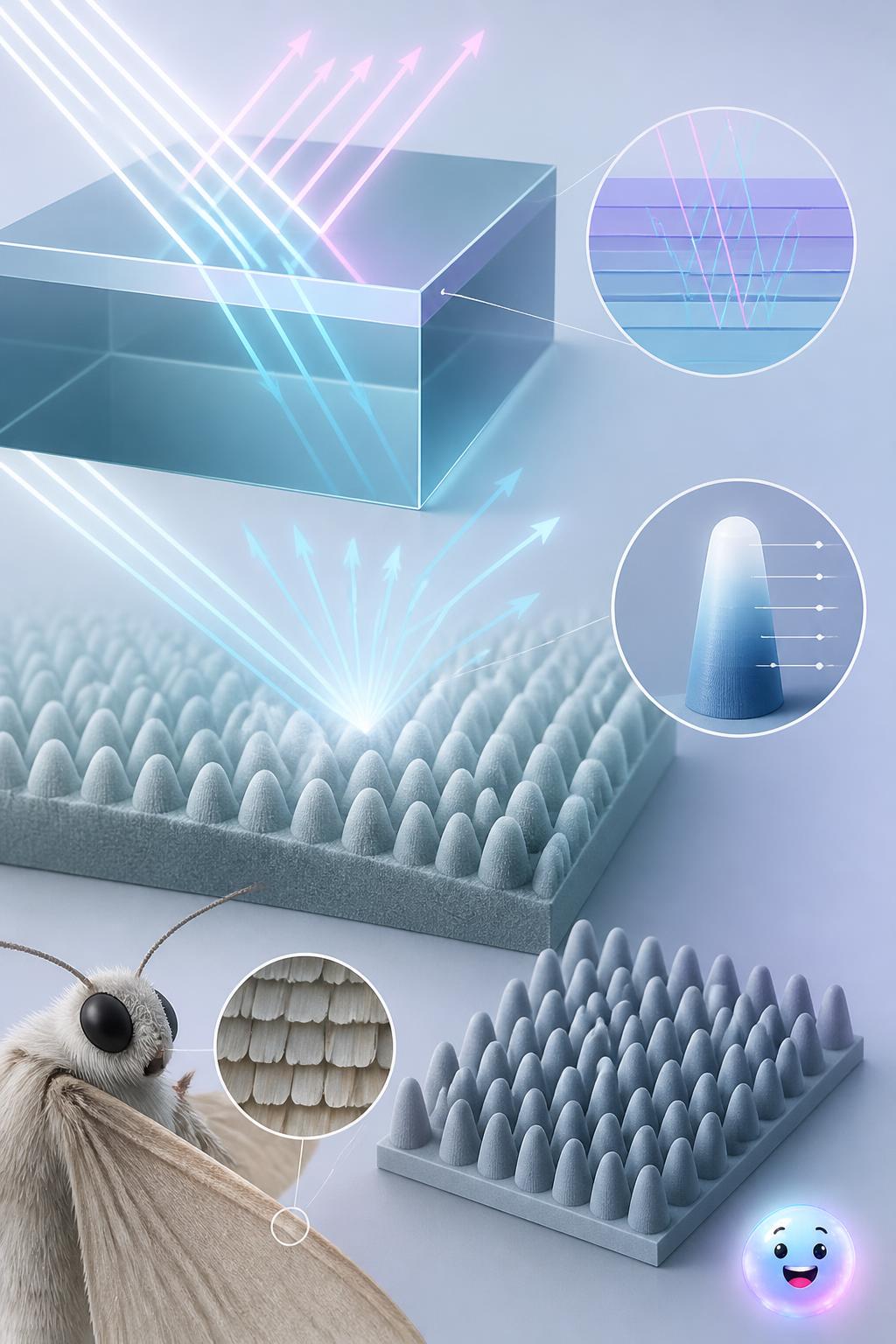
007skaty Color-coded technical diagrams show light waves passing through moth-eye infrared lenses.
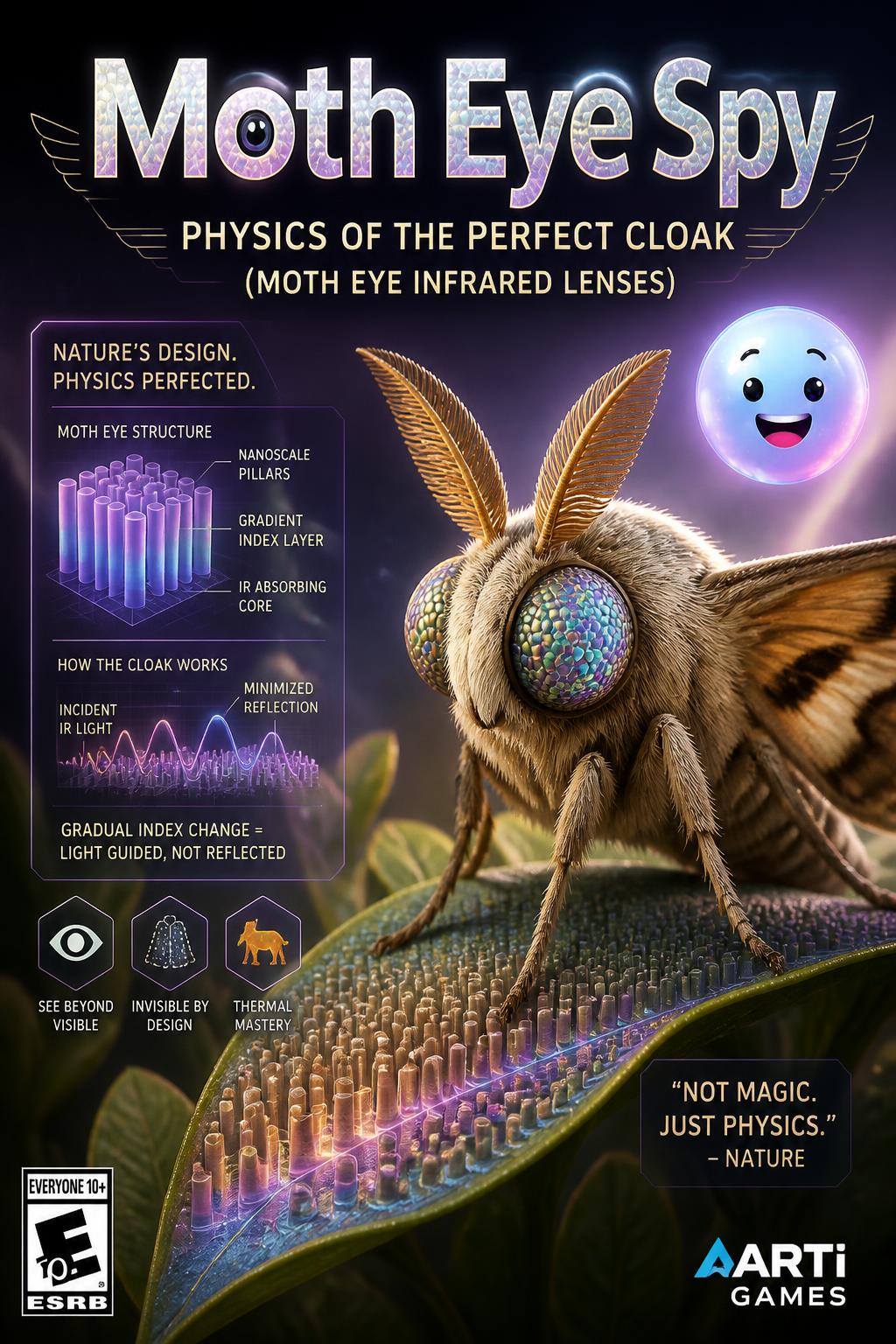
007skaty Spot hidden targets using infrared lenses to learn how moth eyes prevent reflections.
Perfect light traps: Scientists used moth-eye structures on silicon to create surfaces that absorb 99.8% of light, acting like tiny, physical light traps.
A technology or device that renders an object undetectable by bending electromagnetic waves around it. In 2016, Stuttgart scientists used gold nanoparticles to build a nanostructured version to improve anti-reflective lenses.
What is the typical light reflectance of glass treated with a biomimetic moth-eye film?
Why are traditional thin-film anti-reflective coatings often less ideal than moth-eye structures?
According to effective medium theory, how does light interact with sub-wavelength structures?
Which 19th-century physicist formulated the equations describing light reflection at boundaries?