The physics of breath and metal
From mammoth bones to silver tubes
The silver voice of the orchestra
Flutes of the global stage
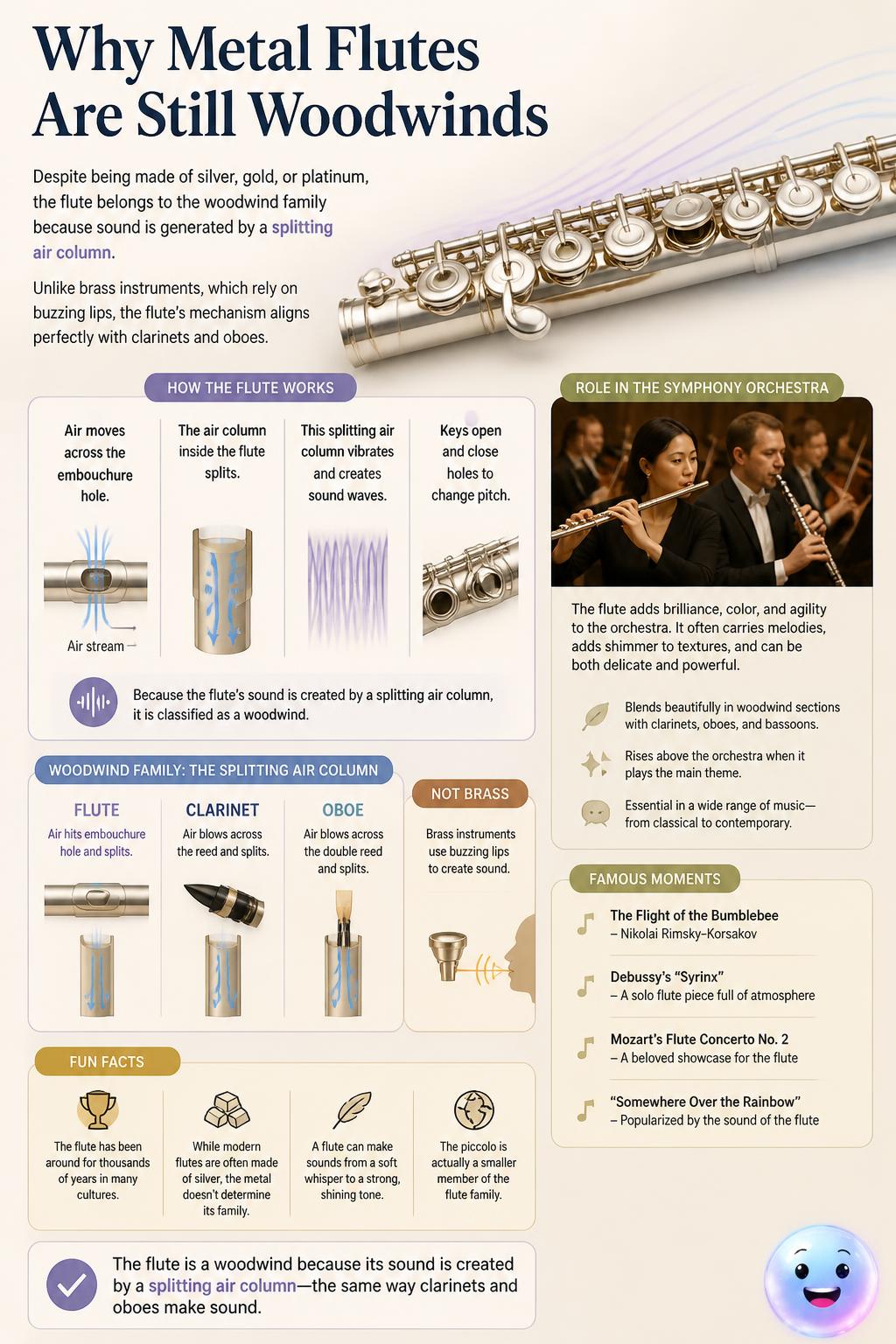
maestro Blowing across the embouchure hole splits the air stream to create rapid pressure vibrations inside the tube. This reedless movement of air generates sound waves and controls the pitch.
What is the standard concert flute's lowest natural note on most modern instruments?

maestro Tap the metal keys to discover how your breath creates the flute's unique sound.
maestro In 1847, the German inventor placed holes where they sounded best rather than where fingers could reach. His system of padded keys and rod axles made playing effortless.

Which metal is prized by some professional flutists for its heavy weight and warm sound?
maestro Physics of Flute Acoustics
My breath splits in two on the edge of the metal (on the edge, yeah) And the air inside starts to shake and settle (shake and settle)
maestro Flutists create sound by splitting an air column against the embouchure hole. This mechanism aligns with clarinets and oboes rather than the buzzing lips of brass.
In what century did metal flutes begin to widely replace wooden flutes in orchestras?

maestro A tiny twelve-millimeter oval hole transforms a musician's breath. Flutists tilt their air stream against this sharp metal edge to shift between dark low notes and piercing high tones.
Flute materials: A solid platinum flute can weigh up to 500 grams, making it significantly heavier and more expensive than standard silver models.
The branch of physics concerned with the properties of sound. In 1847, Theobald Boehm revolutionized woodwind acoustics by constructing the first successful cylindrical metal flute.