
The secret code of red and blue strings
Isometric 3D render of labeled red and blue strings on a chrome harp
The physics of the pedal harp
Harps of the global village
Painting with sound in the symphony orchestra
Harps in pop, jazz, and the future
maestro Plucking a string sends energy through a bridge strip into a tapered sitka spruce soundboard. This wooden board vibrates to project a rich sound throughout the concert hall.
maestro Harpists navigate forty-seven strings by tracking red C strings and dark blue F strings. These colored landmarks prevent musicians from getting lost during rapid, complex solos.
maestro Sébastien Érard invented this double-action system in 1810. Seven pedals shift string pitches by two semitones, allowing harpists to play complex chromatic classical music.

maestro Pluck strings and adjust pedals to discover how the harp works in a symphony orchestra.
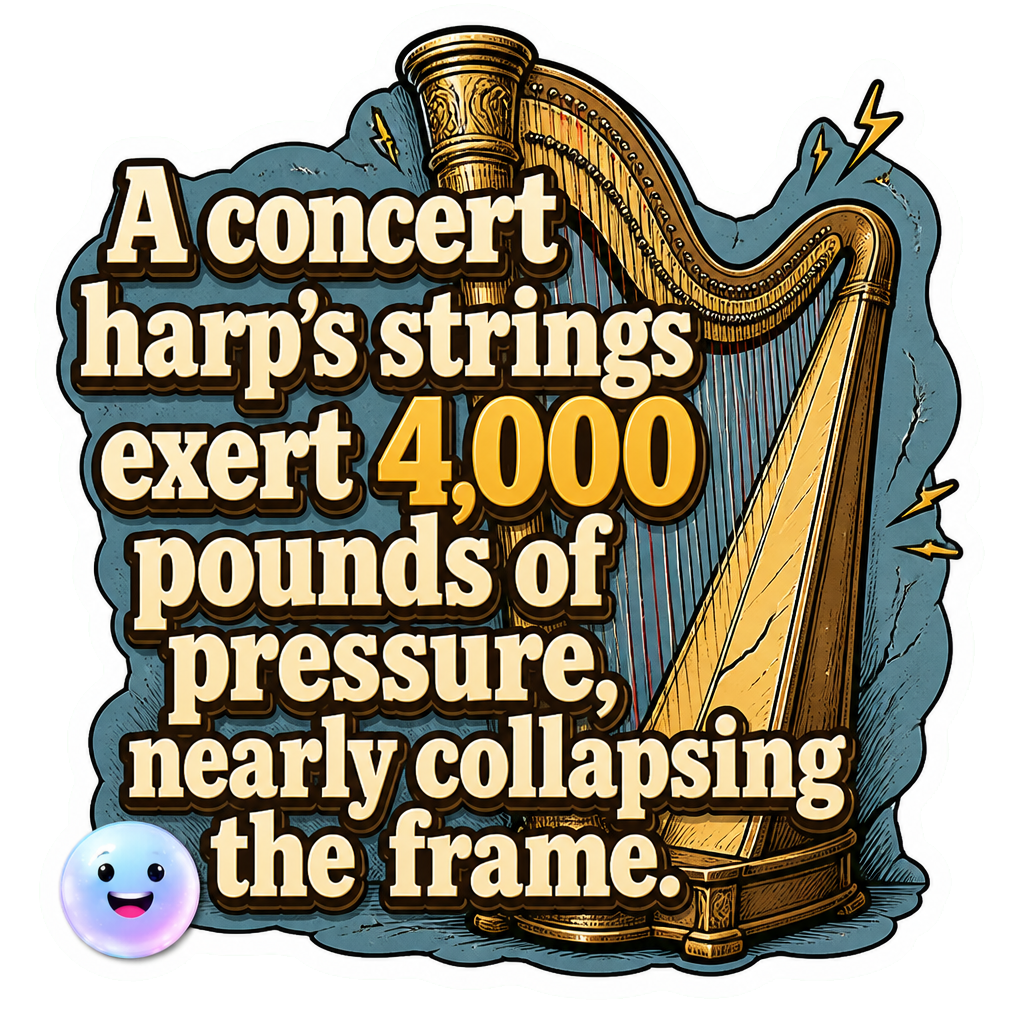
maestro Forty-seven steel, gut, and nylon strings exert four thousand pounds of pressure on the wood. A steel-reinforced neck and hollow column prevent the instrument from collapsing.
maestro Pedal harp physics
Pinch the string, pinch the string, Keeping the tension the same.
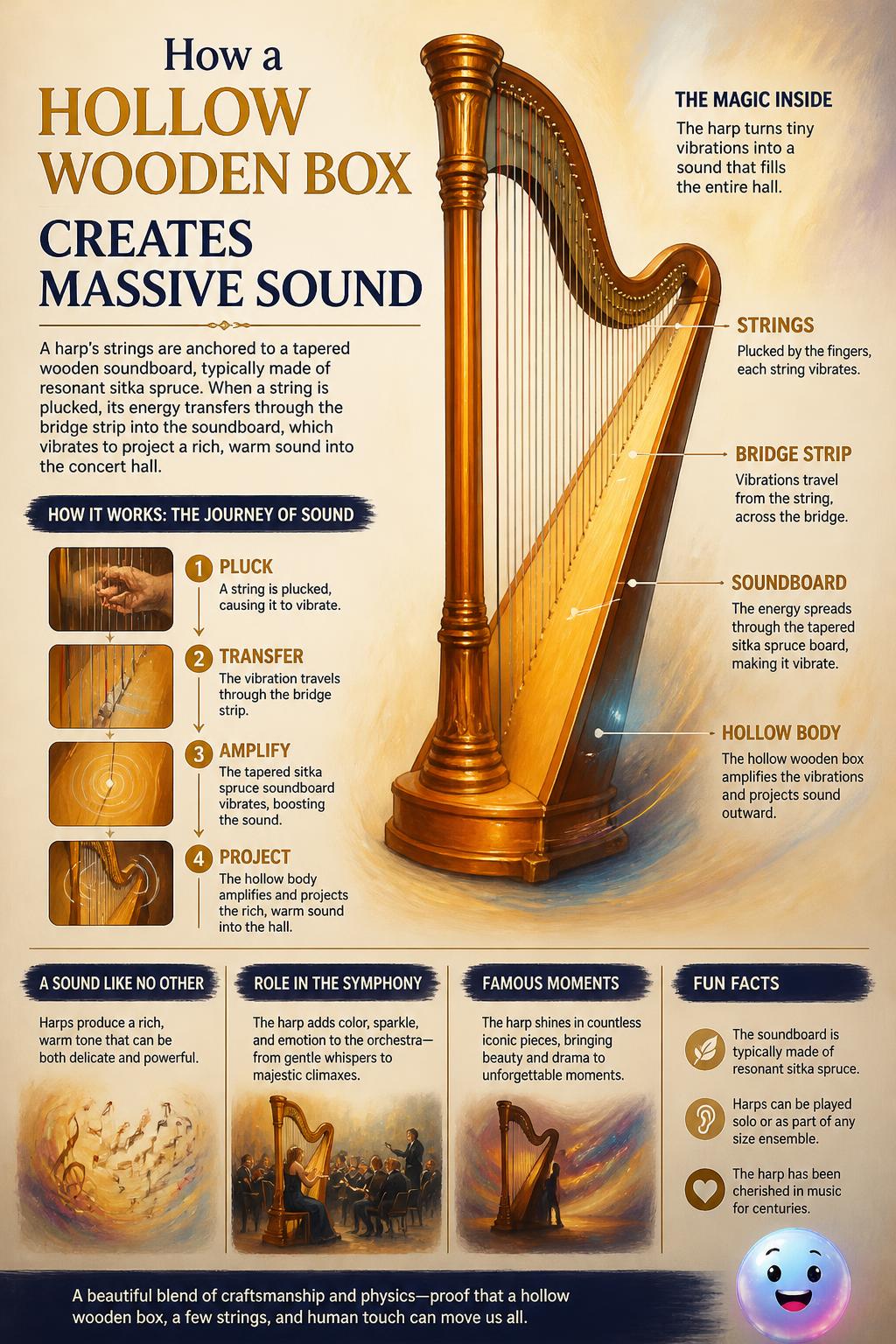
maestro Harp strings anchor to a central bridge strip along the tapered wooden soundboard.
Harp weight: A standard concert grand harp weighs around 80 pounds, which is about the same weight as a large golden retriever, making transport a major workout.
A thin board of wood in a stringed instrument that vibrates to amplify the sound produced by the strings. In a concert grand harp, this spruce component must withstand over one ton of string tension.
Approximately how much total tension force do the strings exert on a modern concert grand harp's frame?
Which resonant wood is most commonly used to construct a modern harp's soundboard?
What material is typically used for the lowest, deepest strings on a concert grand harp?