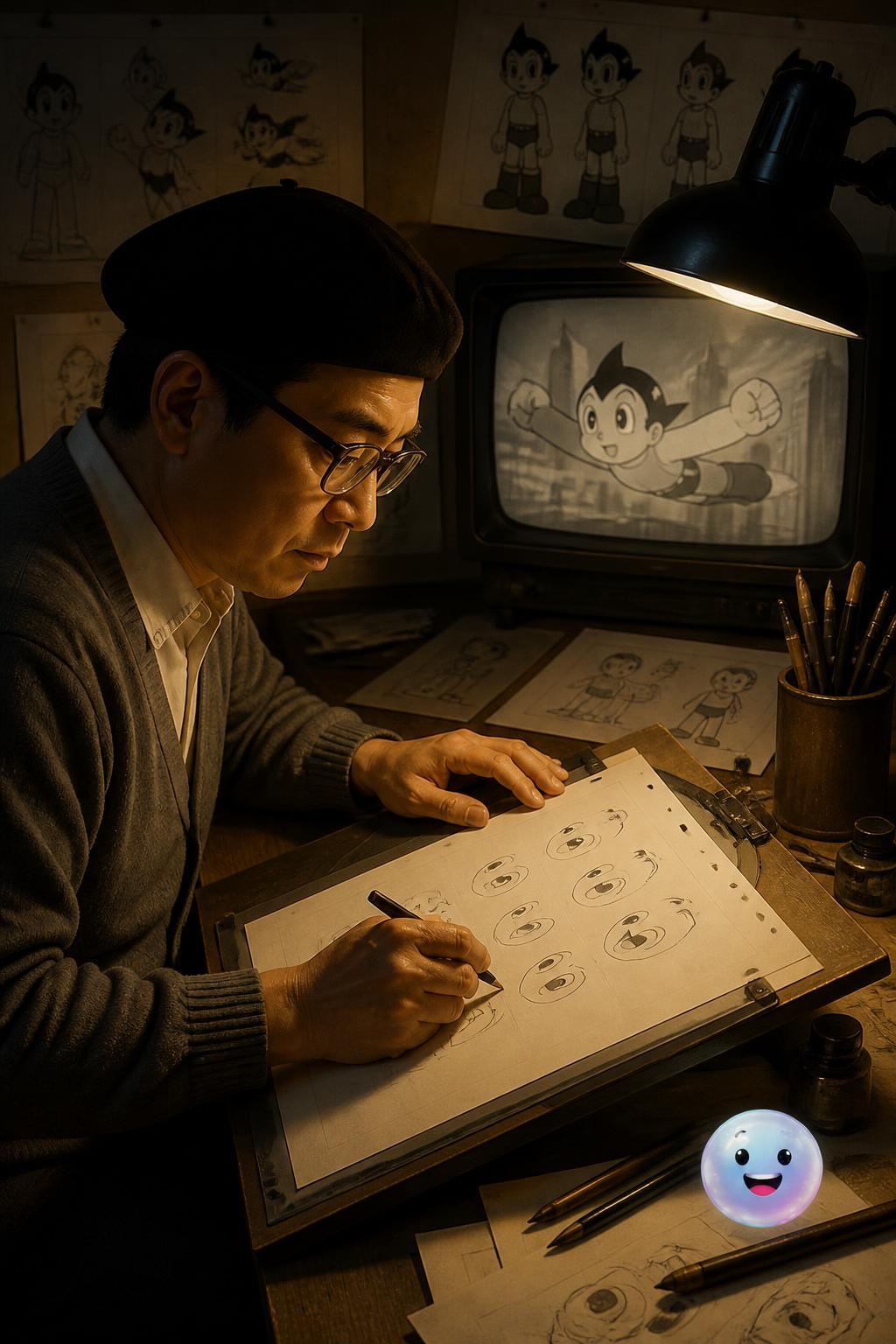
Osamu Tezuka's Limited Lines of Animation
A hand-drawn robot boy stands still under warm, dramatic cinematic spotlights
Magic tricks before the movie theater
The era of ink and scissors
Puppets, clay, and limited lines
The pixels that learned to paint

disney In 1963, Tezuka adapted Astro Boy for television using limited animation. He saved time and money by animating only moving eyes and mouths on still bodies.
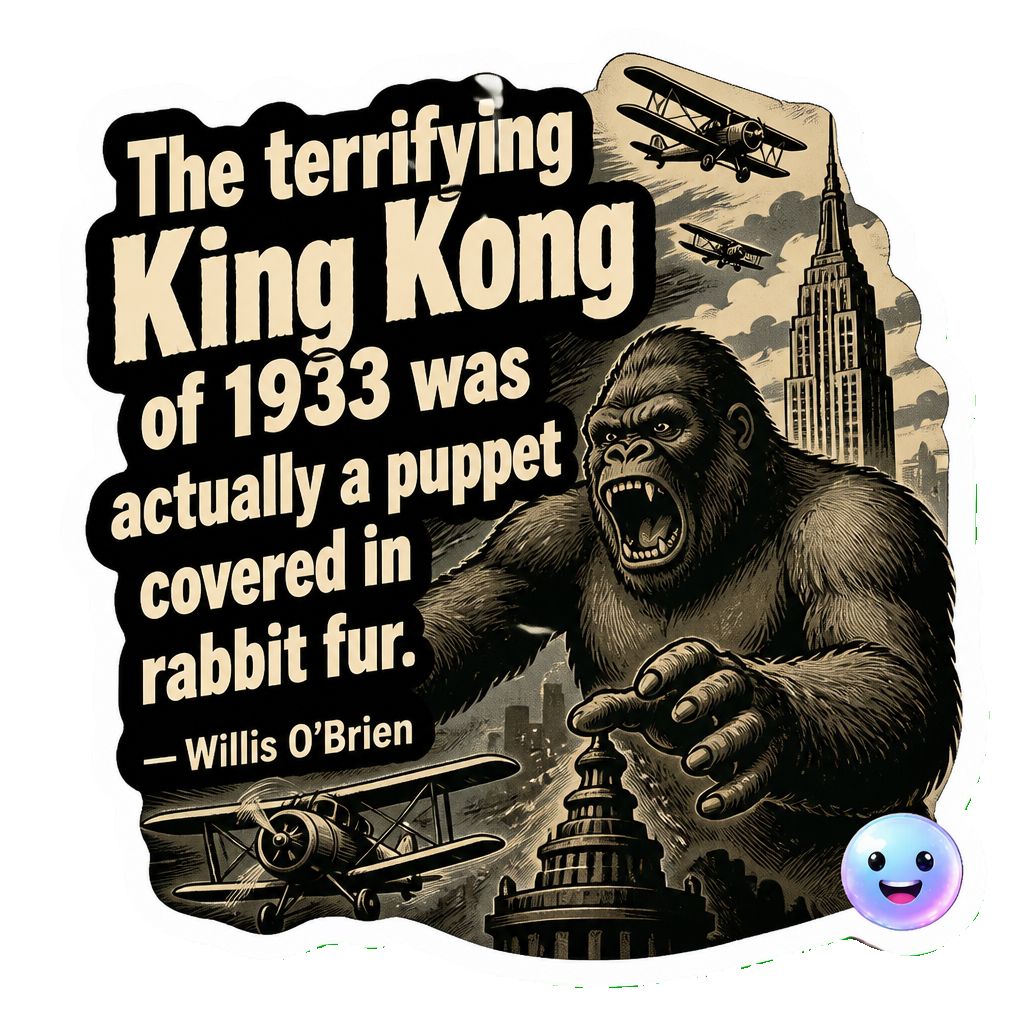
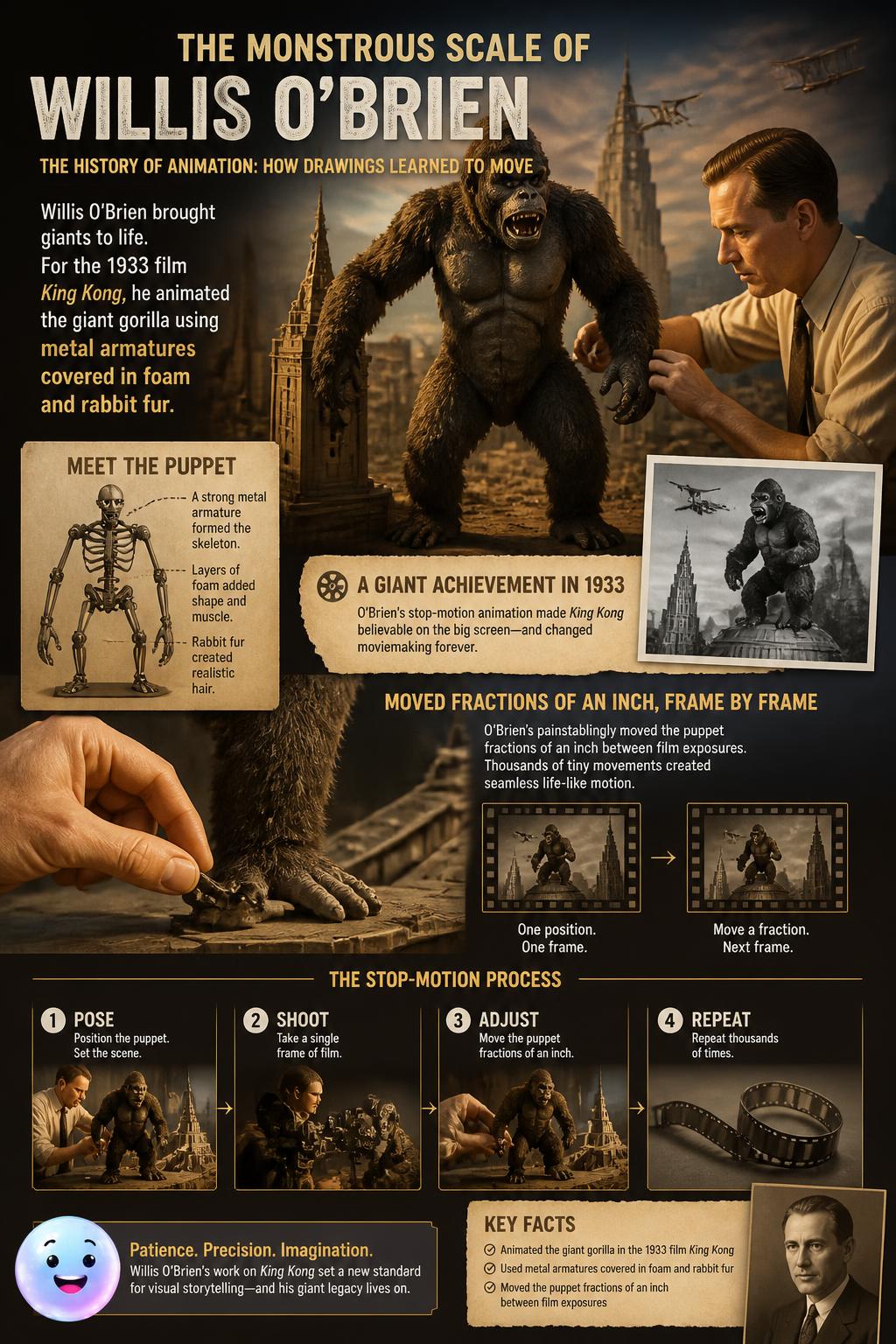
disney For the 1933 film King Kong, O'Brien covered metal armatures in foam and rabbit fur. He painstakingly moved the puppet fractions of an inch between film exposures.
disney Art Clokey popularized claymation on American television in 1953 with Gumby. This style requires taking 24 individual photographs of tiny clay movements for each second of screen time.
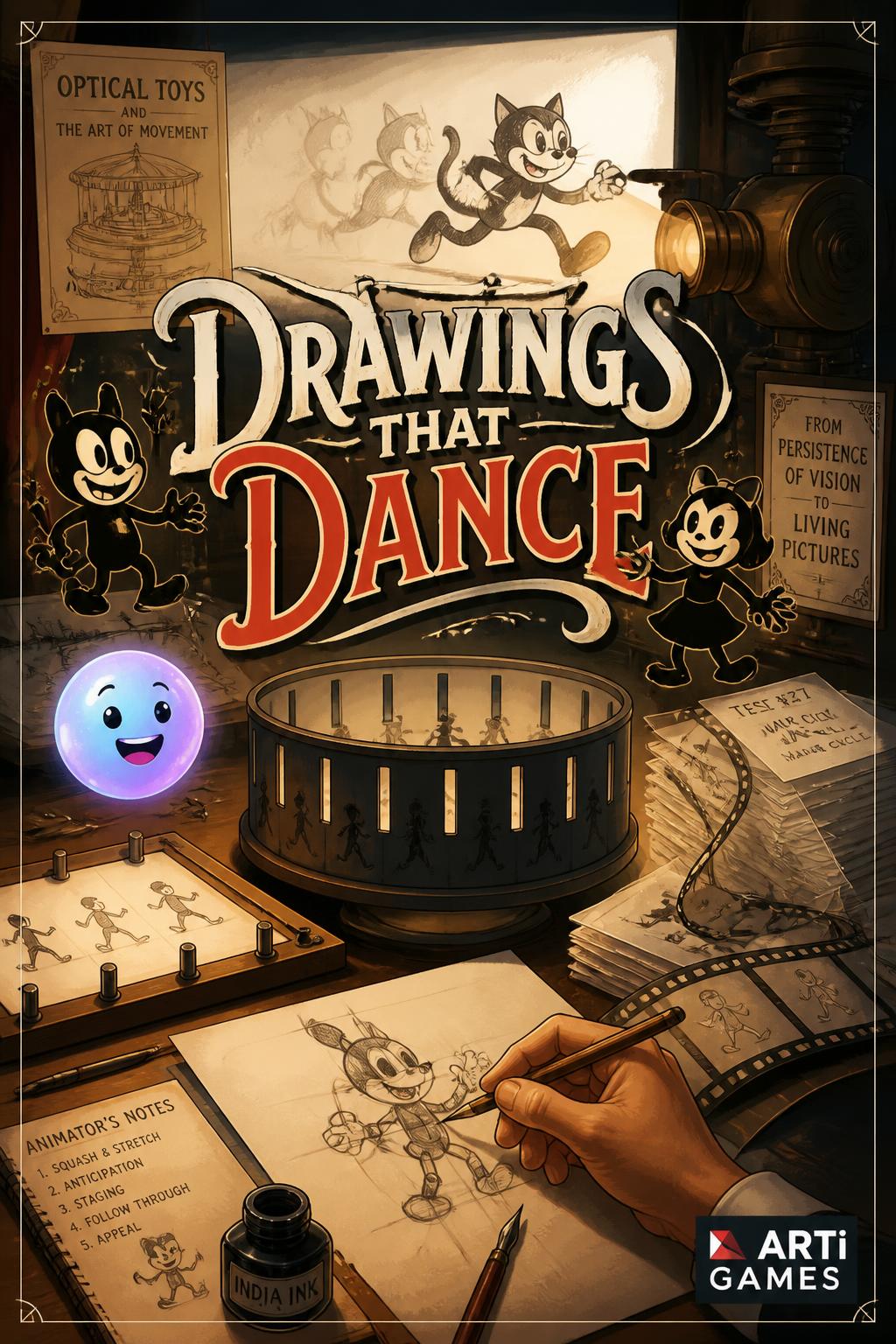
disney Sequence the animation frames to discover how early drawings first learned to dance.
disney Puppets Clay and Limited Lines
Just a few lines, just a few lines, We bring the clay to life with just a few lines!
Astro Boy speed: To meet impossible weekly deadlines, Osamu Tezuka's team animated at only eight frames per second.
What material did Willis O'Brien use to cover the metal skeleton of the 1933 King Kong puppet?
Which animator won an Academy Award in 1977 for animating sand creatures in 'The Sand Castle'?
How many individual photographs are typically captured for one second of standard stop-motion film?
Which artist adapted 'Astro Boy' for television in 1963, launching the modern anime industry?
What is the term for animating only parts of a character, like eyes or mouths, to save time?