Magic tricks before the movie theater
The era of ink and scissors
Puppets, clay, and limited lines
The pixels that learned to paint

disney John Ayrton Paris popularized this toy in 1825 London to demonstrate persistence of vision. Rapidly spinning the card merges a separate bird and cage into one image.

disney Arrange the frames in the correct order to discover how static drawings learned to dance.
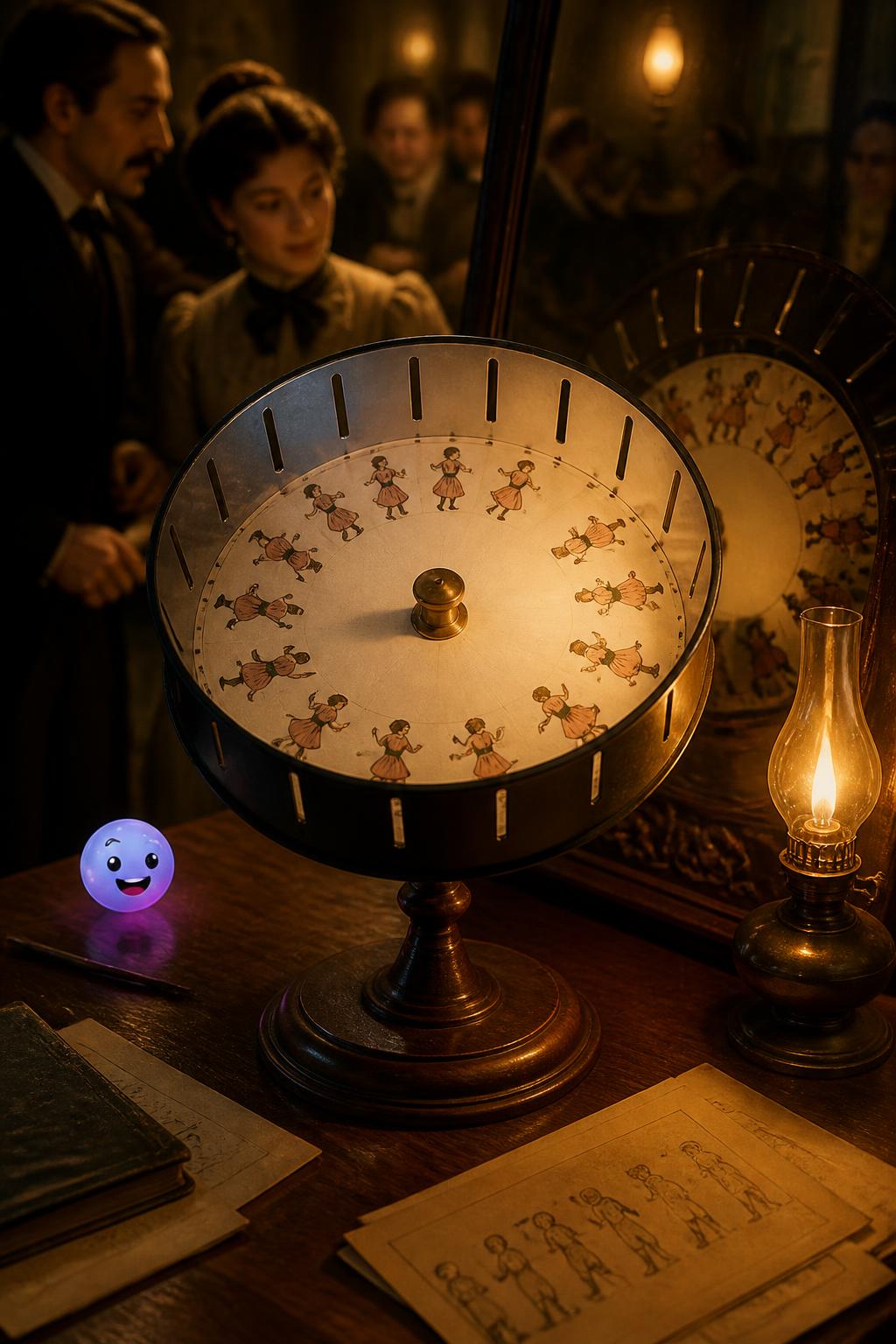
disney Warm light streams through the spinning slits of a rotating phenakistoscope disc.
What optical illusion allows the brain to merge rapidly flashing images into one continuous motion?
disney The Magic Lantern
With painted glass and candle light, a skeleton began to shake Within the magic lantern lens, the first cartoon was wide awake
disney William George Horner patented this Daedalum device in 1834. This spinning wheel became a popular Victorian parlor toy that brought laboratory animation into family homes.
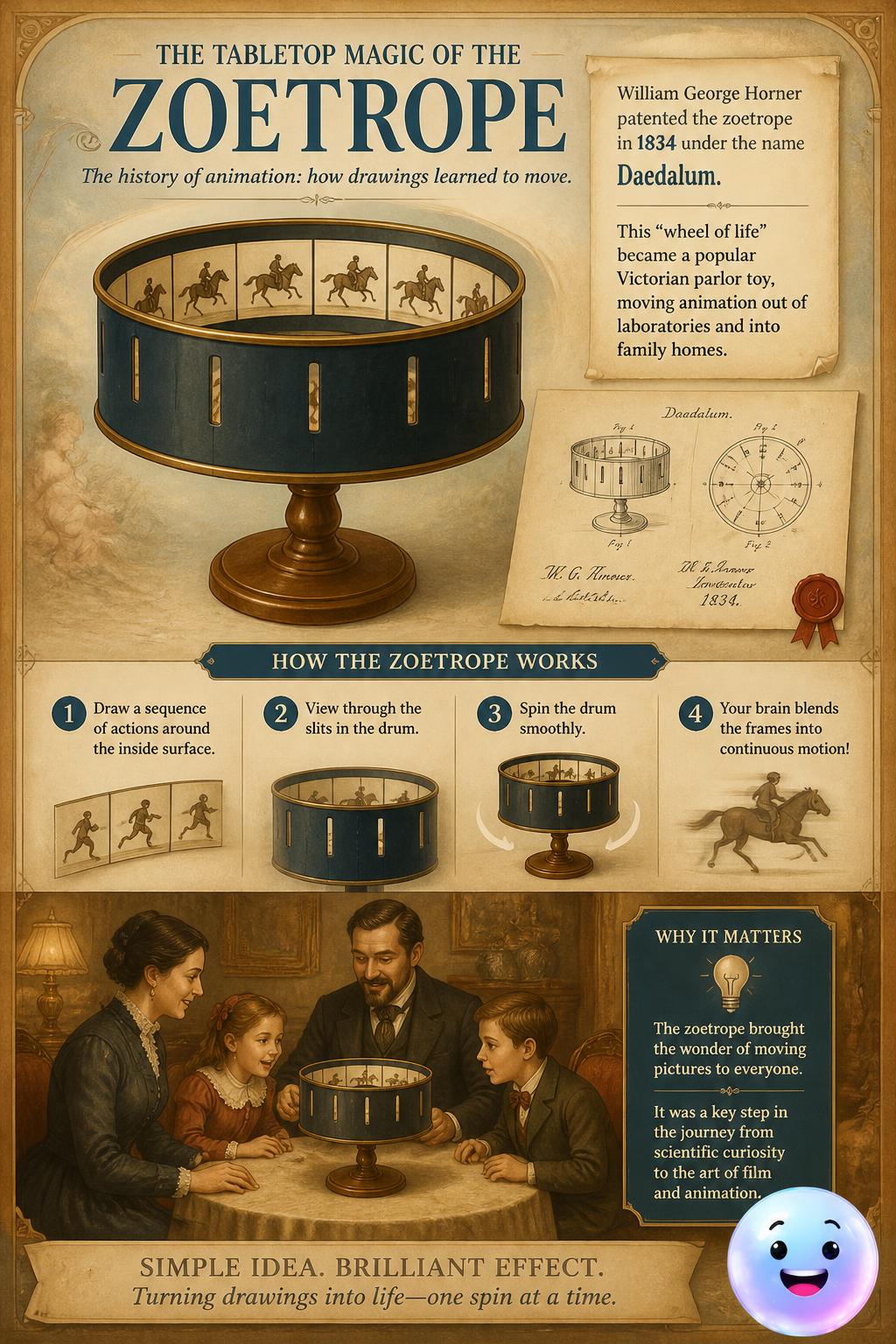
disney A spinning zoetrope wheel displays moving drawings inside a warm, colorful Victorian parlor.
What did Charles-Émile Reynaud use instead of photographic film for his 1892 projections?
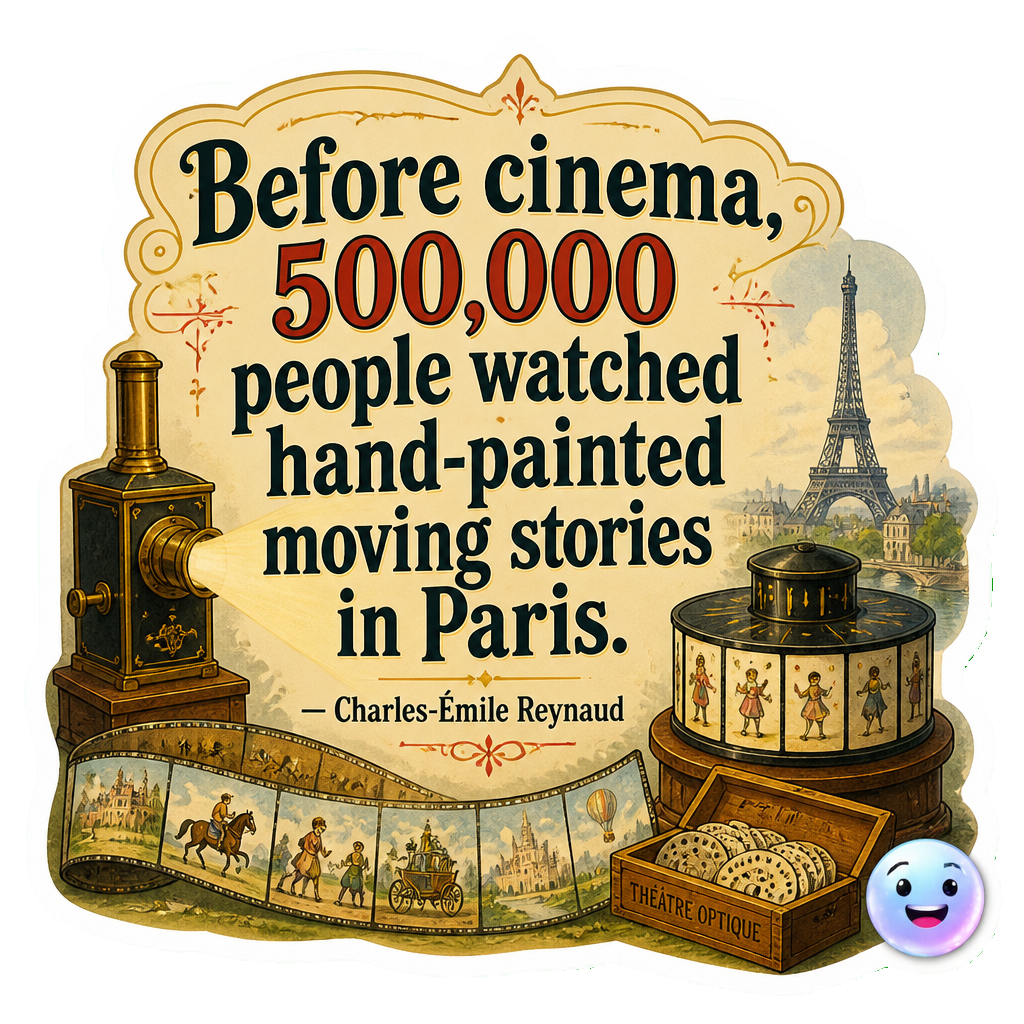
disney In 1892, Reynaud used his Praxinoscope to project 500-frame hand-painted bands of moving stories. This Parisian spectacle entertained over 500,000 people before cinema took over.
What was the zoetrope originally called when William George Horner patented it in 1834?
Movie speed: To trick our brains into seeing smooth motion, animations must show at least 12 frames per second.
An early type of image projector that uses a light source to project pictures painted on glass plates onto a screen. In 1659, Dutch scientist Christiaan Huygens invented the device, pioneering early projected animation.