The pond scum that changed neuroscience
Splicing the switch into the brain
Turning neurons on and off
Healing minds and mapping thoughts

diego In 2002, German biophysicist Peter Hegemann found that the protein channelrhodopsin-1 acts as a solar-powered gate. This gate lets charged particles inside to steer the cell.
Which charged particles enter the cell through channelrhodopsin to trigger a nerve impulse?
Which organism provided the first light-sensitive channelrhodopsin protein used in optogenetics?
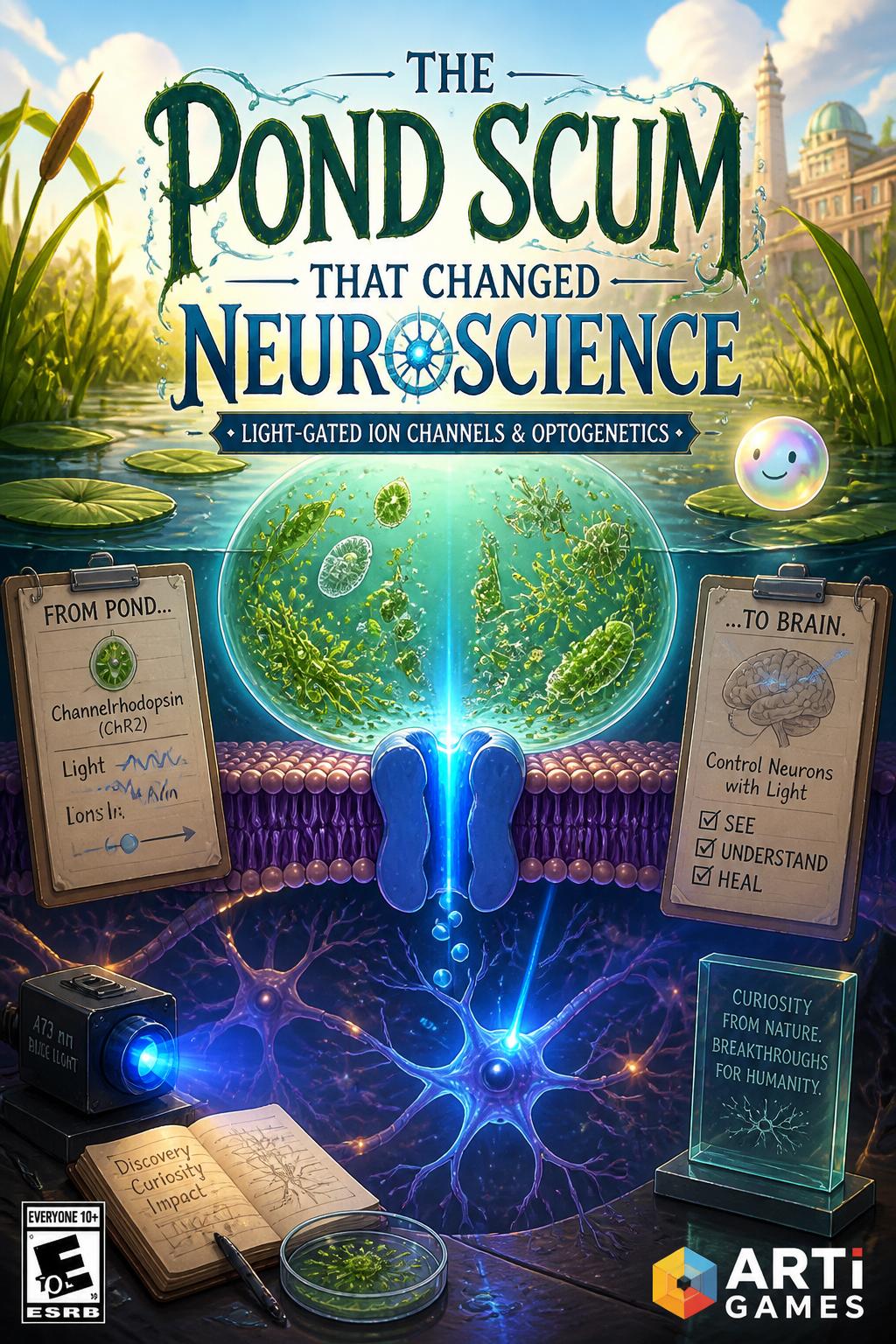
diego Zap pond scum with light to discover how algae proteins help scientists control brain cells.
diego Blue light triggers a channelrhodopsin protein to change shape in under a millisecond. This opens a pore for sodium ions, generating an electrical signal across the cell membrane.
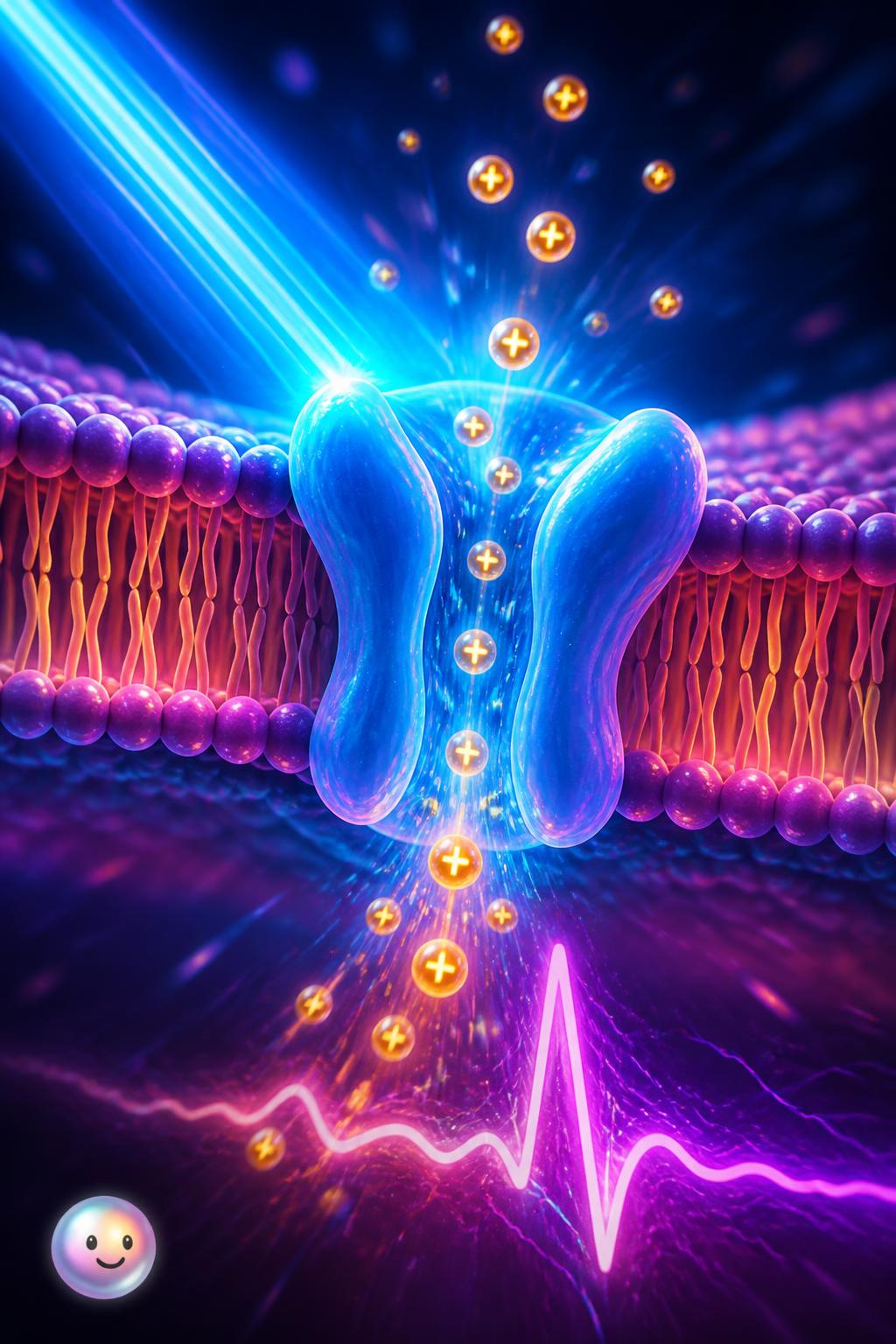
diego Light-gated ion channels are microscopic molecular doors that open only when hit by specific light colors.
What is the primary chemical used by both human eyes and algal light-gates to sense light?
diego Chlamydomonas reinhardtii
Green pond algae has a light-switch key, shining blue beams to make the brain fire away!
diego Brain cells normally use the chemical glutamate to fire electrical signals. Optogenetics replaces these chemical keys with targeted light, giving researchers millisecond control over cellular electricity.
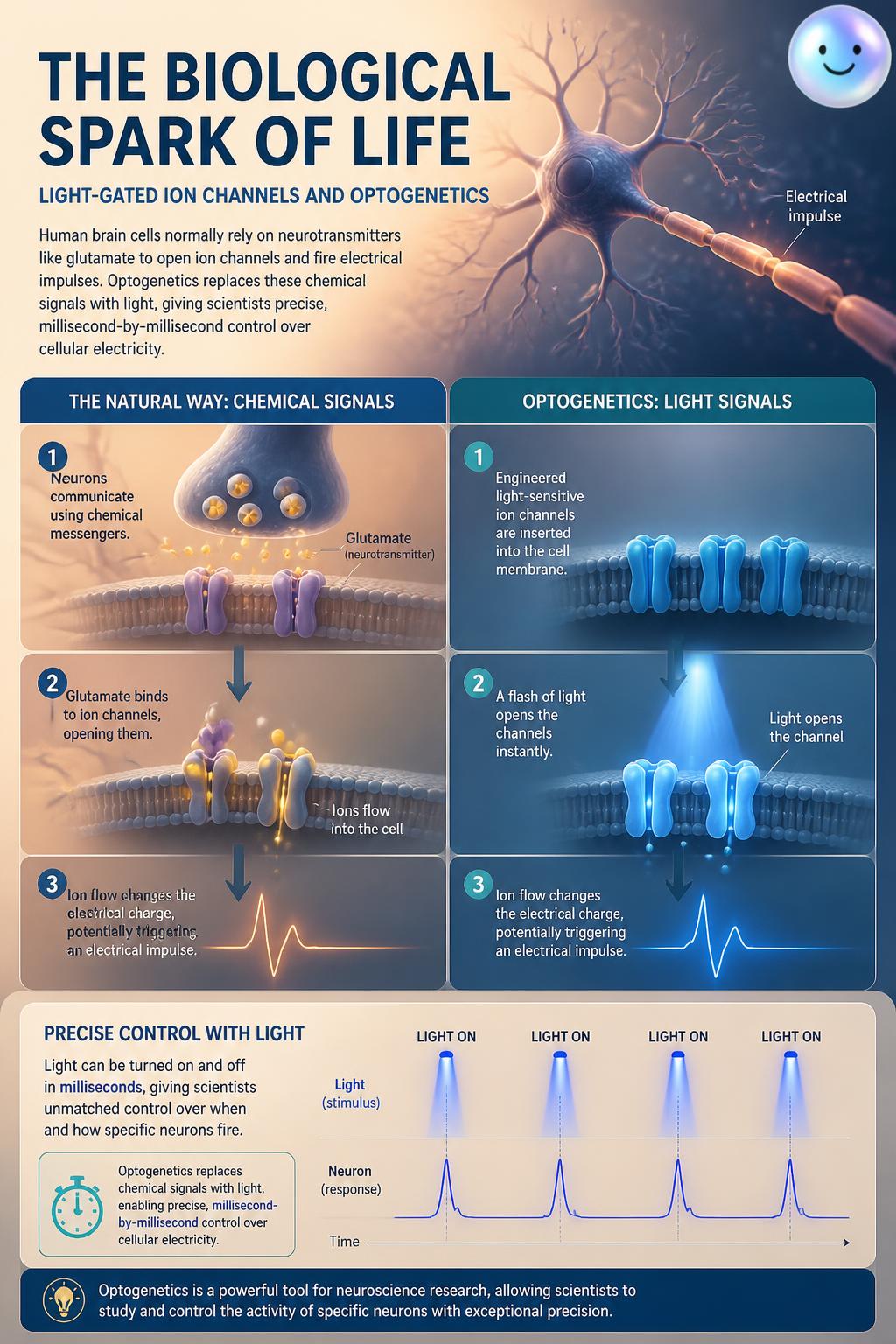
diego Neurons communicate using electrical impulses, which are naturally triggered by chemical signals.
In what year did researchers first successfully express channelrhodopsin in mammalian neurons?
Algae eyes: Pond algae use the exact same light-sensing chemical, retinal, that human eyes use to see.
diego In August 2005, Stanford scientists used a harmless virus to insert algal genes into mouse neurons. Shining blue light made these modified brain cells fire on command.
What biological structure do ion channels span to control the flow of charged particles?
How fast does channelrhodopsin open its channel once hit by the correct light wavelength?
A light-gated ion channel protein that serves as a sensory photoreceptor in unicellular green algae. In 2004, Ed Boyden at Stanford first used this algal protein to control mammalian neurons with light.