The pond scum that changed neuroscience
Splicing the switch into the brain
Turning neurons on and off
Healing minds and mapping thoughts

diego Blue light activates specific proteins to speed up neural signals. Shifting to yellow or green light instantly halts the activity, giving researchers precise traffic control over the brain.
If a scientist flashes blue light at 40 Hertz, how many times does the light flash per second?
From what type of extreme environment was the halorhodopsin protein originally isolated?
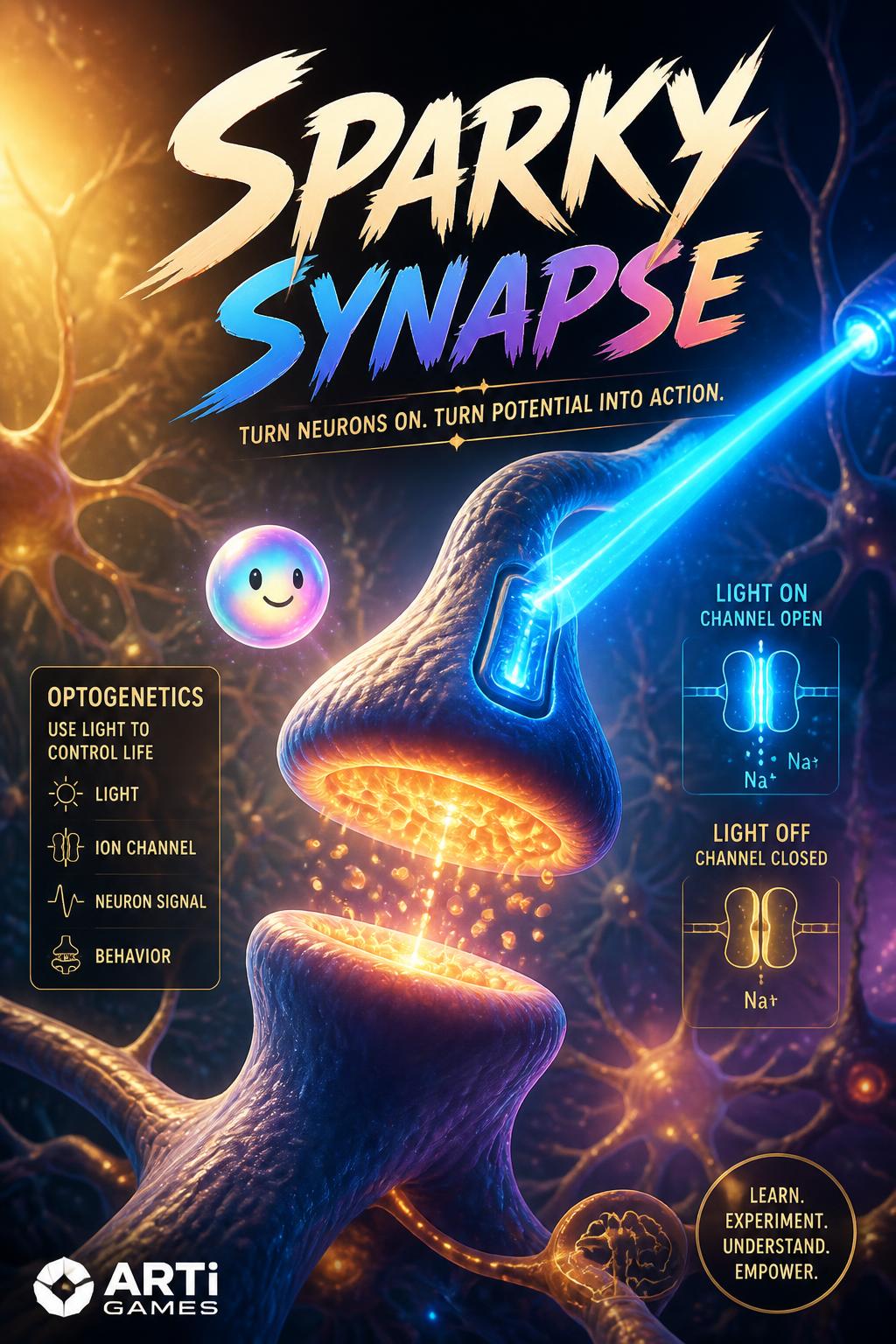
diego Aim light beams at neurons to discover how optogenetics controls brain activity.
diego Found in the microbe Halobacterium salinarum, this protein pumps negative chloride ions into neurons under yellow light. This negative charge stops the brain cells from sending electrical signals.
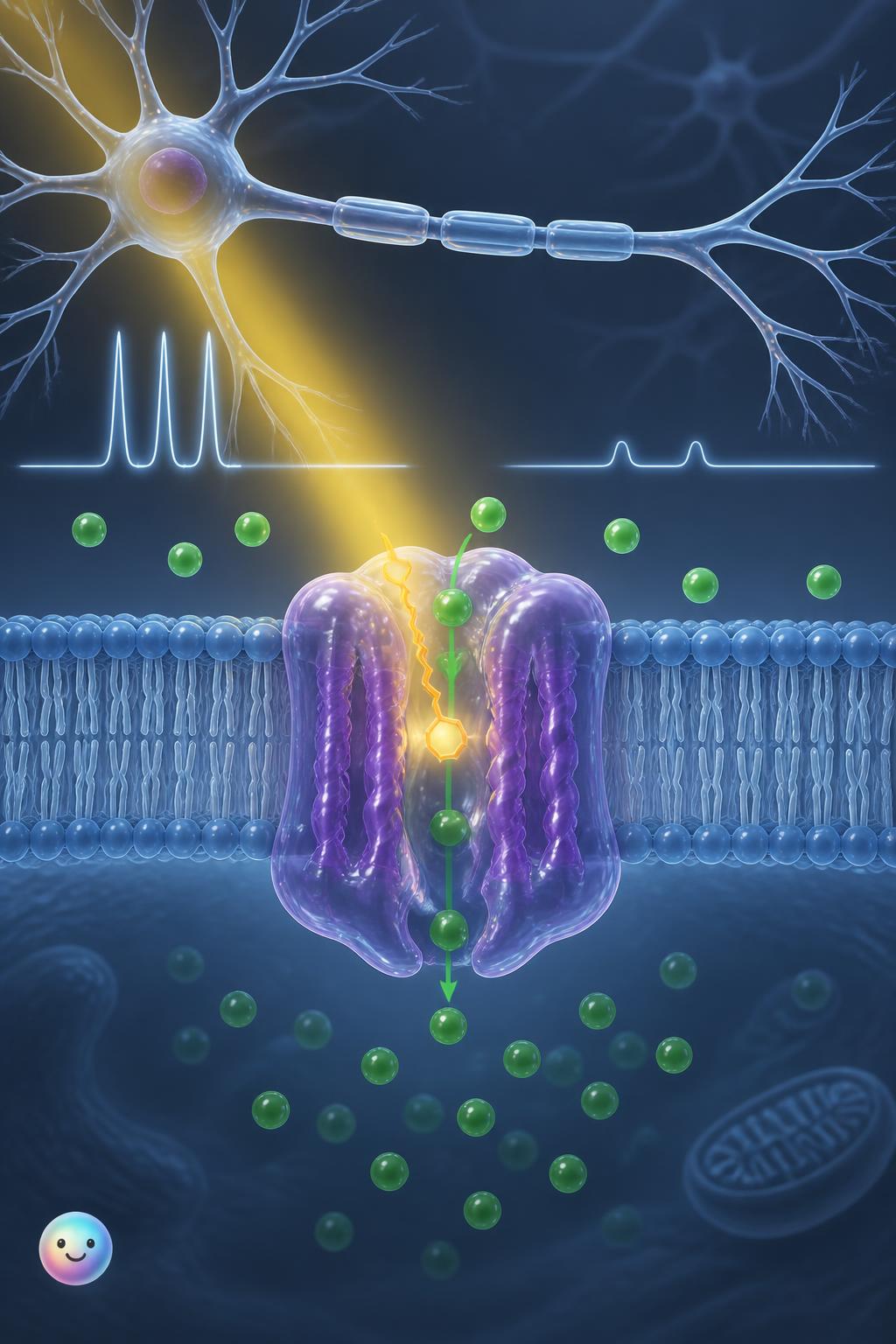
diego Halorhodopsin is a light-sensitive pump from salt-loving microbes that silences neurons when hit by yellow light.
What term describes the state of a neuron when its internal charge becomes highly negative, preventing firing?
What negative ion does halorhodopsin pump into the neuron to silence its electrical activity?
diego While blue light scatters quickly, red light penetrates deep into biological tissue. Researchers use the Chrimson channel to activate deep brain areas with less invasive light sources.
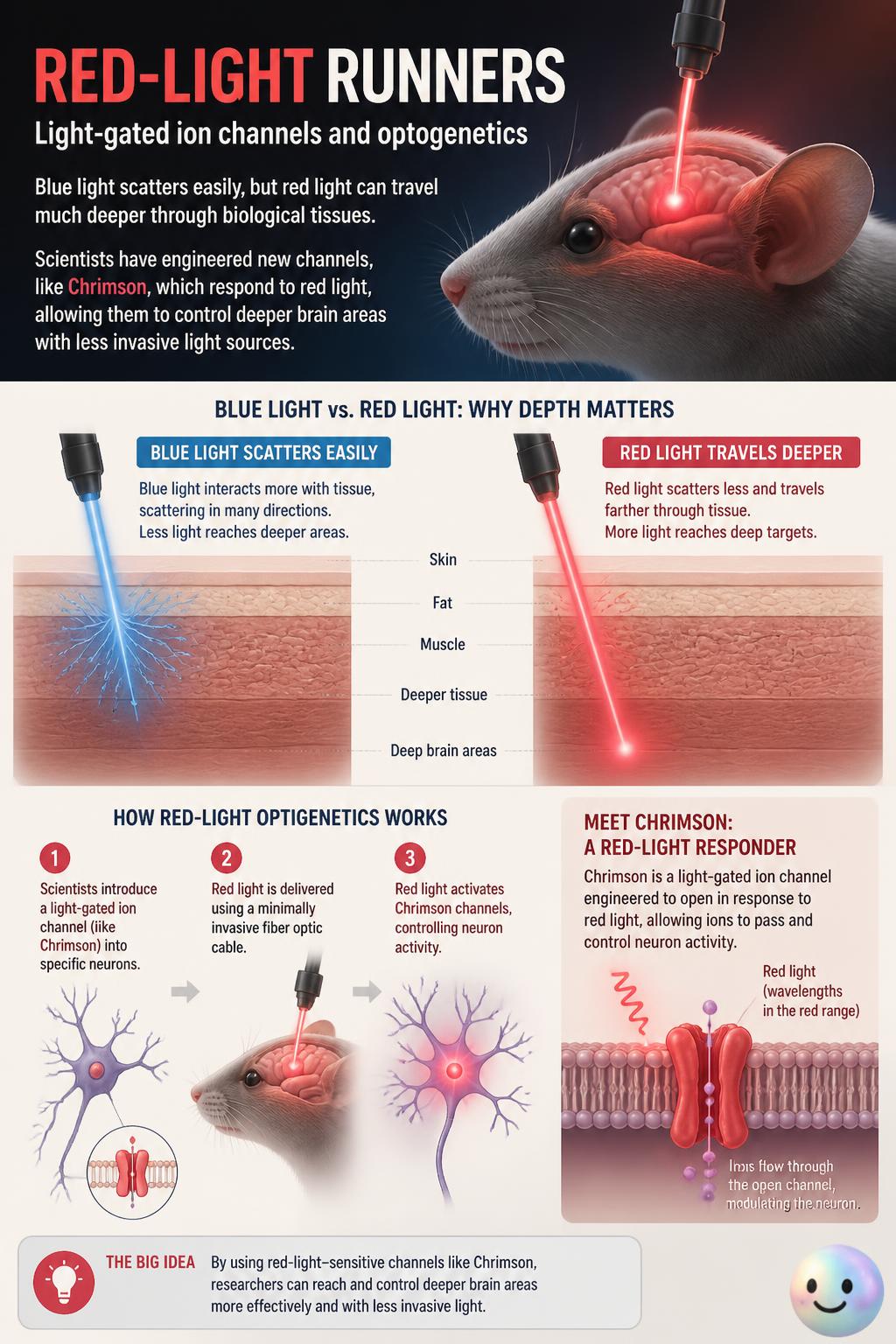
diego Red-shifted optogenetic tools allow scientists to penetrate deeper into tissue without causing damage.
Which protein acts as a light-driven brake to silence neuronal activity when exposed to yellow light?
Salt lovers: Halorhodopsin comes from ancient microbes that thrive in salt lakes so salty that almost no other life can survive.
diego Flashing a laser forty times per second triggers light-sensitive proteins in brain cells. This precise speed mimics natural brain waves to help researchers study focus and sleep.
What is the name of the red-light-sensitive channel developed for deep-tissue optogenetics?
A biological technique that uses light to control cells, typically neurons, that have been genetically modified to express light-sensitive proteins. In 2005, Karl Deisseroth used light-activated proteins to both excite and silence modified mammalian brain cells.