The pond scum that changed neuroscience
Splicing the switch into the brain
Turning neurons on and off
Healing minds and mapping thoughts

diego In a 2021 trial, scientists treated retinitis pigmentosa by delivering channelrhodopsin genes to retinal cells. Wearing special light-projecting goggles, the patient successfully located and touched objects on a table.
What is the main ethical concern surrounding the potential future use of optogenetics in humans?
What wearable device did the blind patient in the 2021 trial need to use alongside optogenetics?
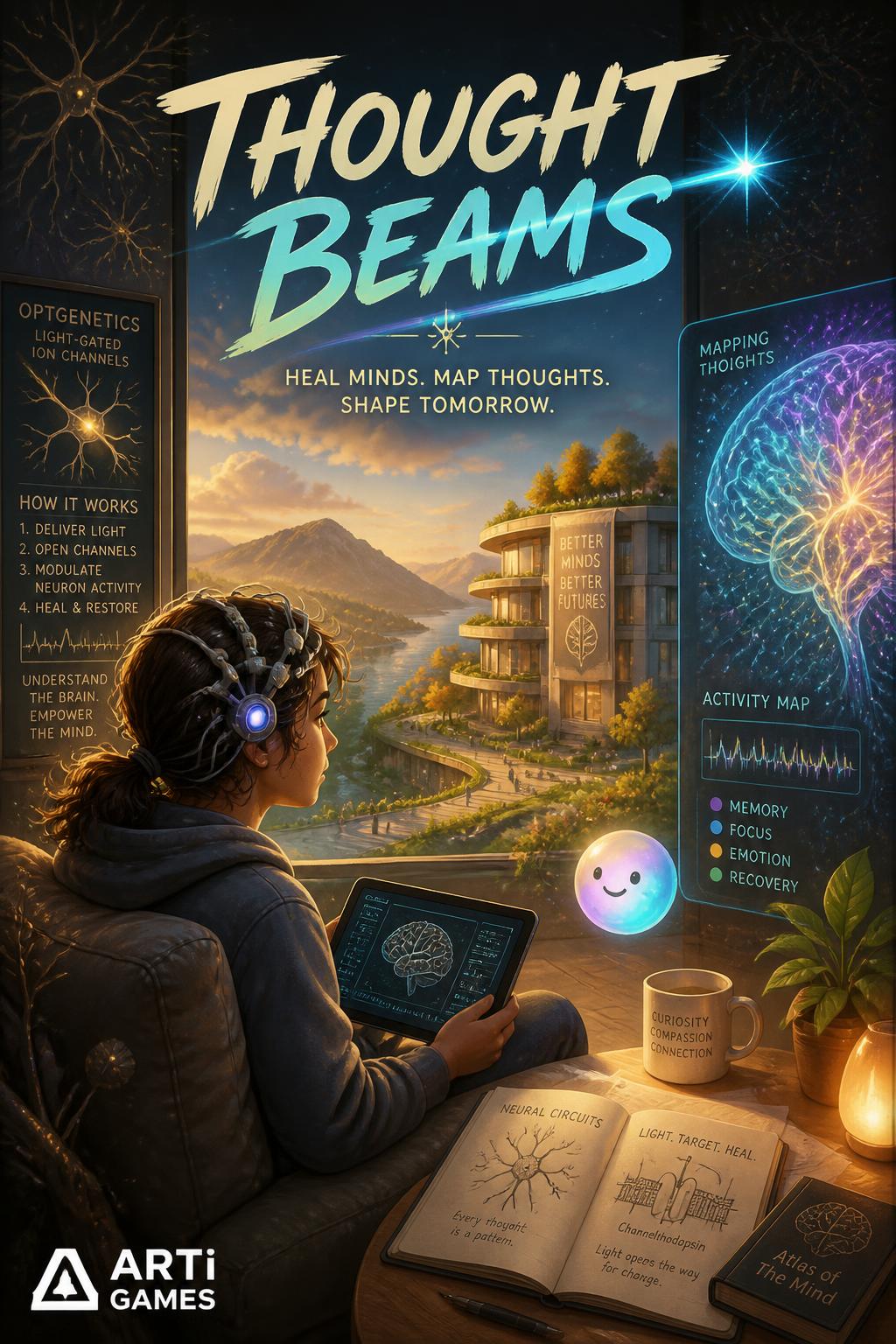
diego Researchers shine light on specific neural circuits in mice. This technique reveals how Deep Brain Stimulation works, paving the way for side-effect-free therapies.
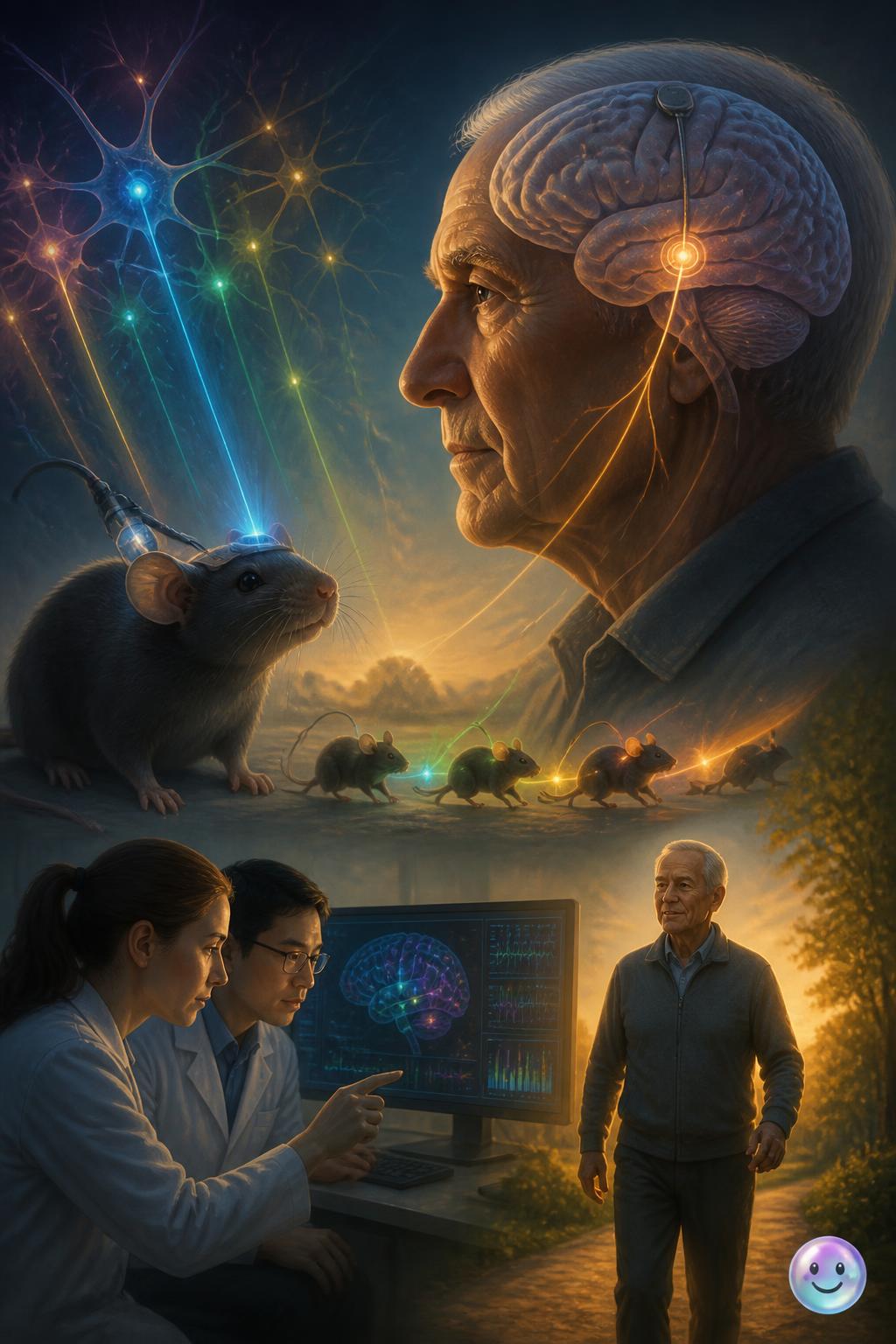
diego Optogenetic mapping has revealed the exact brain circuits responsible for Parkinson's motor symptoms.
In 2021, optogenetics was first used in a clinical trial to successfully treat which human condition?
diego Healing minds and mapping thoughts
We guide the light through algal gates, To map the mind and heal its states.
diego In 2012, MIT researchers used channelrhodopsin to label active brain cells. Shining light on these cells triggered the memory, proving memories are physical circuits called engrams.
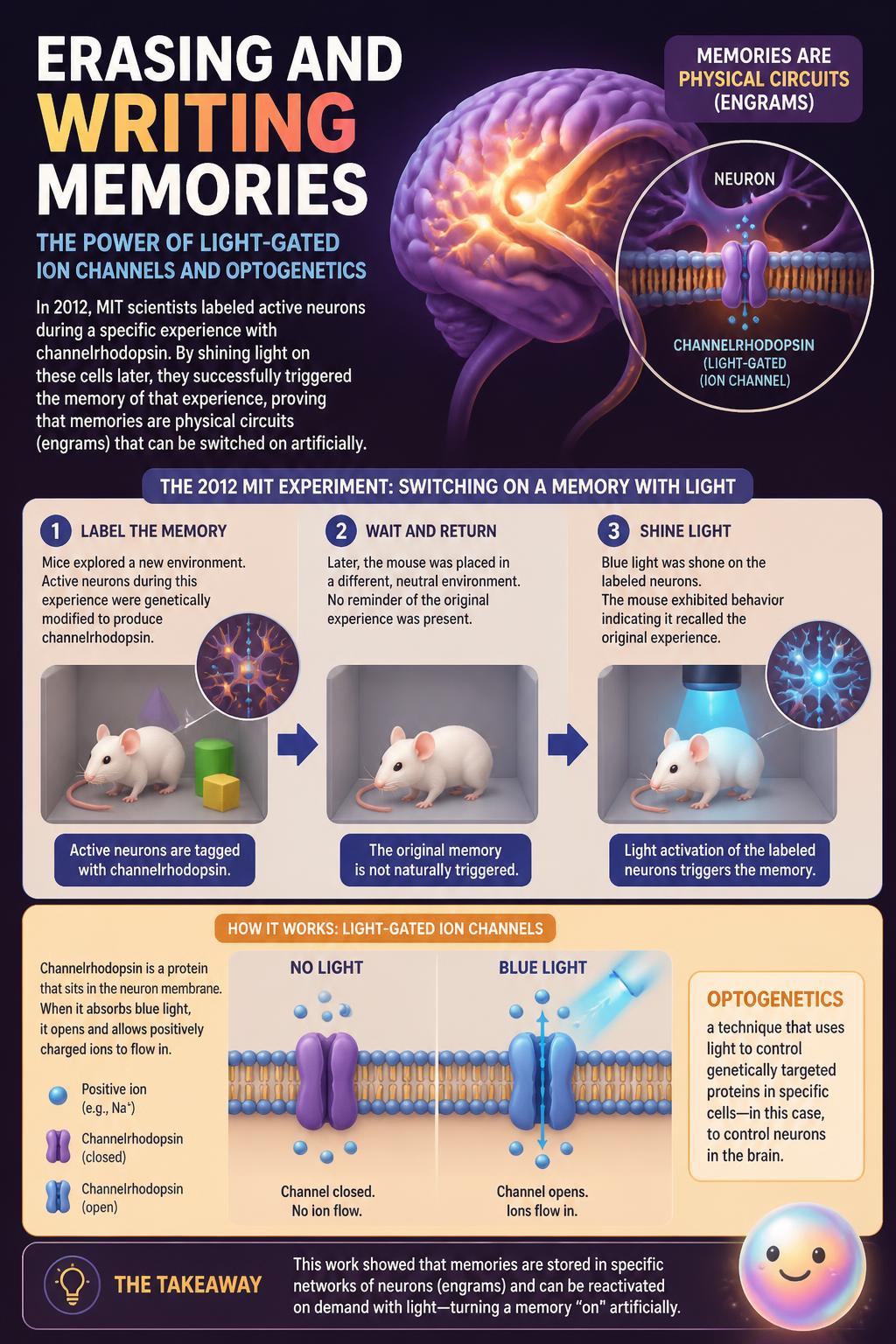
diego Scientists have used light to pinpoint, activate, and even alter specific memory traces in mice.
Which organ, other than the brain, could potentially be regulated using optogenetic pacemakers?
Why are scientists trying to develop infrared-sensitive optogenetic channels for humans?
Light-powered sight: In 2021, a blind man used optogenetics and special camera goggles to see and count stripes on a crosswalk.
diego Researchers engineer ultra-sensitive light channels and safe gene therapies. Wearable infrared devices will soon regulate heartbeats and relieve chronic pain without skull surgery.
How did MIT scientists trigger a specific memory in mice in their famous 2012 experiment?
Which disease's motor circuits were mapped using optogenetics, leading to better Deep Brain Stimulation targets?
A biological technique that uses light to control neurons genetically engineered to be light-sensitive. Karl Deisseroth won the 2026 Nobel Prize for using microbial proteins to chart and treat neural circuits.