
BETA

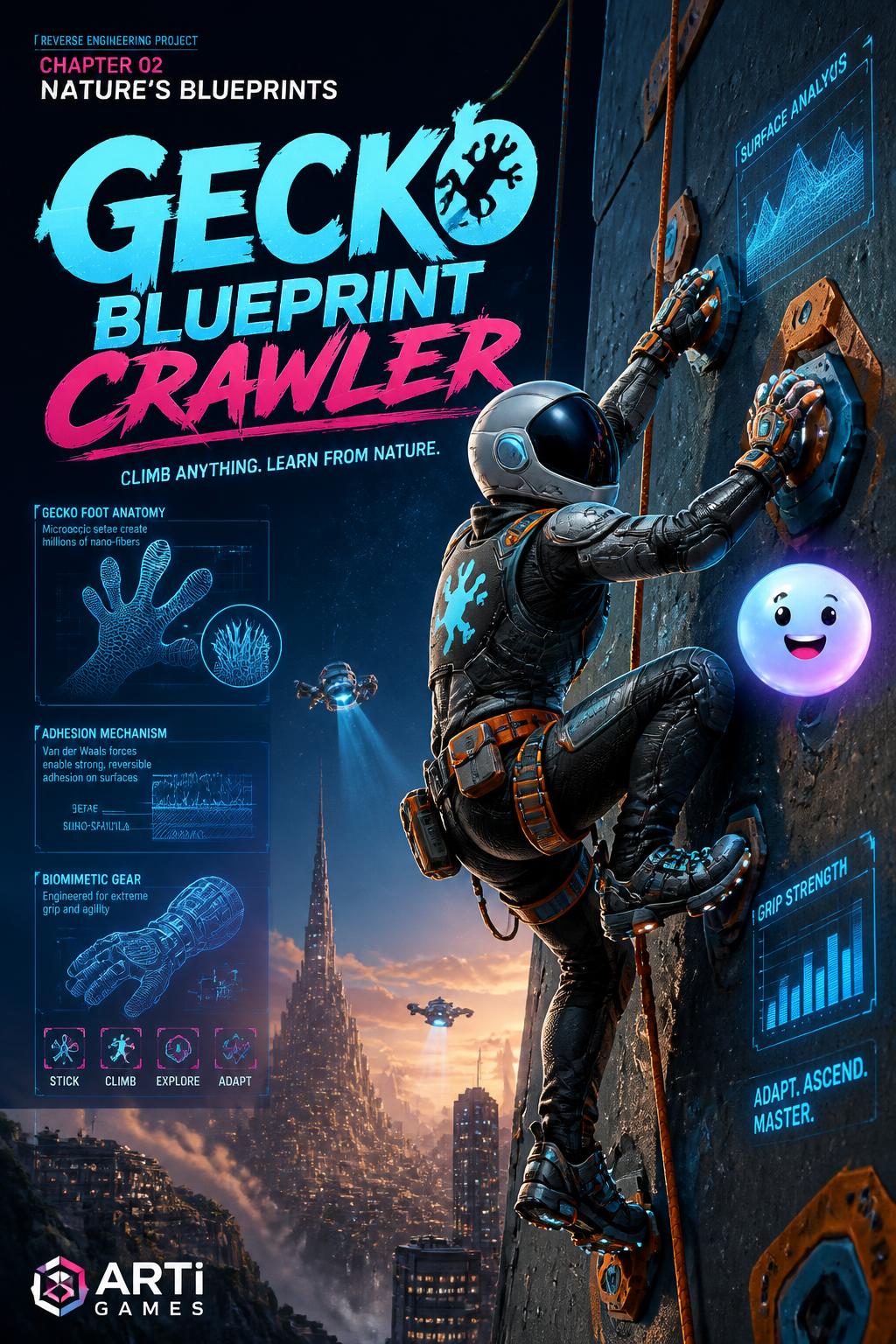
007skaty Navigate your crawler through blueprints to discover how engineers recreate the gecko's sticky grip.
007skaty Nature's Blueprints
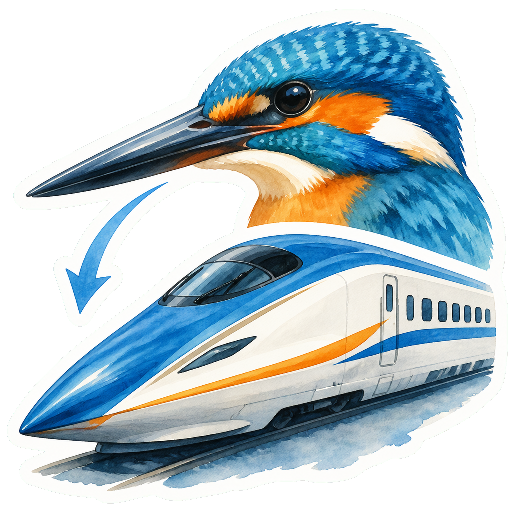
A kingfisher beak on a high-speed train (Oh-oh, we fly!) No sonic boom, just a quiet lane (Yeah, we fly!)
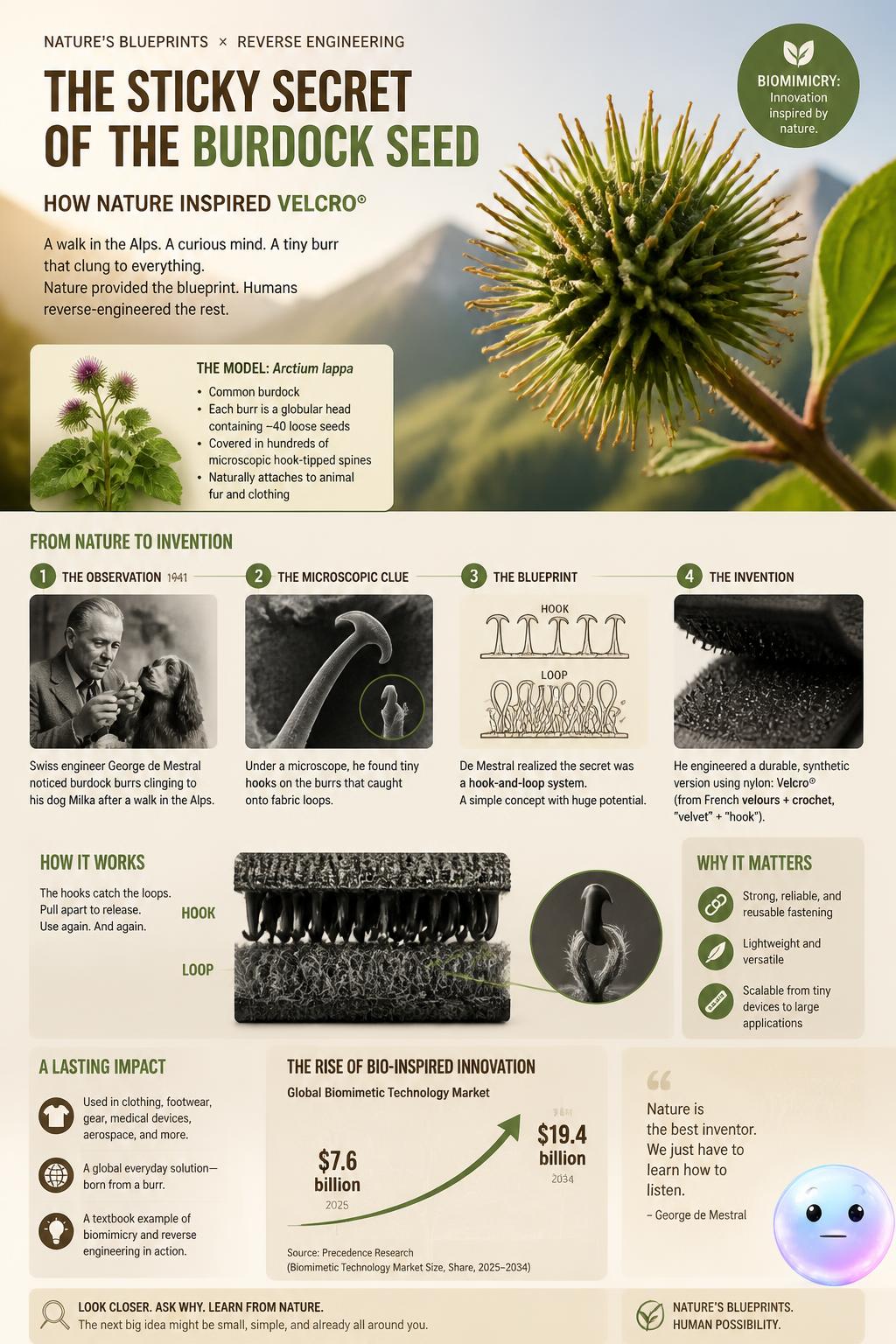
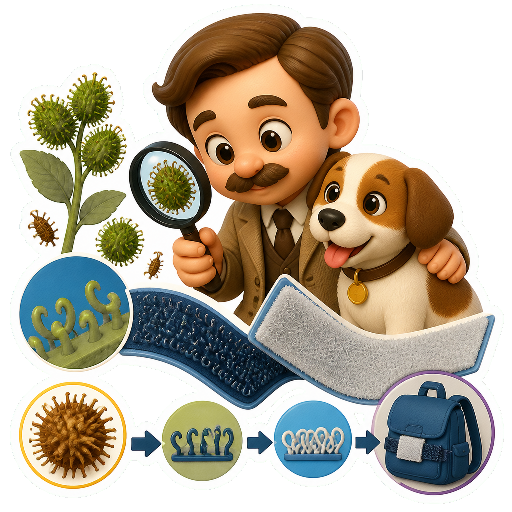
007skaty The hook-like structure of Arctium burrs provides the biological blueprint that inventors copied to create modern hook-and-loop fasteners.
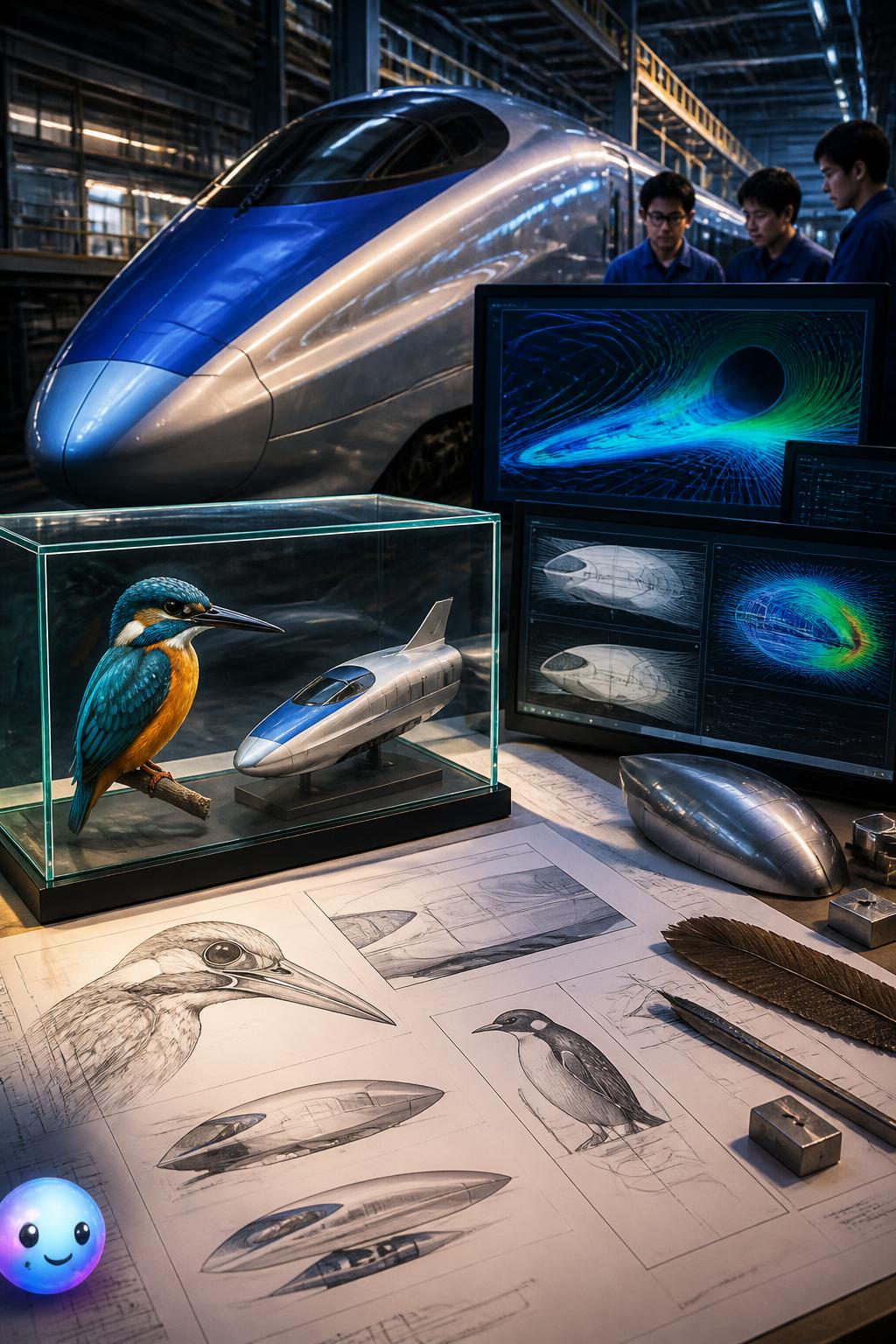
007skaty A fifteen-meter-long nose mimics nature's blueprint to prevent loud tunnel sonic booms.
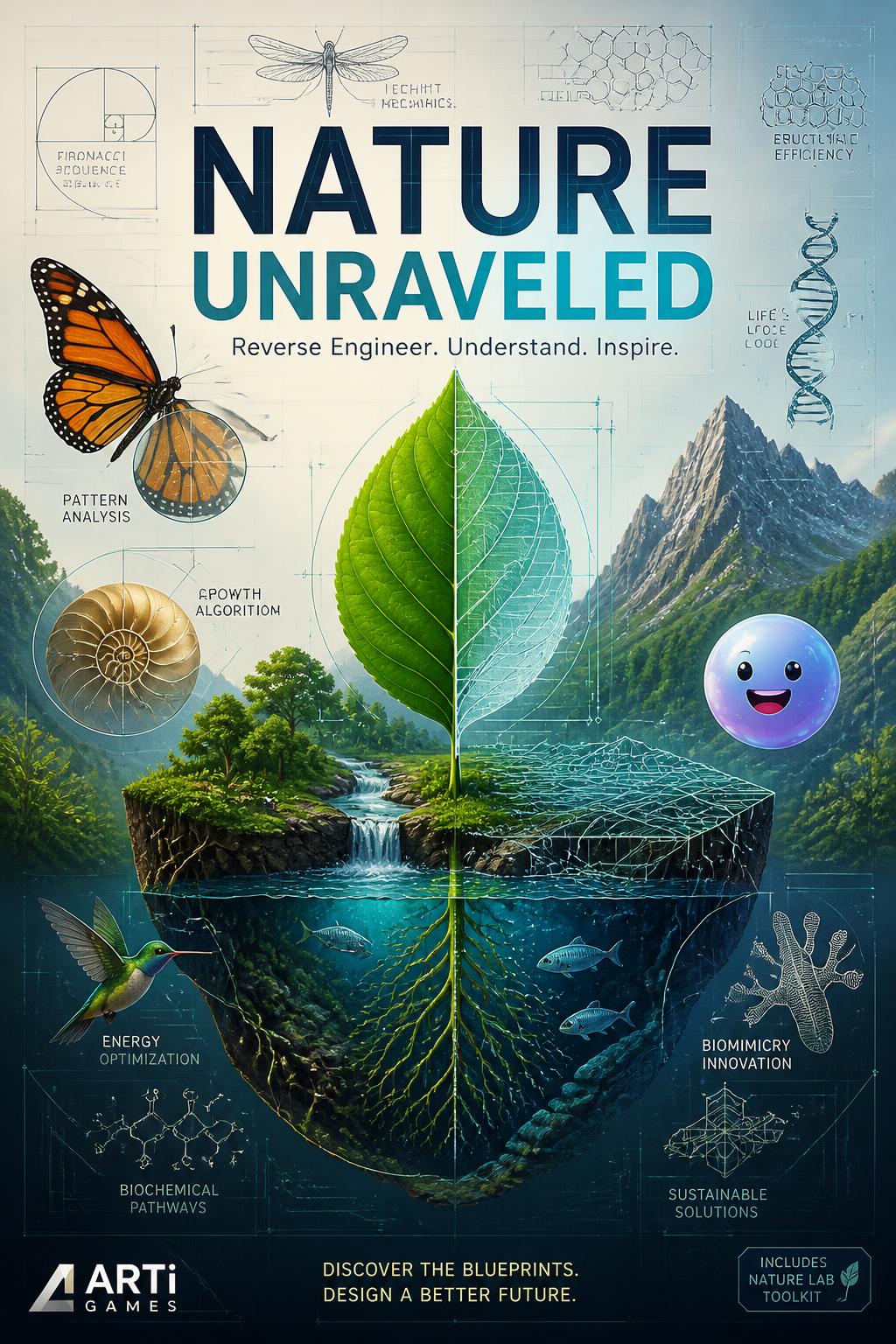
007skaty Decode the mechanics of plants and animals to discover how nature engineers survival.
Bullet train beak: Redesigning the Japanese Shinkansen train's nose to mimic a kingfisher beak reduced noise and cut power use by 15 percent.
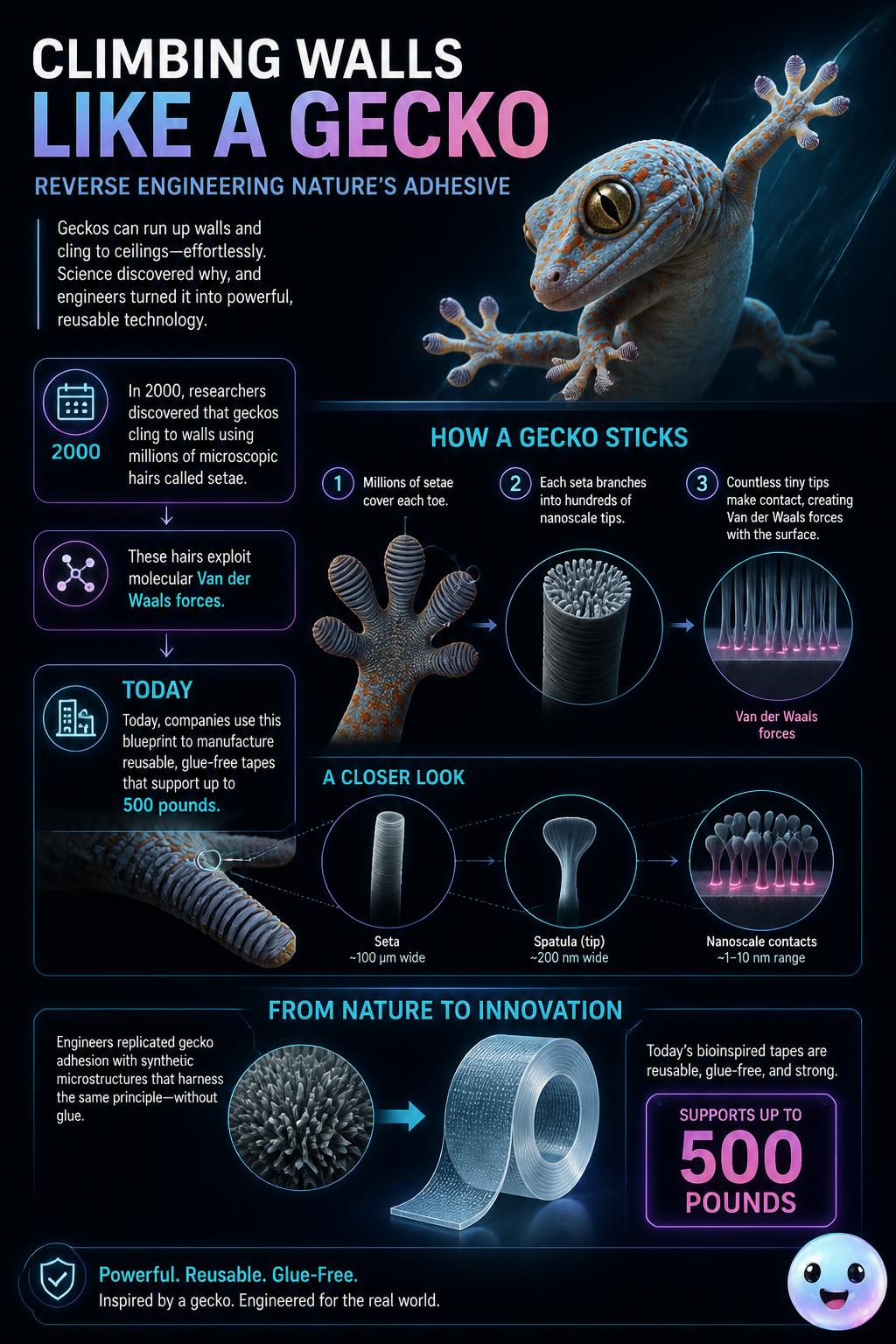
007skaty Researchers in 2000 discovered that microscopic hairs called setae exploit Van der Waals forces, creating a blueprint for

007skaty Holographic schematics overlay a kingfisher beak onto the nose of a bullet train.
Which bird's beak inspired the aerodynamic redesign of Japan's high-speed Shinkansen bullet train?
What microscopic feature allows geckos to stick to smooth ceilings without any liquid glue?
What unique property of the lotus leaf has been reverse engineered to create self-cleaning paint?