
Unalive the rules, unalive the rules / We're dodging the
In our algorithmic future, the coded vocabulary of social media, known as 'algospeak,' is actively spilling offline and changing how people speak in everyday life.
Before the algorithm
The birth of algospeak
Global code-breaking
The algorithmic future
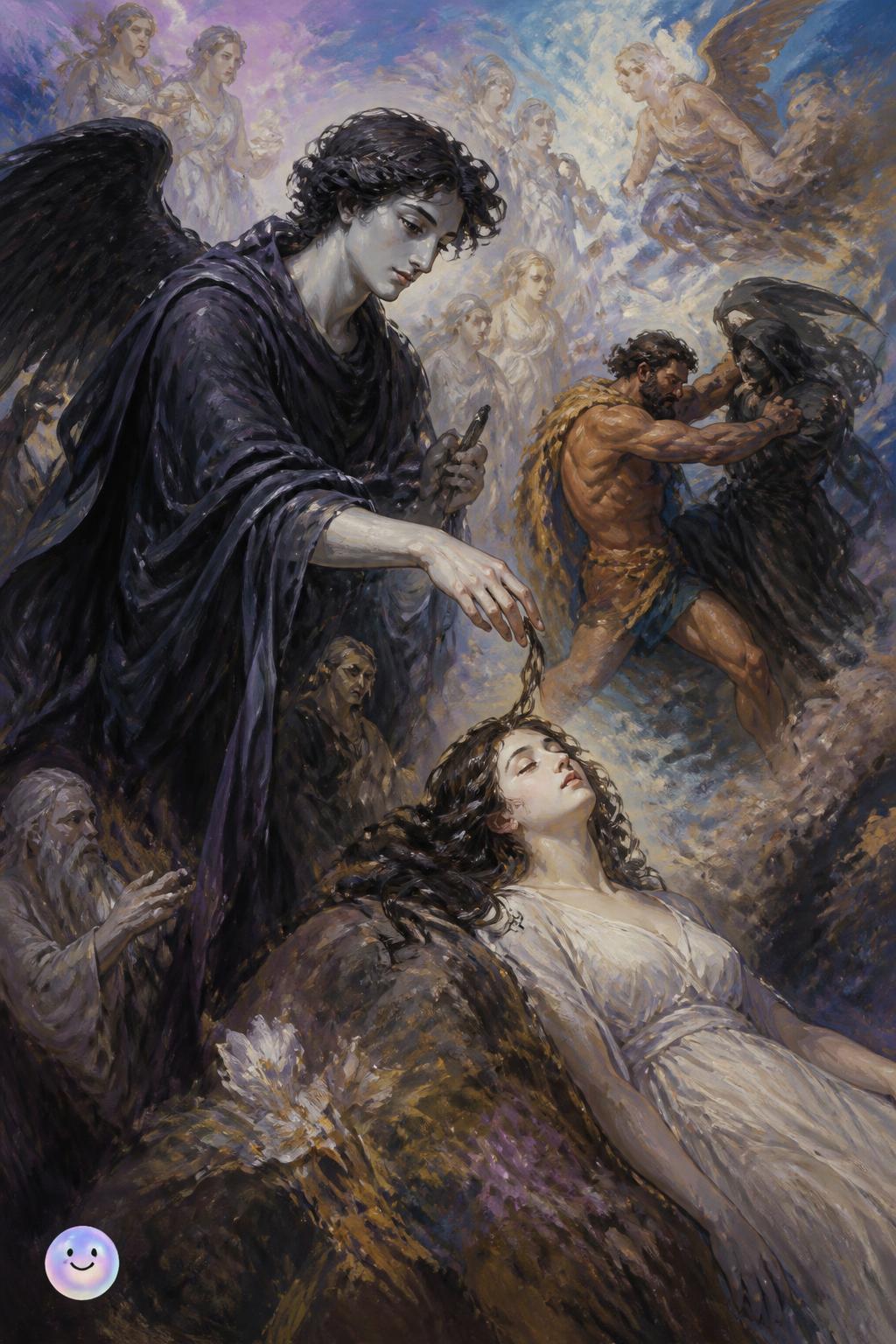
schopenhauer Natural Language Processing helps automated filters recognize context clues like unalive. This technology forces online communities to constantly invent new coded words to bypass detection.
schopenhauer Early filters blocked the English town of Scunthorpe. Today, creators use algospeak to bypass systems that suppress videos about World War II and breast cancer.
schopenhauer The Algorithmic Future
Unalive the rules, unalive the rules / We're dodging the bots on our screens
schopenhauer Creators use coded terms like unalive to trick modern moderation algorithms. This digital cat-and-mouse game mirrors how medieval citizens used slang to evade royal censors.
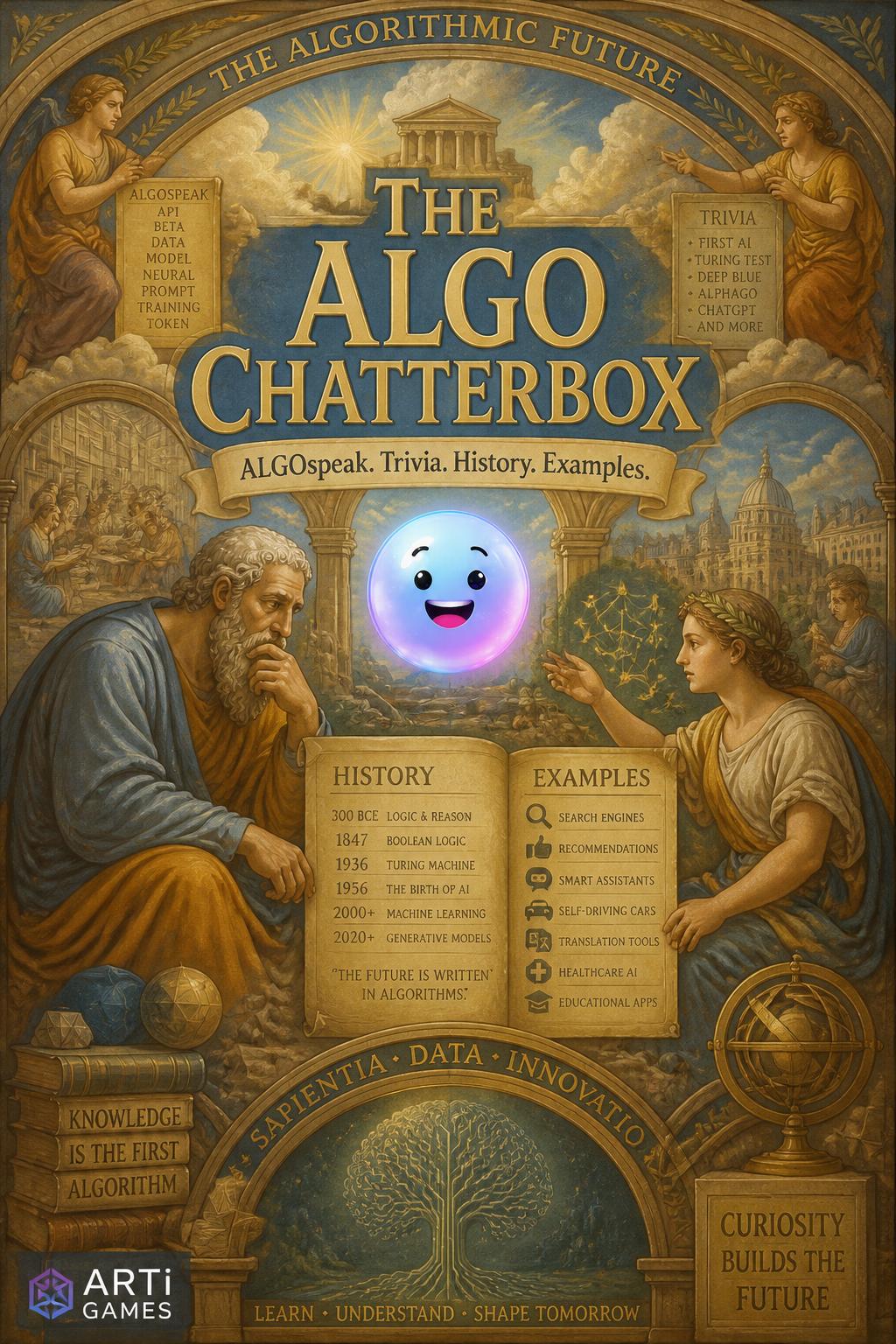
schopenhauer Decode viral algospeak terms to discover how online communities bypass social media filters.

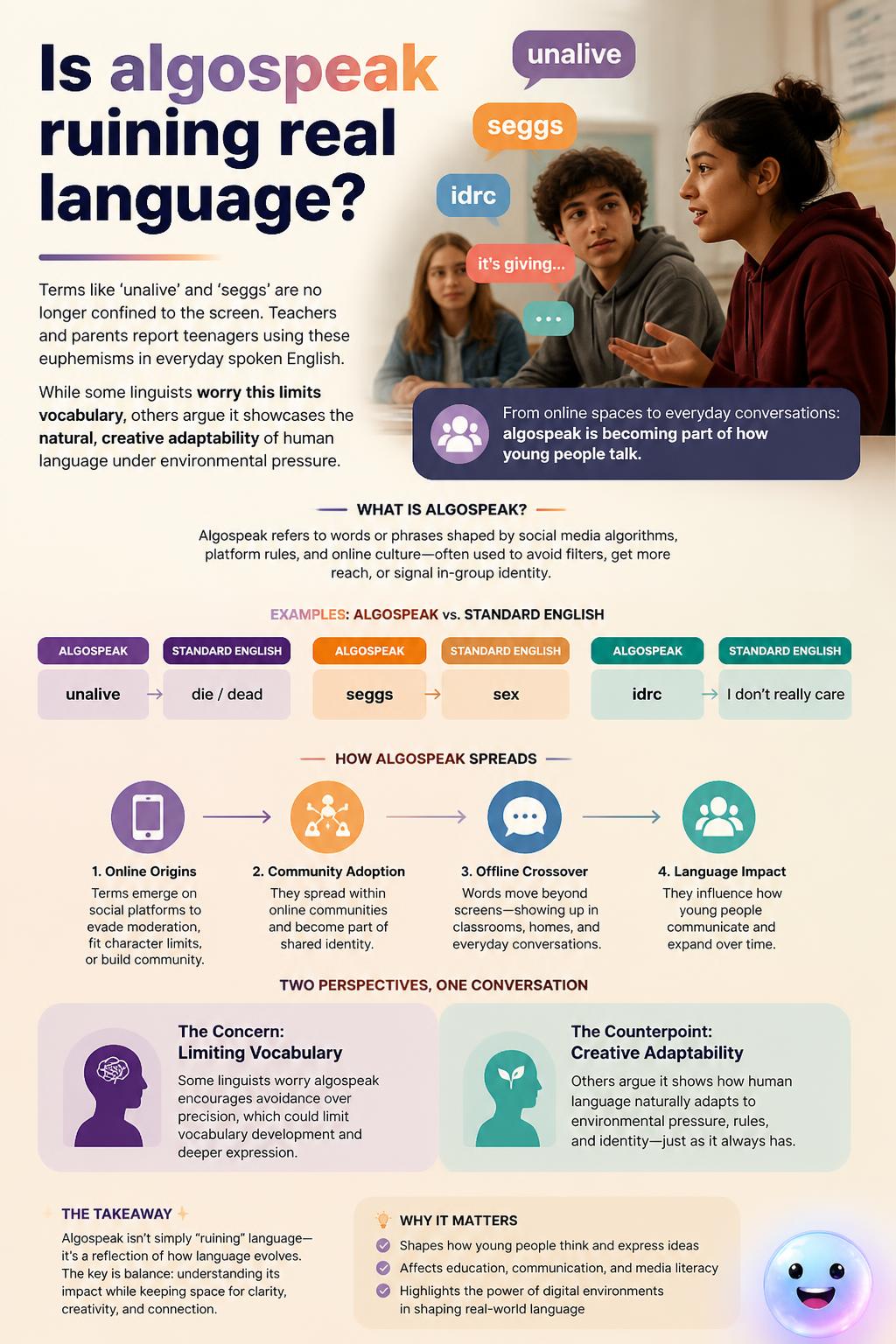
schopenhauer A diagram shows online terms like unalive transitioning into spoken speech bubbles
Offline algospeak: A 2023 study showed that over 50% of high school teachers heard students use 'unalive' in real-life speech.
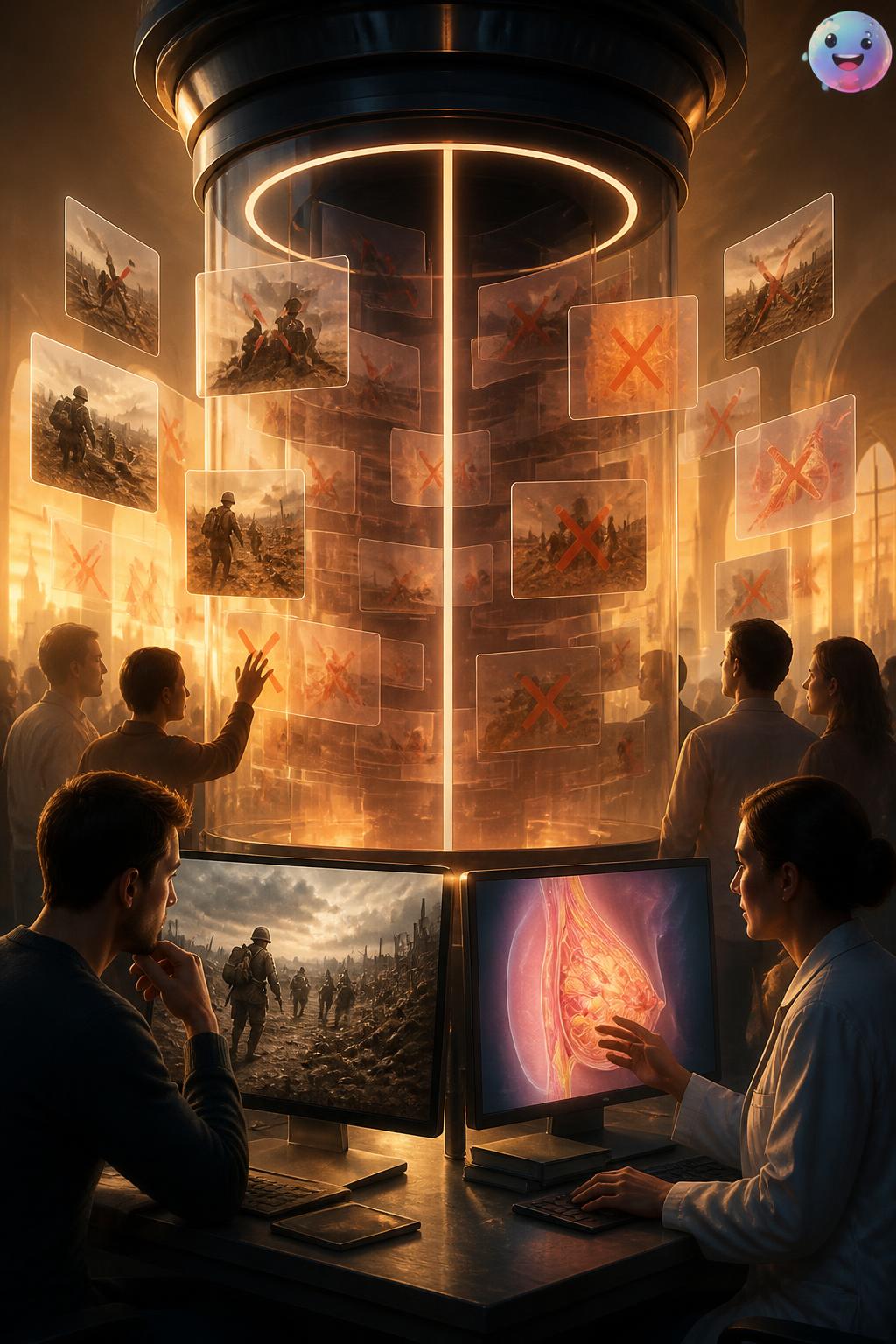
schopenhauer An educational card displays historical examples of over-filtering and modern algospeak terms
What is the primary linguistic benefit of humans constantly inventing new slang to bypass AI filters?
What does the word 'bowdlerization' mean in the context of history and language?
Why are educational videos about historical wars often suppressed by social media algorithms?
What is the famous digital filtering issue called when an innocent word is blocked because it contains a substring of a blocked word?
Which technology allows modern social media algorithms to understand the context of slang rather than just matching keywords?
What do linguists call the transition of online-only slang like 'unalive' into spoken real-world language?
Which of the following is an example of the 'Scunthorpe problem' in digital history?