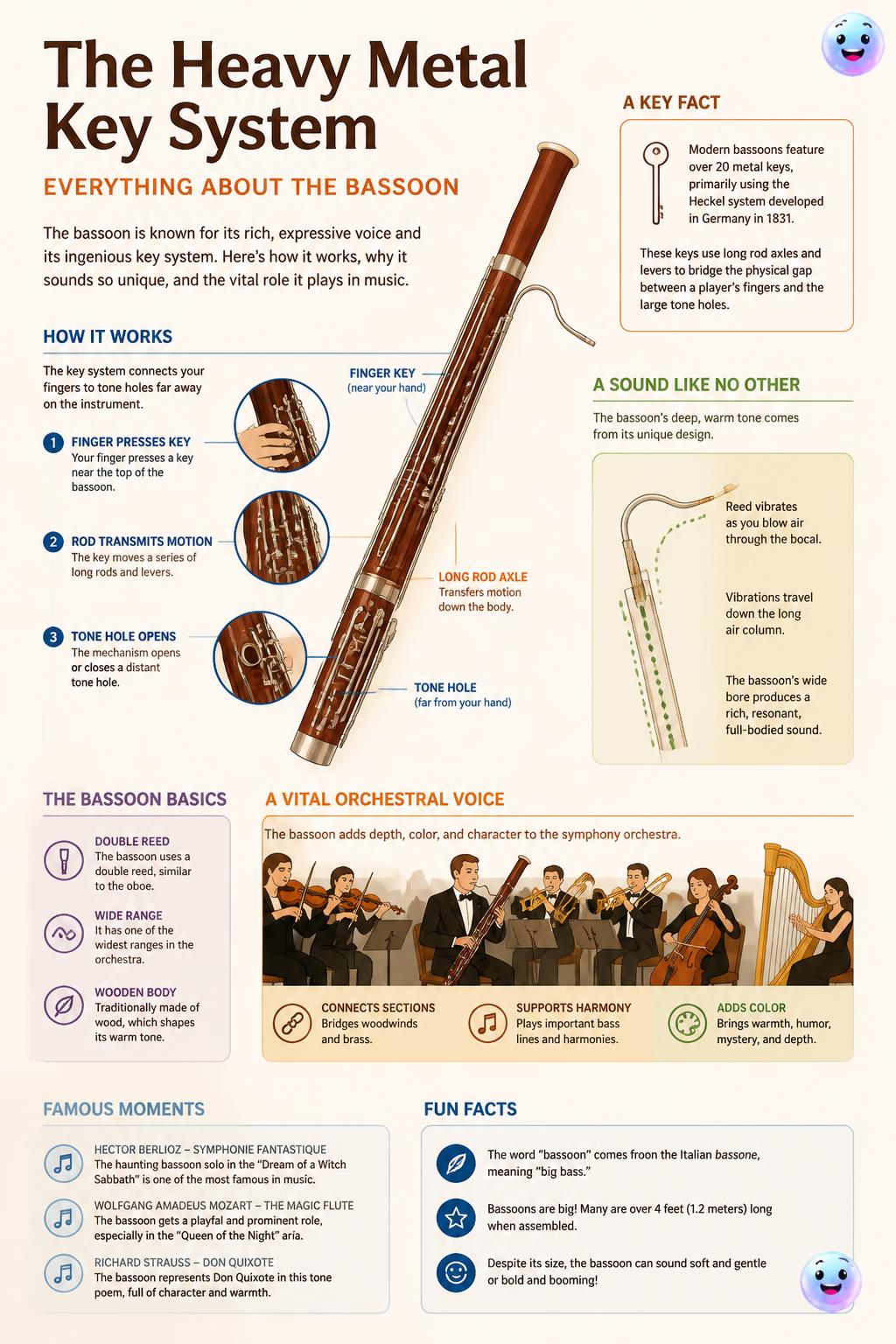
Bassoon Heavy Metal Key System Explained
Long rod axles and levers connect fingers to the bassoon's large tone holes
How to fold nine feet of maple
The voice of drama and comedy
The intense craft of reed making
The heavy metal giant
maestro Germany's Heckel system from 1831 uses over twenty metal keys. Long rod axles and levers bridge the gap between a player's fingers and the giant tone holes.
maestro This twelve-inch brass pipe channels your breath into the wing joint. A microscopic vent hole on the curve lets musicians play high notes.
maestro Instrument makers in the 1500s folded the eight-foot-long woodwind into a U-shape. This practical design allows modern musicians to reach every tone hole.
maestro Flute and clarinet players use thumbs for support, but bassoonists control fourteen different keys with theirs. This rapid movement makes the bassoon a highly finger-dexterous instrument.
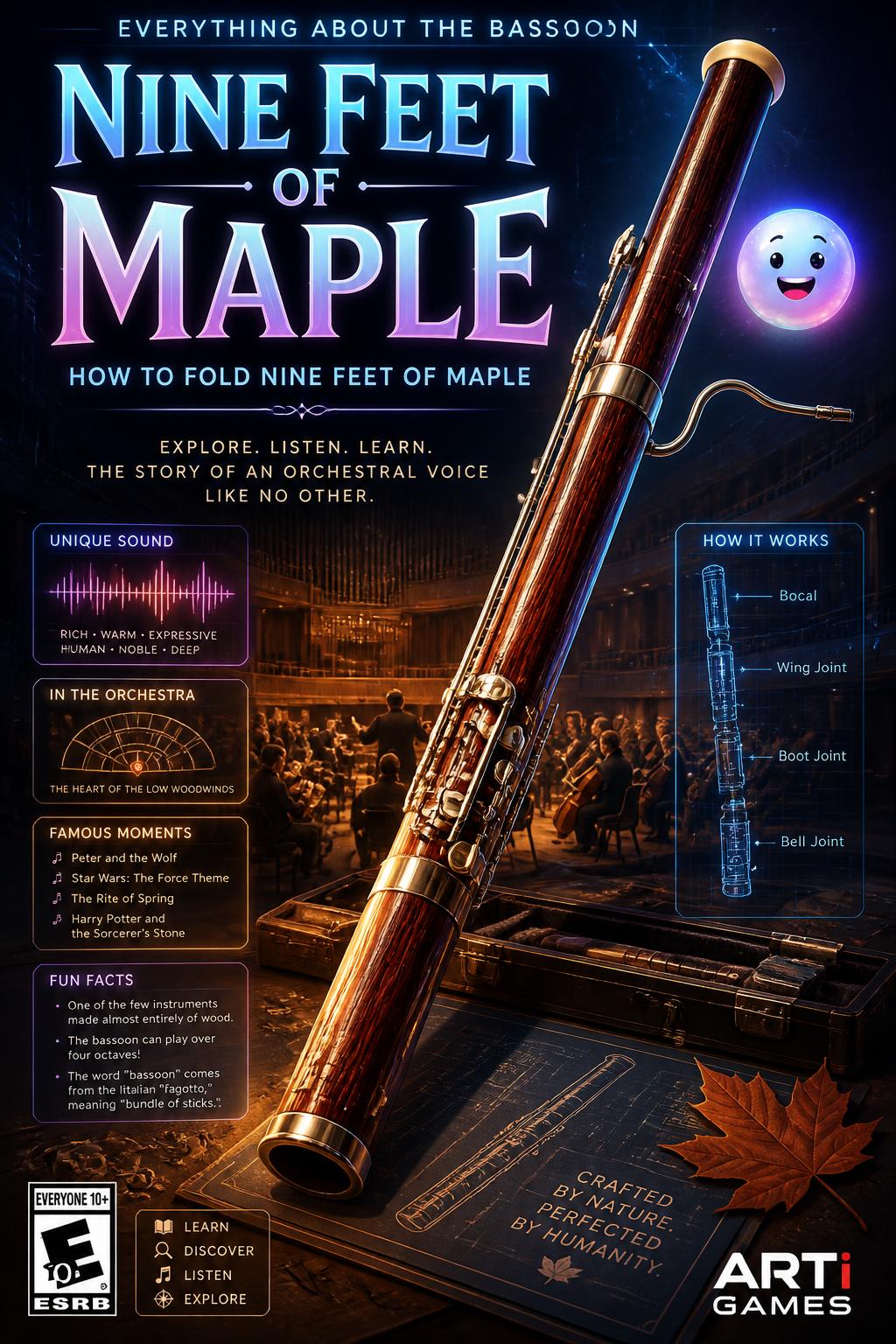
maestro Assemble the wooden joints to discover how nine feet of maple creates the bassoon's sound.
maestro Bassoon Boot Joint
Eight feet of maple folds right through (folds right through), inside the boot joint with a shiny metal U (metal U!)

Bassoon keys: The bassoon has over 20 metal keys, but players must also cover several holes directly with their bare fingers.
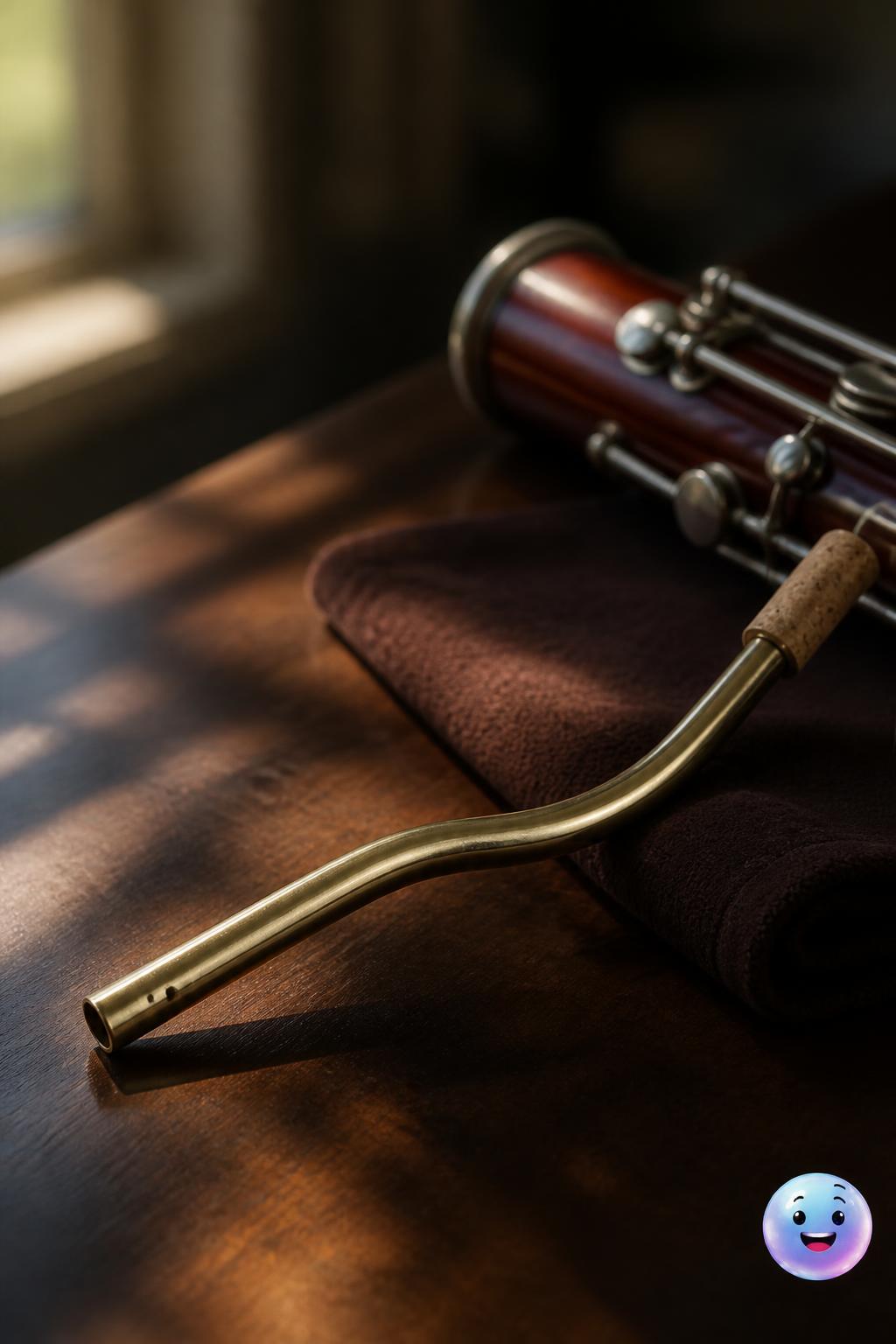
A tube with a U-shaped bend, typically used to connect two parallel pipes. This brass connector links the bassoon's parallel wooden bores, bending its long body into a compact shape.
What is the name of the curved metal tube that connects the bassoon's reed to its wooden body?
What is the tiny, microscopic hole on the bassoon's bocal called that helps play high notes?
What type of wood is most commonly used to construct high-quality professional bassoons?
Which fingers on a bassoonist's hands carry the heaviest workload by operating up to 14 keys?
How long would a standard bassoon be if you unfolded its wooden tubing completely?