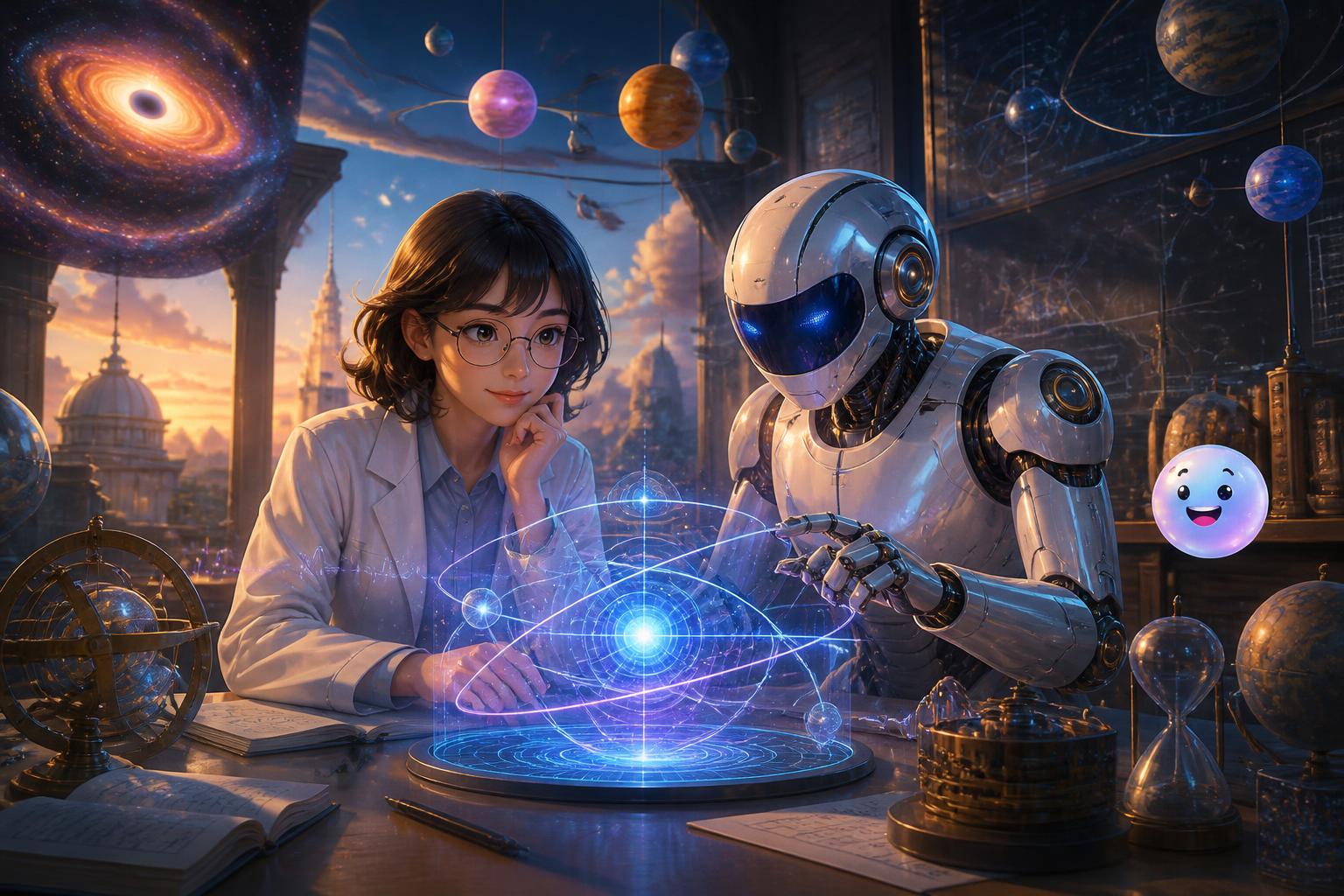
AI Simulates Universe 10 Million Times Faster
Learn how a neural network simulated the universe's gravitational evolution with stunning accuracy, 10 million times faster than before.
The digital apprentice learns the laws of nature
Mapping the cosmos with artificial eyes
Quantum leaps and molecular recipes
Taming the chaos of fire and water
aphrodite1313 In 2021, researchers deployed deep learning to filter traffic noise from LIGO sensors. This AI technology instantly reveals cosmic ripples smaller than a proton from merging black holes.
aphrodite1313 In 2023, the Euclid space telescope team began using deep learning to analyze gravitational lensing. This technology maps invisible dark matter, which makes up 85 percent of the universe.
aphrodite1313 In 2017, Google AI identified Kepler-90i by spotting a tiny 0.01 percent dip in starlight. This breakthrough revealed an eighth planet that human algorithms completely missed.
aphrodite1313 Cosmic AI Mapping
AI eyes trace the rings of warped light, Mapping the dark web tonight (yeah, they do!)
aphrodite1313 In 2019, Flatiron Institute researchers built an AI that generates 3D cosmic simulations in milliseconds. This technology replaces days of supercomputer calculations to show how gravity shapes galaxies.
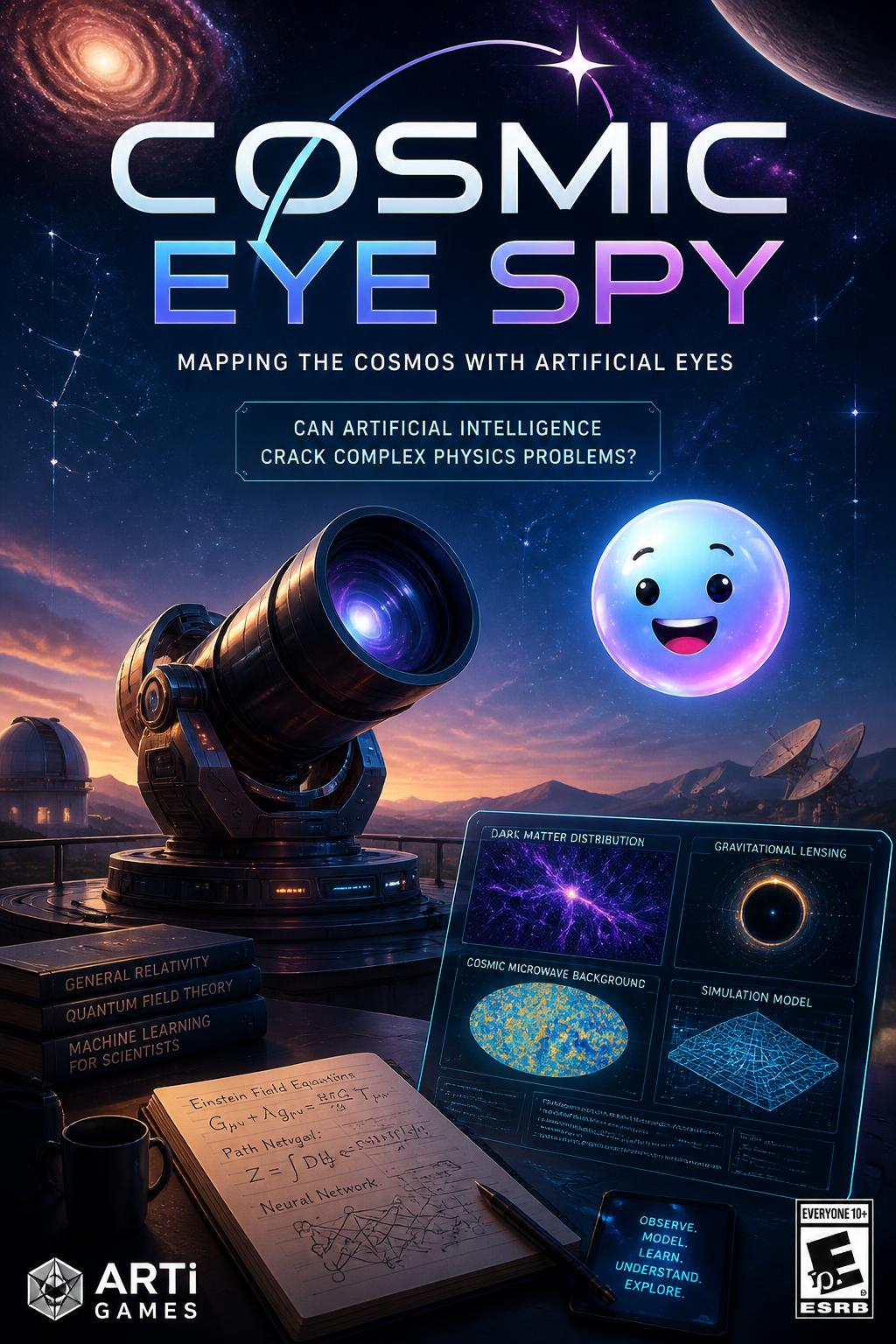
aphrodite1313 Search the cosmos for hidden patterns to discover how AI solves complex physics problems.
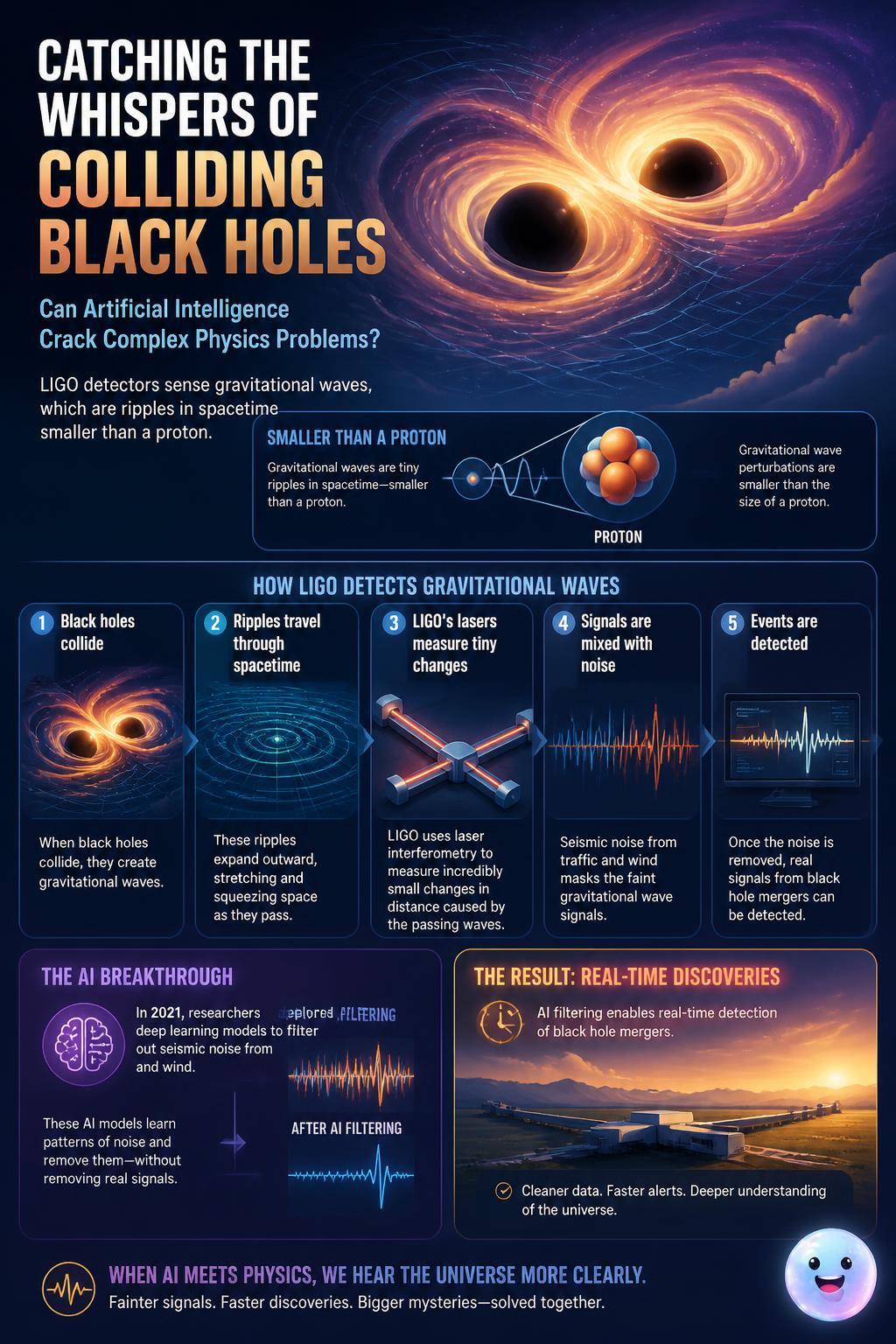
aphrodite1313 AI helps detect gravitational waves by filtering out the noisy vibrations of Earth.
Cosmic shortcut: A neural network simulated the gravitational evolution of the universe 10 million times faster than traditional methods, with stunning accuracy.
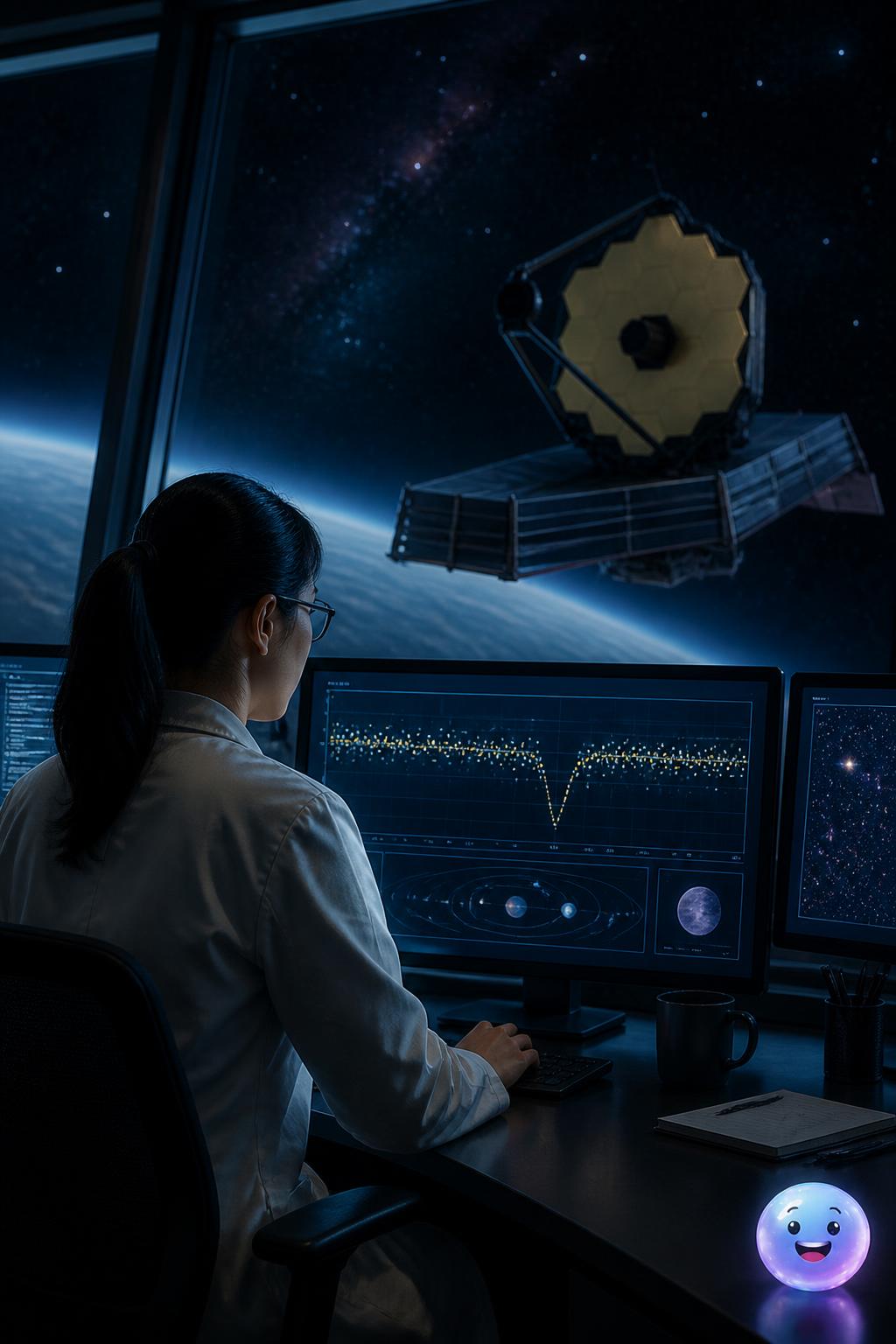
aphrodite1313 Machine learning algorithms scan light curves from distant stars to detect the tiny shadows of orbiting exoplanets.
An instrument designed to gather and focus electromagnetic radiation to make distant cosmic objects visible. Since May 2021, Arizona's Mayall Telescope has utilized robotic positioners to map millions of distant galaxies.
What kind of Earth noise does AI filter out from LIGO gravitational wave detectors?
How long did 3D cosmic simulations take before AI made them nearly instantaneous?
How much did starlight dip when Kepler-90i passed its star, a detail spotted by AI?
In 2019, which institute created an AI that simulates cosmic evolution in milliseconds?