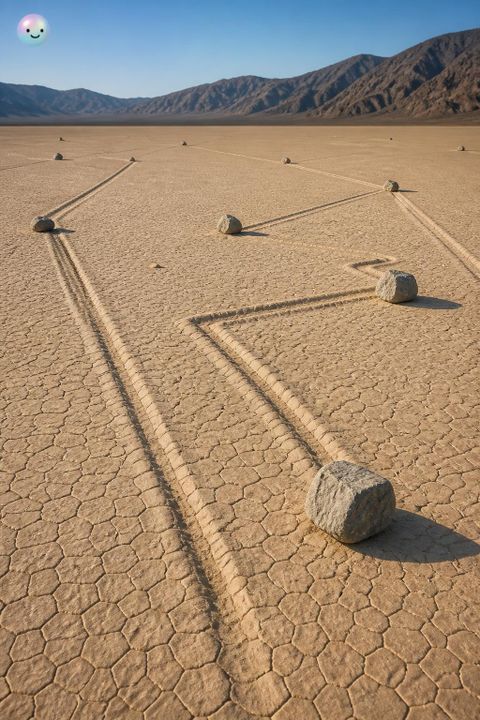
The mystery of Racetrack Playa
Cracking the cold case
Global glides and dry lakes
YOUR GOAL
Master of Sailing stones of Death Valley
hank Racetrack Playa Sailing Stones
Sailing stones, sailing stones! On Racetrack Playa, they glide! Thin ice and desert wind, Make the heavy rocks just slide!
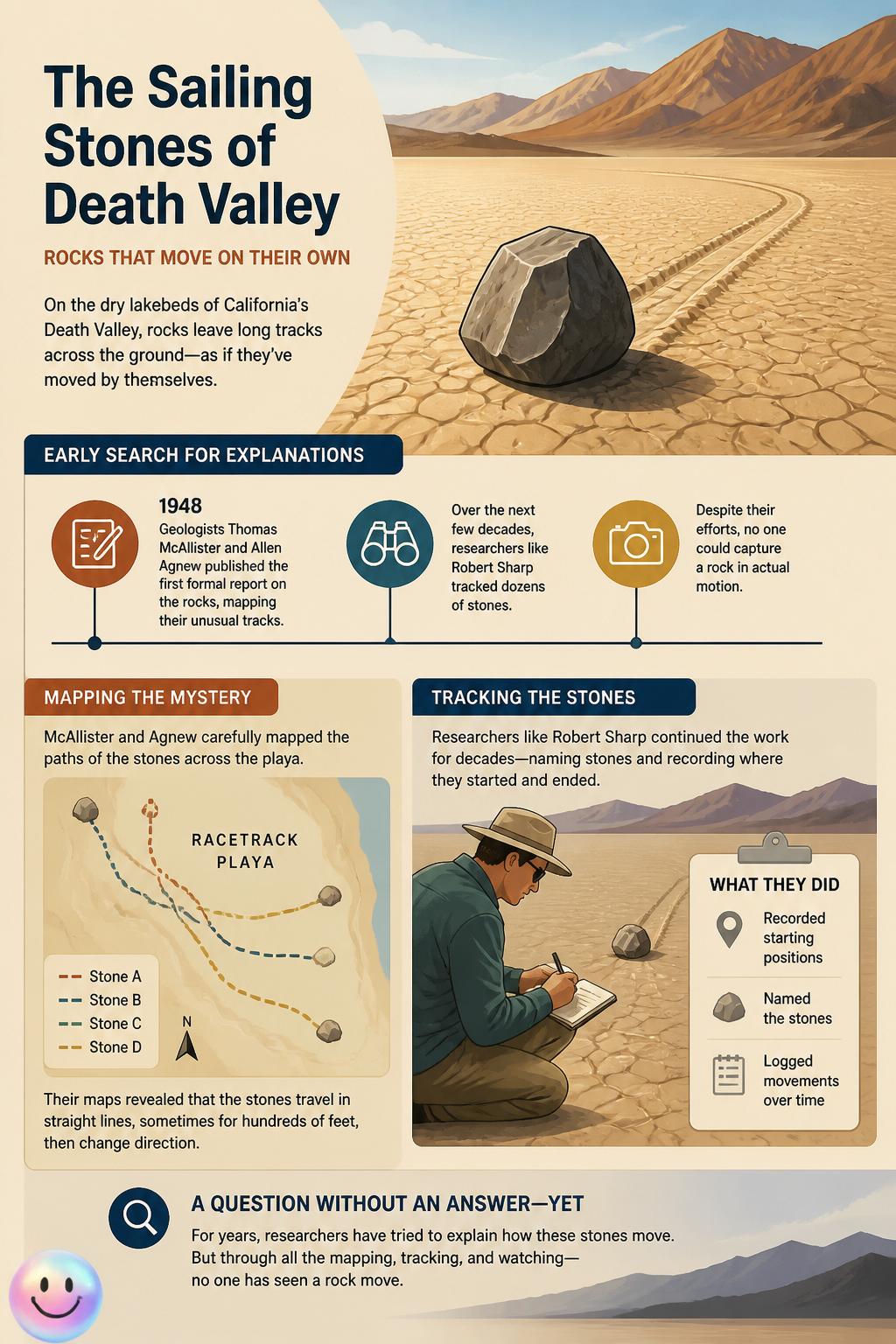
hank The scientific quest to explain the moving rocks began in the mid-20th century, sparking decades of debate among geologists.
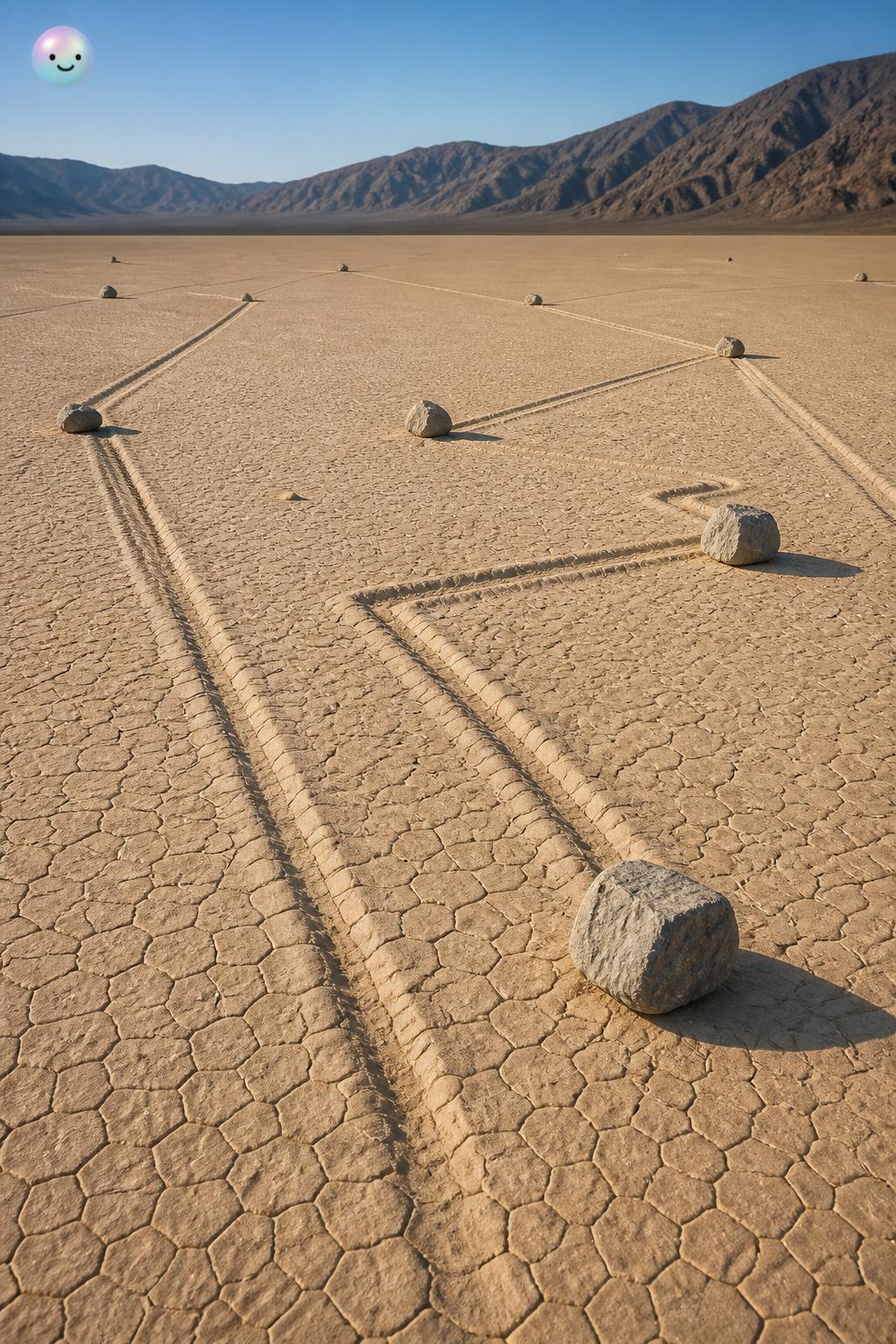
hank Moving stones leave long, winding trails etched into the hard clay of the dry lakebed, proving their movement even when unwitnessed.

Moving rock names: Geologist Robert Sharp named several sailing stones after women, including 'Hortense' and 'Irene', to track their movements over decades.
An area of flat, dry land in a desert basin that occasionally becomes a shallow lake. In 2014, scientists discovered that moving ice sheets push rocks across this dry California lakebed.
Which of these was a popular, debunked 20th-century myth explaining how the sailing stones moved?
In what decade did geologists Thomas McAllister and Allen Agnew publish the first scientific study on the sailing stones?
How long can the tracks left behind by the sailing stones remain visible in the dry clay?
What is the name of the heaviest documented sailing stone on Racetrack Playa, weighing over 700 pounds?
What type of geological feature is Racetrack Playa, where the sailing stones are found?
What is the primary mineral composition of the sailing stones found on Racetrack Playa?
Why did no one actually witness the sailing stones of Death Valley move in person for nearly a century?