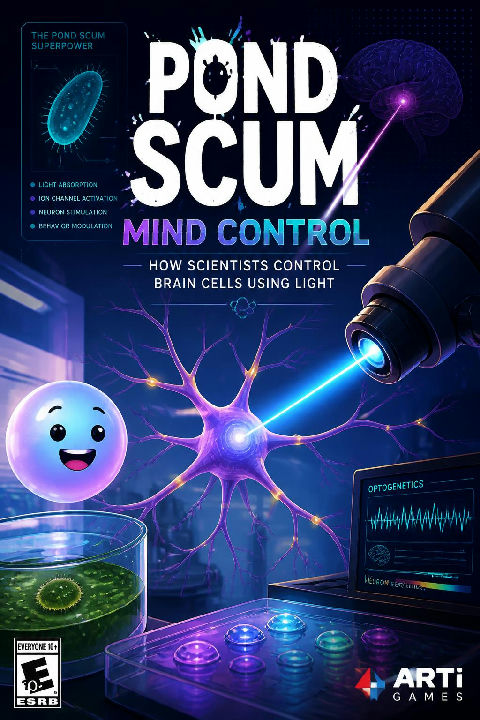
The pond scum superpower
Engineering the neural light switch
The rainbow dashboard of the brain
Healing minds and restoring sight
YOUR GOAL
Master of Shining a light on the brain
007skaty The Pond Scum Superpower
Catch the blue light, flip the cell switch, watch the brain spark!
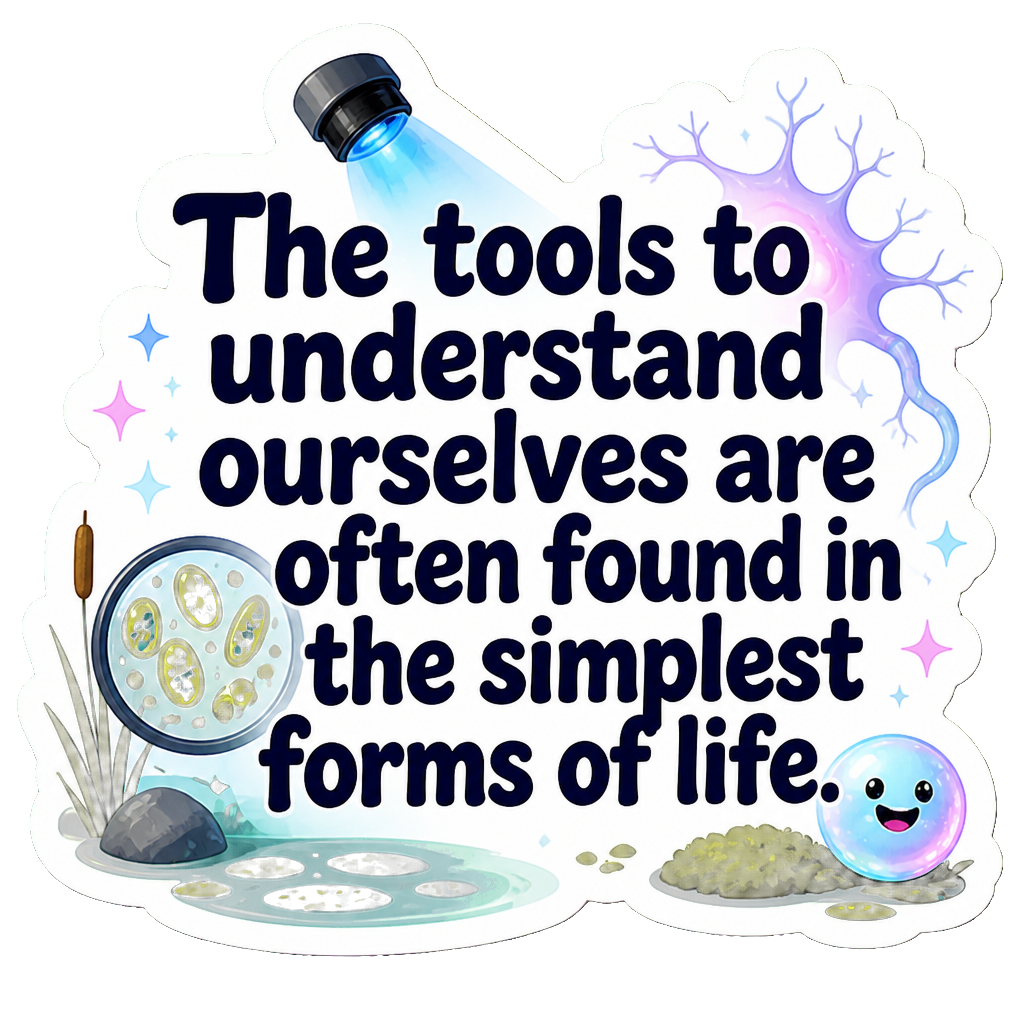
007skaty Microscopic green algae use light-activated protein gates to sense solar energy.
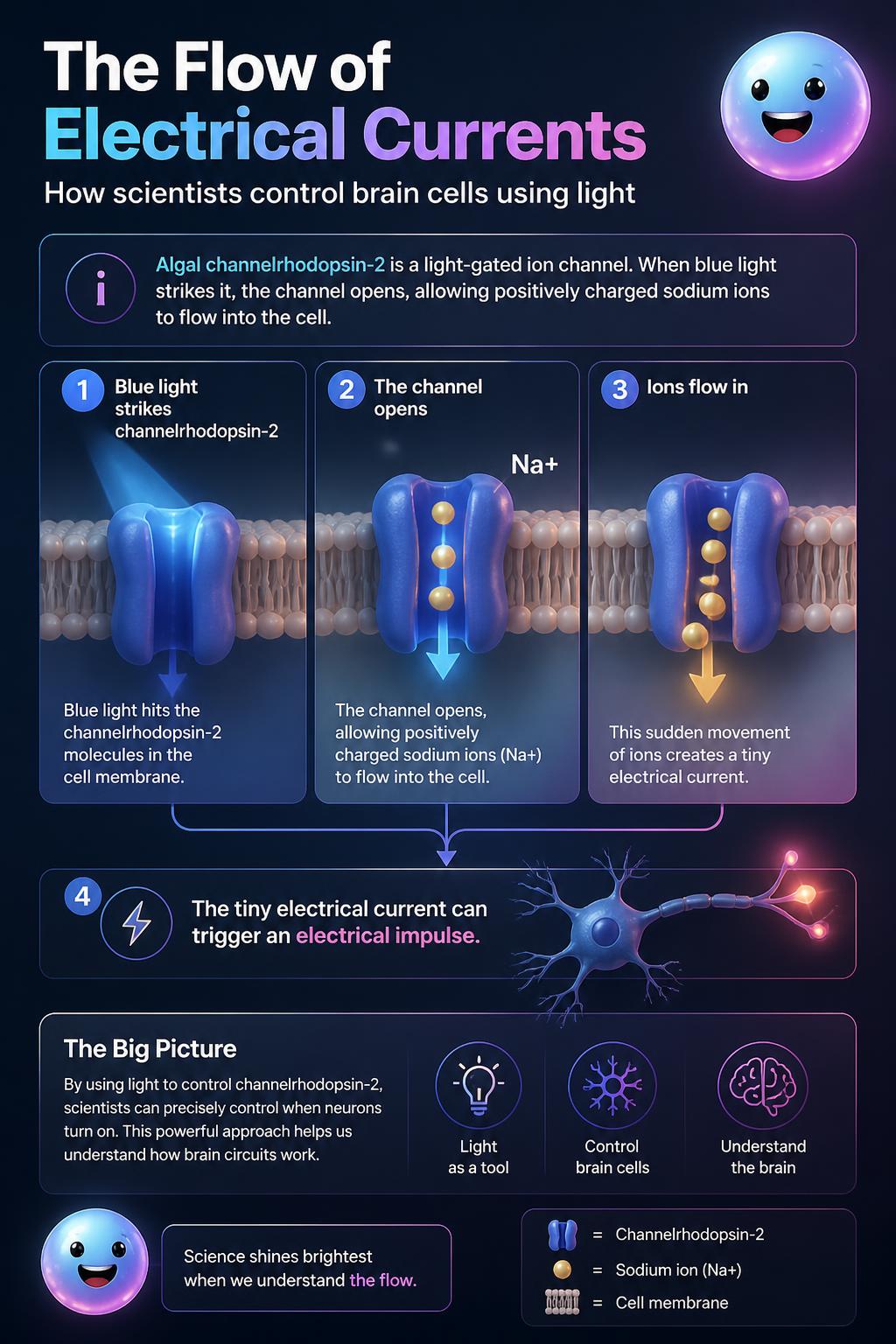
007skaty When blue light hits this light-gated channel, positive sodium ions rush inside the cell to generate a tiny
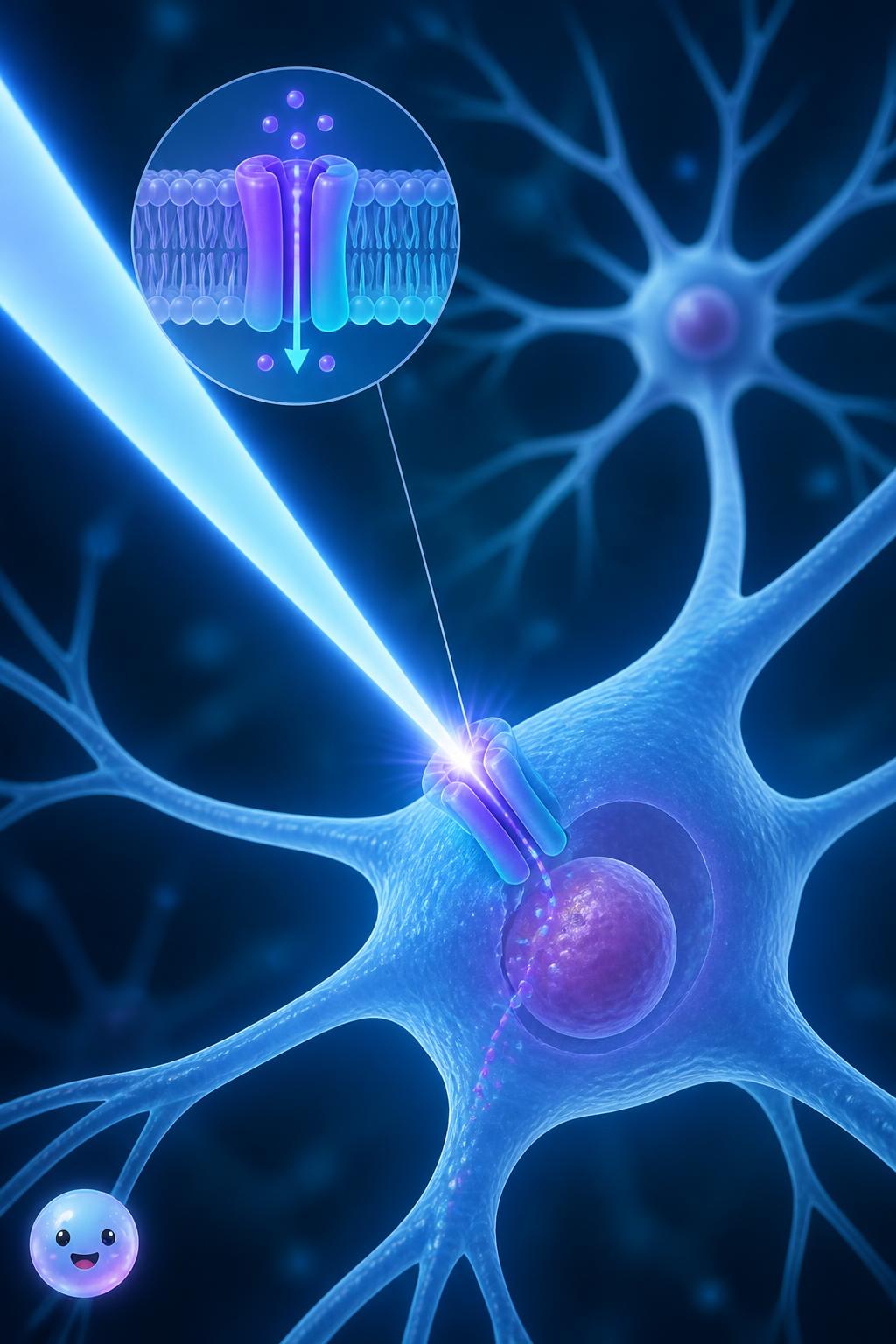
007skaty A precise vector diagram shows blue light opening a color-coded protein channel.
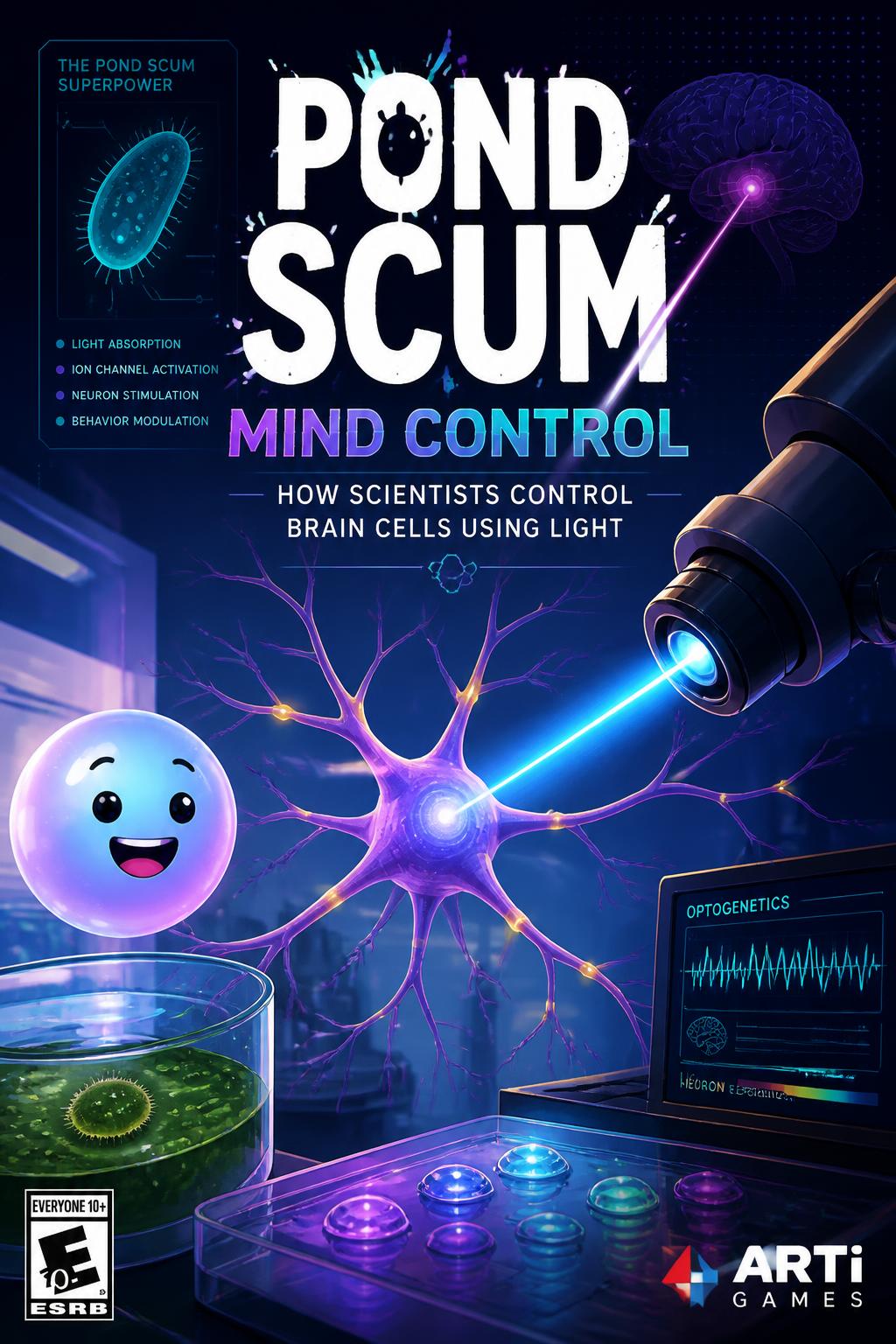
007skaty Shine light on neurons to discover how pond scum proteins help scientists control brain cells.
Algae eyes: The tiny green alga Chlamydomonas has a primitive eyespot that works surprisingly like our own, using a protein called rhodopsin to sense light.
A light-sensitive protein that serves as an ion channel in the membrane of certain unicellular green algae. In 2002, Peter Hegemann and Georg Nagel discovered this protein within the freshwater organism Chlamydomonas reinhardtii.
Which prestigious scientific institution awards the Nobel Prize in Physiology or Medicine, which honored the creators of optogenetics?
In what common natural environment can you typically find the Chlamydomonas reinhardtii algae used in optogenetics?
Which light-sensitive protein, discovered in green algae, acts as a gate that opens when hit by blue light?
In which year did Karl Deisseroth, Peter Hegemann, and Georg Nagel win the Nobel Prize in Physiology or Medicine for optogenetics?
Why does the single-celled alga Chlamydomonas reinhardtii need light-sensitive proteins in nature?
In what year did German biophysicists Georg Nagel and Peter Hegemann first publish their discovery of channelrhodopsin-1?
What is the scientific name of the single-celled green alga whose light-sensing proteins made optogenetics possible?