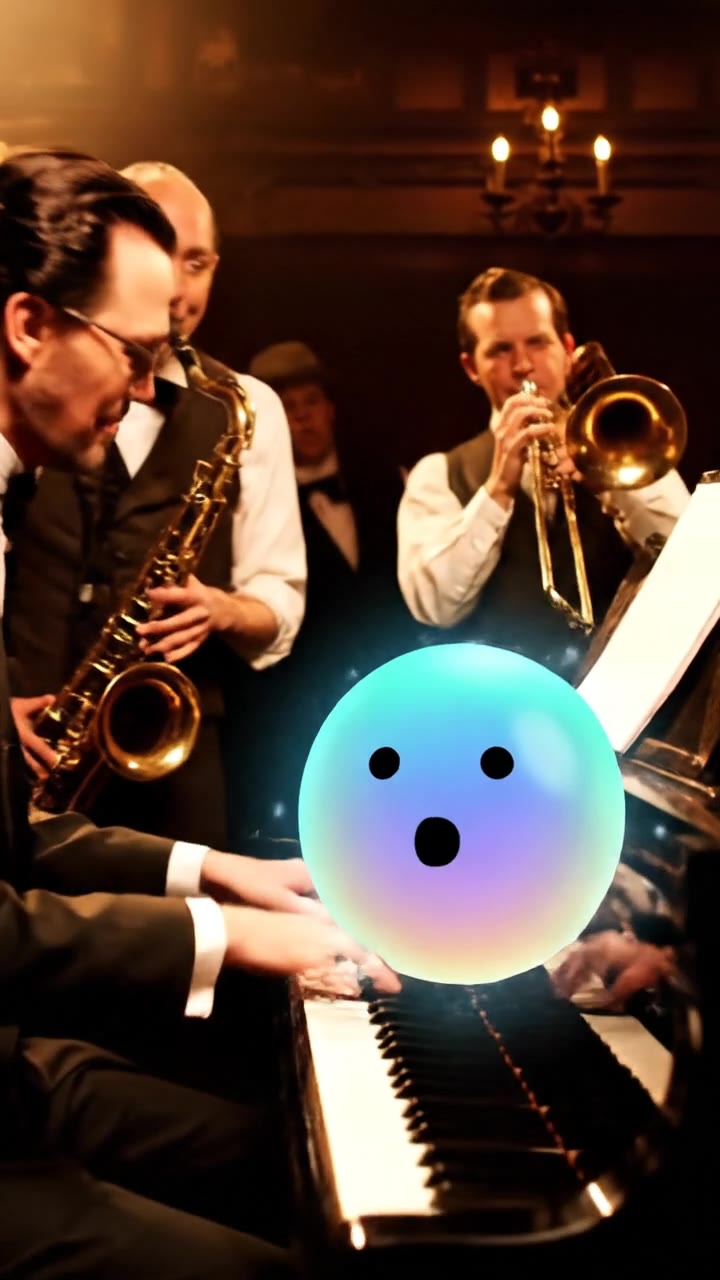
Naming the New Orleans Sound in 1916
In March 1916, the Stein's Dixie Jass Band began playing in Chicago, introducing northern audiences to syncopated New Orleans rhythms. By June, they renamed themselves the Original Dixieland Jass Band, helping popularize the term "jazz" as the music spread rapidly across the nation.
The global stage in flames
Silent screens and slapstick dreams
Words that shook the world
Beats, brass, and early broadcasts
schopenhauer In late 1916, inventor Lee de Forest used his Audion vacuum tube in Highbridge, New York. He beamed phonograph music and election results, proving radio could entertain the public.
schopenhauer In March 1916, the Stein Dixie Jass Band brought syncopated southern rhythms to Chicago. By June, their new name helped popularize the term jazz across the nation.
schopenhauer In 1916, architecture student Gerardo Matos Rodríguez wrote a carnival tune. Roberto Firpo's orchestra performed it in Montevideo, launching a global tango sensation.
schopenhauer 1916 Tufts Wireless Broadcast
Brass on the air, / No Morse in sight, / Beats in the night!
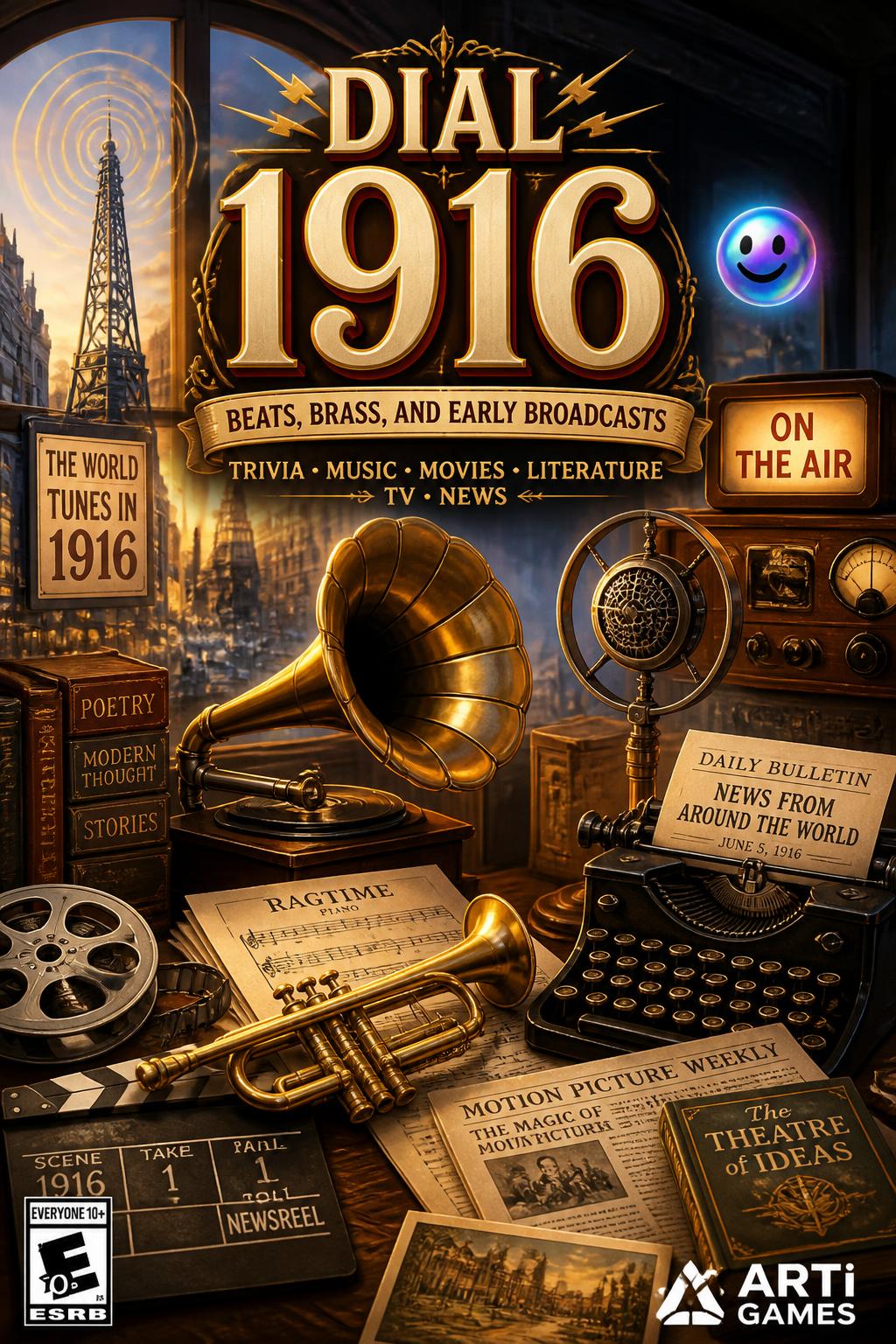
schopenhauer Spin the rotary dial to discover the music, movies, and news of 1916.
schopenhauer By 1916, the Victor Talking Machine Company sold millions of Victrolas. Hiding the metal horn inside an elegant wooden cabinet turned the phonograph into respectable parlor furniture.
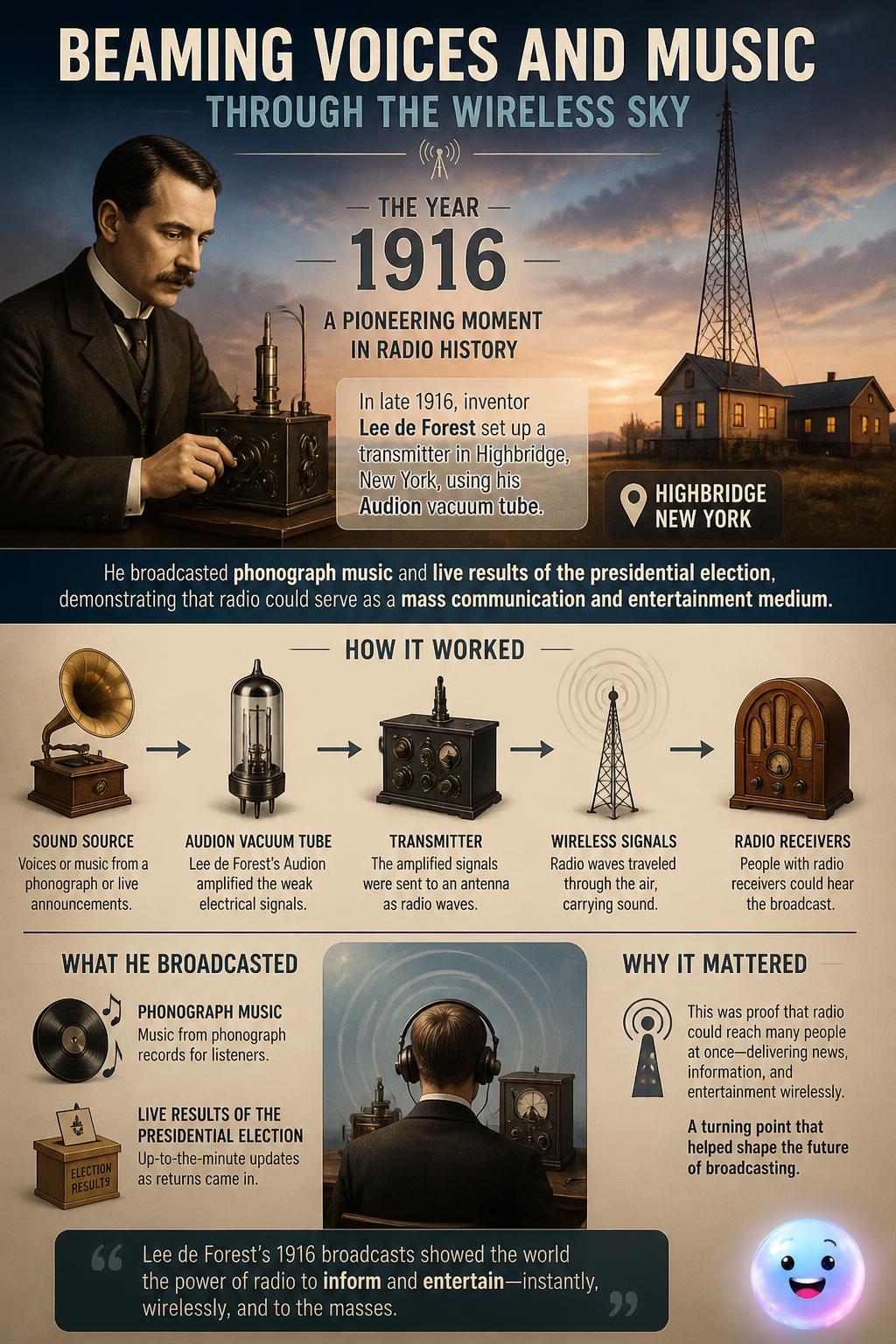
schopenhauer Lee de Forest conducted pioneering radio broadcasts in New York, proving that wireless technology could entertain the masses.
Tango's papal test: In 1916, the Pope reportedly considered banning the tango, but changed his mind after watching a private dance demonstration.
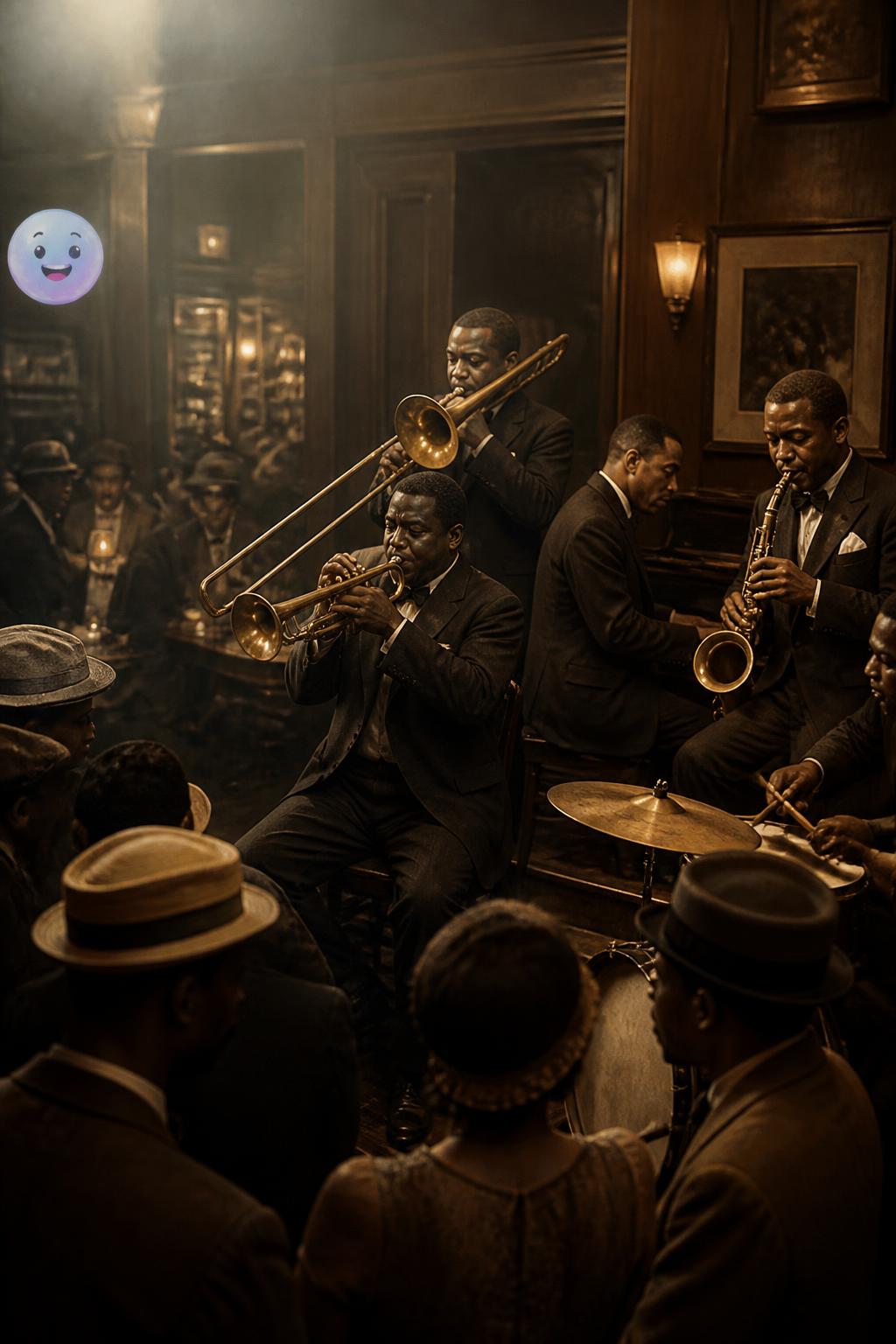
schopenhauer The word "jazz" began appearing in northern newspapers to describe the syncopated, improvisational music migrating from the American South.
The transmission of programs or information by radio or television to a large, public audience. In November 1916, Lee de Forest used a radio transmitter to air presidential election returns.
In 1916, newspapers in which US city first started using the term "jazz" to describe the high-energy music arriving from New Orleans?
Which famous German car manufacturer was officially founded in March 1916, initially producing aircraft engines?
Which major American aircraft corporation was incorporated in Seattle by William Boeing in July 1916?
What was the name of the popular home phonograph record player that became a standard household item by 1916?
In 1916, Edison Records held public "comparison tests" at Carnegie Hall to prove their recordings were identical to what?
Which inventor made early experimental radio broadcasts of music and election results from New York in late 1916?
Which English composer completed his grand orchestral suite "The Planets" in 1916?
Composed in Uruguay in 1916, which musical piece became the most famous and widely recorded tango in history?