Scented Cones of Ancient Banquets
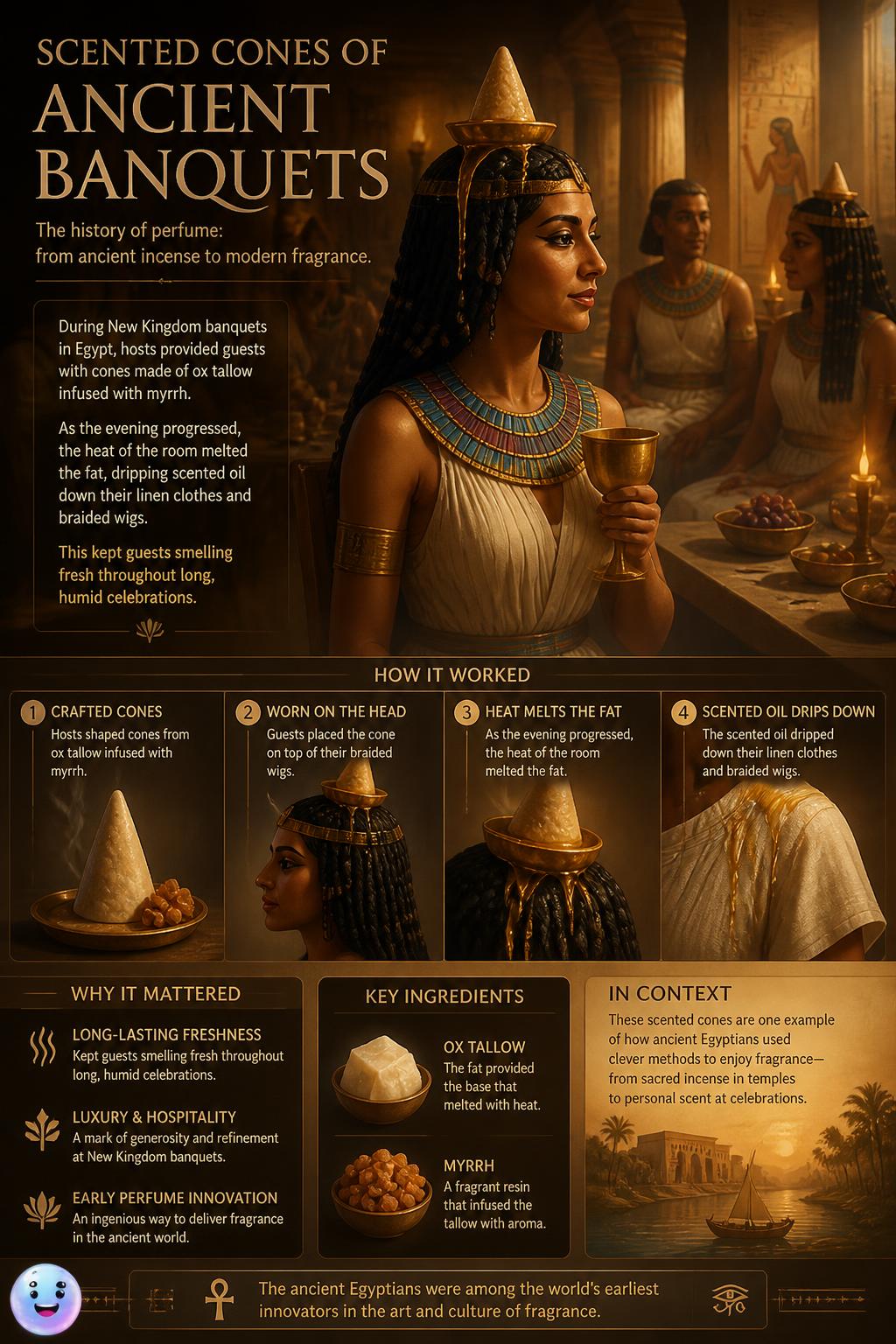
Scented oil drips down a braided wig from a melting ox tallow cone.
Ancient origins and sacred smoke
The science of scent in the Golden Age
European courtly stench and the rise of Grasse
The modern synthetic revolution
elorea Hosts in New Kingdom Egypt gave guests ox tallow cones infused with myrrh. Warm air melted the fat, releasing scented oil onto their braided wigs and linen clothing.
elorea Priests in Heliopolis burned a sixteen-ingredient blend of wine, honey, and resins every evening to soothe the gods. The sacred recipe remains carved on Edfu temple walls.
elorea Excavations in Pakistan and India reveal terracotta distillation tools from 3000 BCE. Ancient people used these clay vessels to extract jasmine oils, creating traditional Indian perfumes.
elorea Around 1200 BCE, this royal perfume-maker recorded her distillation methods on clay tablets. She refined oil, calamus, and myrrh using the oldest known chemical apparatus.
elorea Squeeze the perfume puff to learn how Victorian innovations changed the history of fragrance.
elorea Origins of Perfume
Through the rising smoke, carried to the gods, perfume found its name.
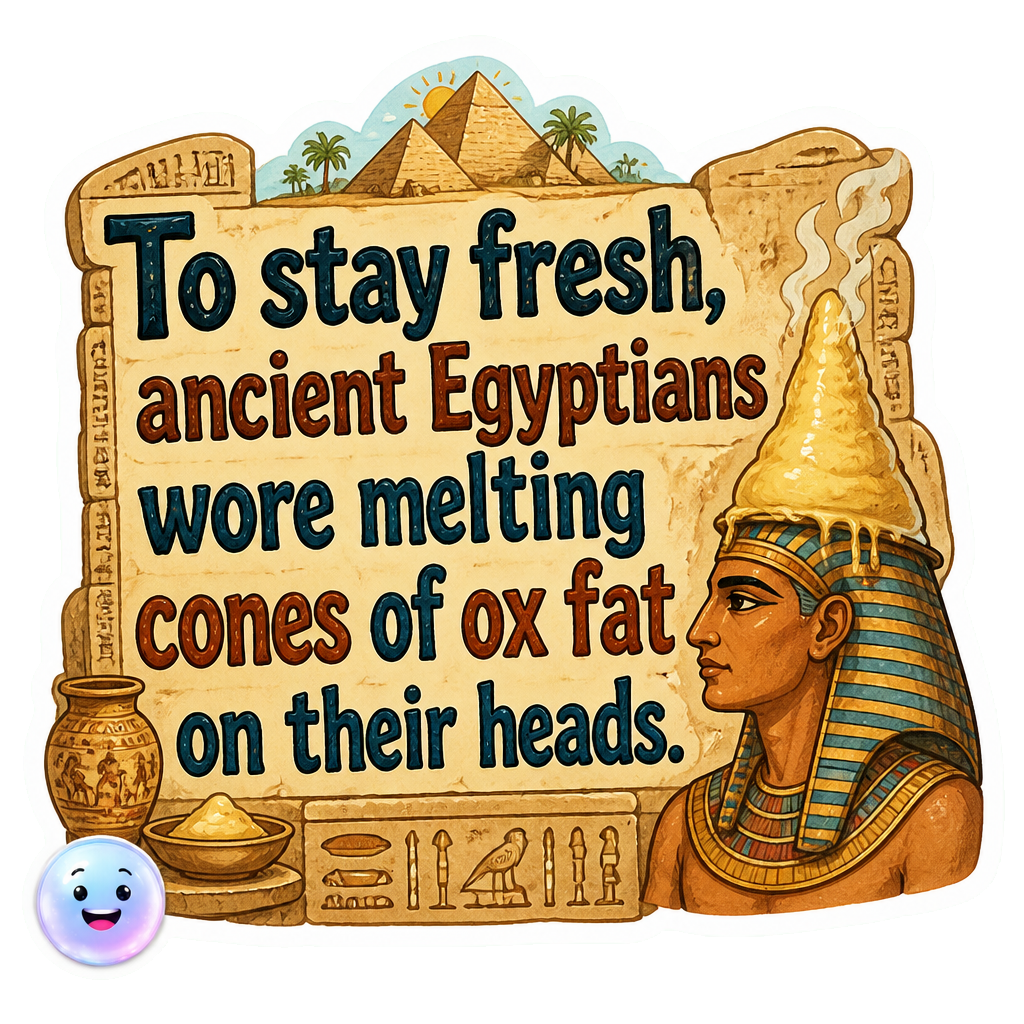
Ancient Egyptian deodorant: Egyptians rubbed citrus and cinnamon mixed with ostrich fat under their arms to fight body odor.
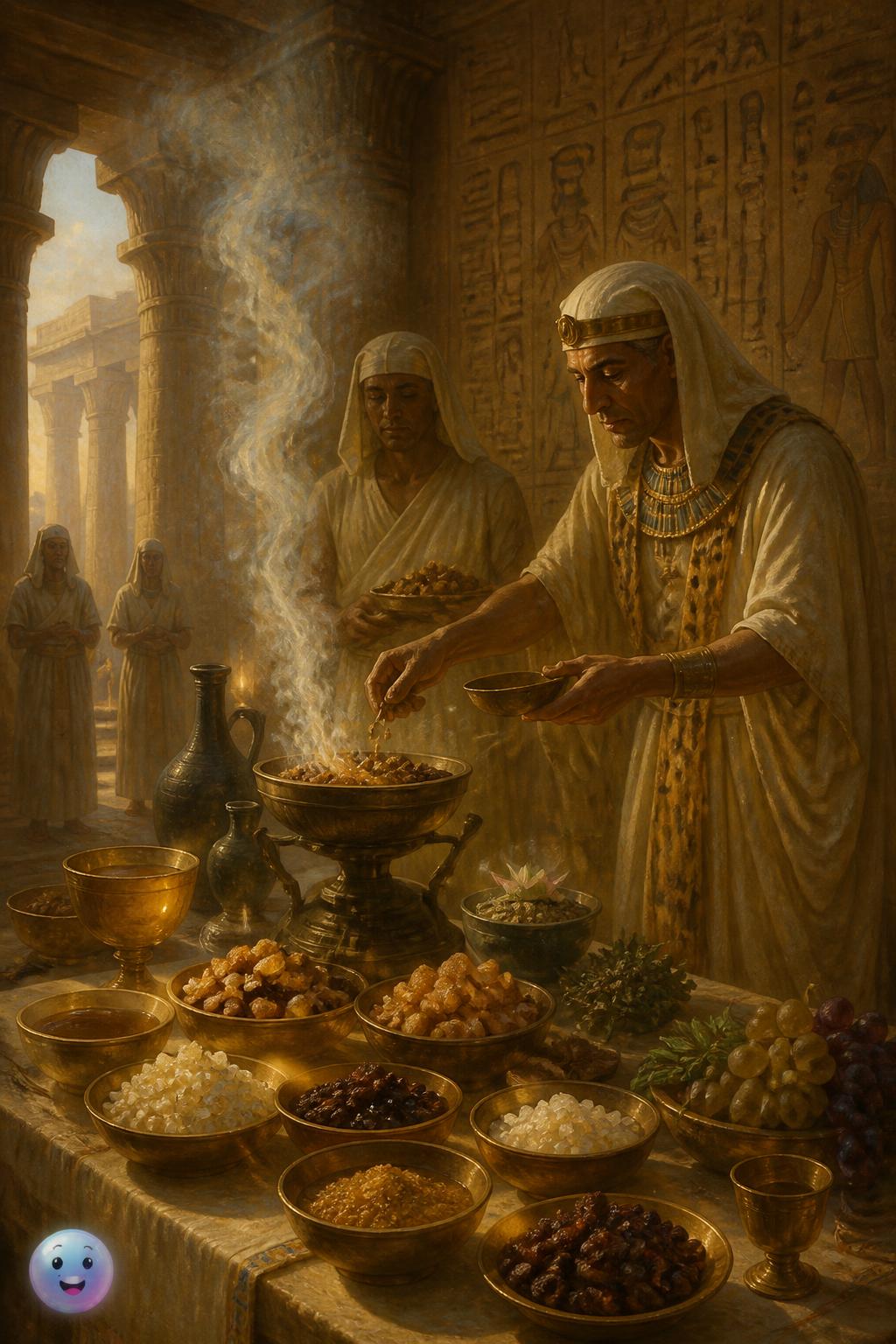
elorea A glowing Renaissance fresco depicts Egyptian priests preparing sacred incense inside a temple.
A substance that produces a fragrant odor when burned, typically used in religious ceremonies. Ancient Egyptians burned complex kyphi incense during temple rituals to honor Ra and other deities.
Which tree resin was so valuable in the ancient world that it sparked the creation of major trade routes?
What does the Latin word 'perfumum,' from which 'perfume' is derived, literally mean?
Which ancient civilization used scented bath oils so extensively that even their horses were perfumed?
Which sacred Egyptian incense required sixteen ingredients, including raisins and wine?