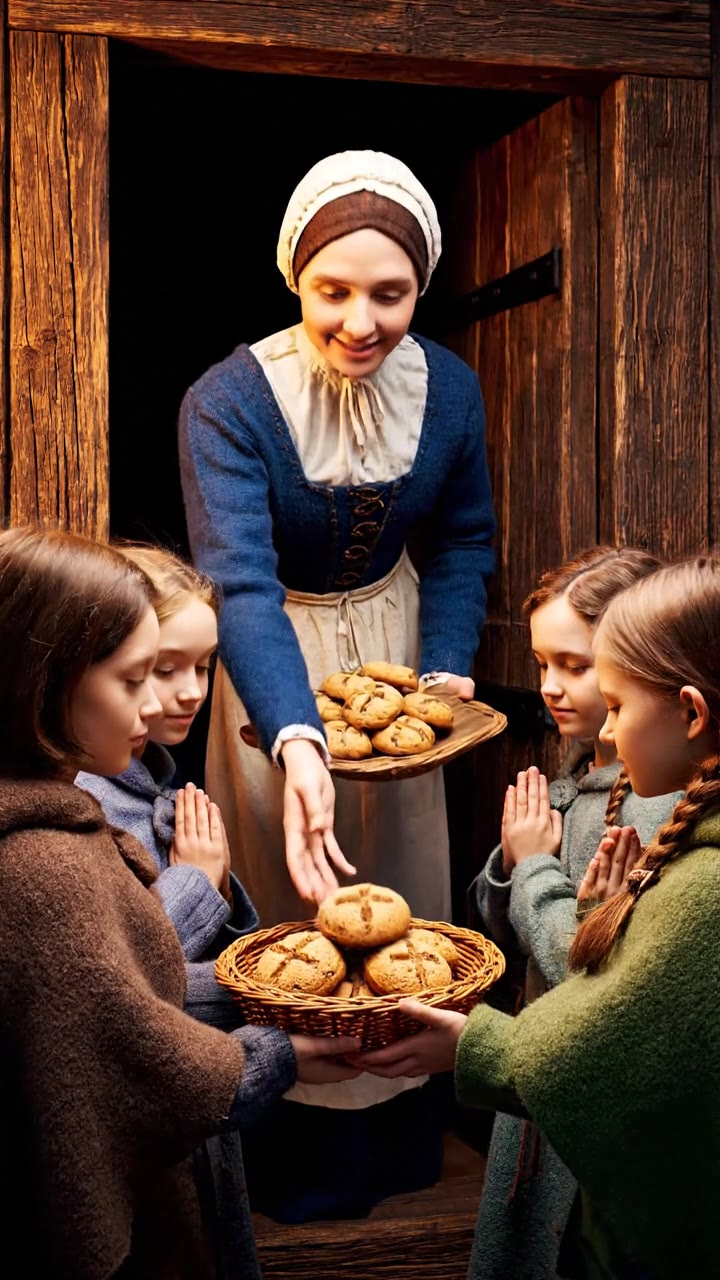
Souling and soul cakes
By the 11th century, the Western Church established All Souls' Day on November 2 to pray for the dead. Poor citizens, especially children, would go door-to-door 'souling' on this day. In exchange for spiced oat cakes called soul cakes, they promised to pray for the host's deceased family members.
Samhain and the Celtic new year
Christianization and All Hallows' Eve
The journey to America
Modern evolution and global spread
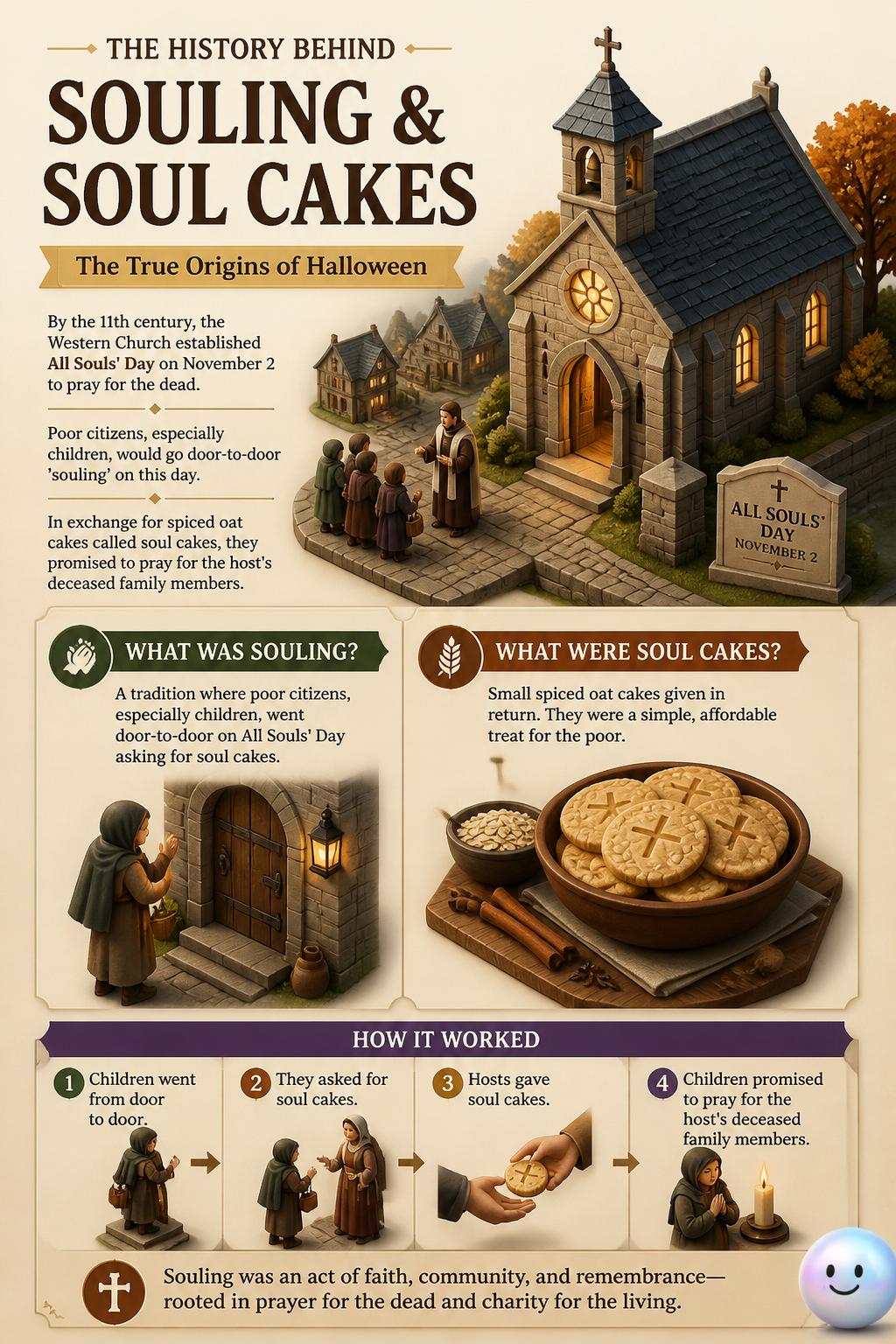
renaissanceman Medieval Christians baked spiced cakes for the poor in exchange for prayers.
Soul cakes: Medieval 'soul cakes' were spiced cakes with raisins, and receiving one meant promising to pray for deceased relatives.
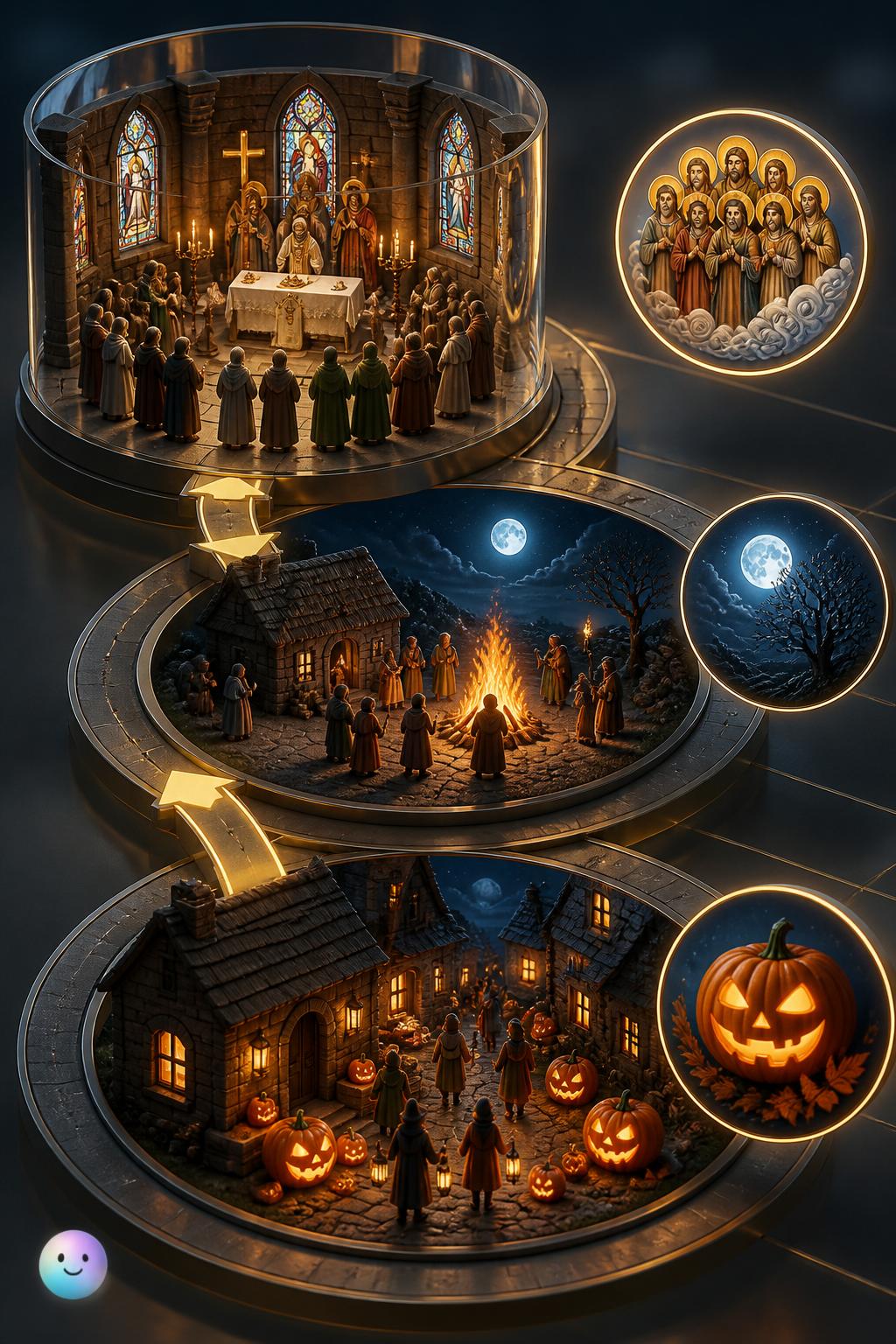
renaissanceman The phrase All Hallows' Eve evolved over centuries into the modern word Halloween.
The conversion of individuals, societies, or cultural practices to Christianity. In 835, Pope Gregory IV promoted this by mandating the November feast of All Saints.
Which group of people were honored specifically on the Christian holiday All Saints' Day?
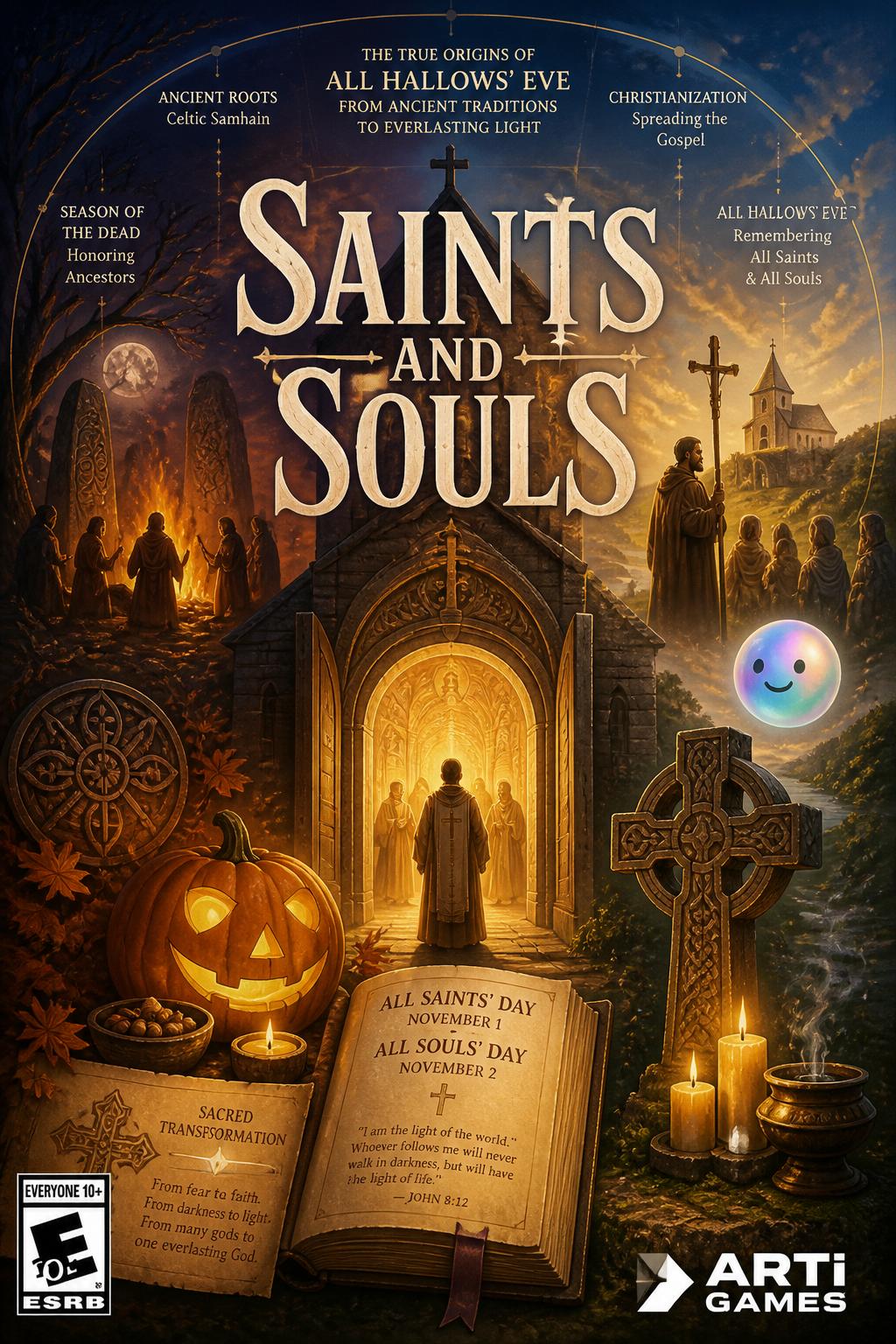
renaissanceman Match ancient rituals to discover the true historical origins of Halloween.
Which Pope officially moved All Saints' Day to November 1st in the 8th century?
What was the medieval Scottish and Irish practice of children dressing up and performing for food called?
Why did the Christian church align its holidays with the dates of the pagan festival Samhain?
In medieval England, what did the poor offer in exchange for receiving soul cakes?
What were medieval 'soul cakes' spiced with to represent sweet remembrance?