
Chapter 1
The spark of the oral tradition
Chapter 2
Ink, clay, and the written revolution
Chapter 3
The magic of the mass media
Chapter 4
The digital age and interactive screens
Ch 2 · Ink, clay, and the written revolution

disney Gutenberg Press Reading Boom
Break the chains, break the chains! Now the stories are free again!
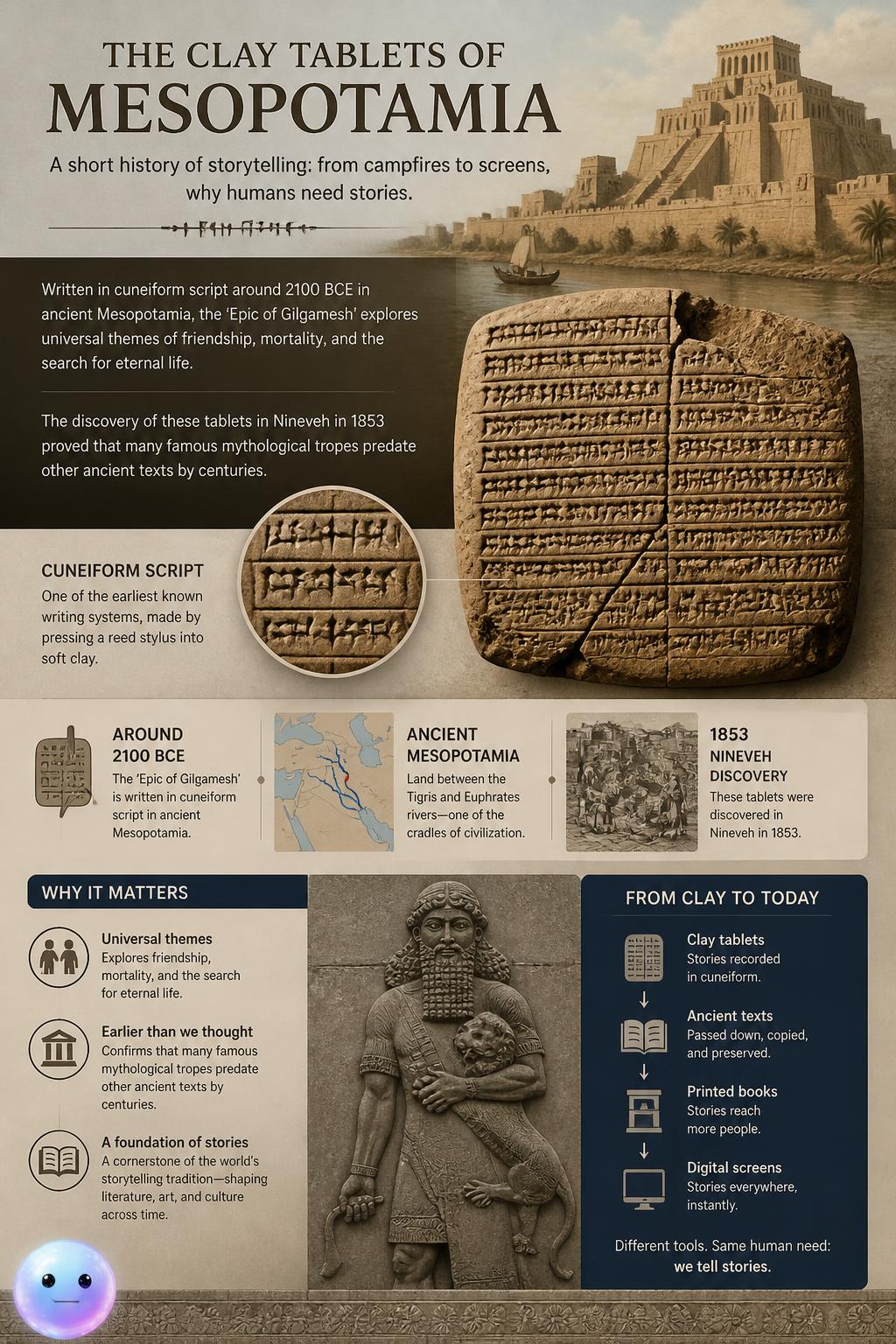
disney Mesopotamian cuneiform tablets discovered in Nineveh in 1853 explore universal themes of friendship, mortality, and the search for eternal life.
Quiz
In which ancient script was the Epic of Gilgamesh originally written on clay tablets?
Quiz
In which ancient city's ruins were the famous clay tablets of the Epic of Gilgamesh rediscovered in 1853?
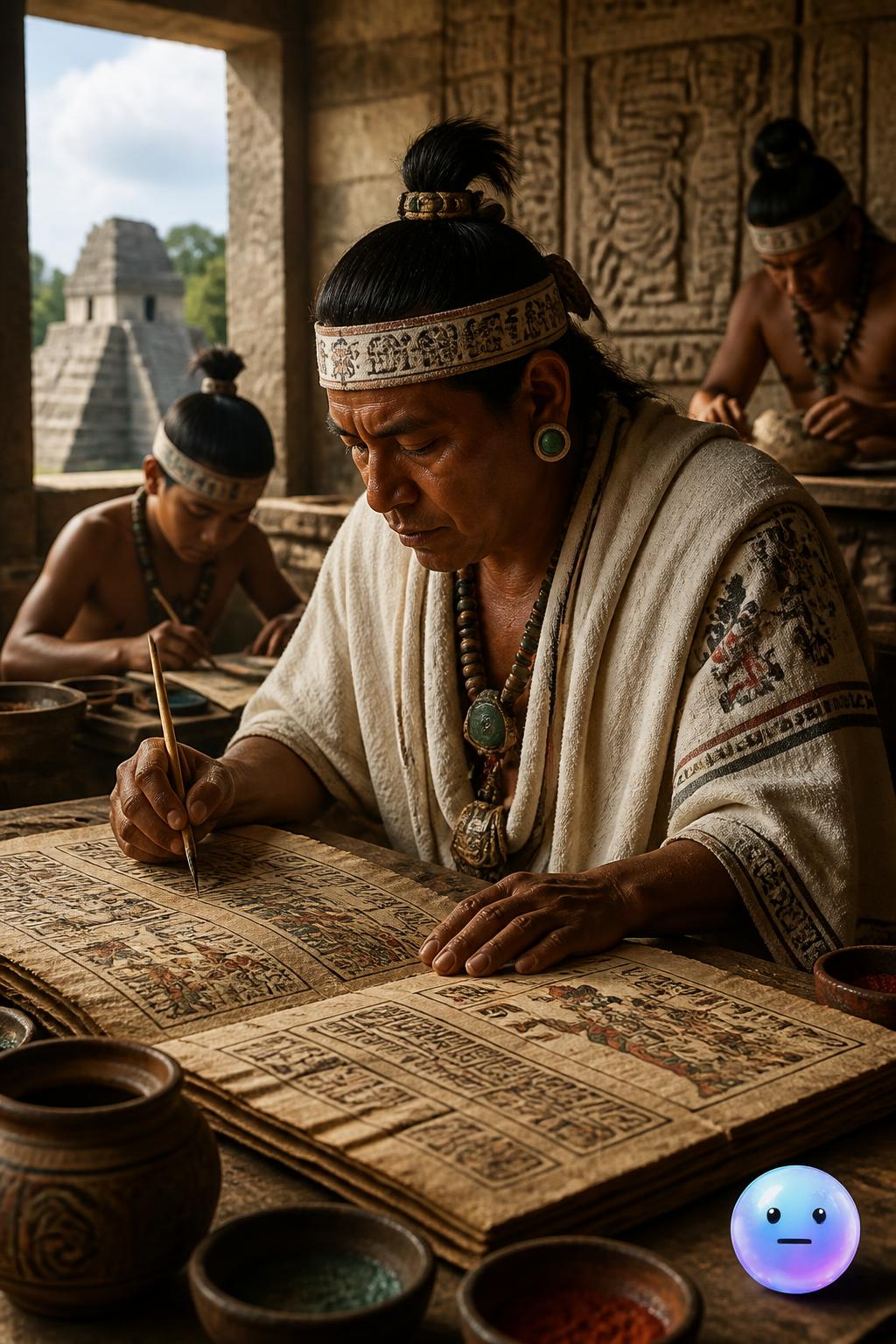
disney Hieroglyphic books called codices recorded Mesoamerican stories using vibrant illustrations.
Quiz
How many authentic Maya bark-paper codices are known to have survived to the modern day?
Quiz
What material did the ancient Maya use to create the accordion-style paper for their historical codices?
Fun Fact
Ancient library: The Library of Alexandria was so determined to collect stories that they searched every ship entering the port, seizing original books to copy them.
Quiz
Which historical Japanese era serves as the setting for the courtly romance and politics in The Tale of Genji?
Quiz
Who wrote The Tale of Genji, widely considered the world's first novel, in 11th-century Japan?
Glossary
cuneiform (noun)
An ancient system of writing represented by wedge-shaped characters. Sumerians in ancient Uruk developed this script around 3200 BCE to log trade transactions on tablets.
An ancient system of writing represented by wedge-shaped characters. Sumerians in ancient Uruk developed this script around 3200 BCE to log trade transactions on tablets.
Quiz
In which German city did Johannes Gutenberg develop his revolutionary movable-type printing press around 1440?
Quiz
How did the invention of the printing press primarily change the nature of storytelling in Europe?