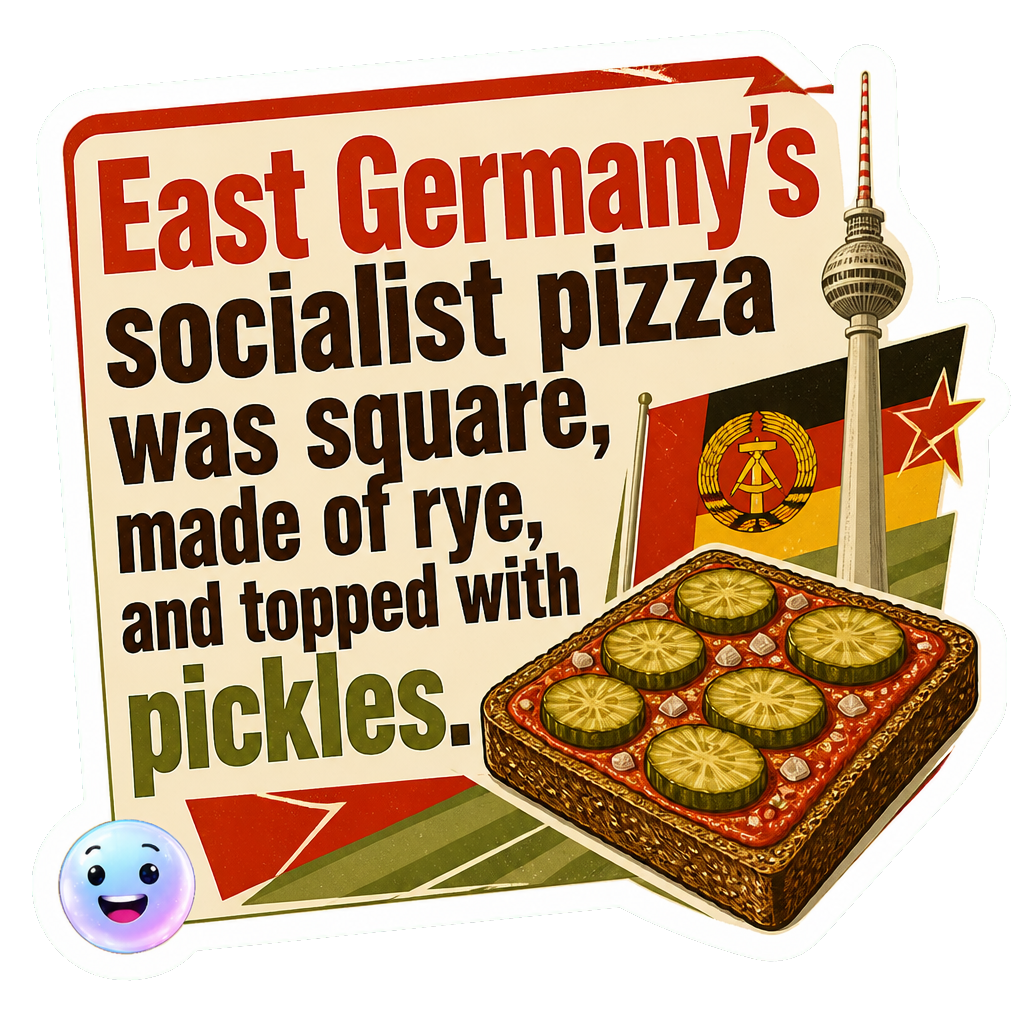
East Germany's Pickle Pizza Statement sticker
An ARTi Statement sticker from the Cold War pizza project. Share this card about East Germany's square rye pickle pizza!
Slicing up the world in post-war Europe
Spikes, spies, and the Pizza Meter
Global delivery and proxy conflicts
The final slice of the Soviet Union
sonia In 1945, Harry Truman, Winston Churchill, and Joseph Stalin carved Germany into four military zones. This division established the physical borders that shaped the early Cold War.
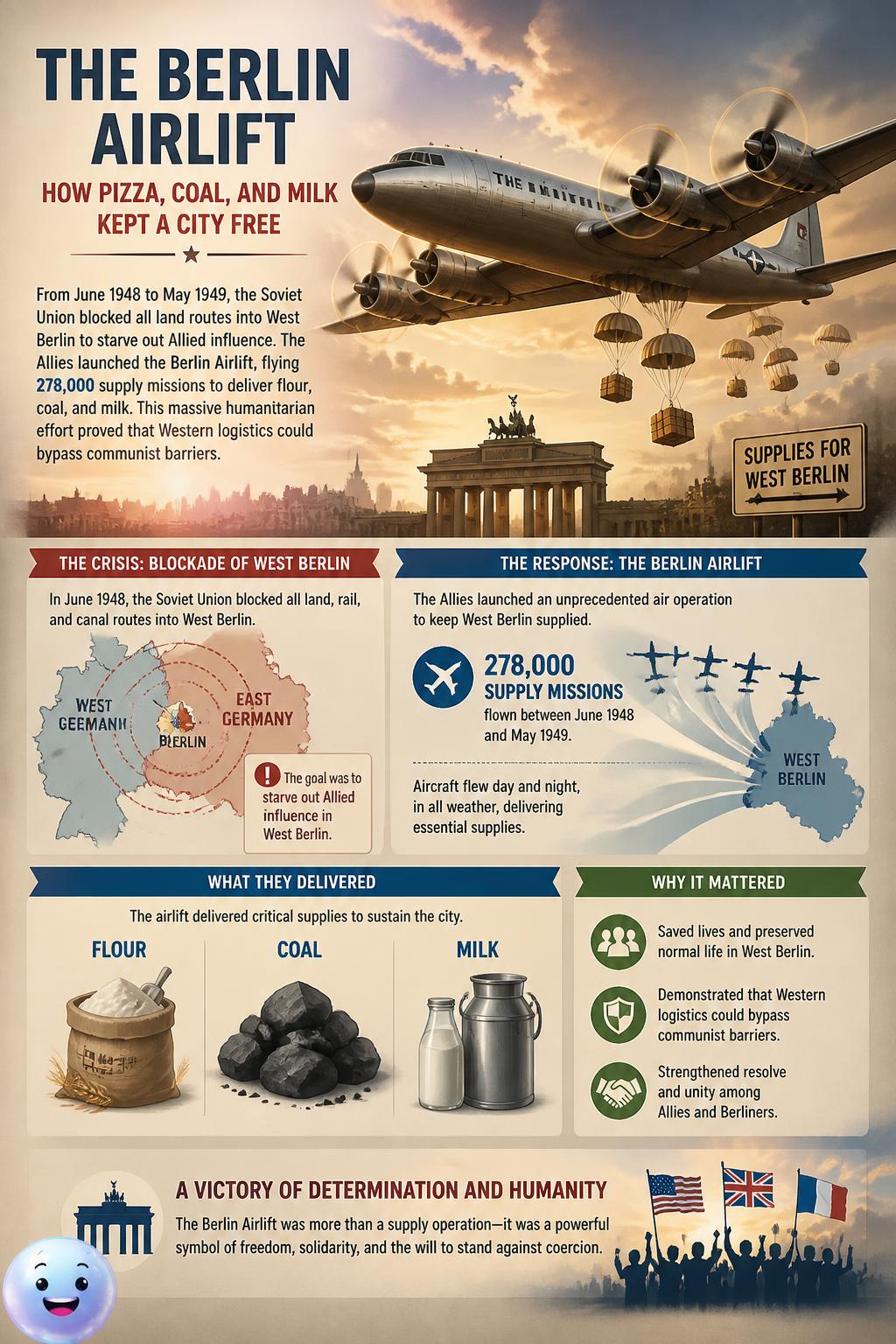
sonia When Soviet forces blocked land routes in June 1948, Allied pilots flew thousands of missions to deliver flour, coal, and milk to West Berlin.
sonia During a March 1946 speech in Fulton, Missouri, Churchill declared that a political barrier divided the continent. This division blocked trade, culture, and travel between East and West
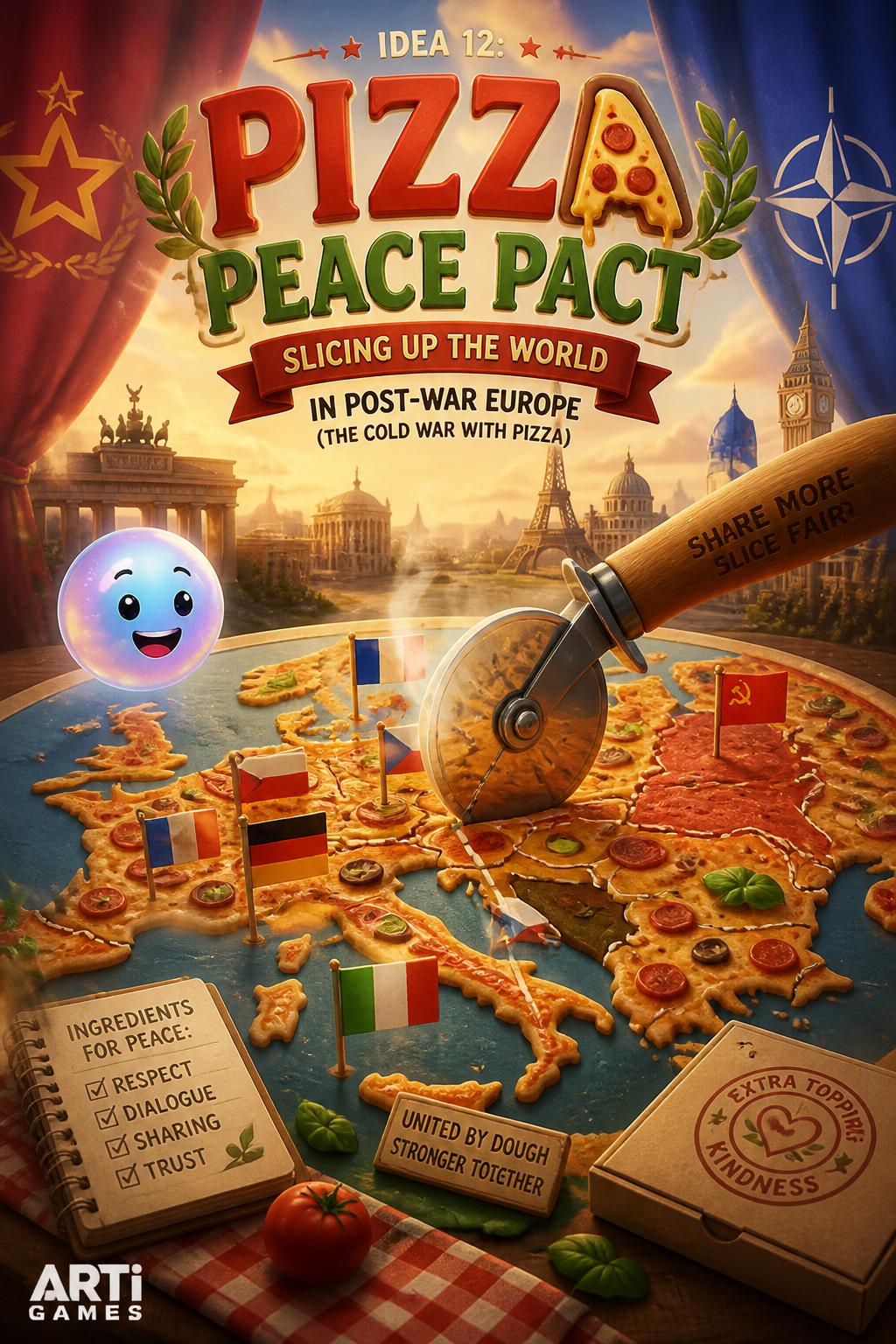
sonia Trade pizza toppings with rival factions to discover how nations negotiated Cold War peace pacts.
sonia The Percentages Agreement
Slicing it up, slicing it up, A scrap of paper divides our world.
sonia In May 1976, East Berlin opened the first Krusta-Stube. Bakers baked dark rye dough on square sheet pans with minced meat and pickle toppings.
East German pizza: East Germany's square 'Krusta' was so distinct that its popular 'Teufelskrusta' (Devil's Krusta) flavor was topped with spicy minced meat, pickles, and onions.
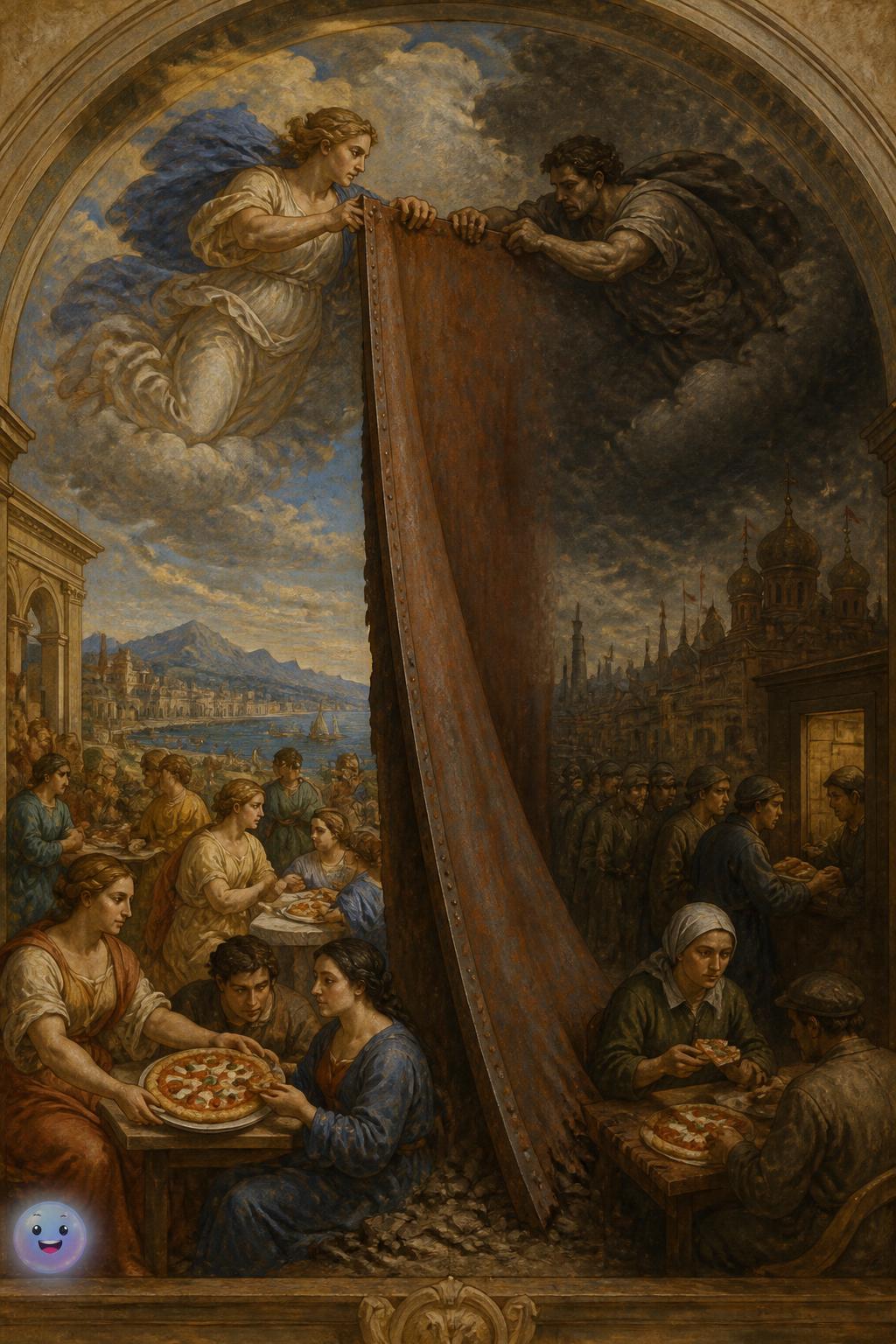
A wartime summit of allied heads of government to discuss the postwar reorganization of Europe. In February 1945, British, American, and Soviet leaders met at Yalta to divide Germany into occupation zones.
What type of flour was primarily used to make the distinctive dough of the East German Krusta?
In what year did the Soviet Union block land access to West Berlin, prompting the historic Berlin Airlift?
During the 1948 Berlin Blockade, how did the Western Allies deliver food and supplies to West Berlin?
Who famously coined the term 'Iron Curtain' in a 1946 speech to describe the division of Europe?
Which major Western country experienced an 'economic miracle' and saw pizza rise in popularity via Italian guest workers in the 1950s?
What shape was the East German 'Krusta' baked in, contrasting with the traditional round Western pizza?