Which trade ingredient is the ultimate kitchen MVP?
The ancient trade route behind your taco
The sweet and savory Pinoy home taco
The legendary sisig taco
The fusion feast continues

sonia Settlers in Pampanga swapped corn husks for local banana leaves to make bobotu. This delicious adaptation blended Mexican and Filipino flavors into a brand-new tradition.
sonia Spanish galleons carried tomatoes, chili peppers, and corn from Mexico to Manila. These foreign plants quickly became essential ingredients in traditional Filipino cooking.
sonia Both cultures balance rich fats with bright calamansi and lime. This shared love for slow-braised meats, garlic, and onions makes wrapping Filipino pork inside warm tortillas taste natural.
sonia Between 1565 and 1815, Spanish ships transported silver, silk, and family recipes across the Pacific. Sailors and cooks blended Mexican and Filipino ingredients to create a lasting food bond.
sonia Manila-Acapulco Galleon Trade Route
Sailed from Mexico, Avocado seeds in tow, Manila's taco show!
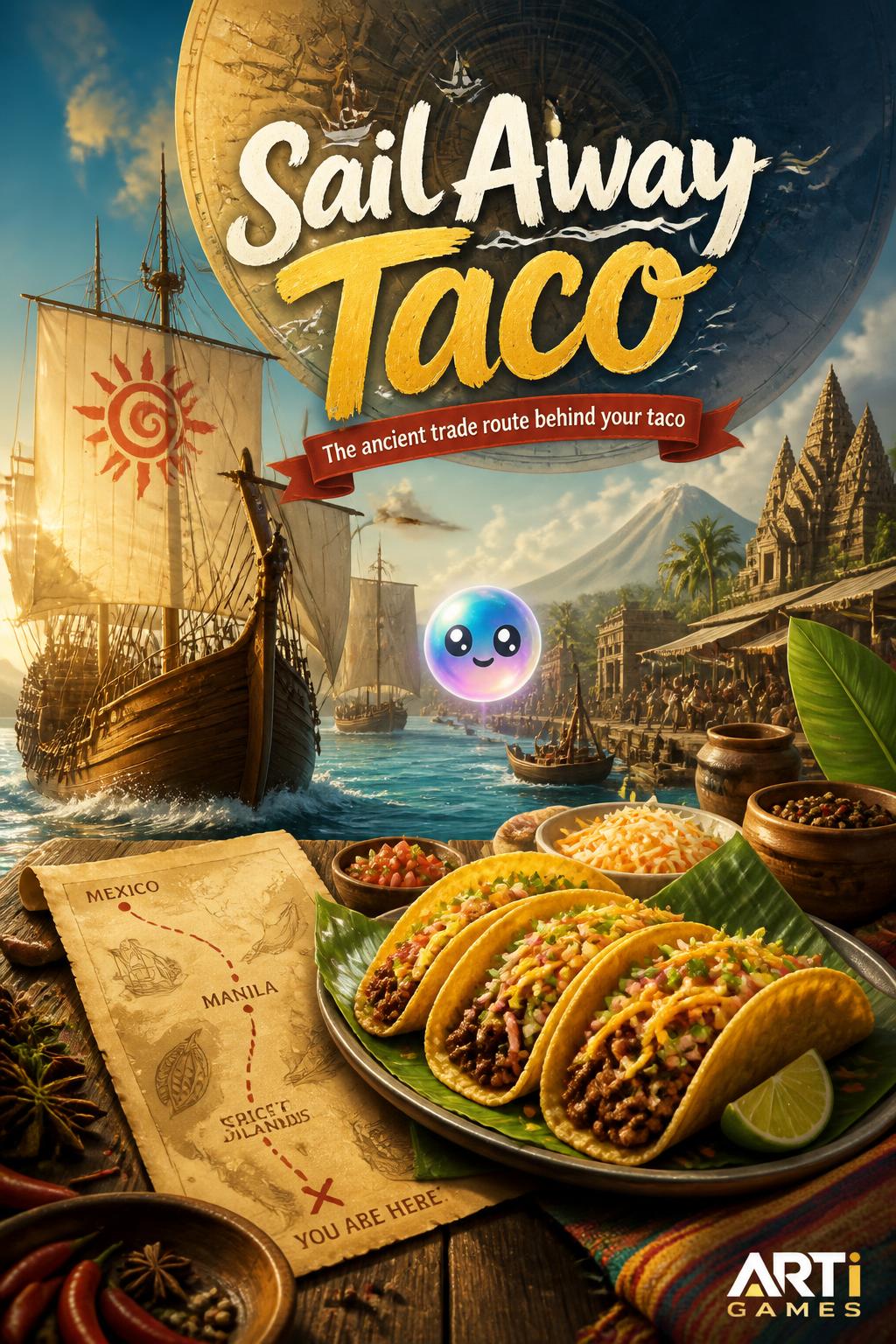
sonia Fill crunchy shells with sweet beef to discover how Filipinos reinvented the classic taco.
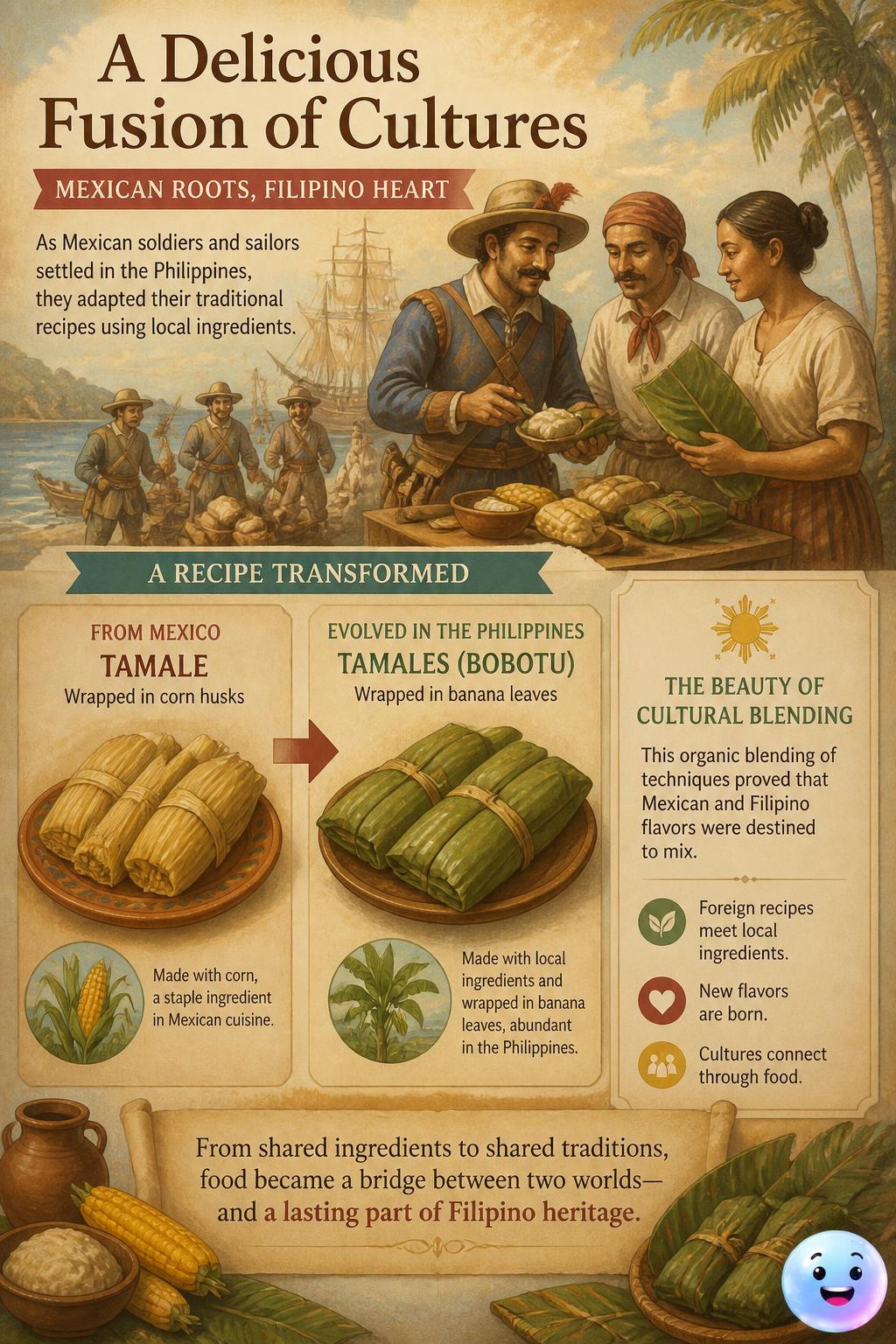
sonia Mexican and Filipino cooks shared cooking techniques, forever altering the flavor profiles of both nations.
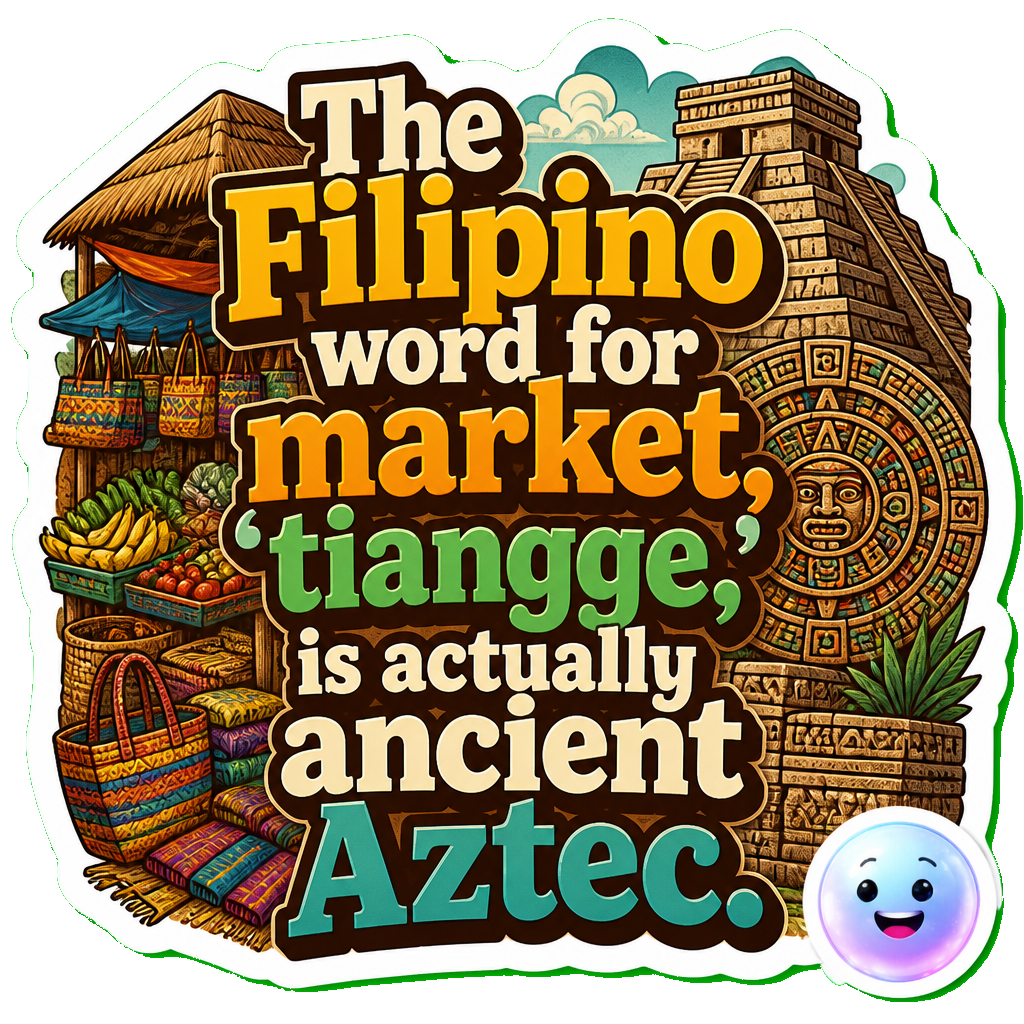
Nahuatl in Tagalog: The Filipino word for a street market, 'tiangge', comes directly from 'tianquiztli', the ancient Aztec Nahuatl word for marketplace.
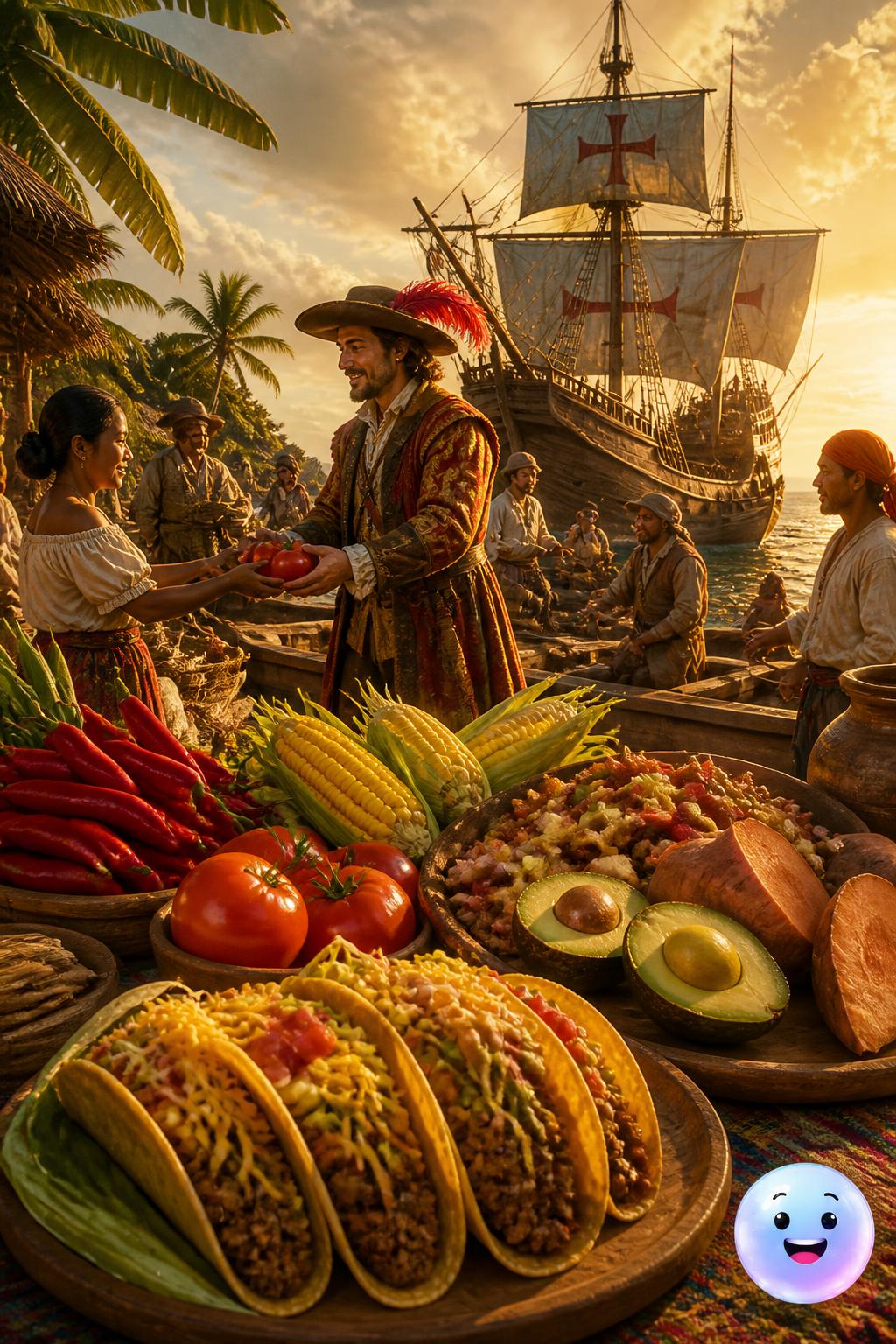
sonia Many staple ingredients in Filipino cooking today actually originated in the Americas and traveled via Spanish ships.
A large, three-masted sailing ship used historically by European states for war or commerce. In 1565, these vessels established a maritime exchange that introduced Mexican ingredients like tomatoes to the Philippines.
Which of these staple Filipino ingredients was actually brought over from the Americas?
Which Mexican port city served as the primary departure point for the galleons heading to Manila?
What local leaf is used to wrap Filipino tamales instead of the traditional Mexican corn husk?
Which plant, crucial for making Mexican tortillas, was introduced to the Philippines by Spanish-Mexican settlers?
The Filipino word 'kamote' (sweet potato) comes from which indigenous Mexican language?
Which of these cultural elements did NOT travel between Mexico and the Philippines during the galleon trade?