Morning light: synchronizing your master clock
Tactical hydration: the fluid-energy connection
Power naps: the NASA-approved midday reset
Movement snacks: powering up without a workout
Strategic eating: flattening the glucose roller coaster
Forest bathing: plugging into nature's battery
thabo Cortisol and Melatonin Timing
Catch the light, catch the light / Sets your timer for the night.

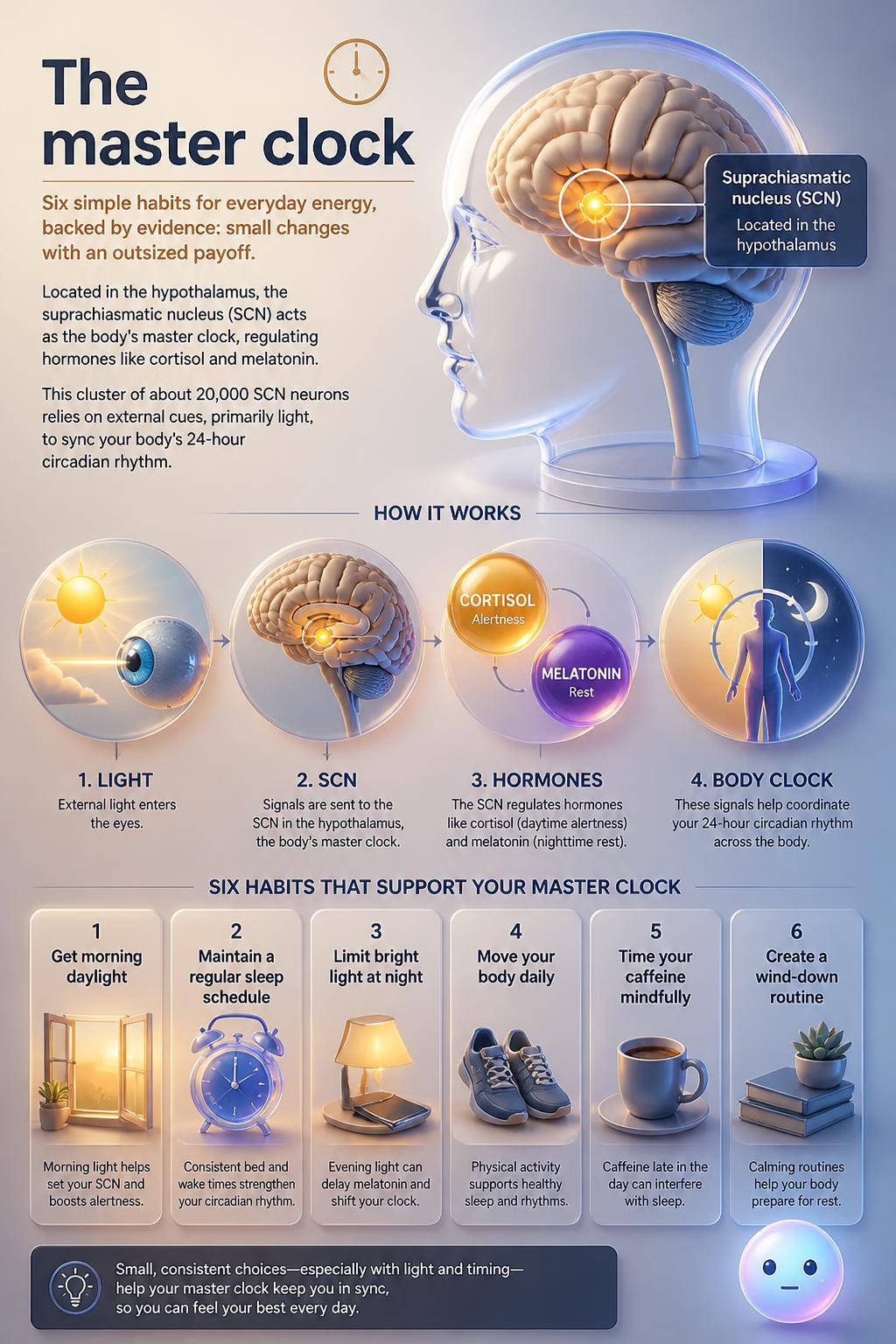
thabo The suprachiasmatic nucleus in your hypothalamus relies on light to regulate cortisol and melatonin, syncing your 24-hour circadian rhythm.
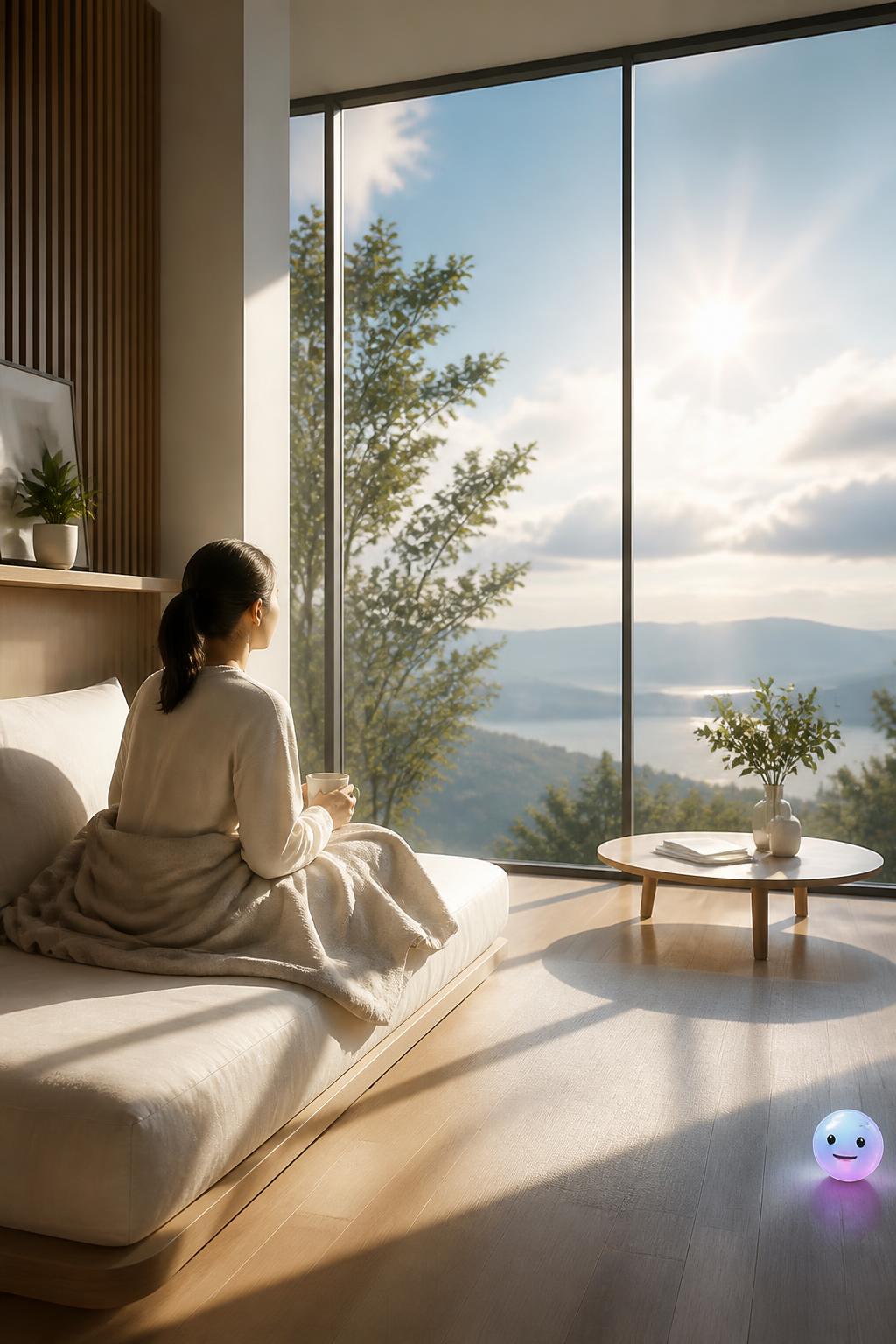

thabo Sort daily habits to discover how six simple changes boost your everyday energy.
Morning eye design: Your eyes contain specialized cells that only detect daytime blue light, completely separate from the cells you use to actually see the world.
A small region of the brain's hypothalamus that regulates circadian rhythms. This hypothalamic region is synchronized by thirty minutes of early daylight or a 10,000-lux lamp.
What is the name of the brain's master clock that regulates our daily sleep-wake cycle?
Which light-sensitive photopigment is found in the eye's specialized ganglion cells that sync our circadian rhythm?
Which specific color wavelength of light are melanopsin-containing cells most sensitive to?
Approximately how many hours after morning light exposure does the brain typically begin releasing melatonin?