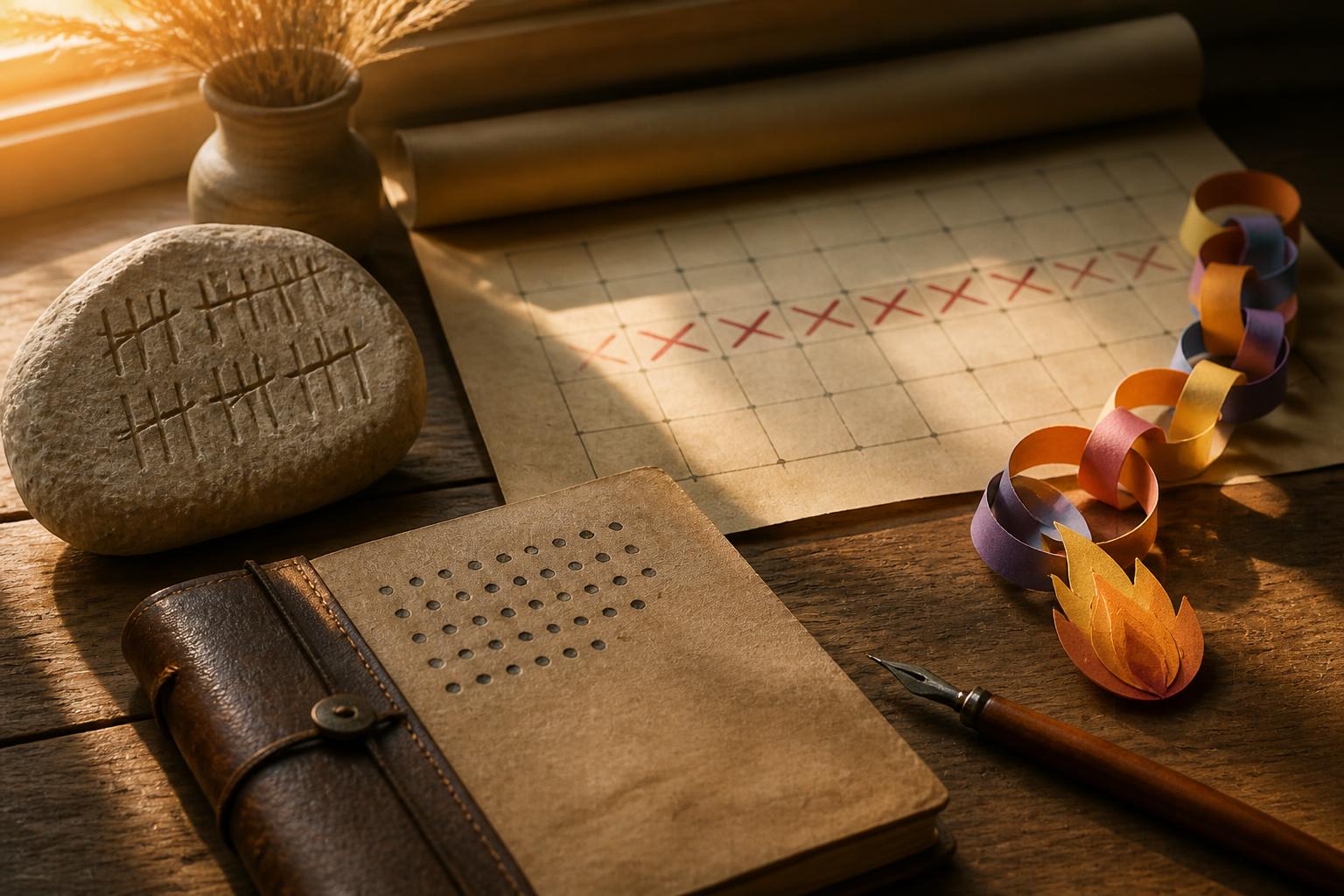
What time did novelist Anthony Trollope sit down to write each
What time did novelist Anthony Trollope sit down to write each morning?
From paper to the wall: The analog origins
The science: Why is it hard to break a streak?
The digital revolution: Gamification and apps
When a streak weighs on you: Criticism and balance

arti Although Seinfeld said the idea wasn't his, the visual chain of completed days is still widely known.
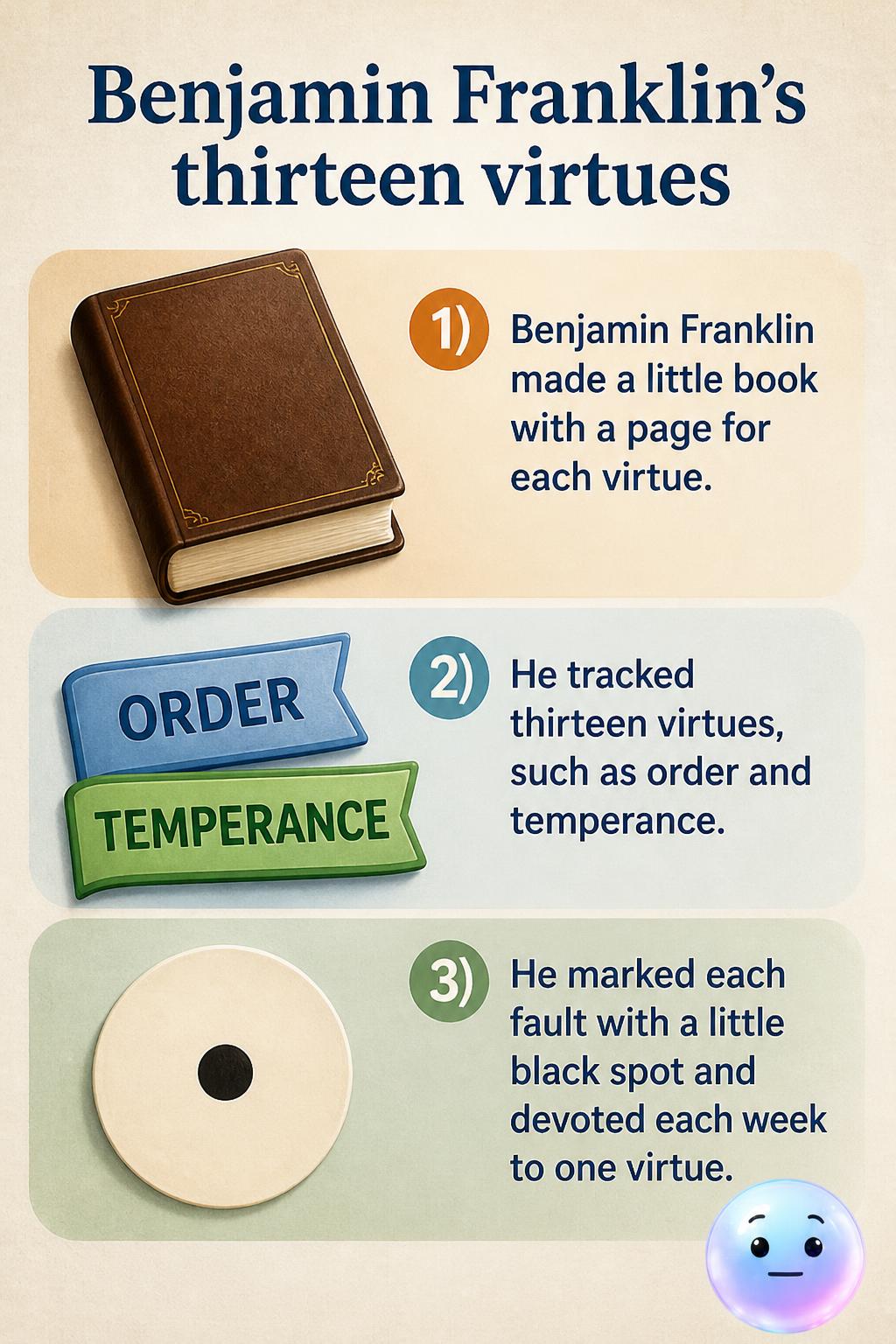
arti According to his autobiography, Franklin marked each fault against his thirteen virtues with a black spot.

Which of these was one of the thirteen original virtues Benjamin Franklin tracked in his notebook?
Seinfeld's streak: Although the method bears his name, in 2014 Jerry Seinfeld said on Reddit that the calendar-chain idea wasn't his.
On which website did Jerry Seinfeld deny, in 2014, that he created the “Don't break the chain” method?
A system for representing the passage of time by dividing it into years, months and days. The “Don't break the chain” technique suggests crossing off each completed day on one.
According to habit experts, what's the main advantage of a physical wall calendar over an app?
Which 19th-century novelist required of himself 250 words every quarter of an hour, with his watch in front of him?
What year did Lifehacker publish the article that popularized Seinfeld's “Don't break the chain” technique?
According to his autobiography, what did Benjamin Franklin mark in his notebook each time he fell short on a virtue?
arti There's no single official reason why streaks use a flame. But in English, being “on fire” has long meant doing extremely well.

arti A 12-week study reveals daily actions take 18 to 254 days to become automatic, and missing one day does not set you back.
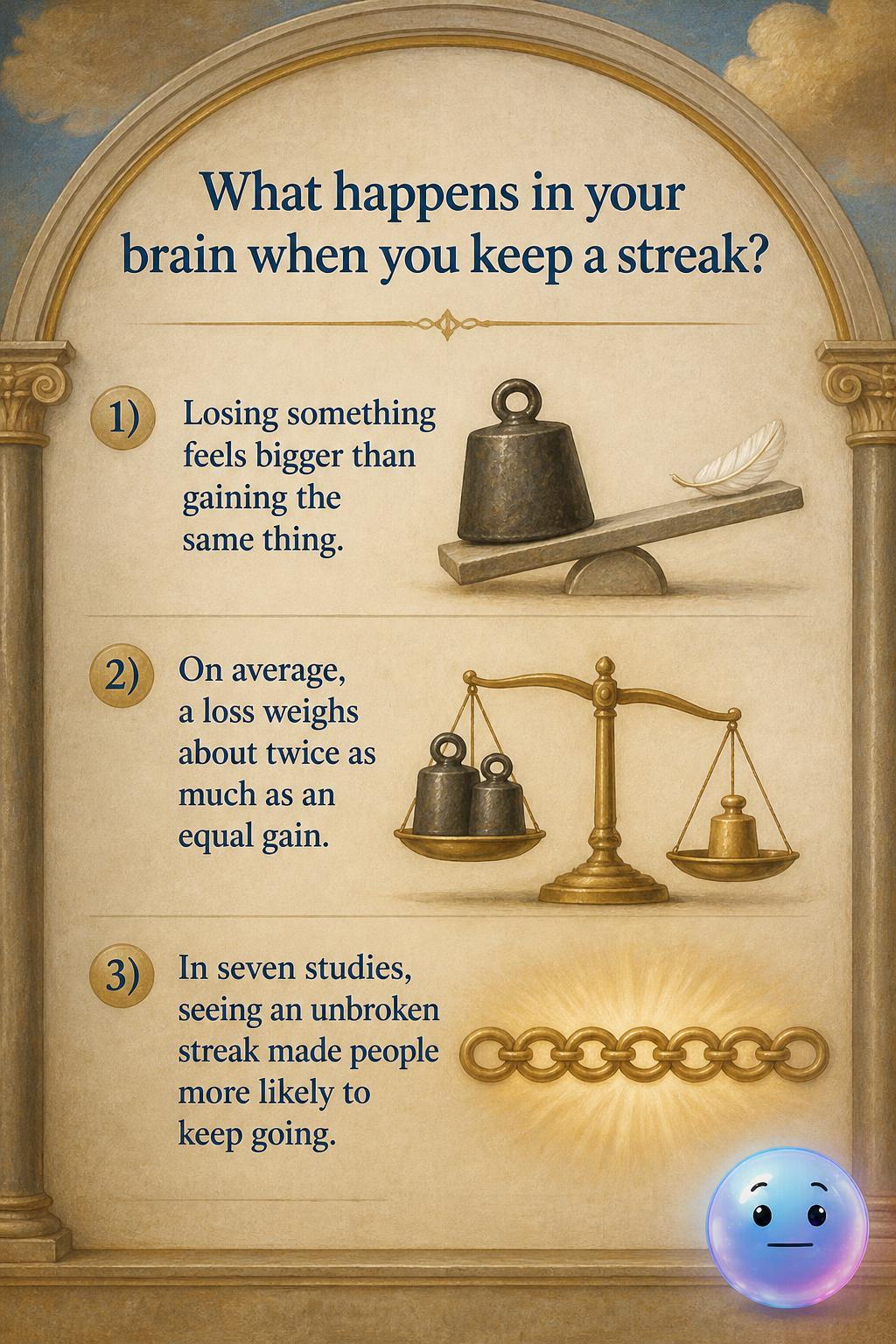
arti Because a loss weighs twice as much as a gain, seeing an unbroken streak keeps people going, as proven in seven studies.
what happens when you repeat something until you do it without thinking. Psychologists describe habits as actions triggered automatically by cues from the situation where you usually do them.
someone with a streak on ARTi who can't stop asking why. The word first appeared in 1950, as the name of an imaginary animal in Dr. Seuss's book If I Ran the Zoo. By 1951, Newsweek used it for someone who once would have been called a “square”.