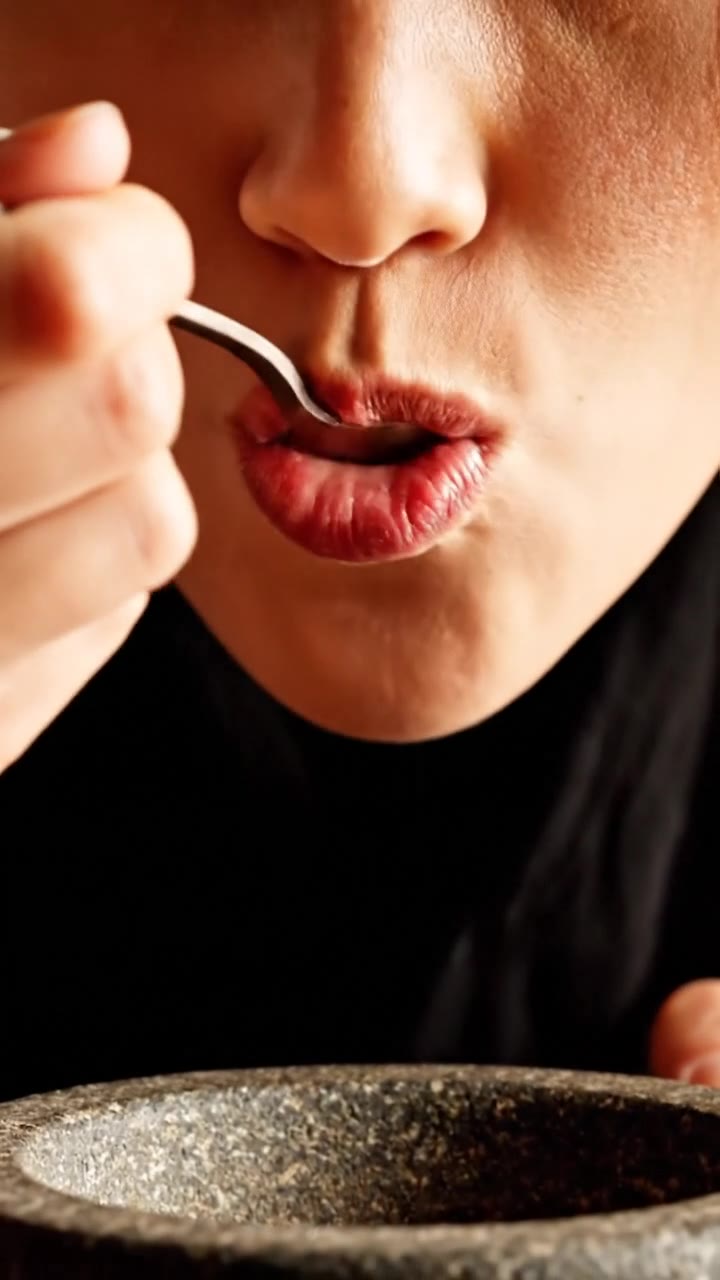
Retronasal Olfaction and the Science of Pumpkin Spice
While we taste basic profiles like sweet or salty on our tongue, true flavor complexity is perceived through the back of our throat. As we chew, warm air pushes volatile compounds from our food up to our nasal cavity. This retronasal olfaction is why a clogged nose makes pumpkin spice taste like plain warm milk.
Chapter 1
The ancient spice route roots
Chapter 2
How your brain smells a pumpkin
Chapter 3
The liquid gold rush of 2003
Chapter 4
The great 2015 pumpkin patch correction
Ch 2 · How your brain smells a pumpkin

renato How your brain smells pumpkin
Fill in the gaps, fill in the gaps / Your brain turns those spices to pumpkin!
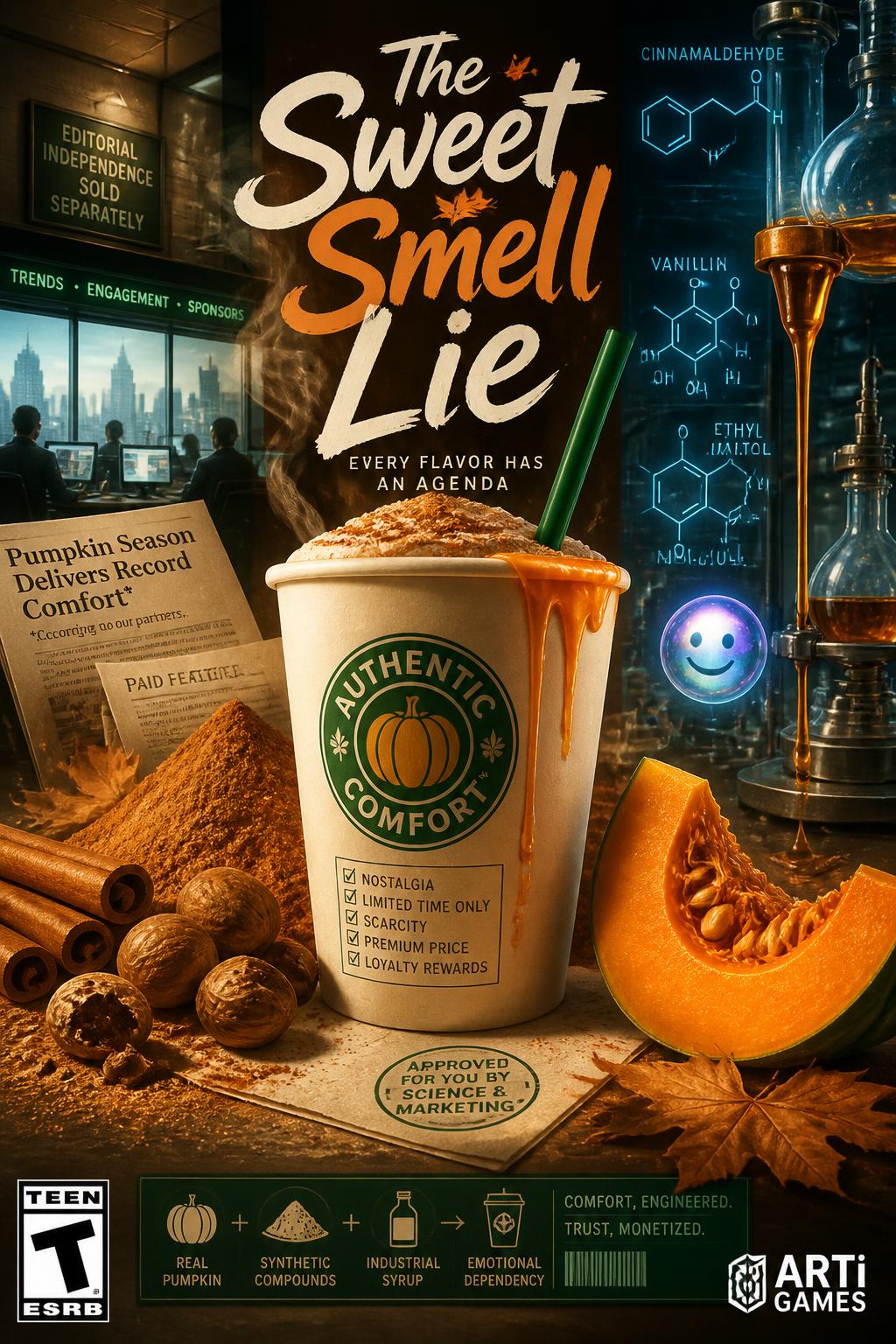
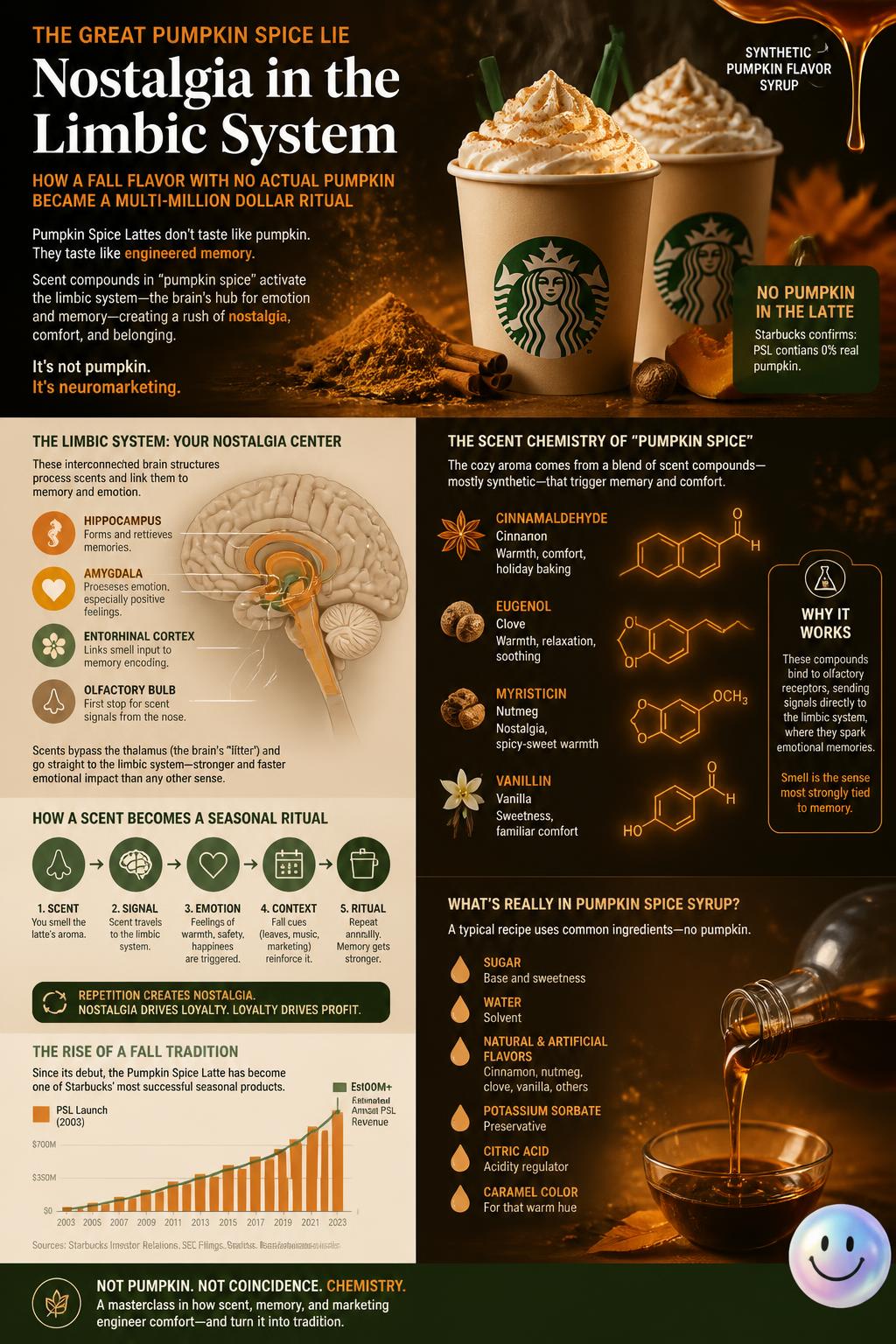
renato Our olfactory bulb connects directly to the amygdala and hippocampus, triggering intense emotional memories of cozy autumns.
Fun Fact
Brain wiring: Smells bypass the brain's main sensory relay station and go straight to the emotional limbic system, explaining instant nostalgia.
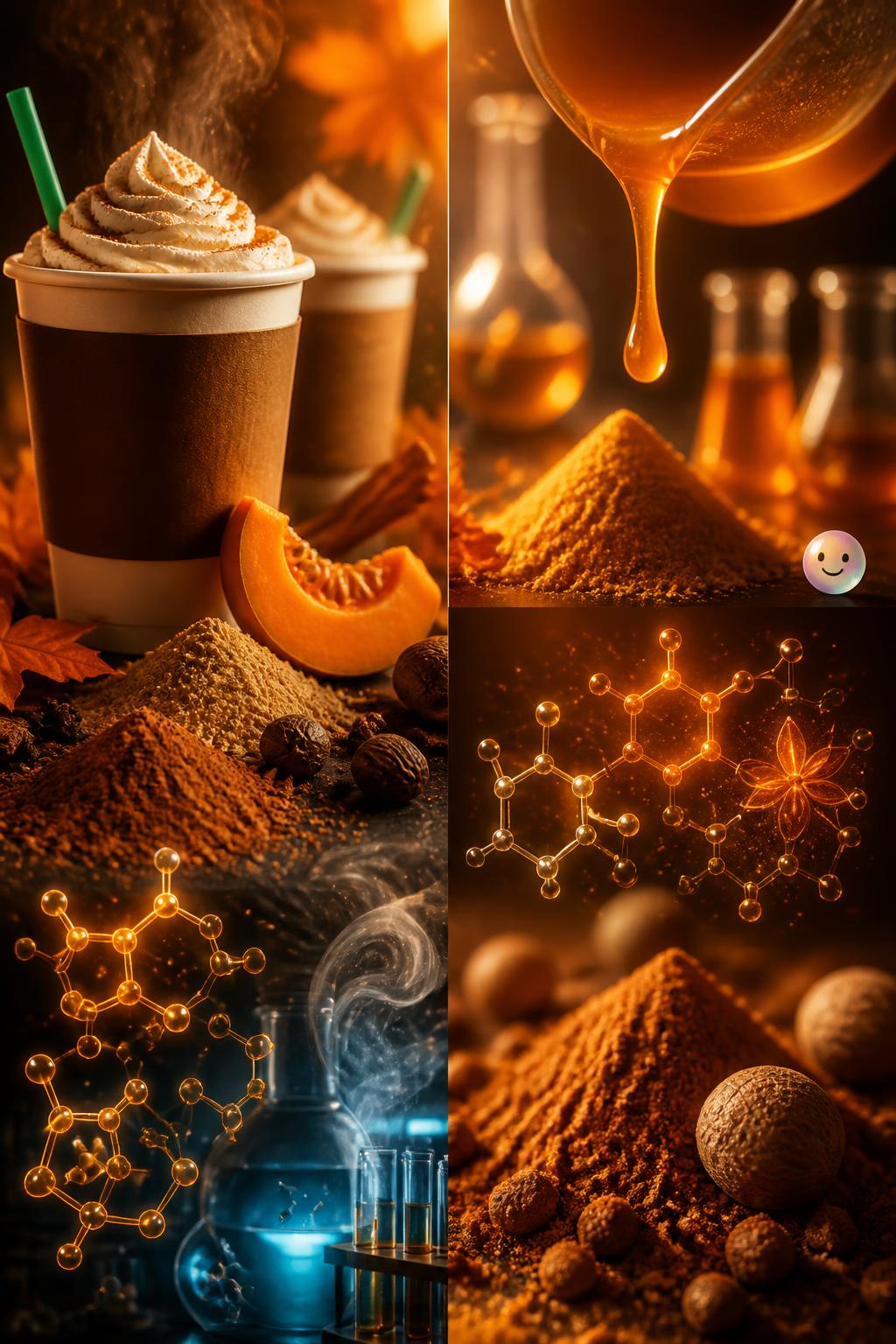
renato The brain automatically pairs warm spices with the visual of an orange pumpkin, creating a flavor illusion even when none is present.
Glossary
olfaction (noun)
The capacity for or the act of smelling. Johns Hopkins University researchers studied how this sense links seasonal spice blends to memories of autumn.
The capacity for or the act of smelling. Johns Hopkins University researchers studied how this sense links seasonal spice blends to memories of autumn.
Quiz
Which brain region, responsible for emotions and memory, connects directly to the olfactory bulb?
Quiz
What is the name of the cognitive phenomenon where one sensory input, like smell, automatically triggers another, like vision?
Quiz
What is the scientific term for smelling food aromas that travel from the mouth up to the nose while chewing?
Quiz
Approximately how many different scent receptors does the average human nose have to detect aromas?
Quiz
Which chemical compound gives cloves their distinctively pungent, medicinal, and woody aroma?