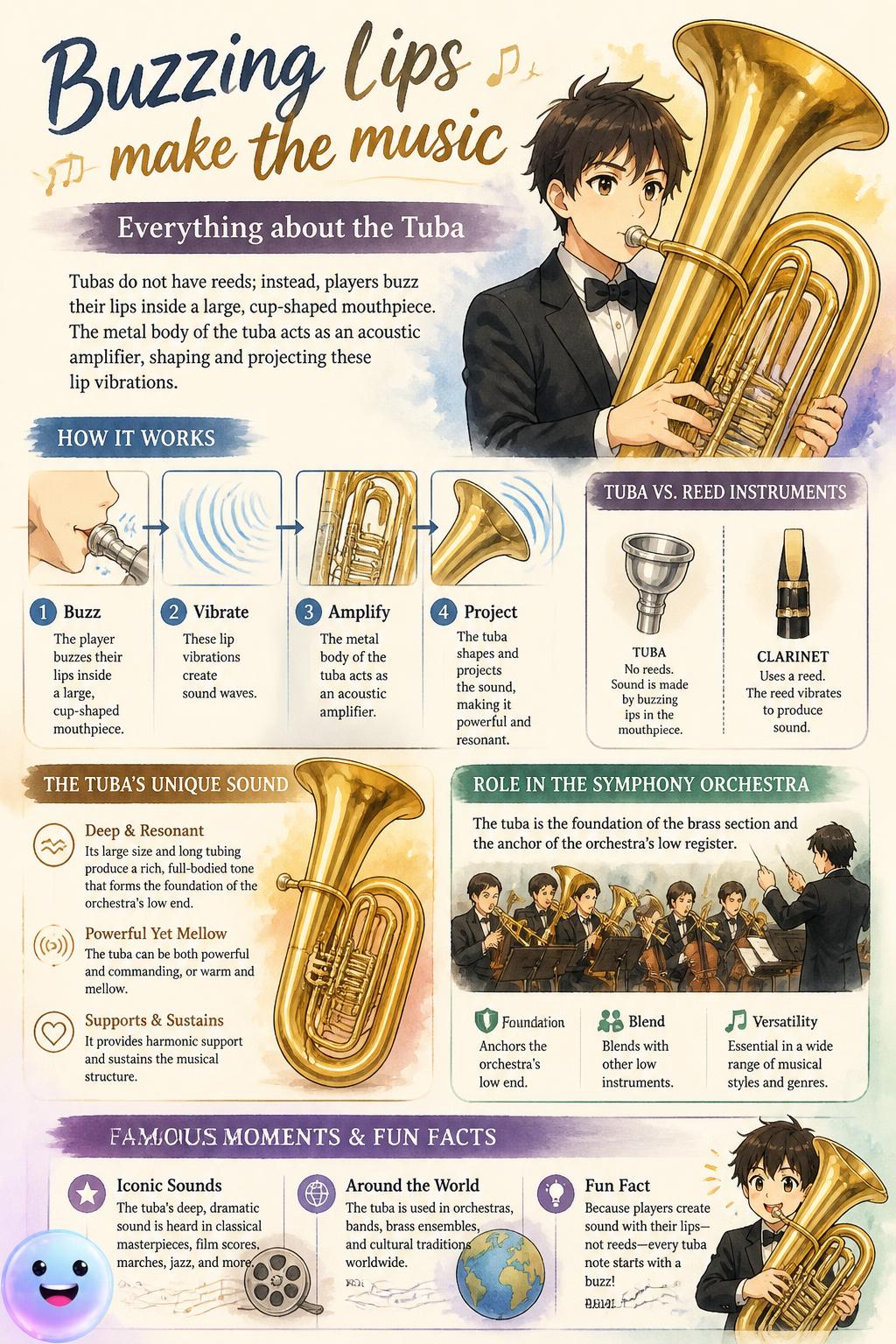
How the Tuba Works: Infographic Guide
A colorful diagram labels the cup-shaped mouthpiece and the metal acoustic amplifier
Heavy metal physics
The birth of a brass giant
Global cousins and band leaders
Orchestral power and famous solos
maestro Pressing a piston or rotor redirects your breath into extra loops of tubing. This instantly lengthens the tuba to lower the pitch by precise musical intervals.
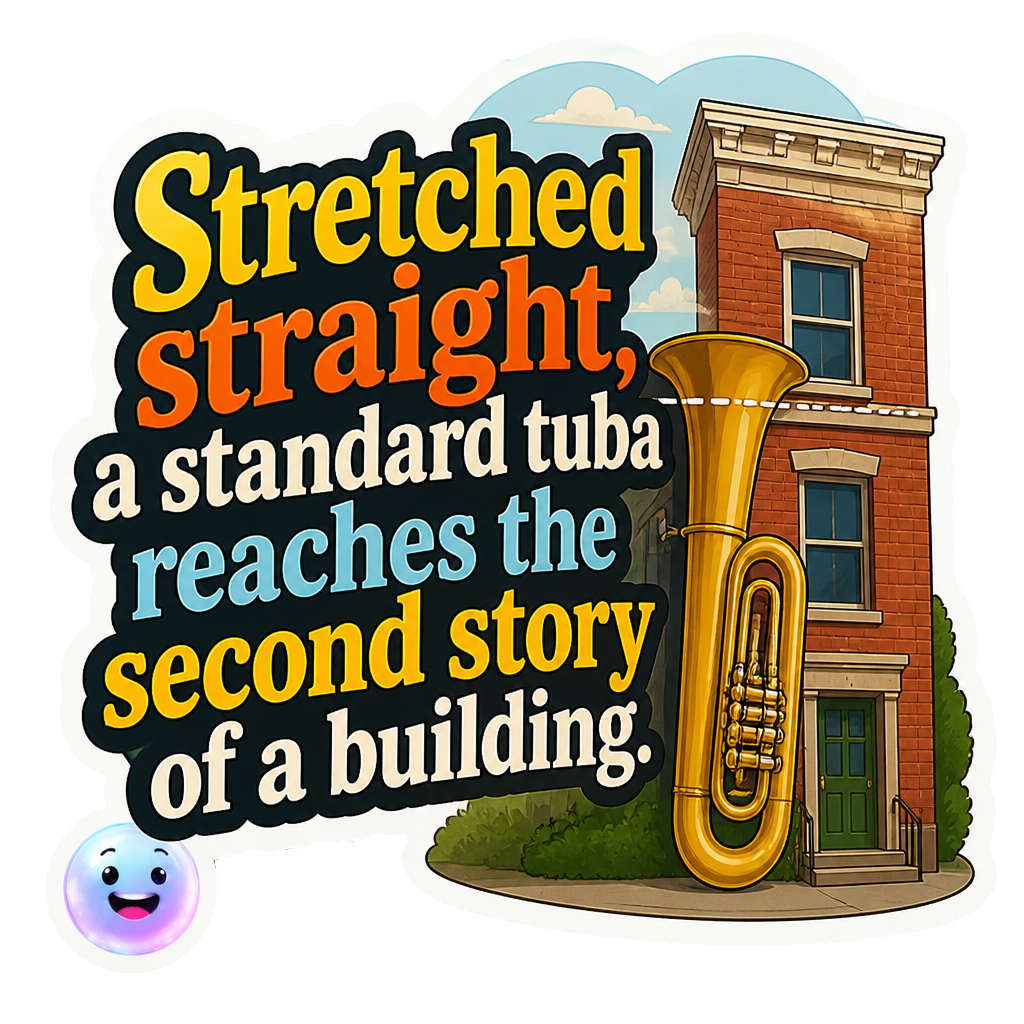
maestro Unrolling this instrument reveals eighteen feet of brass that could reach a second-story window. Coiling the tube allows musicians to hold and play the giant instrument.
maestro Trumpet tubing stays the same width, but tuba tubing continuously widens toward the bell. This expanding shape dampens harsh upper harmonics to create a warm, mellow tone.

maestro Adjust the brass pipes to learn the physics behind the tuba's deep, powerful sound.
maestro Heavy metal physics
Press down the valves and stretch that heavy metal thirty-one feet long
maestro A colorful diagram labels the cup-shaped mouthpiece and the metal acoustic amplifier
Tuba weight: A standard orchestral contrabass tuba can weigh up to 35 pounds, requiring significant physical strength to carry and play.

maestro Polished brass valves and intricate tubing loops glow under dramatic studio lighting
The prolongation of sound by reflection from a surface or by the synchronous vibration of a neighboring object. In 1835, Prussian inventors utilized this physical phenomenon to build Berlin's first deep-sounding chromatic bass tuba.
Which part of a modern tuba physically redirects air into extra loops of tubing to change the pitch?
What happens to the overall air column inside a tuba when a player presses a valve?
What is the approximate length of tubing in a standard BBb contrabass tuba if it were stretched straight?
What shape of tubing, known as a conical bore, gives the tuba its warm and mellow tone?
Which valve type, common on European tubas, rotates a cylinder to redirect air rather than sliding up and down?