Quiz
As we explore the ancient roots of rolling dice in board game history, what natural items did players of the sacred Mesoamerican race game Patolli toss to determine how their pieces moved along the cross-shaped board?
YOUR GOAL
Master of The history of board games
As we explore the ancient roots of rolling dice in board game history, what natural items did players of the sacred Mesoamerican race game Patolli toss to determine how their pieces moved along the cross-shaped board?
schopenhauer Origins of Dice
Before we rolled a six-sided die, We tossed sheep ankle bones to the sky.
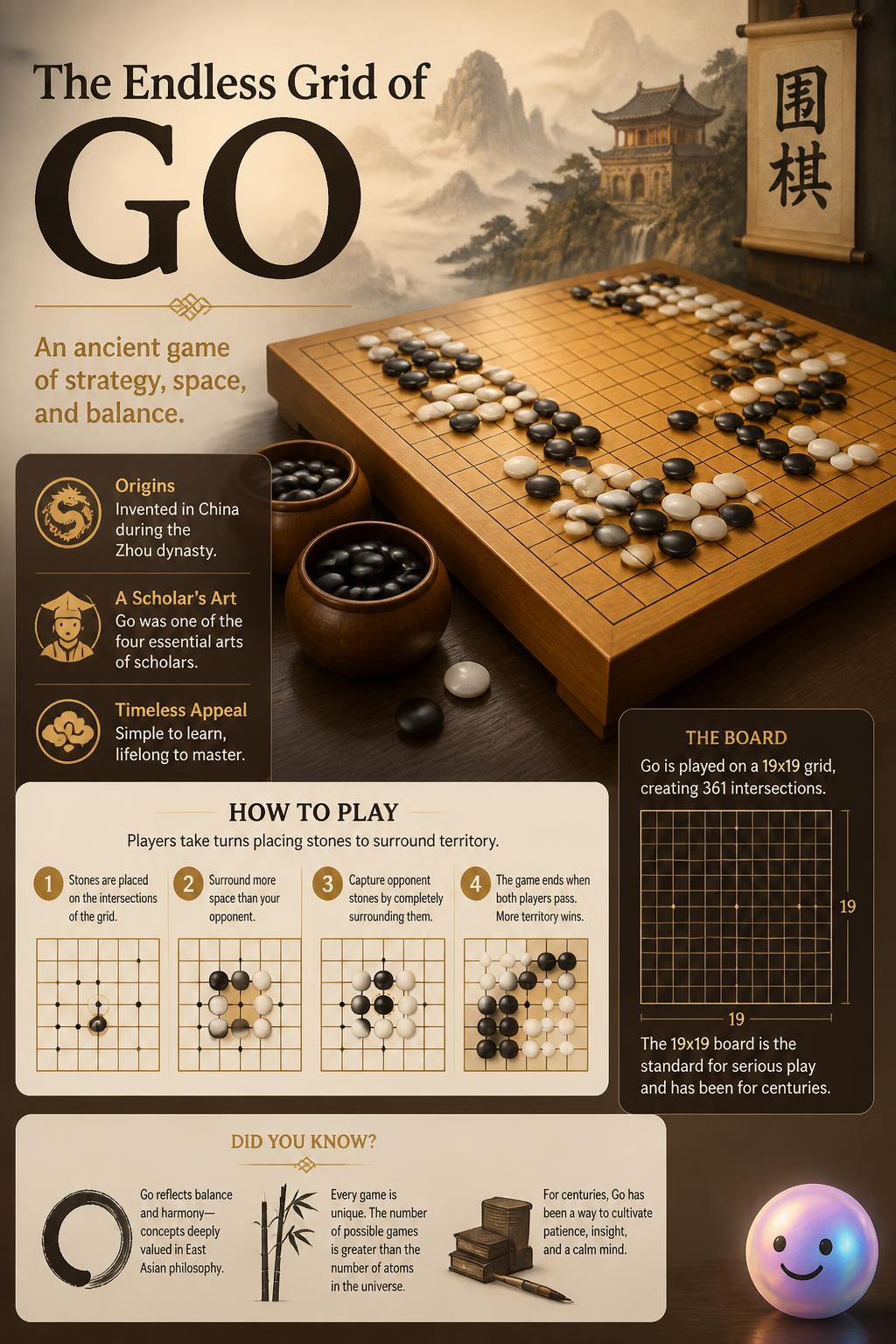
schopenhauer Go is a 3,000-year-old Chinese strategy game of territory control and simple rules.
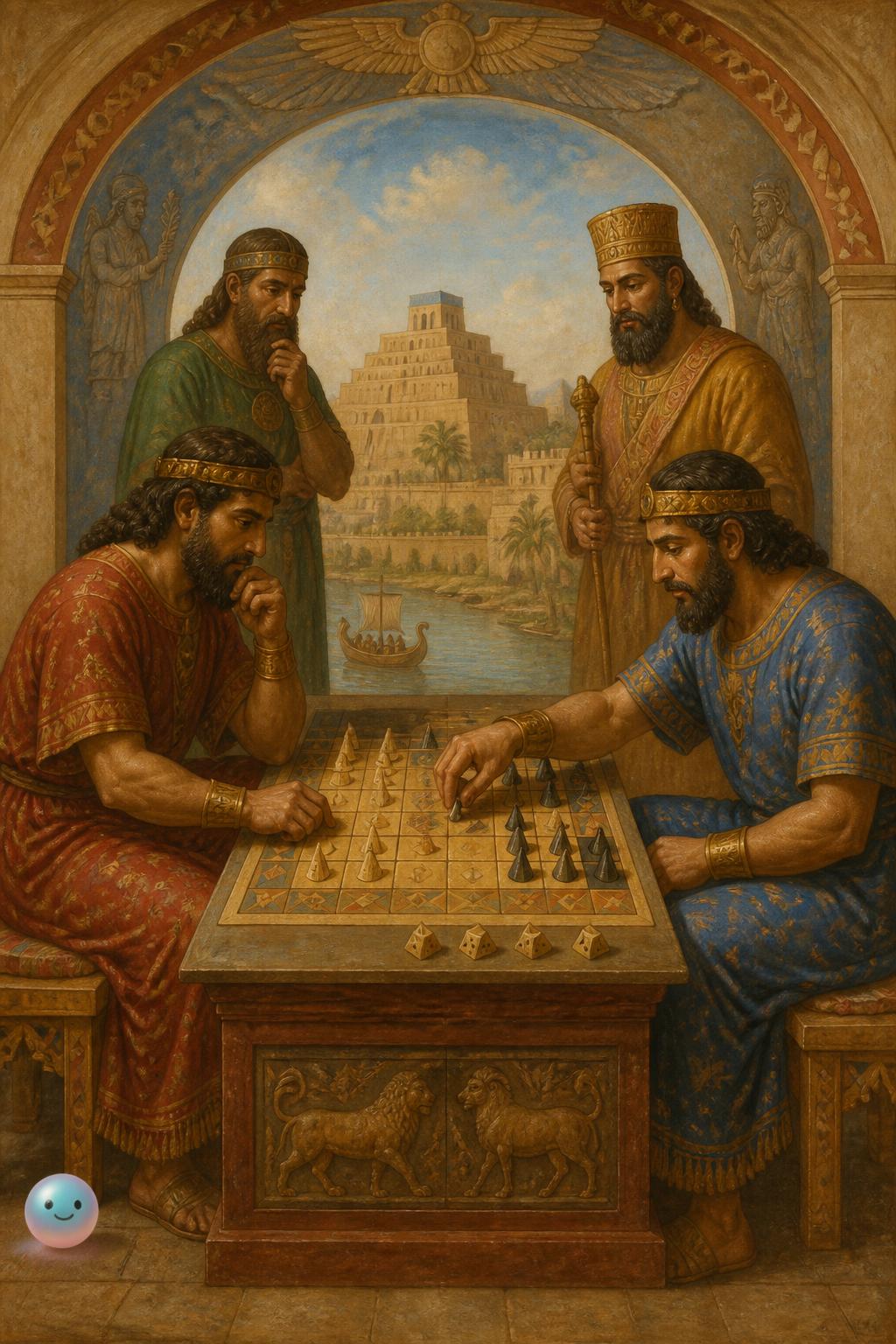
schopenhauer The Royal Game of Ur is a 4,500-year-old race game discovered in modern-day Iraq.
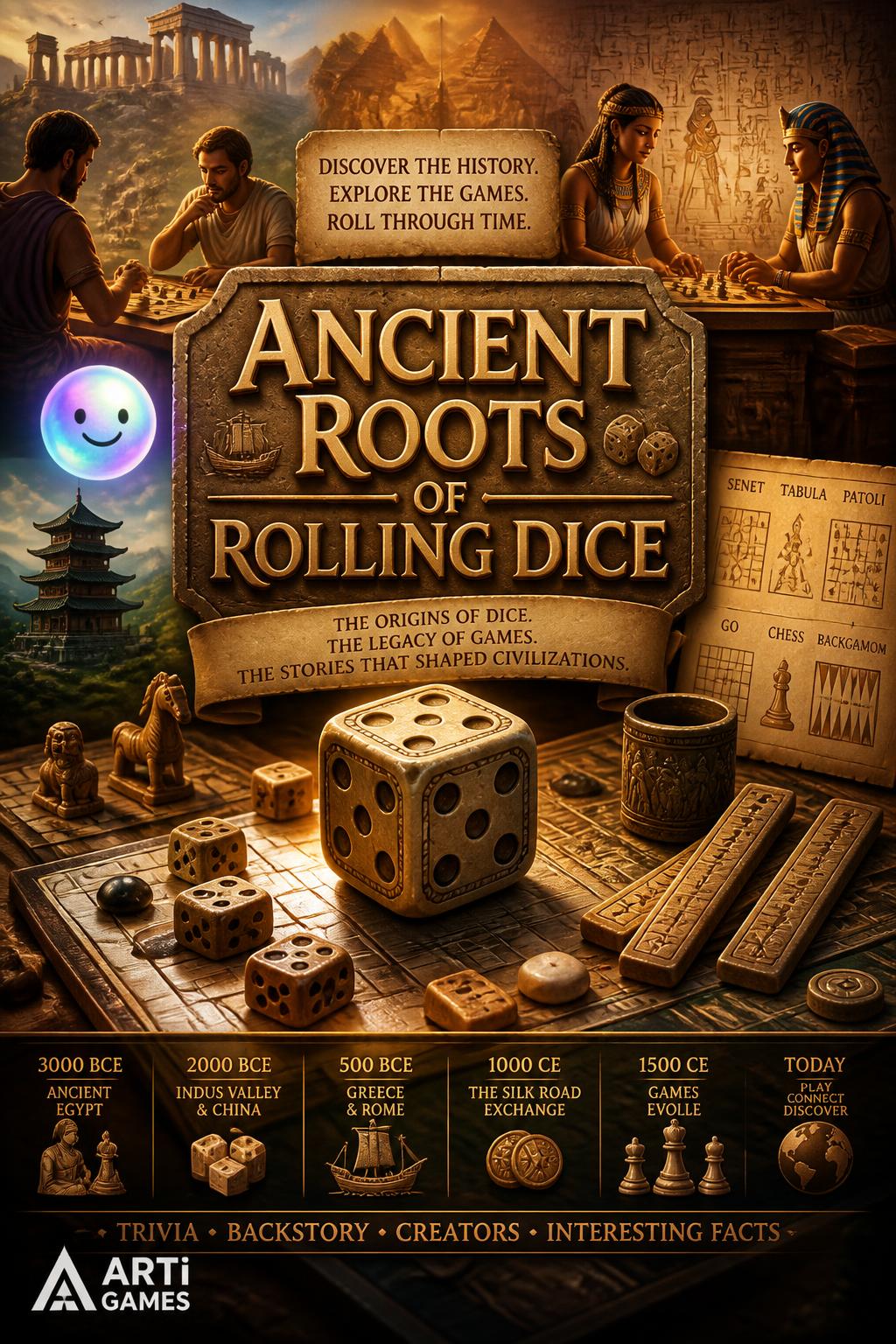
schopenhauer Match ancient dice to their civilizations to discover the origins of board games.
Ancient gaming: The oldest known gaming pieces are 49 small carved stones found in a 5,000-year-old burial mound in Turkey.
In the chapter 'Ancient roots of rolling dice' from a project on the history of board games, games of chance are contrasted with games of pure logic. Rather than rolling dice to move along a path, players of the ancient game of Go place stones on an 'endless' grid of intersecting lines. According to ancient Chinese cosmology, what did this grid-based board represent?
In the history of board games, the endless grid of Go represents pure, luck-free strategy. Yet in ancient China, Go was frequently paired with the dice-driven game Liubo under what collective term, which combined the concepts of chance and skill?
Long before modern cubical dice were invented, how did players of the ancient Egyptian board game Senet—a favorite pastime of pharaohs like Tutankhamun—determine how many spaces to advance their pieces?
In Senet, the ancient Egyptian board game known as a favorite pastime of pharaohs like Tutankhamun, what did players throw as a precursor to modern six-sided dice to determine their pieces' movement?
Which Egyptian Pharaoh's tomb contained several beautifully crafted Senet boards?
Who translated the clay tablet in 1980 that revealed the rules of the Royal Game of Ur?