Chapter 1
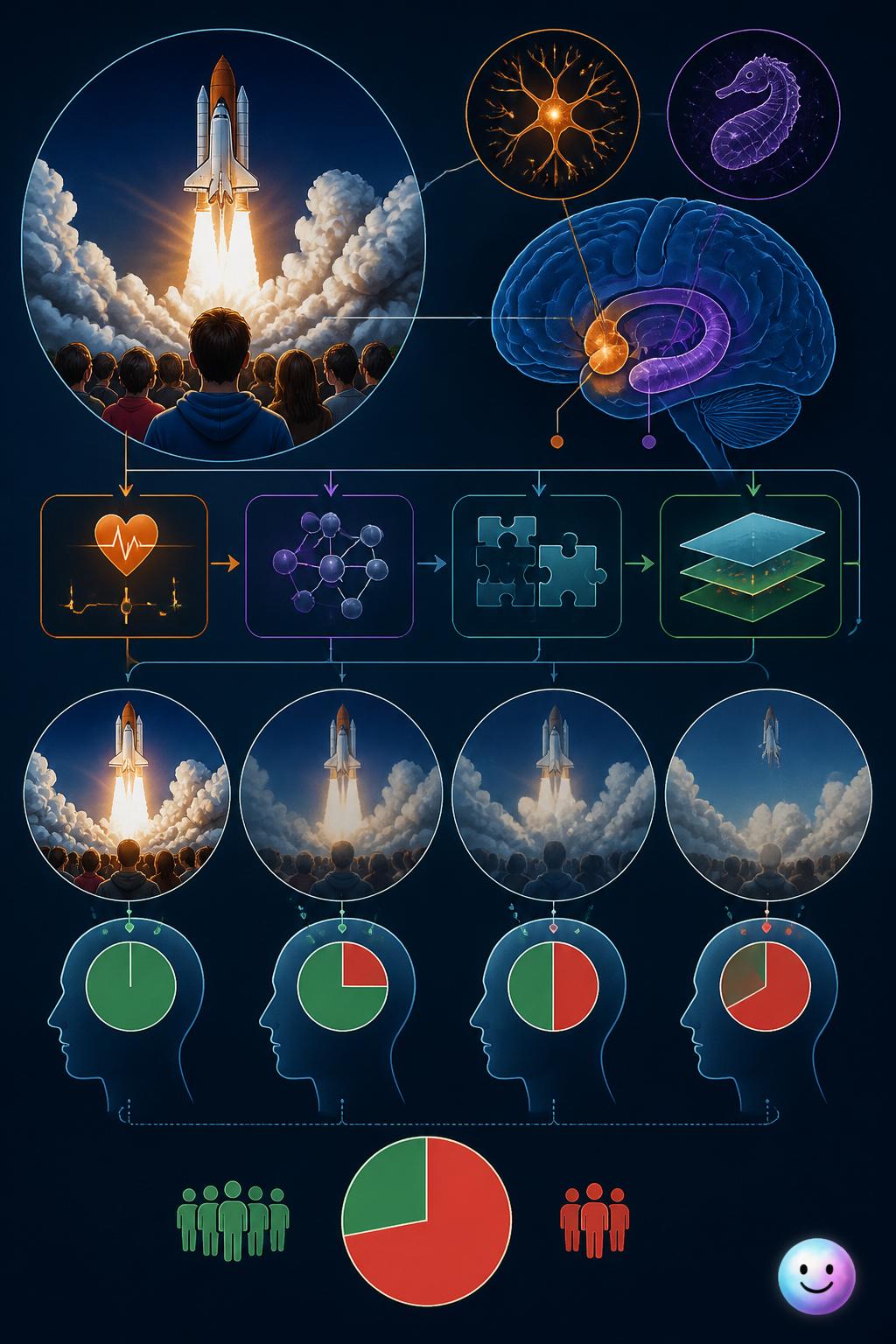
How the brain builds memories
Chapter 2
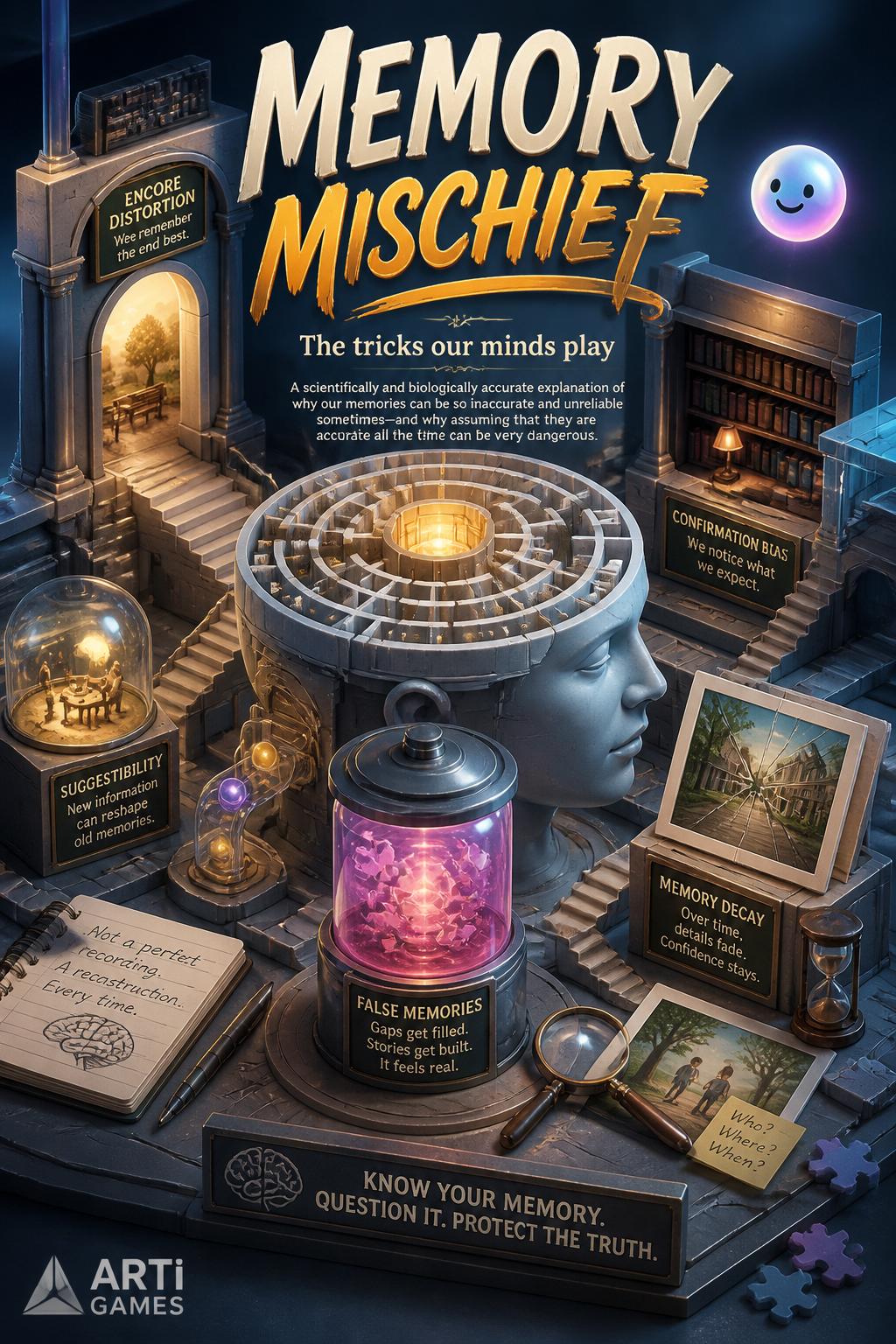
The tricks our minds play
Chapter 3
When false memories feel real
Chapter 4
The high stakes of memory errors
Ch 2 · The tricks our minds play
renaissanceman Highly emotional public events feel frozen in our minds but decay just like normal memories.
Quiz
In Ulric Neisser's 1986 study on the Challenger disaster, how did students' memories change after three years?
Quiz
What hormone, released during high stress, is known to impair the hippocampus's memory functions?
Quiz
What did changing 'a' to 'the' in questions about a broken headlight do to participants' answers?
Quiz
Which brain structure triggers the release of stress hormones that can disrupt memory encoding?
Quiz
Who conducted the famous 1974 'car crash' study demonstrating how suggestive language alters memory?
Quiz
Which cognitive bias causes us to remember events in a way that confirms our pre-existing beliefs?
Quiz
What are highly vivid memories of shocking, emotionally charged public events called?
Quiz
What is the phenomenon where a witness focuses on a threat, missing other details like the perpetrator's face?
renaissanceman Memory Reconsolidation
We're just rewriting the story every single time we remember
Fun Fact
Misleading words: In a 1974 study, people asked if they saw 'the' broken headlight instead of 'a' broken headlight were twice as likely to falsely remember it.
Glossary
false memory (noun)
A fabricated or distorted recollection of an event that did not actually occur. In 1995, Elizabeth Loftus demonstrated this phenomenon by implanting false childhood memories of being lost in malls.
A fabricated or distorted recollection of an event that did not actually occur. In 1995, Elizabeth Loftus demonstrated this phenomenon by implanting false childhood memories of being lost in malls.