
Chapter 1
The science of interval walking
Chapter 2
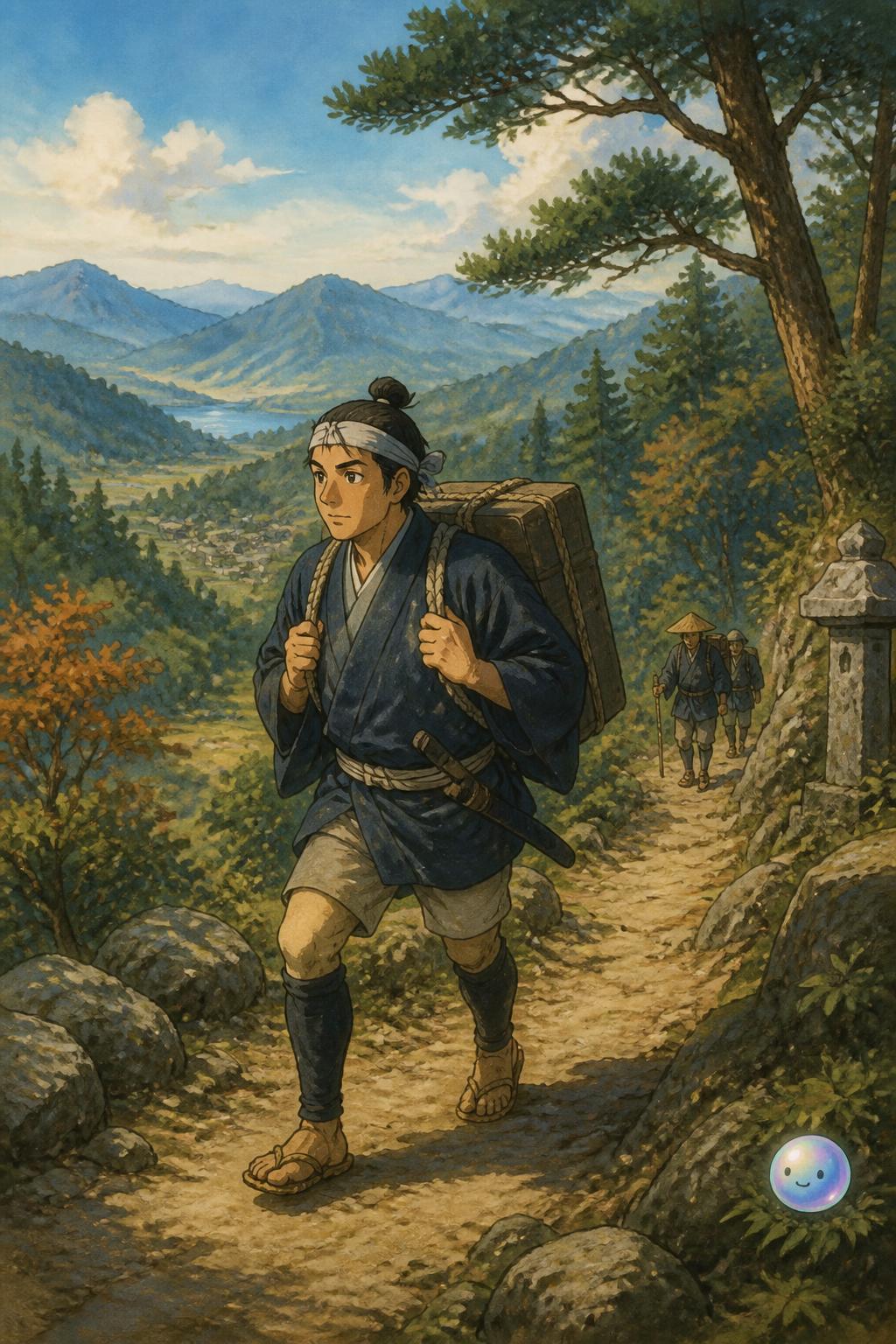
The samurai stride of Namba Aruki
Chapter 3
The myth of the 10,000 steps
Chapter 4
Shinrin-yoku and mindful walking
Ch 2 · The samurai stride of Namba Aruki
diego Discover the traditional Japanese walking method used by Edo period messengers to travel long distances quickly without getting tired.
Quiz
What were the traditional Edo-period express messengers who used Namba walking called?
Quiz
What type of traditional Japanese footwear made Namba walking highly practical on dirt roads?
Quiz
What traditional Japanese clothing item was protected from mud splashes by Namba walking?
BETA
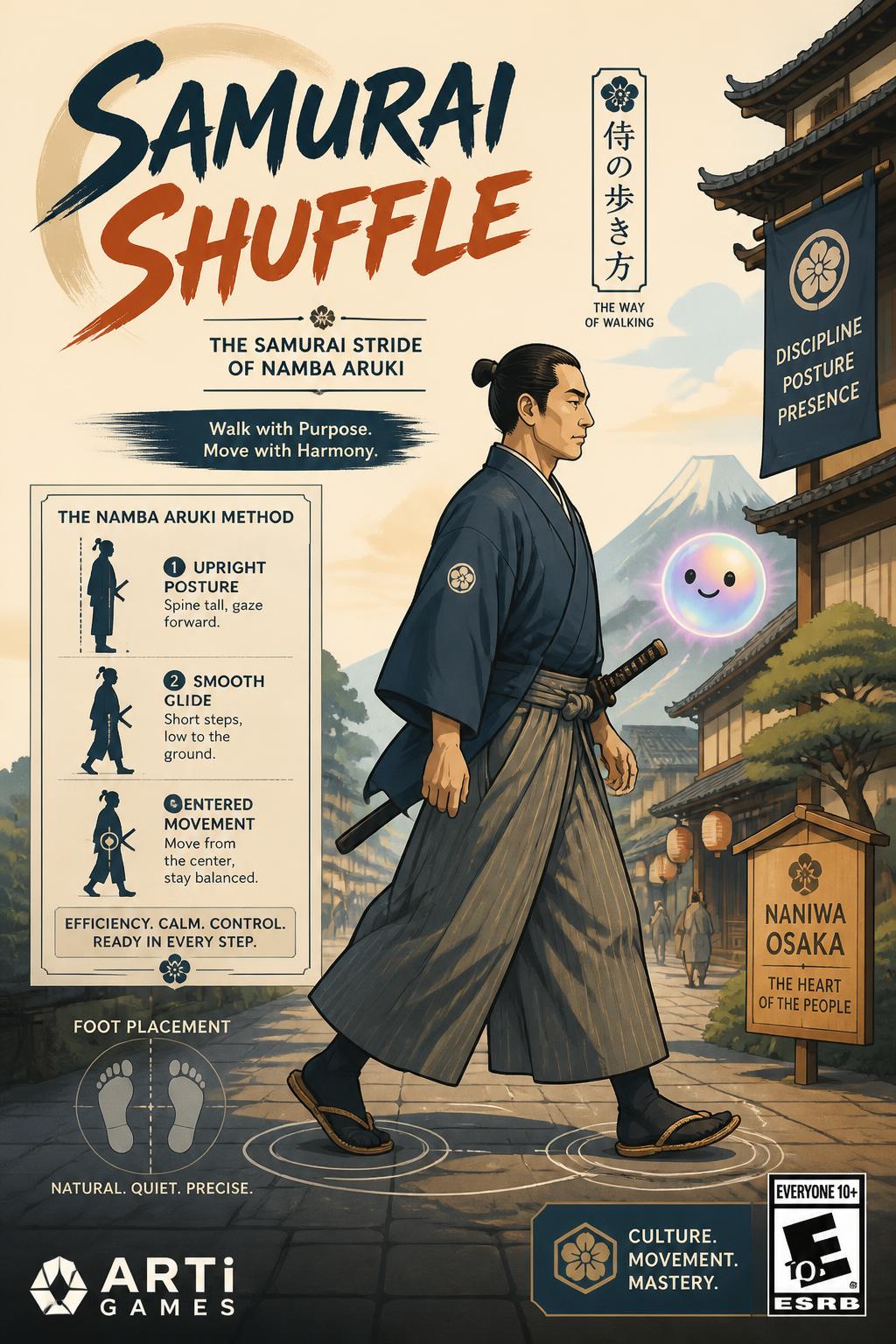
diego Play Samurai Shuffle and learn the traditional Japanese walking method of Namba Aruki. Master the unique samurai stride in this educational game.
Quiz
Which limbs move forward together in the traditional Japanese Namba Aruki walking style?
Quiz
How does Namba Aruki affect the twisting of the human spine compared to Western walking?
diego Namba Aruki
Move your same arm and leg together, keep your core steady and your sword perfectly still.
Fun Fact
Mud-free walking: Edo-period walkers used Namba Aruki to avoid splashing mud onto the backs of their traditional kimono trousers (hakama) while walking on unpaved streets.
Glossary
namba aruki (noun)
A traditional Japanese gait where the arm and leg on the same side move forward in unison. During the Edo period, Japanese warriors used this gait to keep their swords stable while traveling.
A traditional Japanese gait where the arm and leg on the same side move forward in unison. During the Edo period, Japanese warriors used this gait to keep their swords stable while traveling.