

BETA

esther Holding yoga poses hydrates stiff fascia, improving flexibility and reducing chronic pain.
esther Yoga increases brain volume in areas for emotional regulation and self-awareness, preventing mental decline.
esther Yoga reduces stress-induced inflammation, protecting your heart and boosting cardiovascular health.
esther Pranayama stimulates the vagus nerve, activating the parasympathetic system to lower heart rate and cortisol.
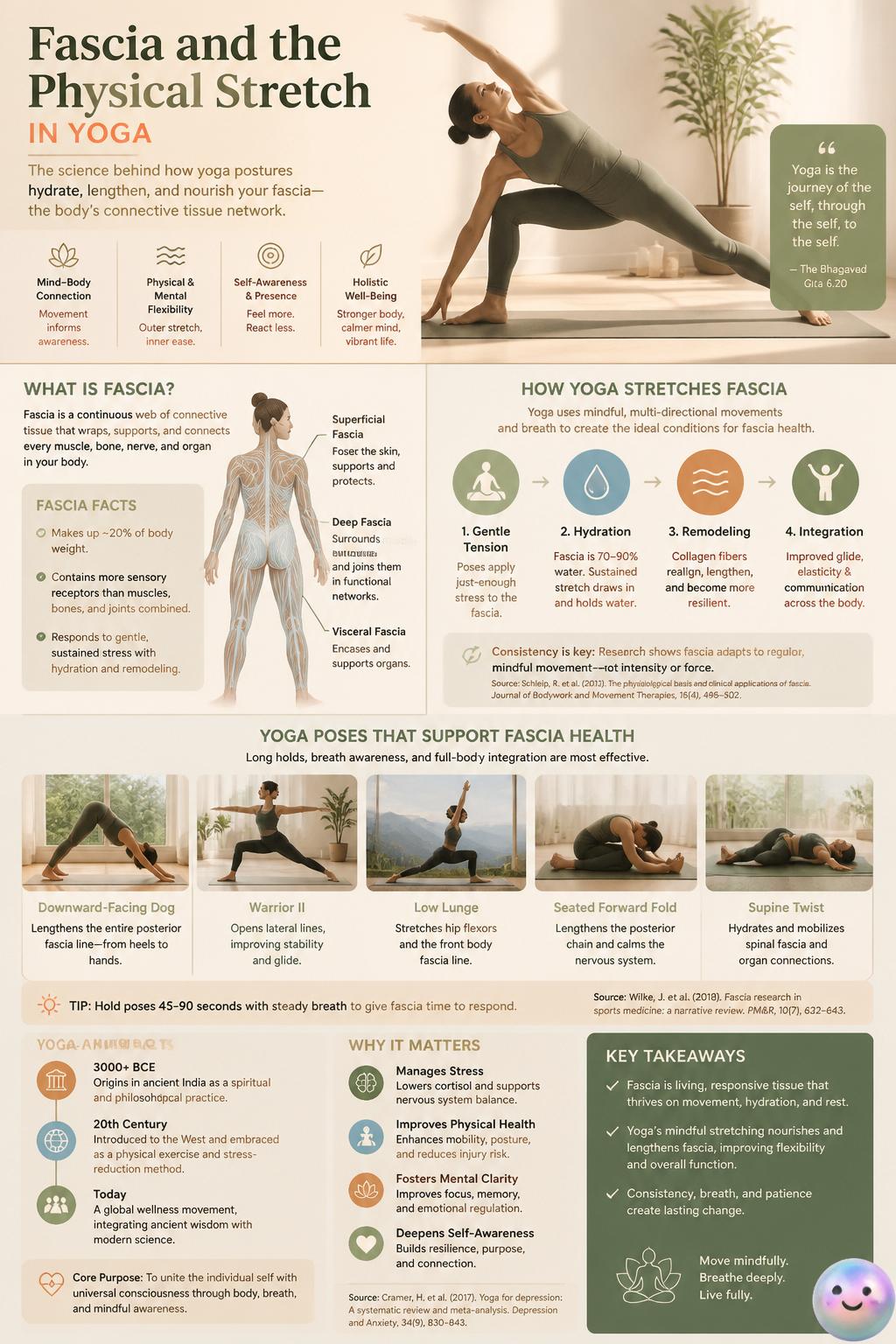
esther Yoga does not just stretch muscles; it targets fascia, the connective tissue wrapping around every muscle and organ.
Vagus nerve: Deep belly breathing tricks your brain into thinking you are completely safe, stopping the fight-or-flight response instantly.

esther Neuroscientists have found that regular yoga and meditation can physically increase brain gray matter and improve memory.
A major cardiology study found that yoga is as effective at improving heart health as which activity?
What is the classic relaxation pose, usually done at the end of a yoga class, called in Sanskrit?
According to brain scans, what physical change occurs in the brains of people who practice yoga regularly?
Which major nerve is stimulated during deep breathing, helping to trigger the body's relaxation response?
What is the Sanskrit term for the practice of breath control and life-force expansion in yoga?
What is the name of the web-like connective tissue in the body that yoga helps stretch and hydrate?
Which stress hormone's level is significantly reduced in the body after a session of yoga?