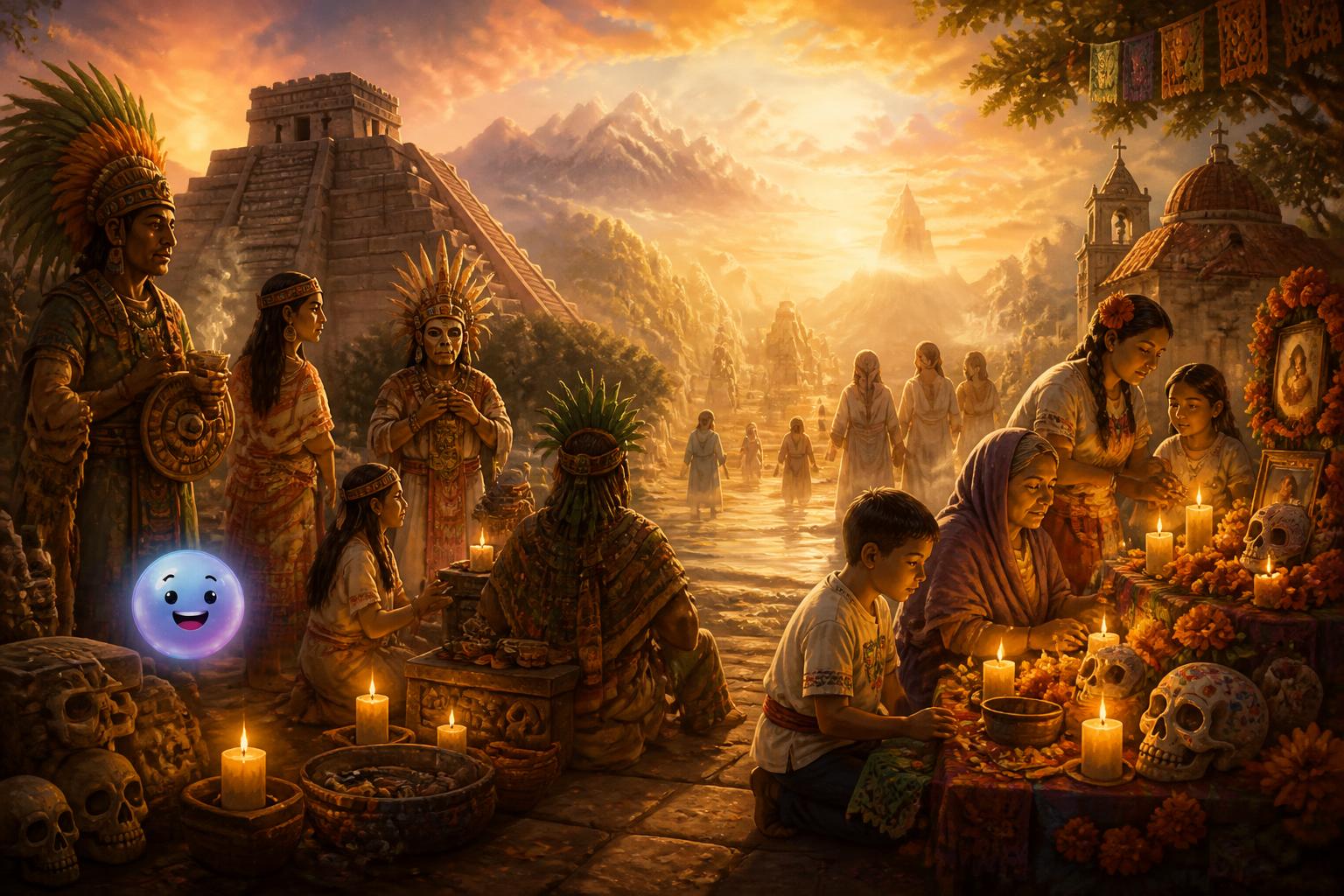
The Aztec underworld and the nine levels of Mictlan
Maya and Purepecha paths through the underworld
The colonial meeting and the blending of traditions
Modern altars and global tables of remembrance
YOUR GOAL
Master of The long road to Mictlan and the modern celebration of death
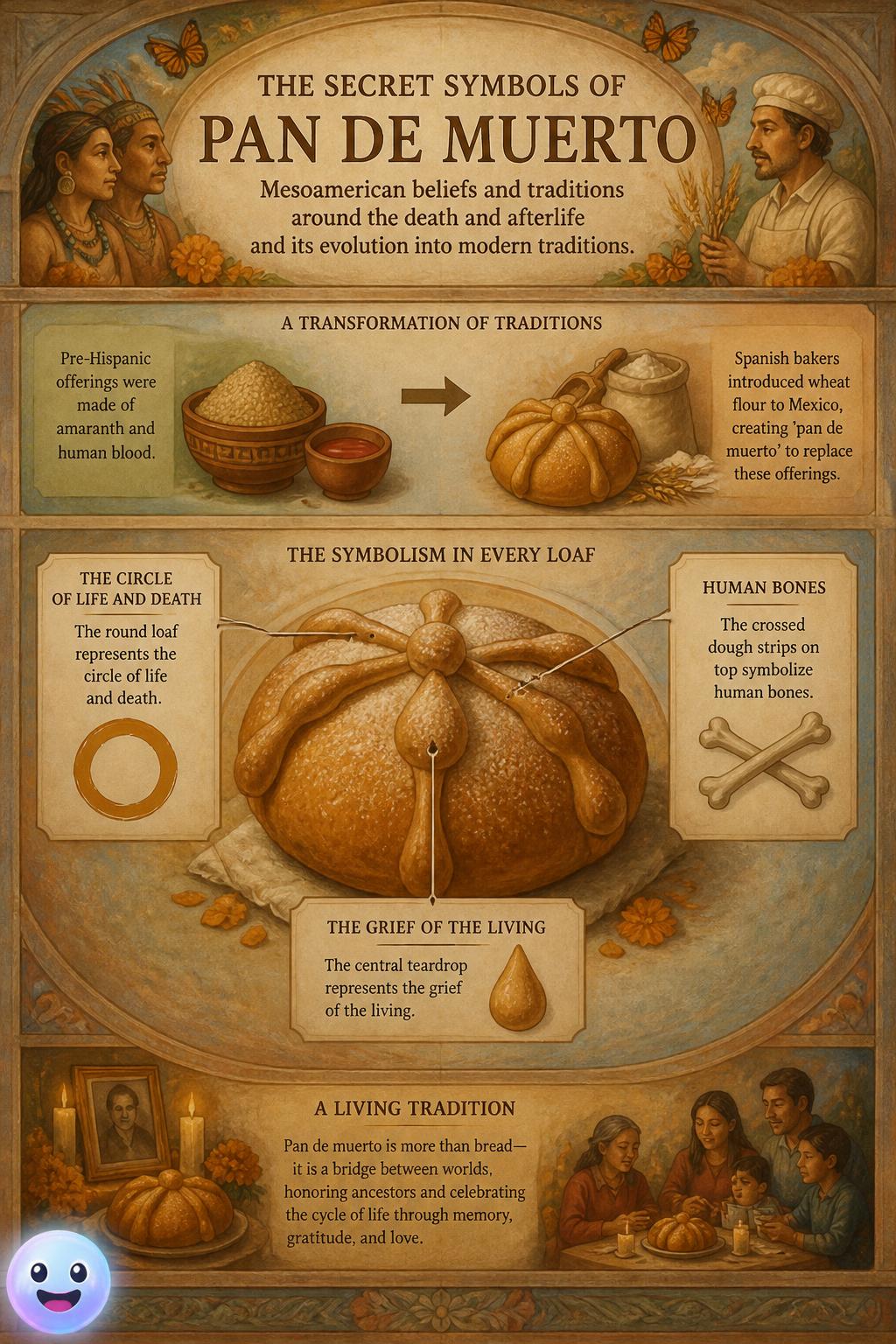
mankai Modern pan de muerto uses shaped dough to symbolize the circle of life, human bones, and the grief
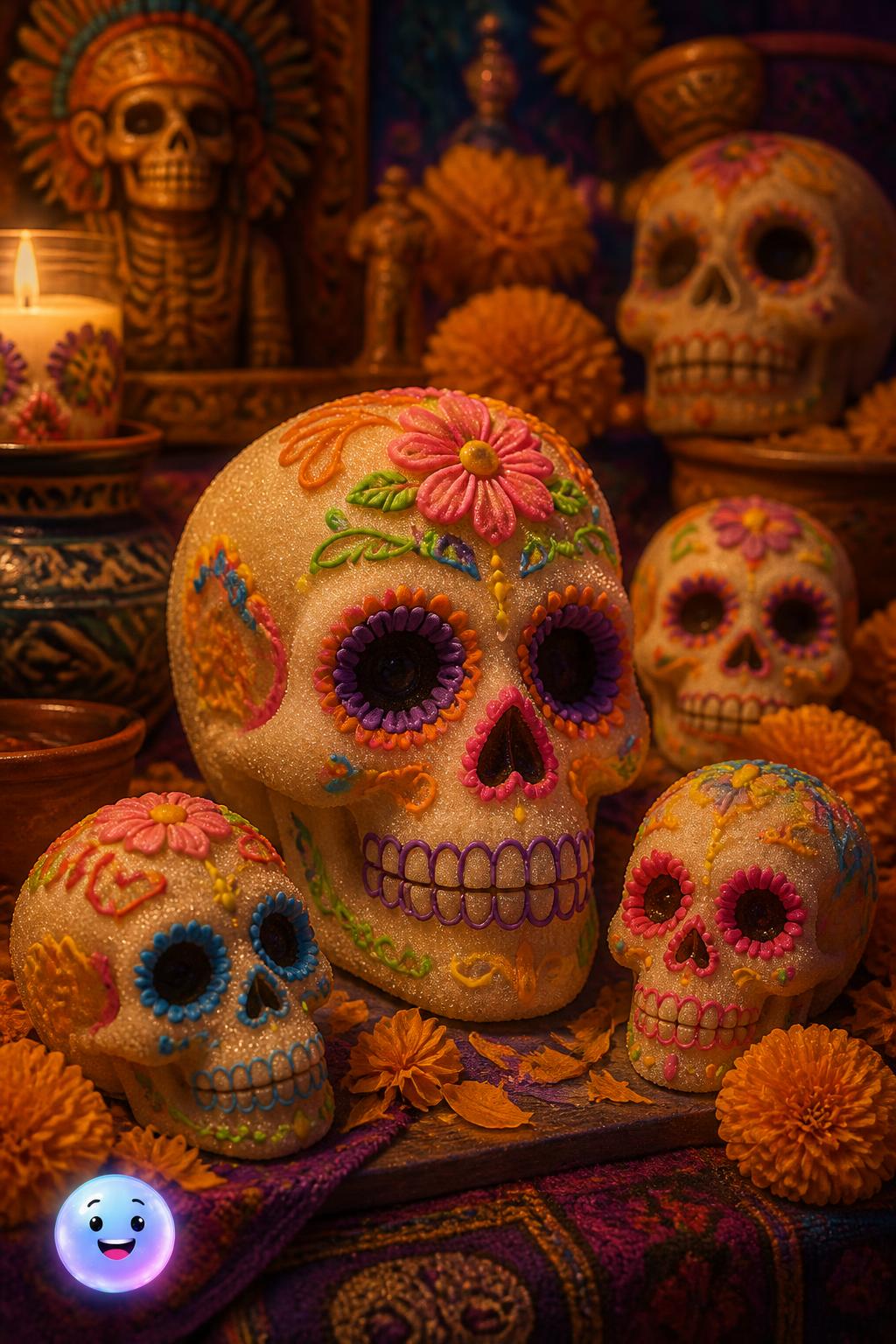
mankai Vibrant sugar skulls decorated with colorful icing patterns sit under warm, dramatic lighting.
mankai Match ancient afterlife symbols to discover how Mesoamerican beliefs evolved into modern traditions.
Sugar skulls: Sugar skulls were invented because 18th-century Mexican families couldn't afford imported church decorations, so they made art from cheap sugar paste.
The amalgamation of different religions, cultures, or schools of thought. In sixteenth-century Mexico, Spanish priests merged indigenous Aztec death rituals with Catholic All Saints' Day.
What term describes the blending of Spanish Catholic rites with indigenous Mesoamerican beliefs?
During which modern month did the Aztecs originally celebrate their main festivals for the dead?
What imported European craft technique inspired the creation of colorful Mexican sugar skulls?
Which celestial body did the Aztecs believe was represented by the yellow cempasúchil flower?
Which Catholic holidays did Spanish friars merge with pre-Hispanic death celebrations to create modern dates?
Why is the cempasúchil flower traditionally scattered in paths leading to Day of the Dead altars?