The humble origins of paper and paste
Pedro Linares and the birth of the alebrije
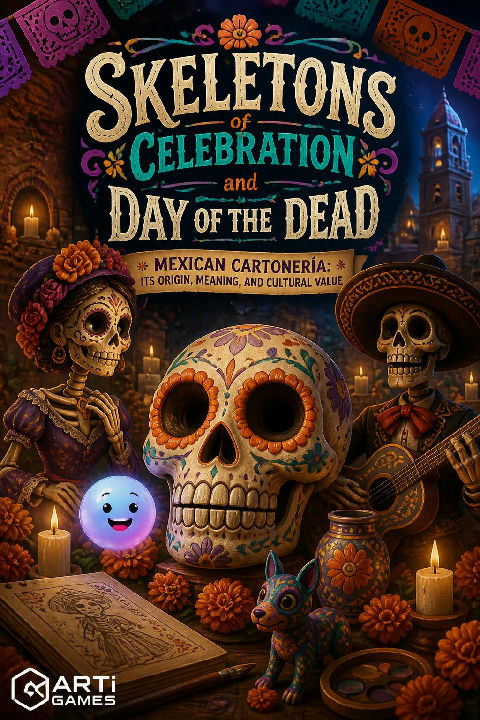
Skeletons of celebration and Day of the Dead
Regional masters and the modern global legacy
YOUR GOAL
Master of The paper monsters of Mexico
choko Artisans sculpt festive paper-mache skeletons that mimic everyday human activities.
choko Mexican Cartonería Skeletons
We mold the paper to bone! (Paper to bone!) / To watch the skeletons dance! (Watch them dance!)
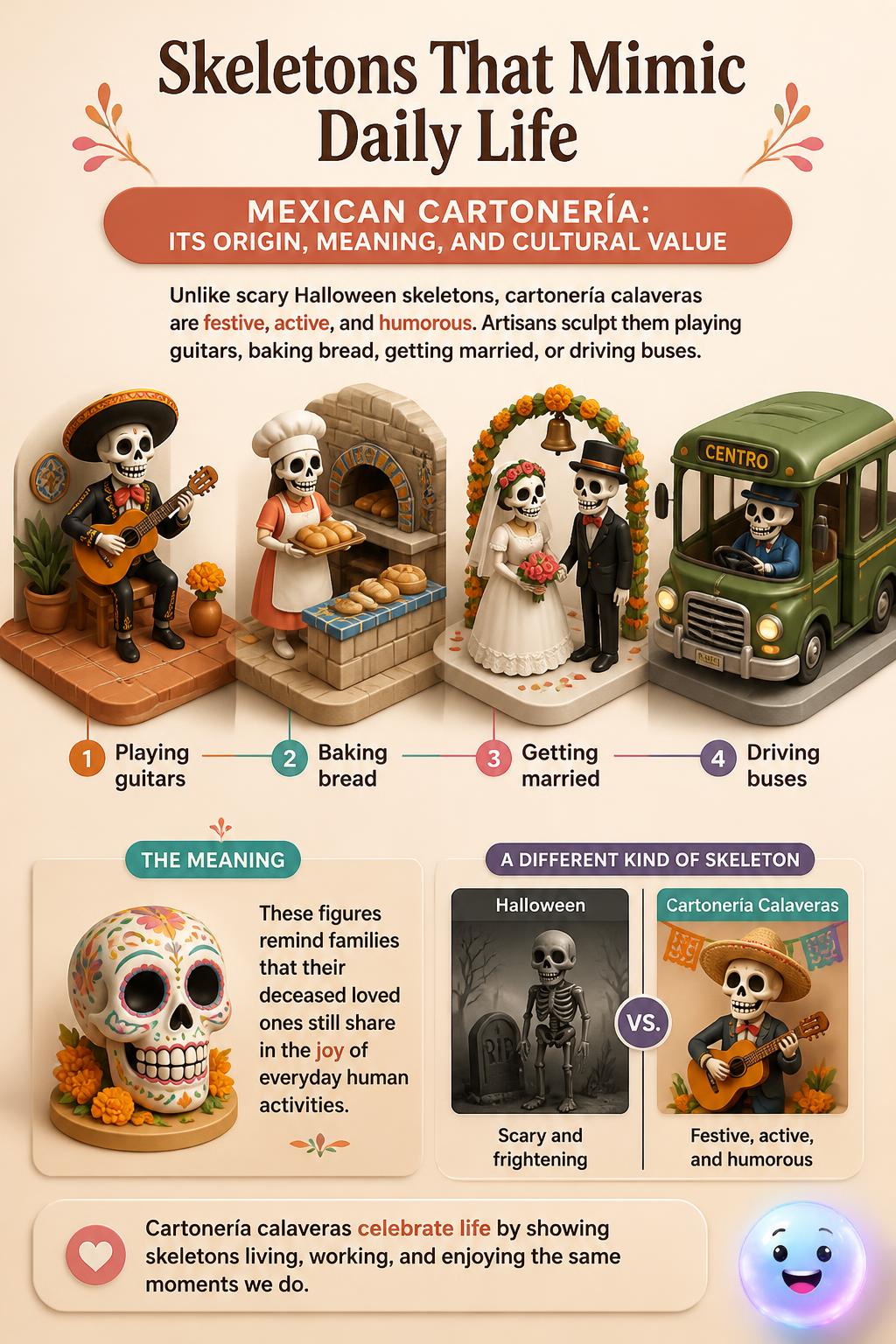
choko Artisans sculpt these festive, active skeletons baking bread, playing guitars, or driving buses to connect the deceased with
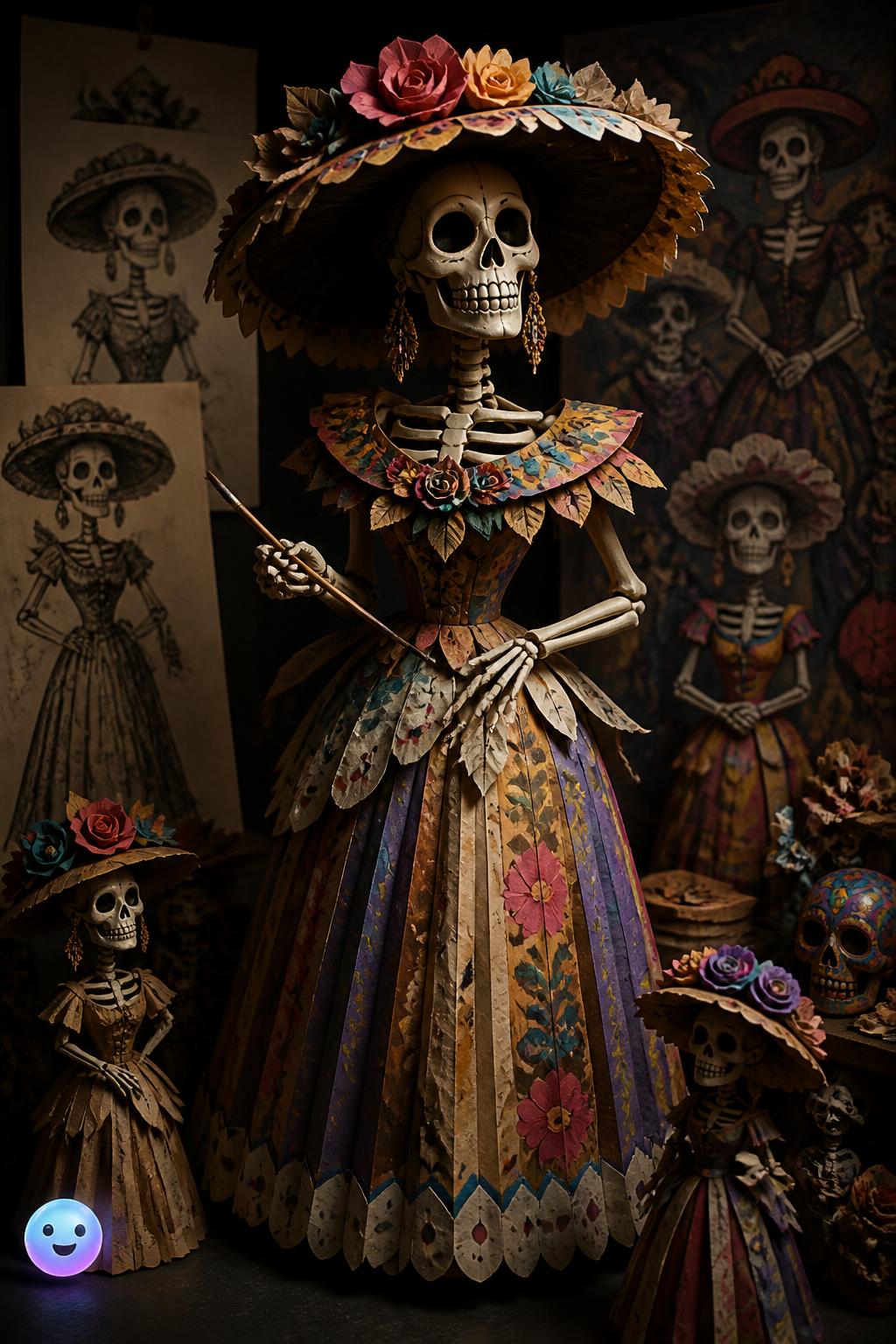
choko A glossy paper-mâché skeleton lady in an elegant gown glows under dark studio lights.
choko Assemble festive skeletons to discover the cultural value of Day of the Dead cartonería.
Sugar vs. Paper: While sugar skulls are meant to be eaten or dissolve, cartonería skeletons are made to last for years, often passed down through generations.
A representation of a human skull used as a festive symbol. The Linares family of Mexico City famously crafts these papier-mâché pieces for annual holiday altars.
What is the primary artistic philosophy behind portraying cartonería skeletons doing normal human jobs?
Which famous Mexican muralist gave 'La Catrina' her name and painted her in a full-body dress in 1947?
What are the traditional clay molds called that cartoneros use to shape paper-mâché skulls?
Who was the 19th-century Mexican printmaker whose satirical skeleton illustrations inspired modern cartonería calaveras?
During which major Mexican holiday are cartonería calaveras most prominently displayed on home altars?
What was the original name of the skeleton character that later became known as 'La Catrina'?
What satirical message did Jose Guadalupe Posada convey through his famous skeleton drawings?