Quiz
According to the philosopher Arthur Schopenhauer in his work 'The World as Will and Representation', what does it mean to say the world is a 'representation'?

Take this quiz on Arthur Schopenhauer's philosophy. Do you know how he defined the relationship between the human intellect and the Will?
According to the philosopher Arthur Schopenhauer in his work 'The World as Will and Representation', what does it mean to say the world is a 'representation'?
schopenhauer World as Will and Representation
My mind paints the picture (it's representation!) / But a blind force drives it all (oh-oh, the Will!)
schopenhauer In 1819, Schopenhauer argued that an unconscious, aimless force drives everything from gravity to human desire.
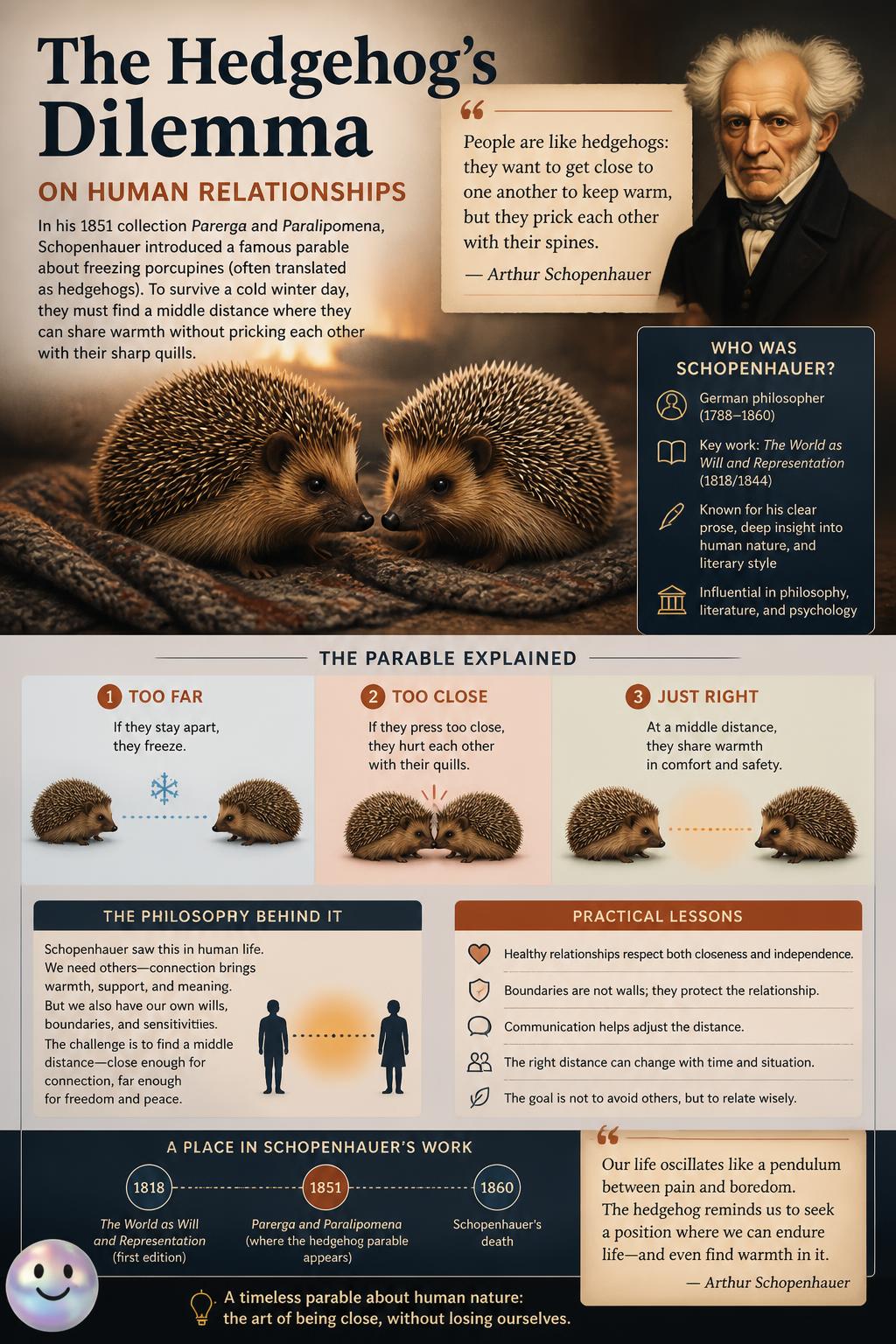
schopenhauer Humans are like cold hedgehogs who need closeness for warmth but keep their distance to avoid hurting each other with their spines.
Philosopher's poodle: Arthur Schopenhauer left a significant portion of his estate to his final poodle, Butz, to ensure the dog was cared for after his death in 1860.

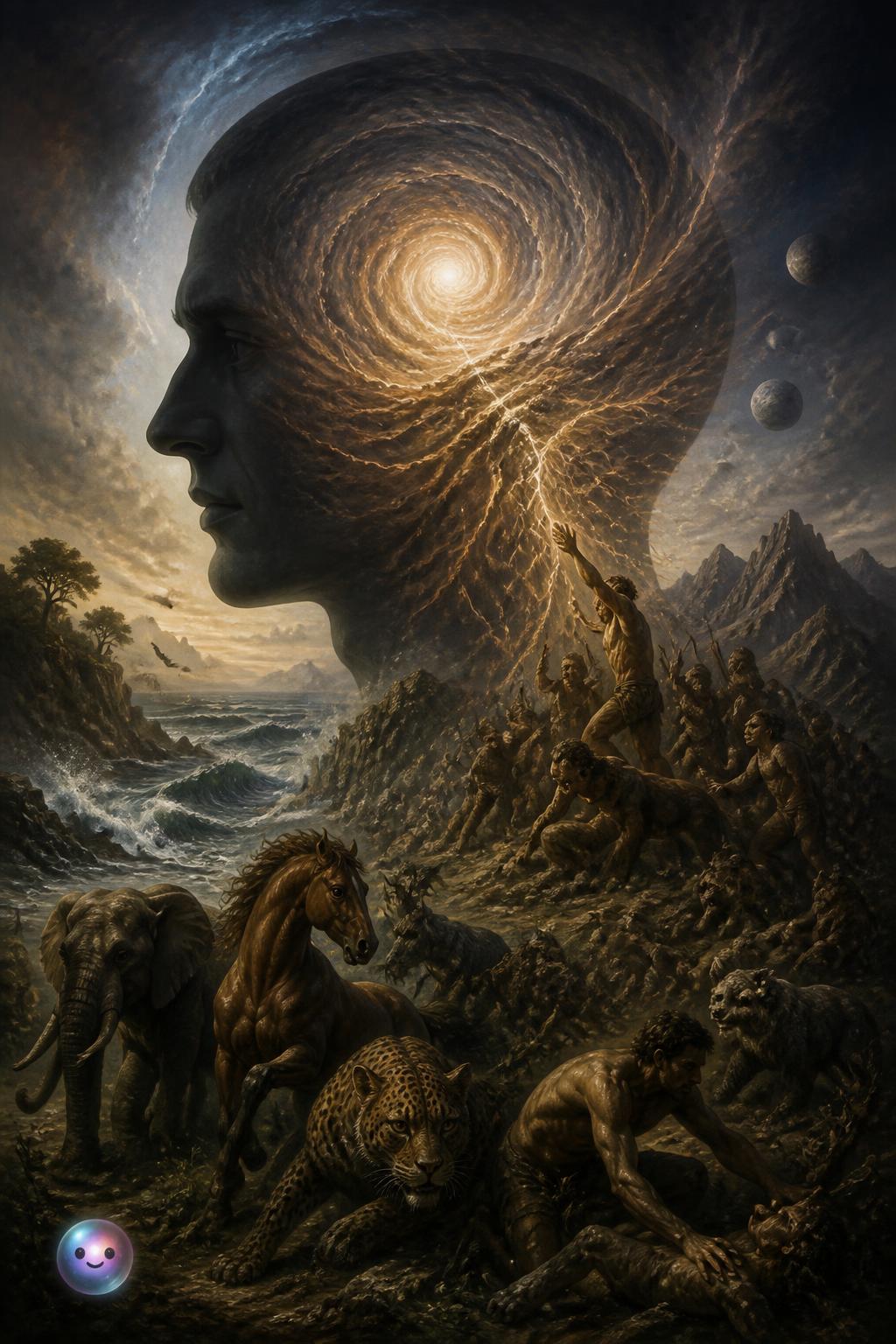
schopenhauer Beneath our conscious thoughts lies a blind, endless urge to exist and reproduce, which Schopenhauer called the Will.
In which 1819 book did Arthur Schopenhauer outline his core theory that the world is divided into mental perception and a driving force?

schopenhauer Swipe away endless desires to discover how Schopenhauer's Will shapes our world.
schopenhauer Understand Arthur Schopenhauer's hedgehog's dilemma and what this philosophical concept reveals about the challenges of human intimacy.
schopenhauer Schopenhauer lived with white poodles named Atman, arguing that animal cruelty is linked to human cruelty.
In which German city did Arthur Schopenhauer spend his final decades living quietly with his pet dogs?
schopenhauer Explore Arthur Schopenhauer's philosophy and maxims explaining how the human brain functions like a movie projector in this educational video.
In Schopenhauer's famous hedgehog parable, what are the animals trying to balance when they huddle together?
Which earlier German philosopher heavily influenced Schopenhauer's view that we cannot experience the outer world directly?
What Sanskrit name did Arthur Schopenhauer give to his beloved pet poodles, reflecting his interest in Indian philosophy?