
The world as representation and will
The pendulum of desire and pain
Eastern wisdom meets Western thought
The art of being happy
YOUR GOAL
Master of The philosophy of Arthur Schopenhauer
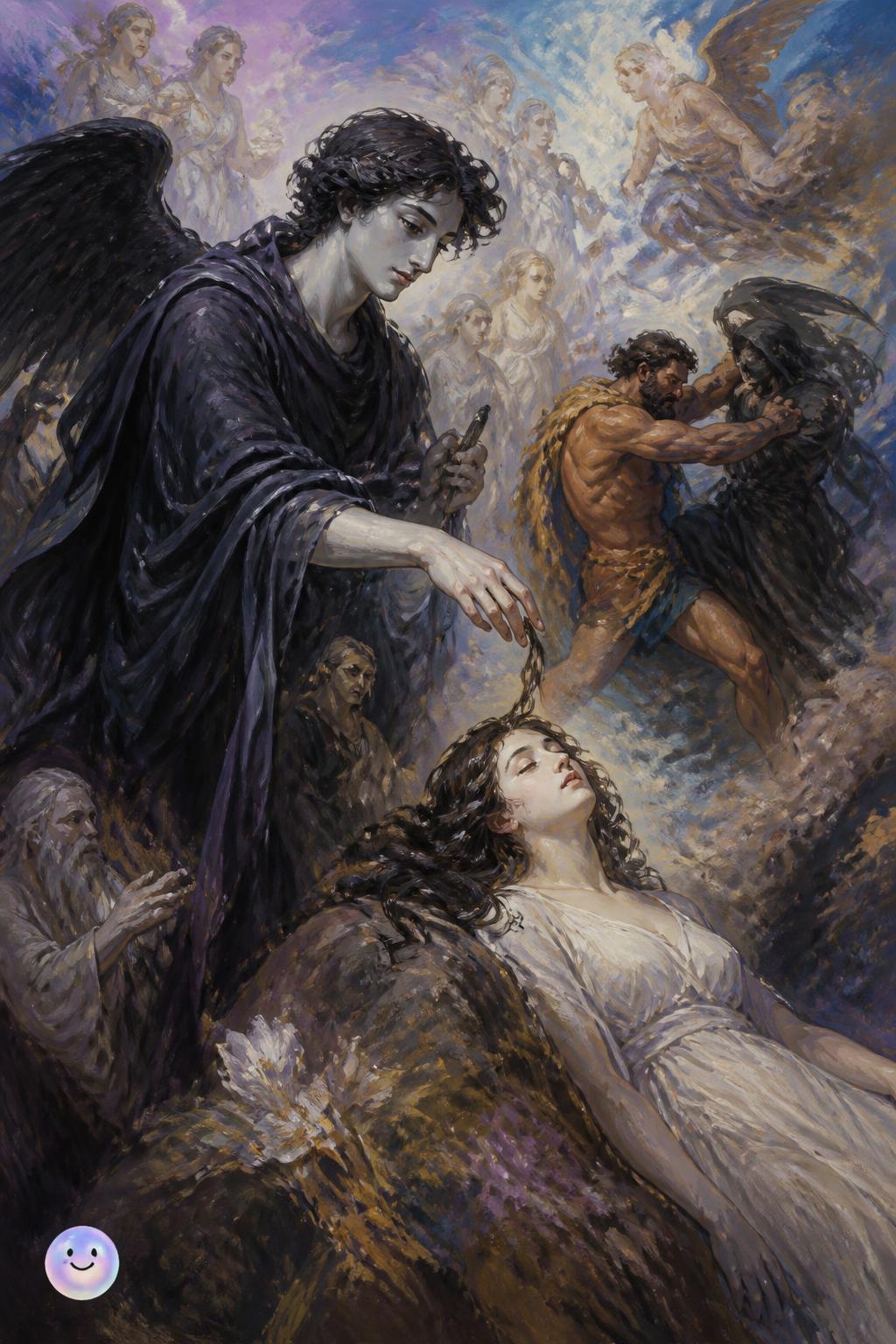
schopenhauer Eastern and Western Philosophy
Sanskrit on the desk, / Peace to heal the stress, / East and West coalesce.
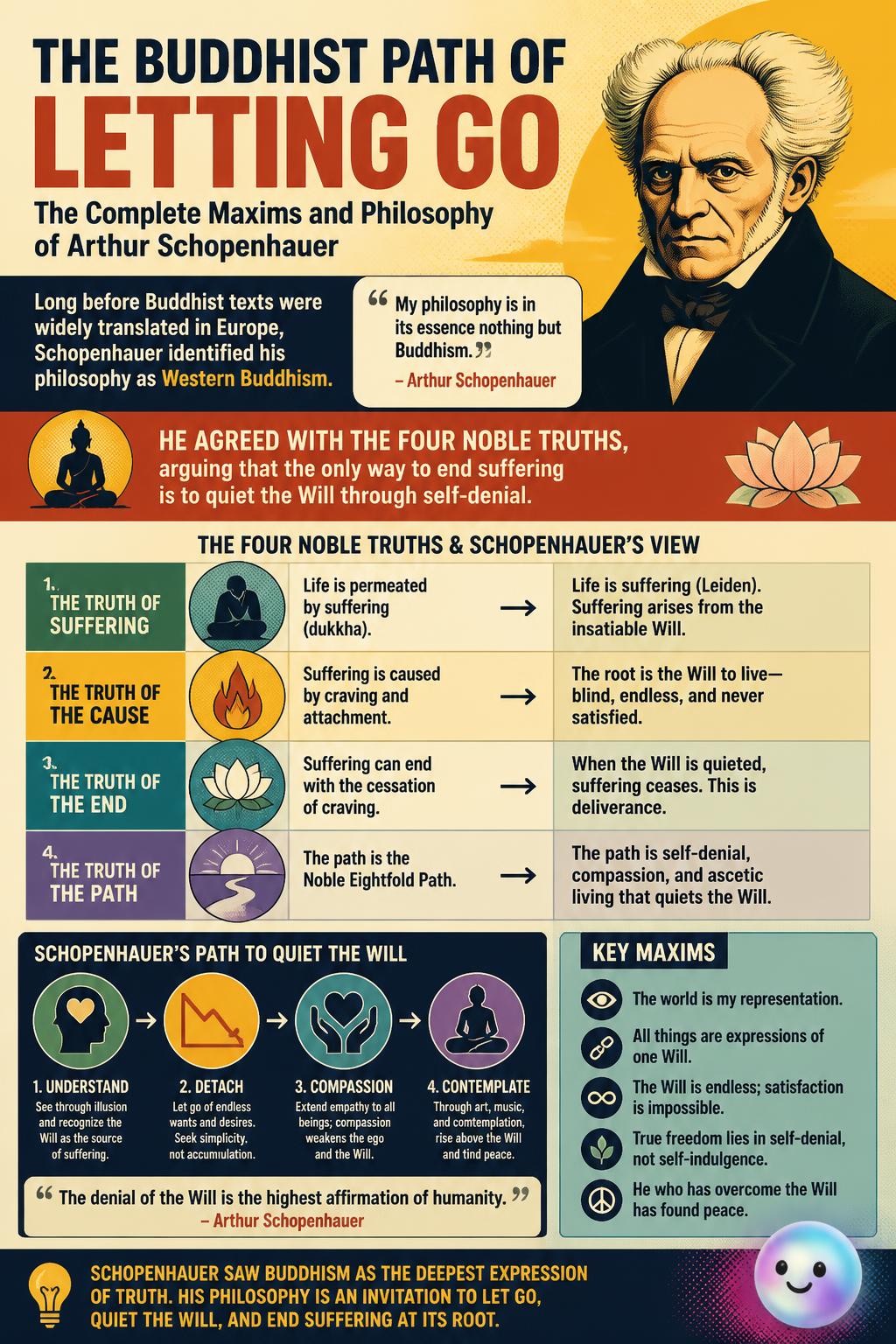
schopenhauer Schopenhauer recognized that his views on suffering and the denial of desire perfectly mirrored the core teachings of Buddhism.

schopenhauer He adopted the Indian concept of 'Maya' to explain how our brains trick us into thinking we are separate from others.

schopenhauer Sort daily desires and distractions to discover Arthur's maxims for true peace of mind.
A Western Buddha: Visitors to Schopenhauer's study in Frankfurt noted he kept a large, gilded bronze statue of the Buddha on his desk next to a bust of Immanuel Kant.
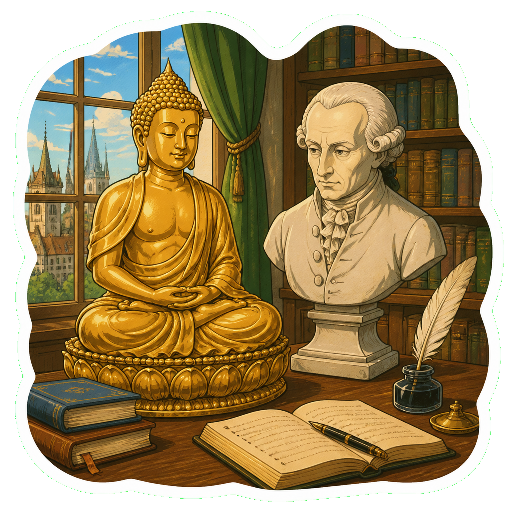
A category of ancient Sanskrit texts containing the central philosophical concepts of Hinduism. Arthur Schopenhauer discovered these texts in 1814, famously calling them the consolation of his life.
Which Buddhist teaching aligns perfectly with Schopenhauer's view that life is full of struggle caused by desire?
In his 1840 book on ethics, what German word did Schopenhauer use for the active compassion that drives moral actions?
Who translated the Persian version of the Upanishads into Latin, which Schopenhauer read in 1814?
Which ancient Sanskrit texts did Arthur Schopenhauer read every night, calling them the 'consolation of my life'?
What ancient Indian concept did Schopenhauer use to describe the illusion that we are all separate individuals?
Which major world religion did Schopenhauer feel his philosophy most closely resembled?