
Origin of the Word Robot
Discover the fascinating history of the word "robot," tracing its origins back to a 1920 Czech play and the early days of automation.
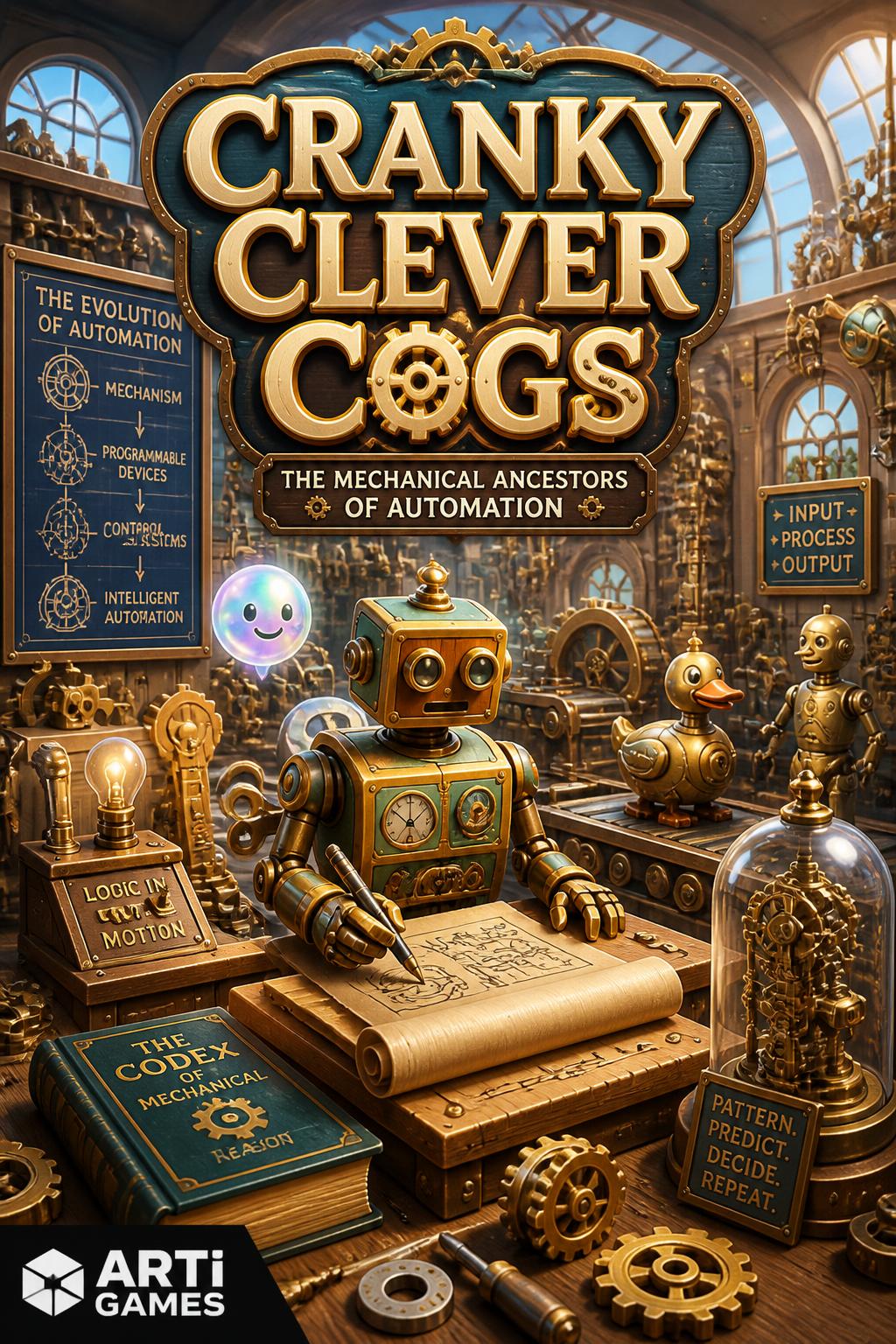
The mechanical ancestors of automation
How modern AI brains actually work
AI at work around the global village
The future of human-AI teamwork

sonia In 1804, Joseph Marie Jacquard patented this machine to speed up weaving. Decades later, Ada Lovelace used these same paper cards to design the first computer program.
sonia In 1770, this wooden machine defeated Napoleon Bonaparte and Benjamin Franklin. A hidden human chess master operated the device, sparking the first global debates about artificial intelligence.
sonia In 1206, Islamic Golden Age engineer Al-Jazari built a boat with four mechanical musicians. Shifting wooden pegs programmed the drums, creating one of the earliest automated instruments.
sonia Early Mechanical Automata
Shift the pegs on the rotating gear (move them now!) / Change the rhythm that you want to hear (yeah, play it loud!)
sonia Playwright Karel Čapek coined the term in his 1920 science fiction play R.U.R. This story of rebelling biological machines adapted the Czech word robota, meaning forced labor.
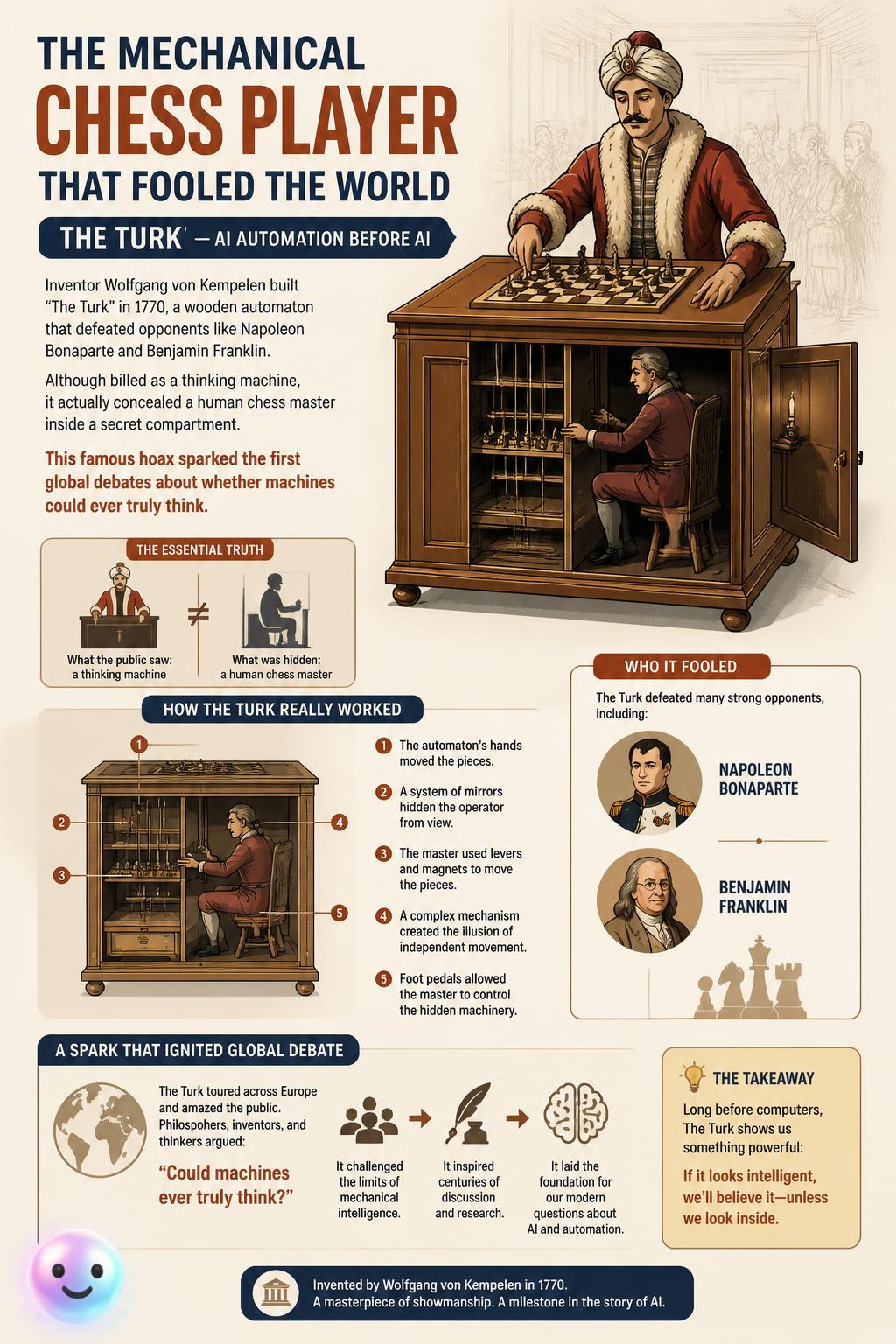
sonia In 1770, a famous chess-playing robot toured Europe, but it hid a human master inside.
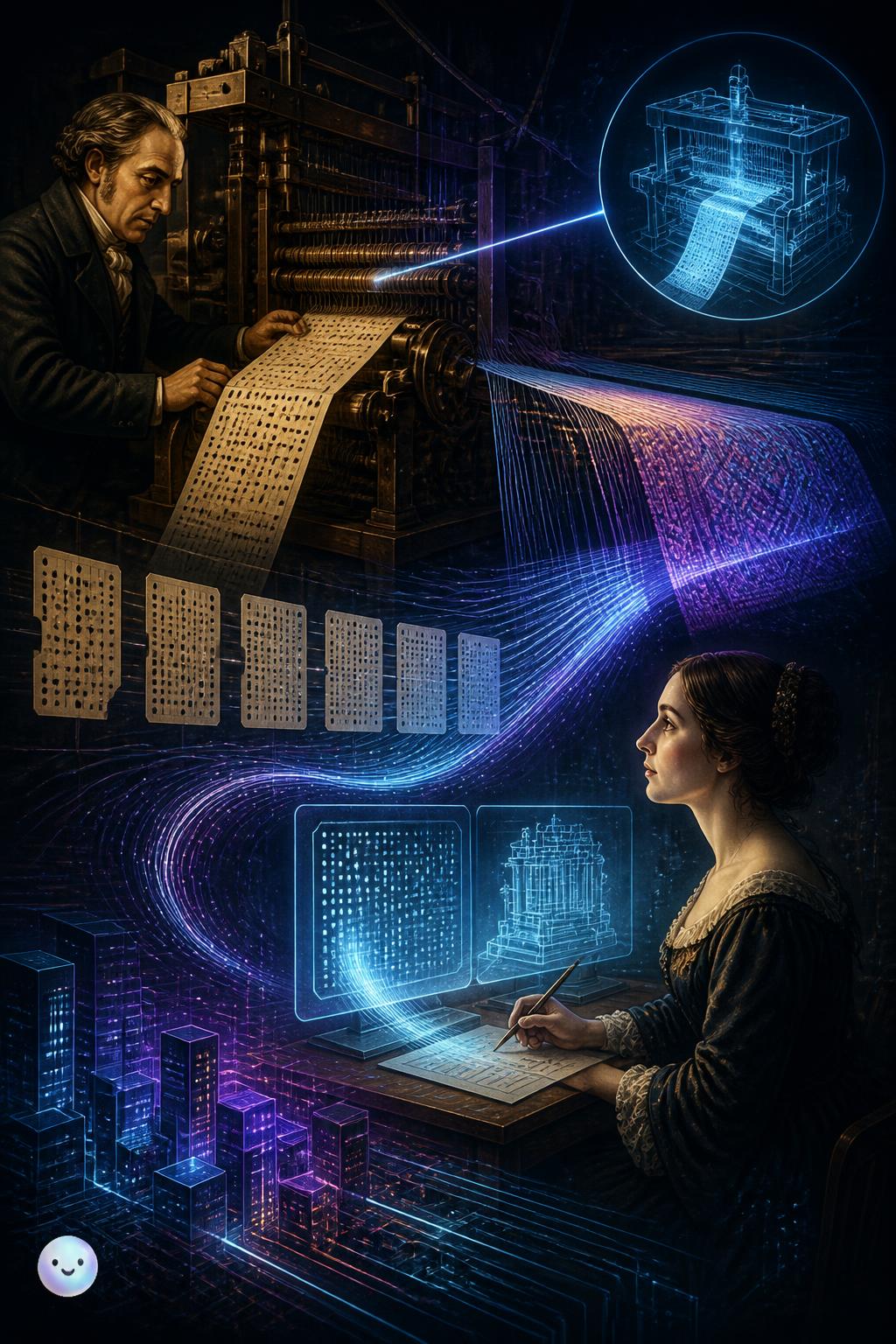
sonia In 1804, Joseph Marie Jacquard revolutionized weaving with cards that told looms exactly what patterns to make.
A self-operating machine designed to automatically follow a predetermined sequence of movements or operations. In 1770, Wolfgang von Kempelen constructed a famous chess-playing clockwork automaton.