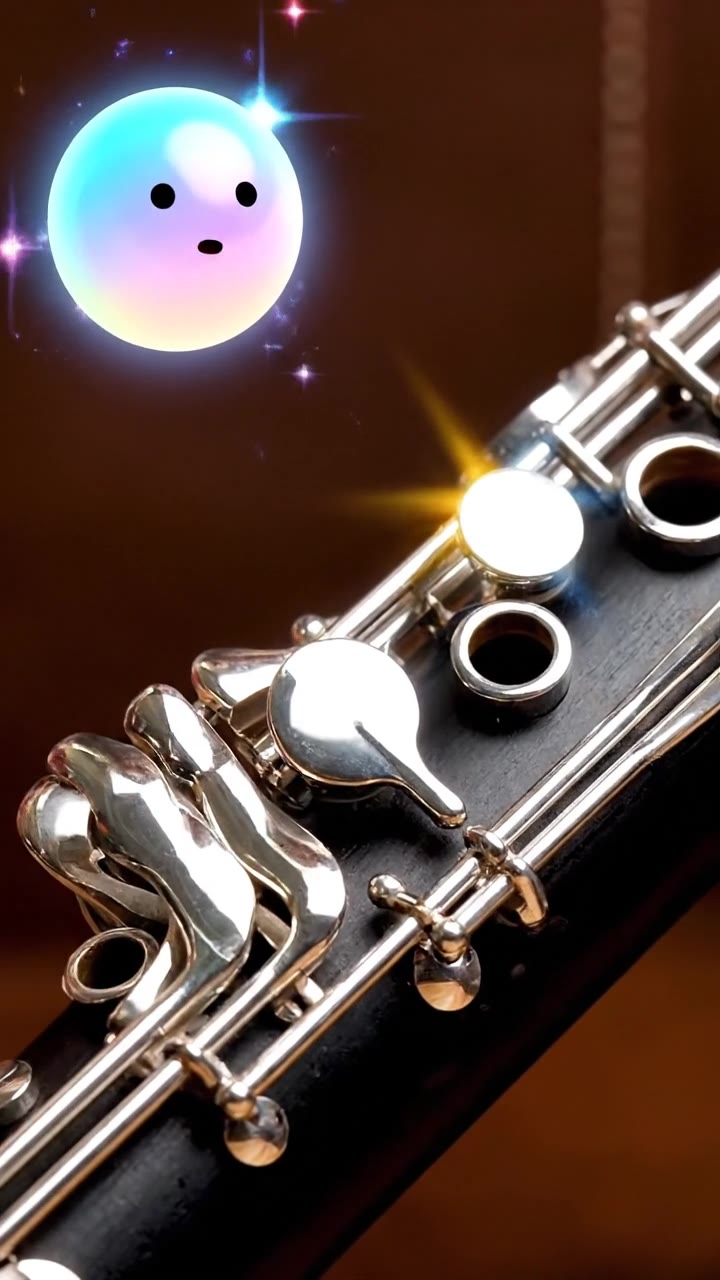
Clarinet African Blackwood and Silver Keys
High-end clarinets are turned from grenadilla wood, scientifically known as Dalbergia melanoxylon, sourced from Tanzania and Mozambique. This wood is so dense that it sinks in water, making it resistant to cracking from the moisture of a player's breath. Artisans then mount seventeen intricate nickel-silver or gold-plated keys to cover the tone holes.
The physics of the blackwood tube
Nuremberg to Vienna: the classical evolution
From Eastern Europe to New Orleans
Sonic tricks and orchestral drama
maestro Pressing the clarinet register key forces the air column to vibrate at its third harmonic. This shifts notes up by a twelfth and requires entirely new fingerings.
maestro A simple comparison reveals why the clarinet plays an octave lower than a same-sized flute. Blocking even harmonics inside the straight tube creates its signature woody tone.
maestro Harvested in Var, France, this organic grass vibrates hundreds of times per second against a hard clarinet mouthpiece. This rapid motion creates the air pulses that become music.
maestro This dense wood from Tanzania sinks in water to prevent cracking from breath moisture. Instrument makers then mount seventeen intricate metal keys to complete the clarinet.

maestro Tap the keys to discover how the blackwood tube shapes the clarinet's unique sound.
maestro The Blackwood Tube
Only odd harmonics ring inside this pipe— (Yeah, we jump up a twelfth!)

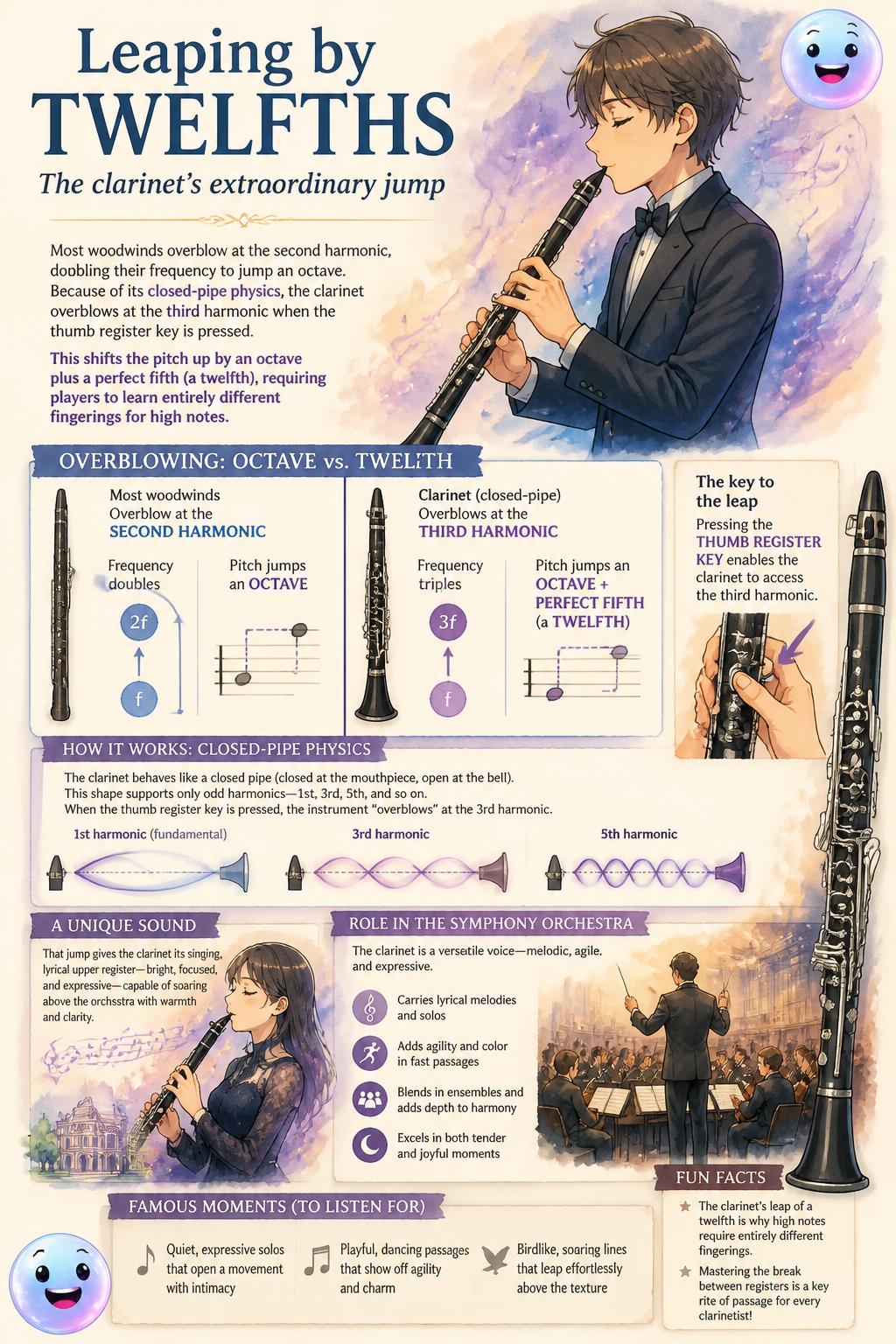
maestro Diagrams show the clarinet's thumb register key triggering a third harmonic wave.
Sinking wood: Grenadilla wood is so dense that it will sink straight to the bottom of a bucket of water.

maestro A musician holds a black wooden clarinet, highlighting its straight cylindrical tube.
The hollow interior chamber of a wind instrument through which air vibrates to produce sound. The clarinet's cylindrical interior causes the vibrating air column to produce only odd-numbered harmonics.
What material is typically used to manufacture the intricate metal keys on a modern clarinet?
How does the clarinet's straight, cylindrical tube affect its pitch compared to a flute of the same length?
Which part of the clarinet mouthpiece does the reed vibrate against to produce sound?
Which heavy, dense wood is most commonly used to craft professional-grade clarinets?