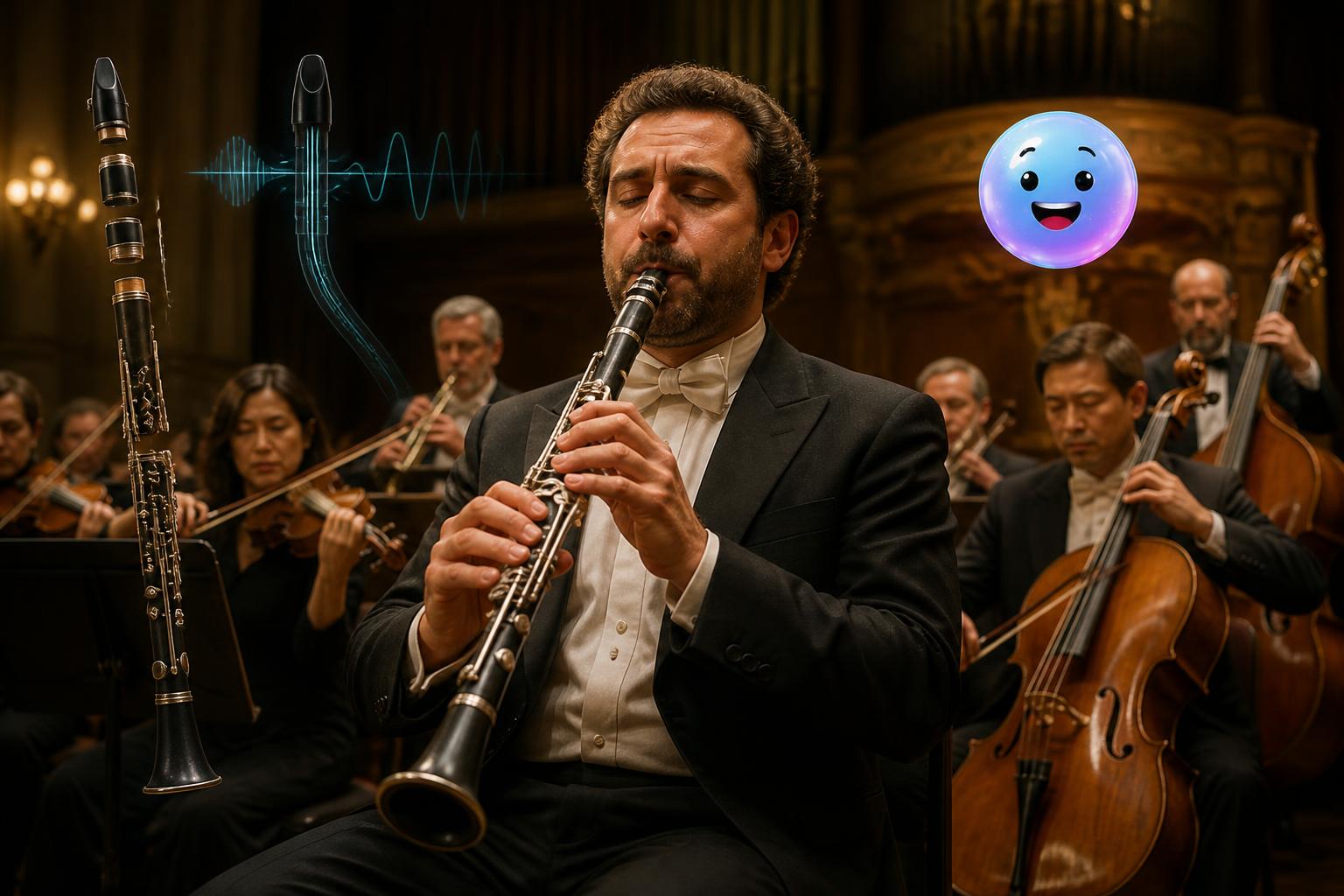
Would you rather play high-speed solos or slow, emotional melodies?
The physics of the blackwood tube
Nuremberg to Vienna: the classical evolution
From Eastern Europe to New Orleans
Sonic tricks and orchestral drama
maestro In Nuremberg, Germany, Denner added a register key to a recorder-like chalumeau. This simple modification unlocked brilliant high notes that sounded like a little trumpet.
maestro Performers demonstrate how the instrument mimics a deep cello in its dark chalumeau register and a soaring soprano in its bright clarion and piercing altissimo ranges.
maestro Mozart befriended performer Anton Stadler and fell in love with his custom basset clarinet. In October 1791, he completed the famous Clarinet Concerto in A major.
maestro In 1839 Paris, Hyacinthe Klosé and Louis-Auguste Buffet adapted flute ring keys to the clarinet. This system of movable rings and needles still gives modern clarinetists incredible playing speed.
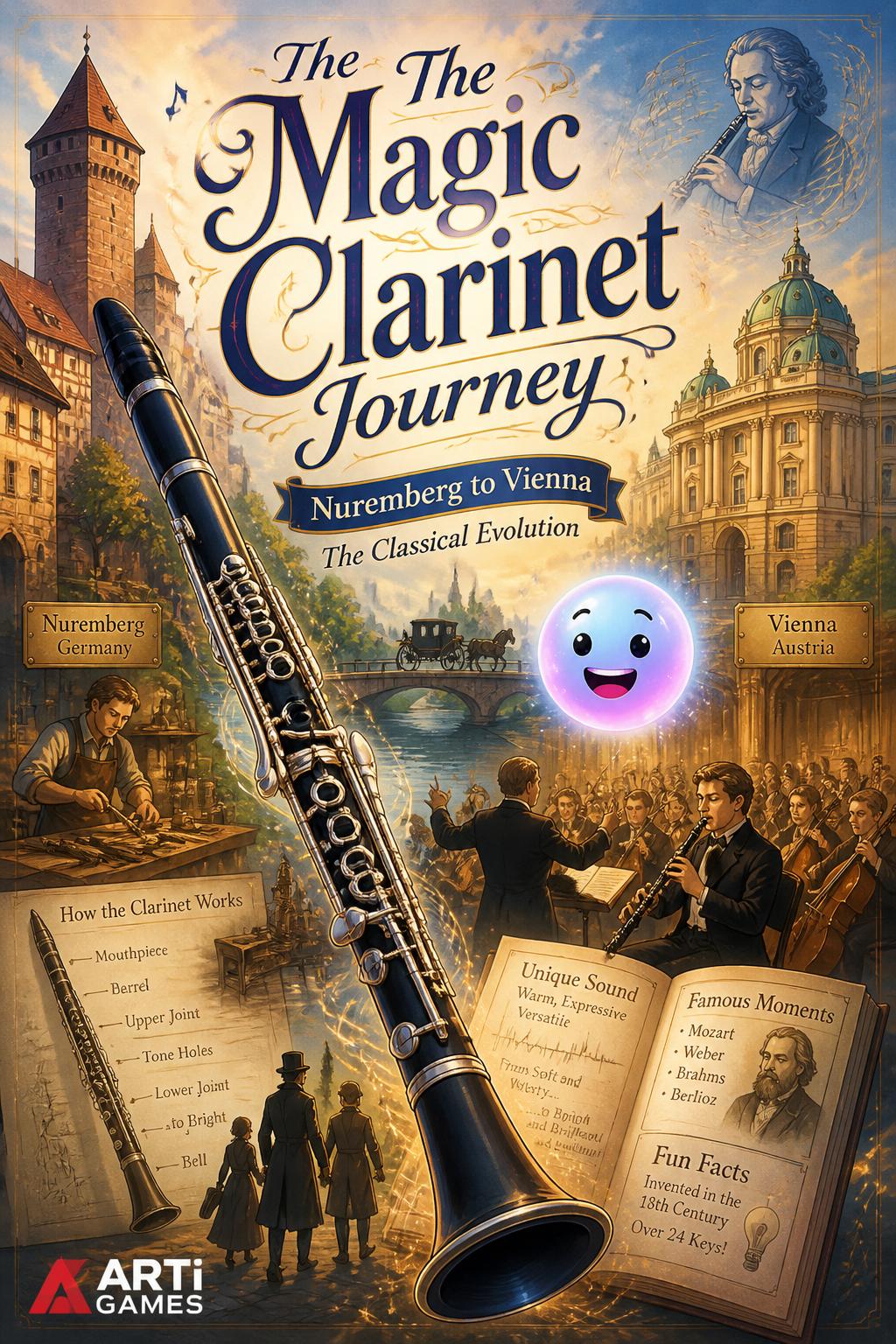
maestro Assemble the clarinet's parts to learn how it produces its unique orchestral sound.
maestro Classical Clarinet Evolution
Nuremberg to Vienna, Nuremberg to Vienna! We're overblowing up to the sky!
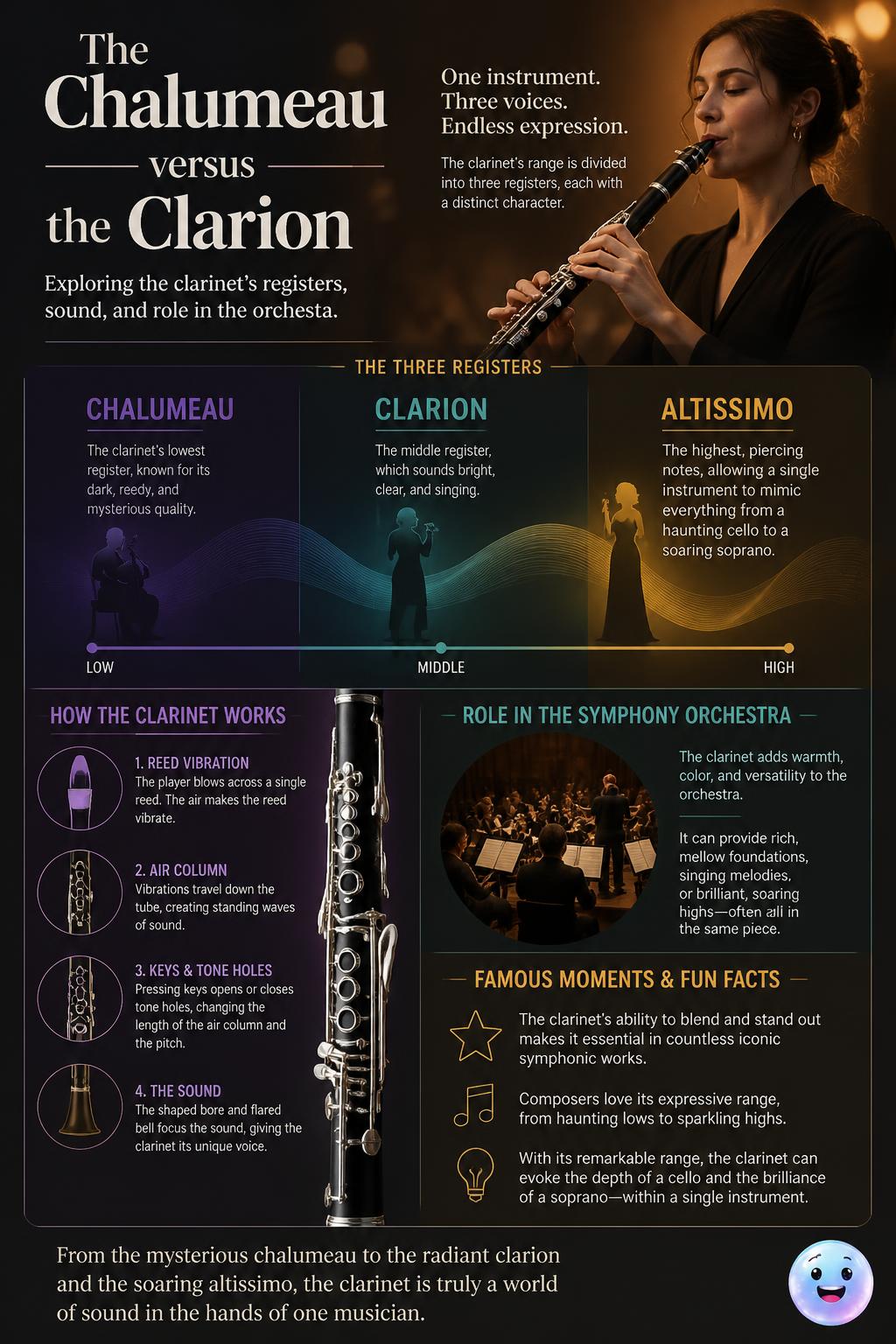
maestro A chart maps the clarinet's low chalumeau, middle clarion, and high altissimo registers
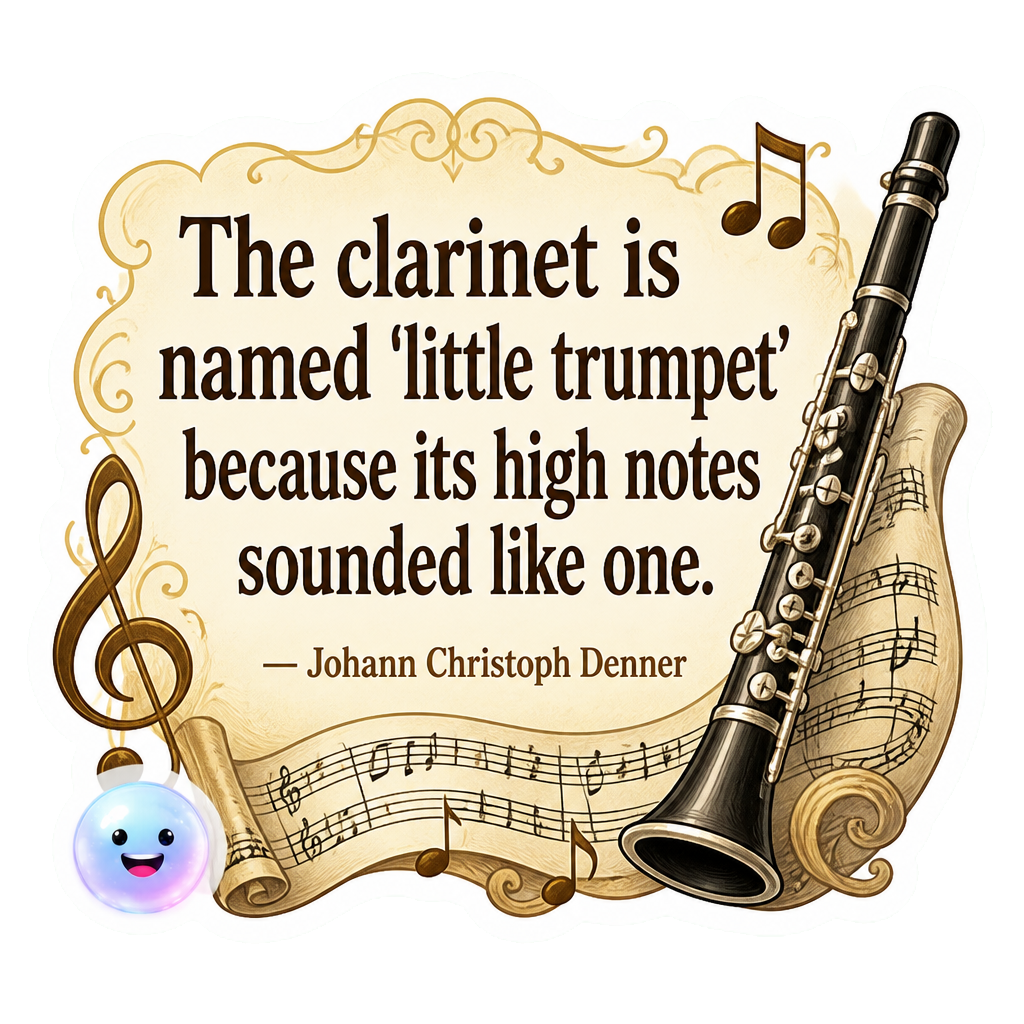
Trumpet cousin: The word clarinet comes from 'clarino,' a historical Italian trumpet, because its high register sounded so similar.
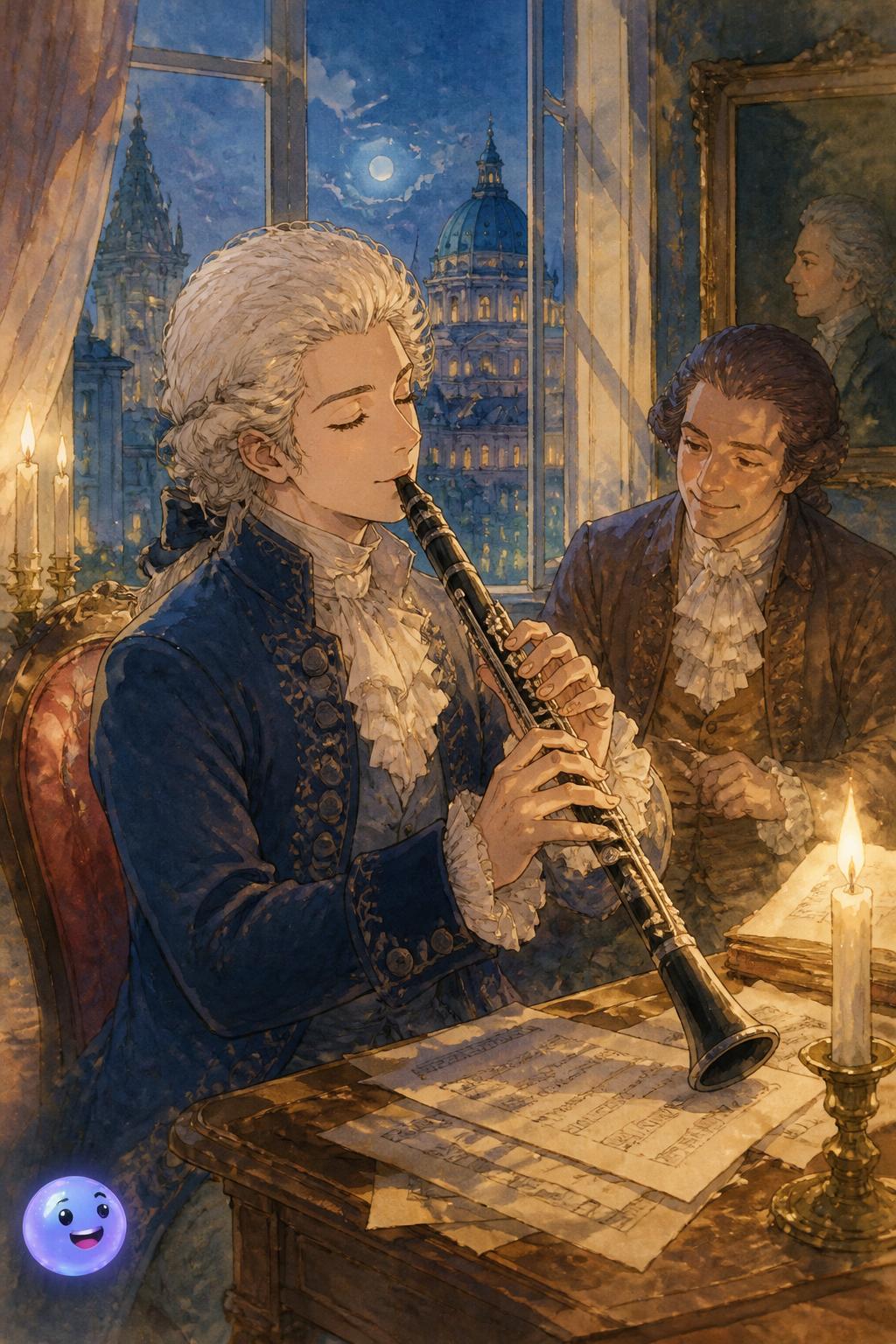
maestro Mozart holds a wooden clarinet against a painterly backdrop of historic Vienna.
A single-reed woodwind instrument of the Baroque era with a cylindrical bore. Johann Christoph Denner modified this instrument in Nuremberg around 1700 to invent the clarinet.
In which German city did Johann Christoph Denner invent the first clarinet around 1700?
Which key system, adapted from the flute in 1839, is the standard for modern clarinets?
What custom low-range instrument did Anton Stadler use to play Mozart's clarinet concerto?
For which clarinet virtuoso did Wolfgang Amadeus Mozart write his famous Clarinet Concerto?