
What is the name of the wooden stick at the bottom of the double bass
What is the name of the wooden stick at the bottom of the double bass that rests on the floor?
Anatomy of a musical giant
The classical backbone
Jazz, slap, and rockabilly
The extreme and the bizarre
maestro Steel and synthetic bass strings vibrate at forty-one Hertz to push massive amounts of air. Jazz players still use traditional sheep gut strings for a different rumbling tone.
maestro Eighteenth-century luthiers adapted the sloped shoulders of the viola da gamba for the double bass. This flat-backed design lets musicians drape over the instrument to reach high notes easily.
maestro The overhand French grip mimics the cello for precise control. The nineteenth-century underhand German grip harnesses natural arm weight to deliver deep, powerful strokes.

maestro Tap the giant strings to discover how the double bass powers the symphony orchestra.
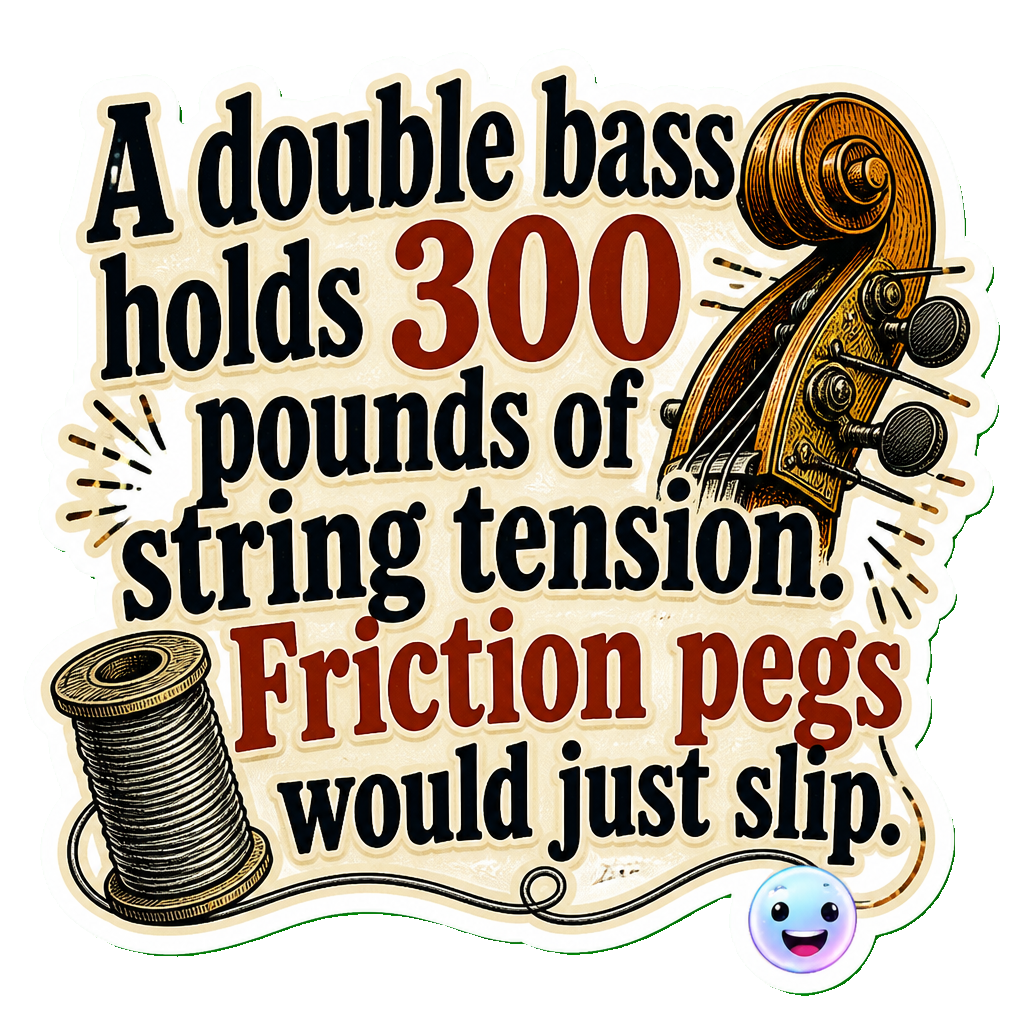
maestro Violin friction pegs fail under three hundred pounds of tension. These late 1700s metal gears keep heavy double bass strings from slipping out of tune.
maestro The Double Bass
Spin those brassy gears to tune! (Crank it tight!) / Hold that heavy tension down! (Make it boom!)
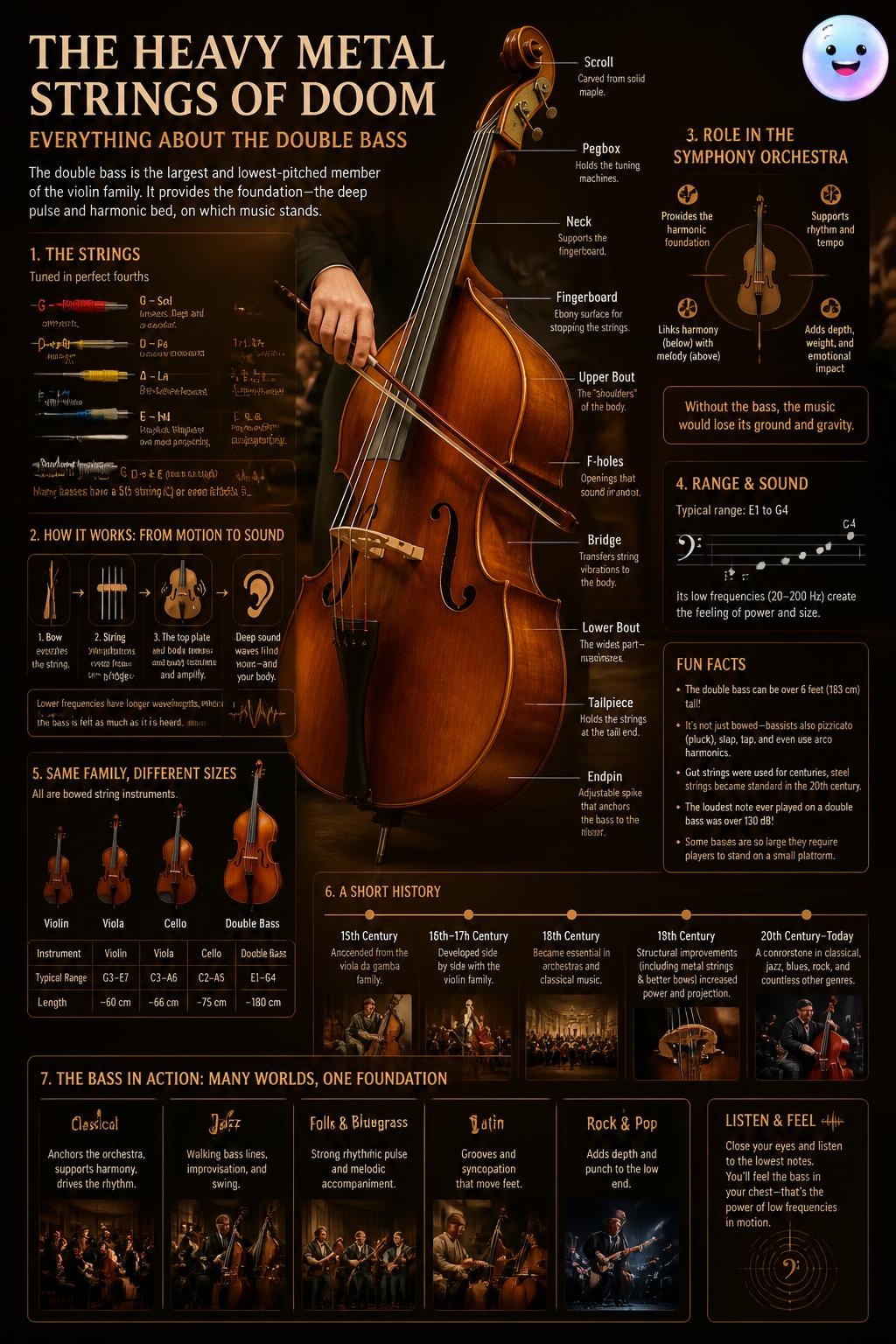
maestro Colossal wooden curves of a double bass frame its thick, vibrating metal strings.
Bass rosin: Double bass players use extra-sticky rosin made from pine sap to grip their incredibly thick strings.
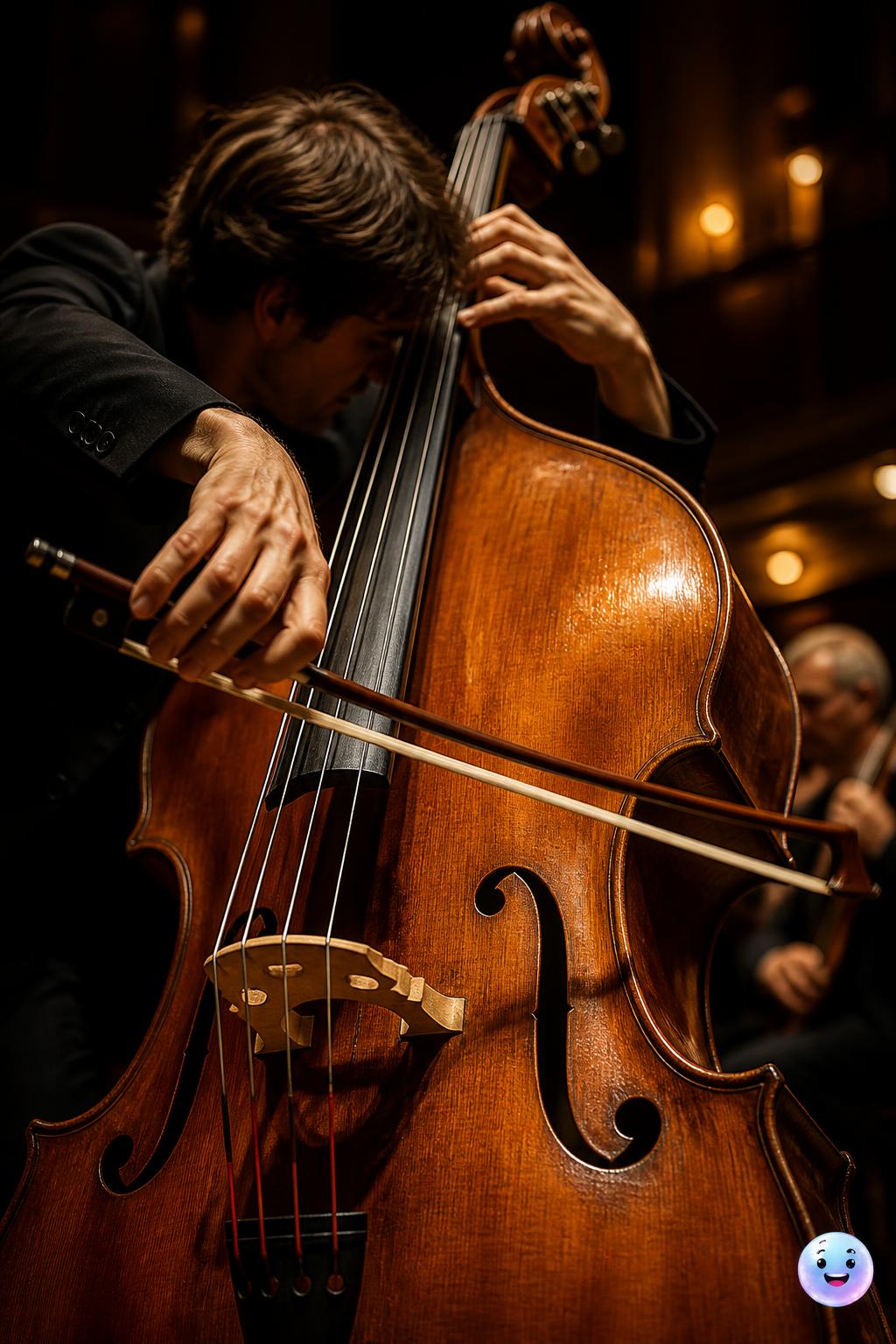
maestro A musician demonstrates two different bow grips against a glowing amber double bass.
The largest and lowest-pitched bowed stringed instrument used in modern orchestral music. Its sloping shoulders evolved from the viola da gamba family to help players reach the upper fingerboard.
What material was historically used to make double bass strings before steel became standard?
Which part of the double bass body is flat, unlike the curved backs of violins and cellos?
What is the name of the wooden stick at the bottom of the double bass that rests on the floor?
What sticky substance do double bass players apply to their bows to help grip the thick strings?
What is the main physical difference between the French and German double bass bows?
Which family of string instruments gave the double bass its sloped shoulders and flat back?
Why does a double bass use geared metal tuning machines instead of simple wooden friction pegs?