According to research at the Weizmann Institute, what human fluid
According to research at the Weizmann Institute, what human fluid contains chemical cues that unconsciously affect empathy?
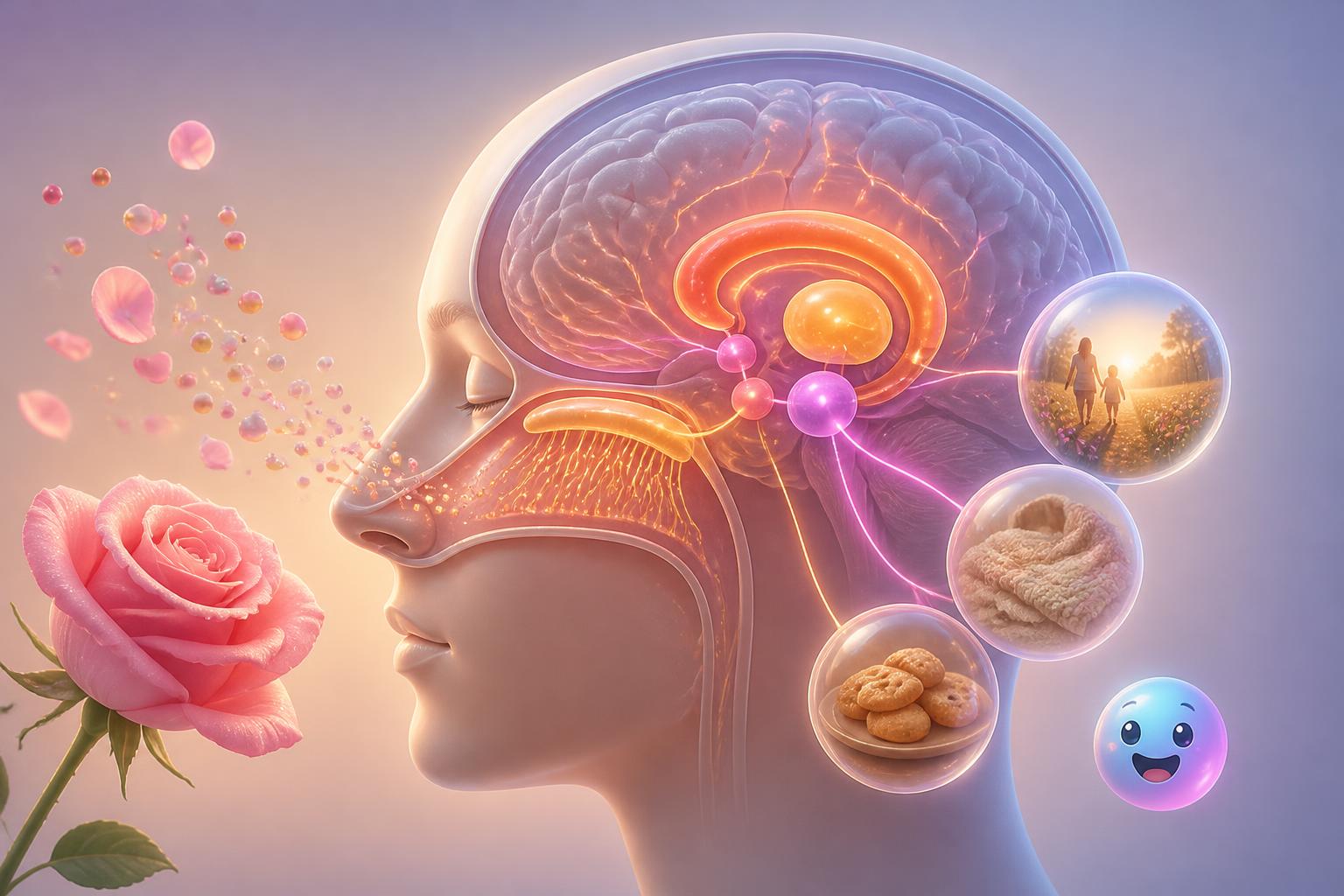
The brain's direct hotline
The Proust effect and time travel
The evolutionary survival guide
Cultural landscapes of scent
elorea Although our nose lacks working pheromone organs, Weizmann Institute of Science researchers reveal how chemicals in tears and sweat still unconsciously alter human empathy
elorea Bloodhounds use 300 million olfactory receptors to track faint scents. Bears possess an even stronger nasal anatomy that detects food from miles away.
elorea Our ancestors survived by detecting tiny traces of rotten egg odor. This ancient defense mechanism alerts us to deadly gas at 0.00047 parts per million.
elorea Evolutionary biologists trace how ancient primates traded scent sensitivity for trichromatic color vision. This genetic shift left humans with hundreds of broken olfactory genes called pseudogenes.
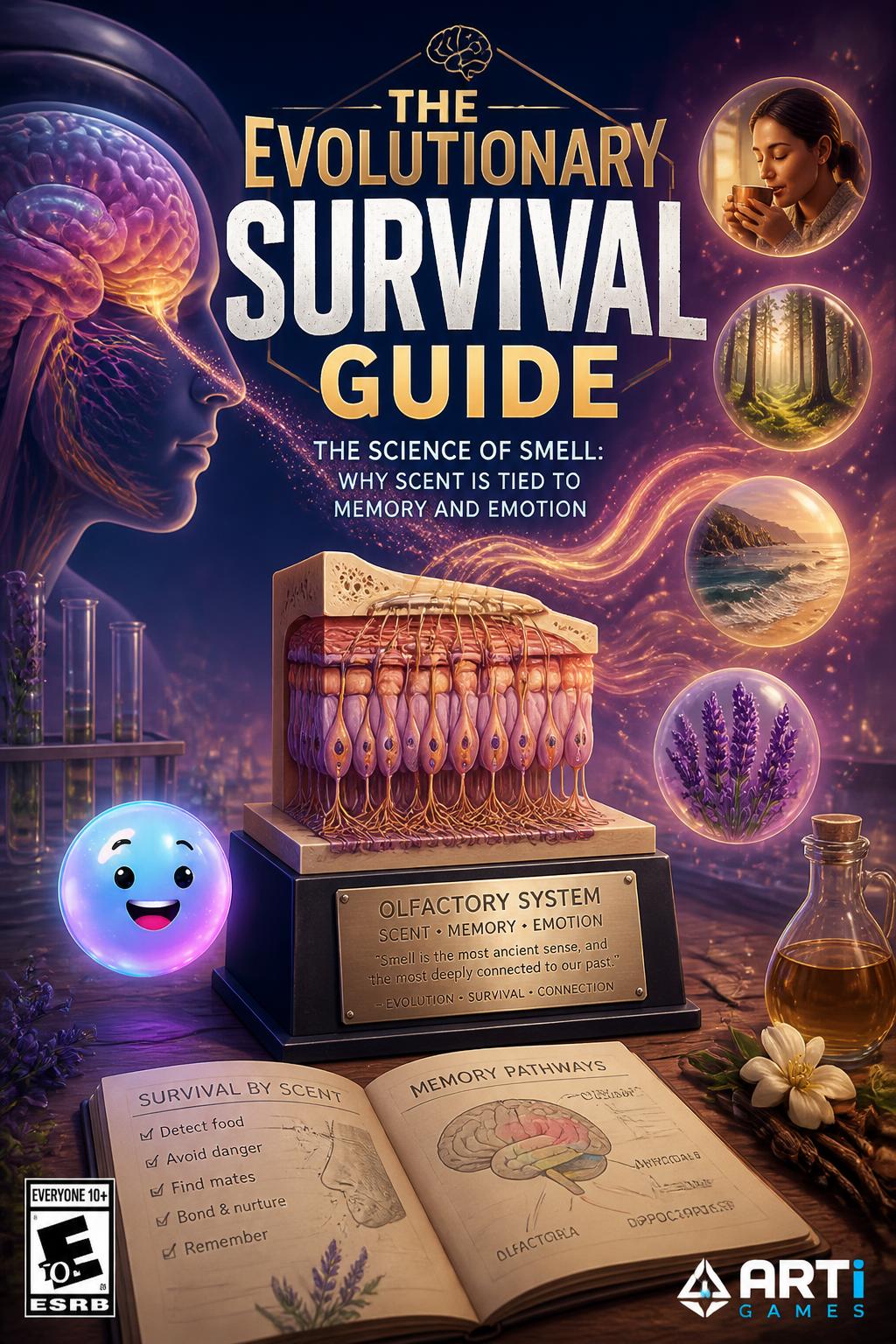
elorea Match ancient scents to dangers to learn how smell memory kept our ancestors alive.
elorea The Evolutionary Survival Guide
A scent skips the detour to trigger what we feel, An ancient survival guide that makes a memory real.

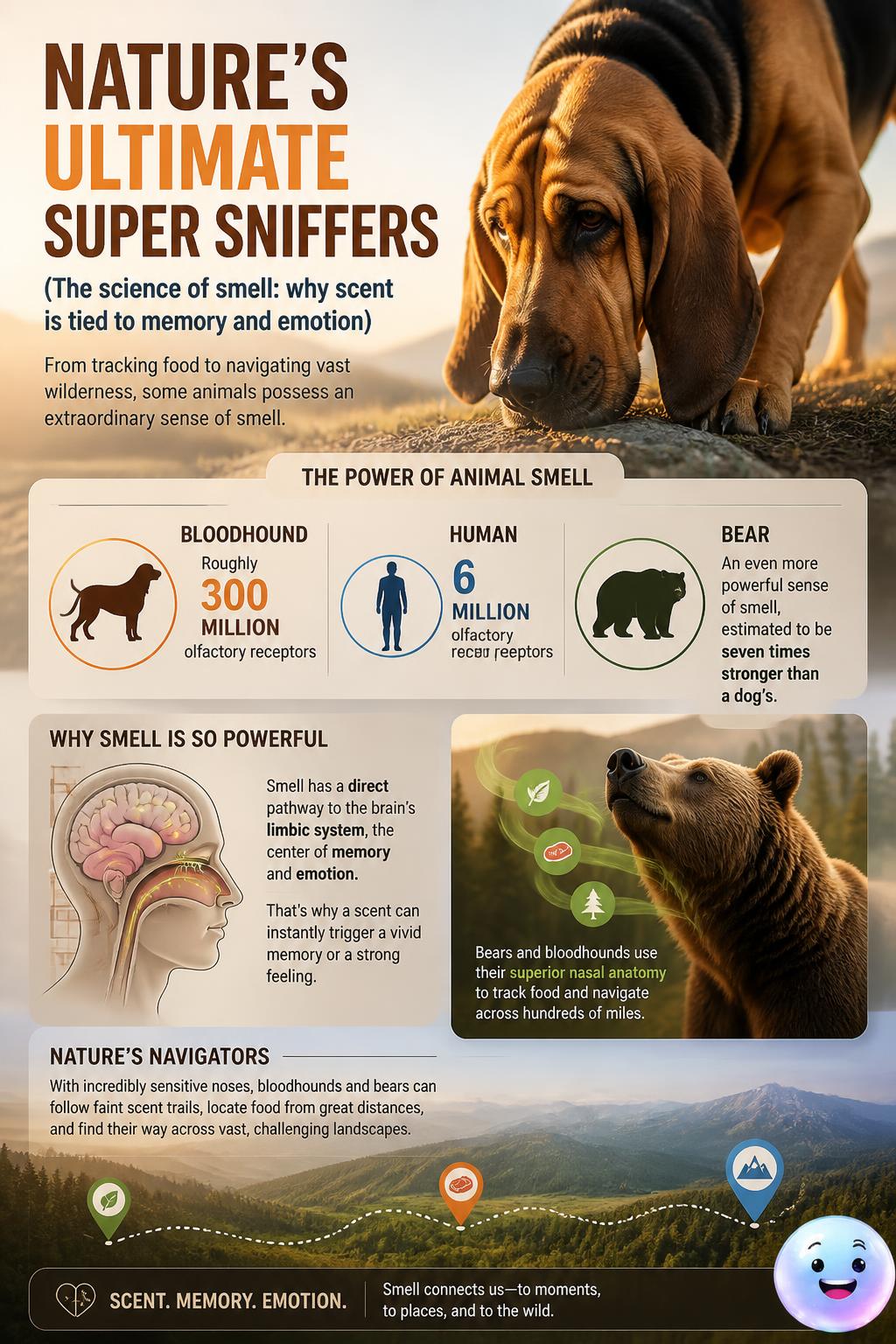
elorea Graphics compare the nasal passages and receptor counts of humans, bloodhounds, and bears.
Space smell: Astronauts describe the smell of outer space as a mix of hot metal, seared steak, and welding fumes.

elorea Isometric glass and chrome models map the human olfactory system with precise labels.
Which mammal is estimated to have a sense of smell seven times stronger than a dog's?
What is the name of the organ used by many animals to detect pheromones, which is non-functional in humans?
According to research at the Weizmann Institute, what human fluid contains chemical cues that unconsciously affect empathy?
Approximately how many active scent receptor genes do humans have compared to their total of 800?
What did evolutionary biologists find humans traded their olfactory sharpness for over millions of years?
How low of a concentration of hydrogen sulfide (rotten egg smell) can humans detect?