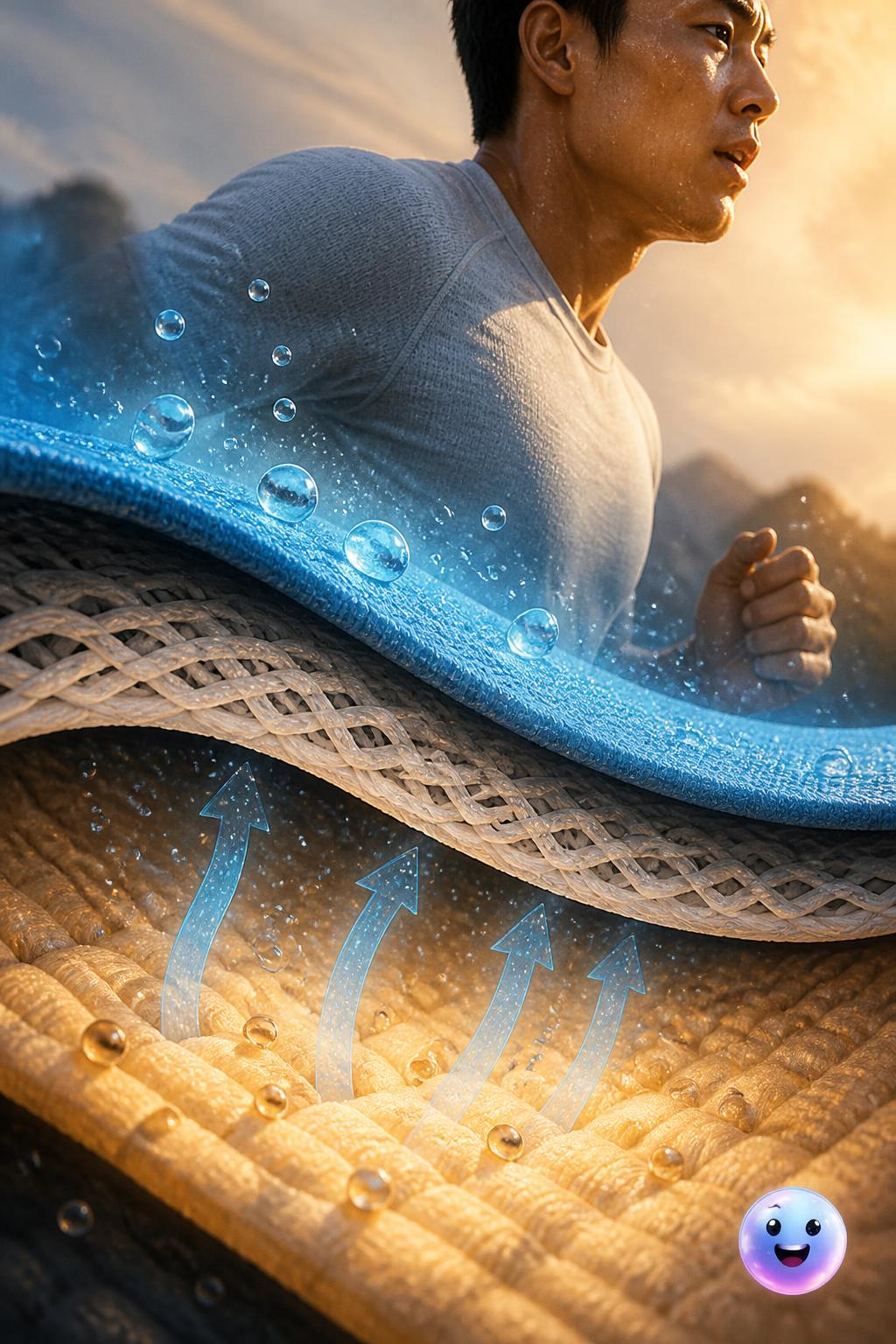
The push-pull of double-knit fabrics
Moisture droplets travel from the water-repelling inner layer to the absorbing outer weave.
The battle against sweat and moisture
Staying dry in the heaviest storms
Keeping cool with space-age science
Borrowing high-tech secrets from nature
Squeezing out speed and aerodynamics

adidas Microscopic tests show wet cotton fibers swelling to block airflow. This trapped moisture causes rapid body cooling and painful skin chafing during long runs.
adidas Odorless sweat becomes smelly when skin bacteria feast on it. Lululemon infuses fabrics with silver ions that destroy these bacterial membranes to keep gear fresh.
adidas Close-up demonstrations reveal how a polypropylene inner layer repels sweat, pushing moisture into an outer nylon layer that quickly absorbs and evaporates it.
adidas In 1996, researchers engineered cloverleaf-shaped polyester fibers to create microscopic channels. These channels use adhesive forces to drag sweat outward for rapid evaporation.
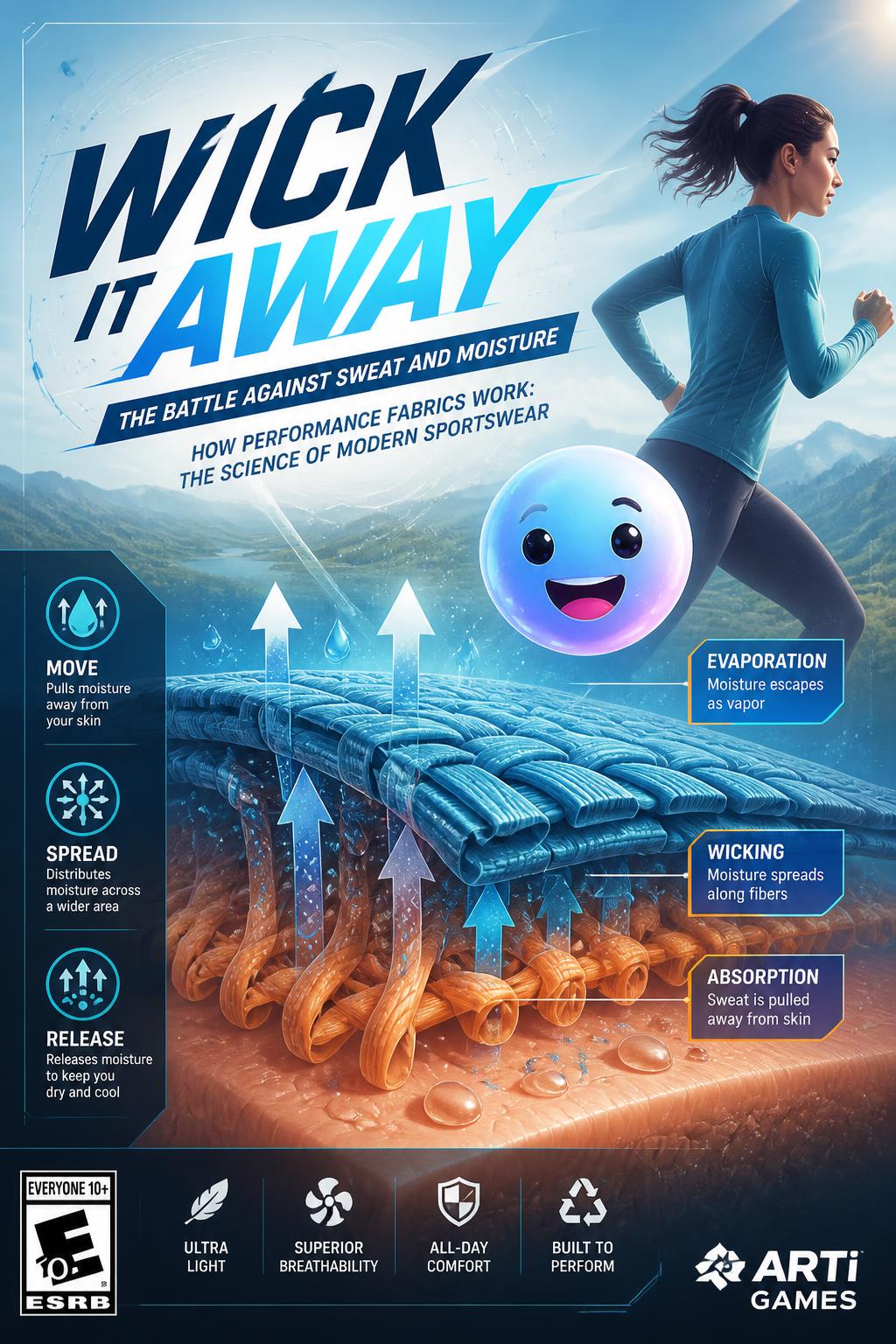
adidas Swipe sweat droplets through fabric pores to discover how performance sportswear keeps athletes dry.

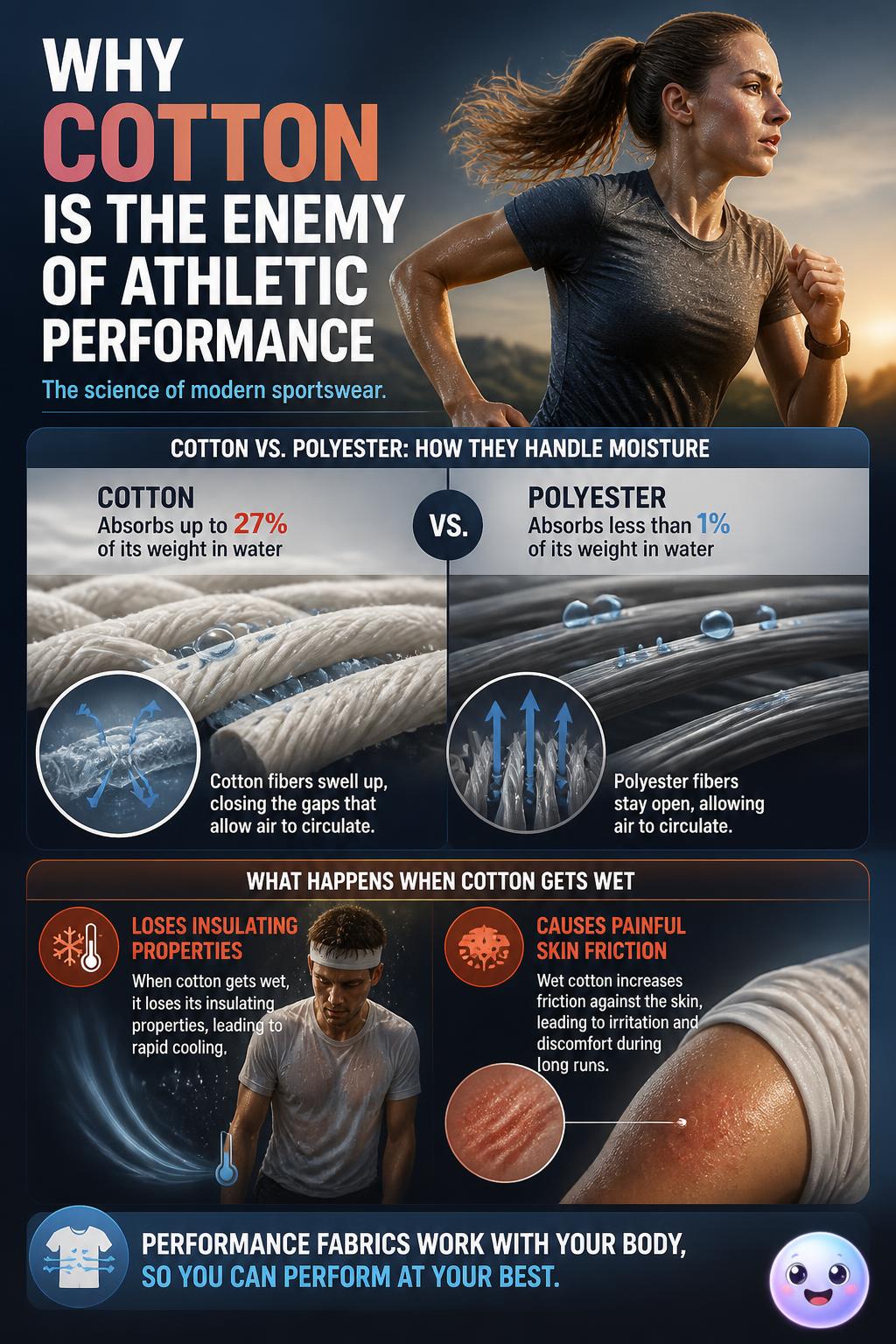
adidas Diagrams show swollen cotton fibers blocking airflow next to breathable polyester threads
Smelly sweat: Pure sweat is completely odorless; body odor is actually the waste product of bacteria eating the sweat on your skin.
adidas Moisture droplets travel from the water-repelling inner layer to the absorbing outer weave.
The process of absorbing or drawing off liquid by capillary action. DuPont introduced this capillary technology to sportswear in 1986 with the launch of its Coolmax brand.
What ingredient is infused into sports fabrics to prevent bacteria from causing bad odors?
What percentage of its weight in water can cotton absorb, making it heavy during workouts?
In what year did researchers perfect synthetic sportswear fabrics that mimic capillary action?
Which fiber shape is engineered into synthetic fabrics to create microscopic channels for sweat?