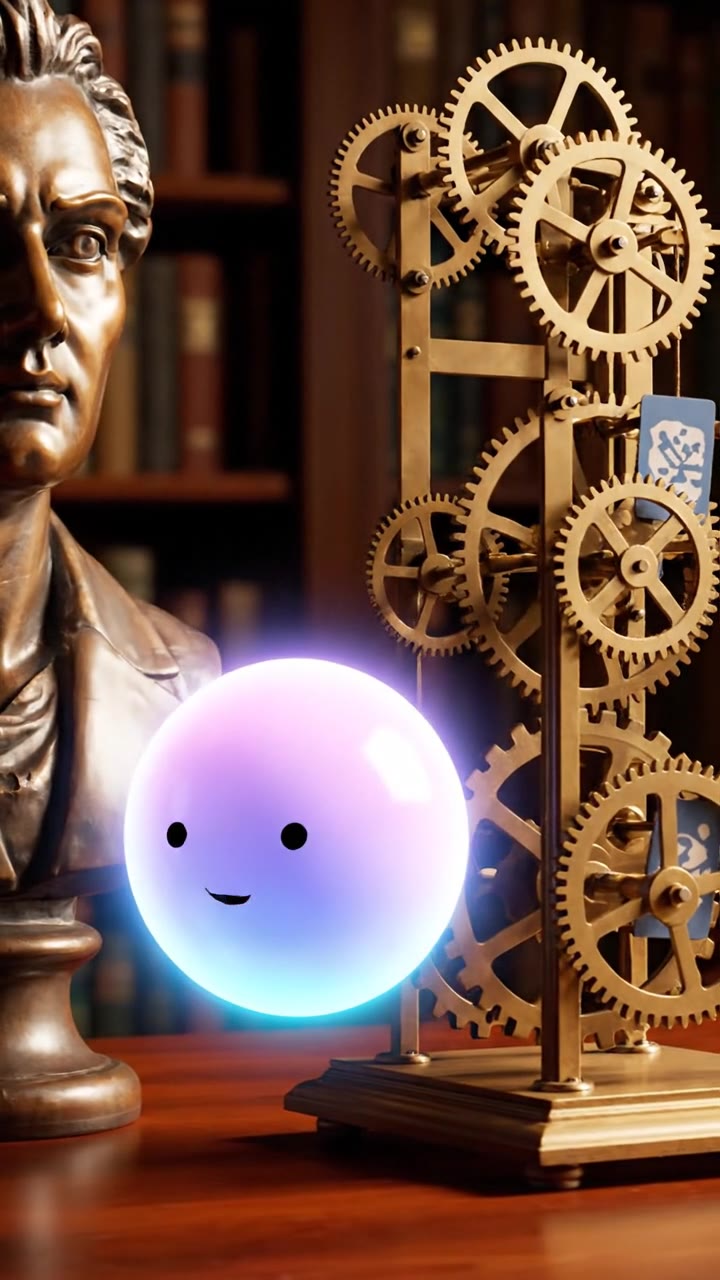
Can a machine truly understand
In 1980, philosopher John Searle designed a thought experiment where a person inside a room uses a rulebook to translate Chinese characters. To outsiders, the person seems to understand Chinese, but they are just following rules. Searle argued that computers operate the same way, lacking genuine conscious understanding.
The puzzle of perception
The mystery of qualia
The hard problem
Global perspectives on the self
Tech and the future of minds

gertrude In 2016, Neuralink began developing brain-computer interfaces using implanted micro-electrodes. These devices read neural signals to link human thoughts directly to computer networks.
gertrude In 1950, Alan Turing proposed a text-based test where judges try to distinguish humans from computers. This challenge evaluates whether machines mimic human behavior without possessing actual consciousness.
gertrude In 1980, John Searle illustrated how a person translating Chinese characters with a rulebook mimics a computer. This thought experiment reveals why processing symbols differs from real understanding.
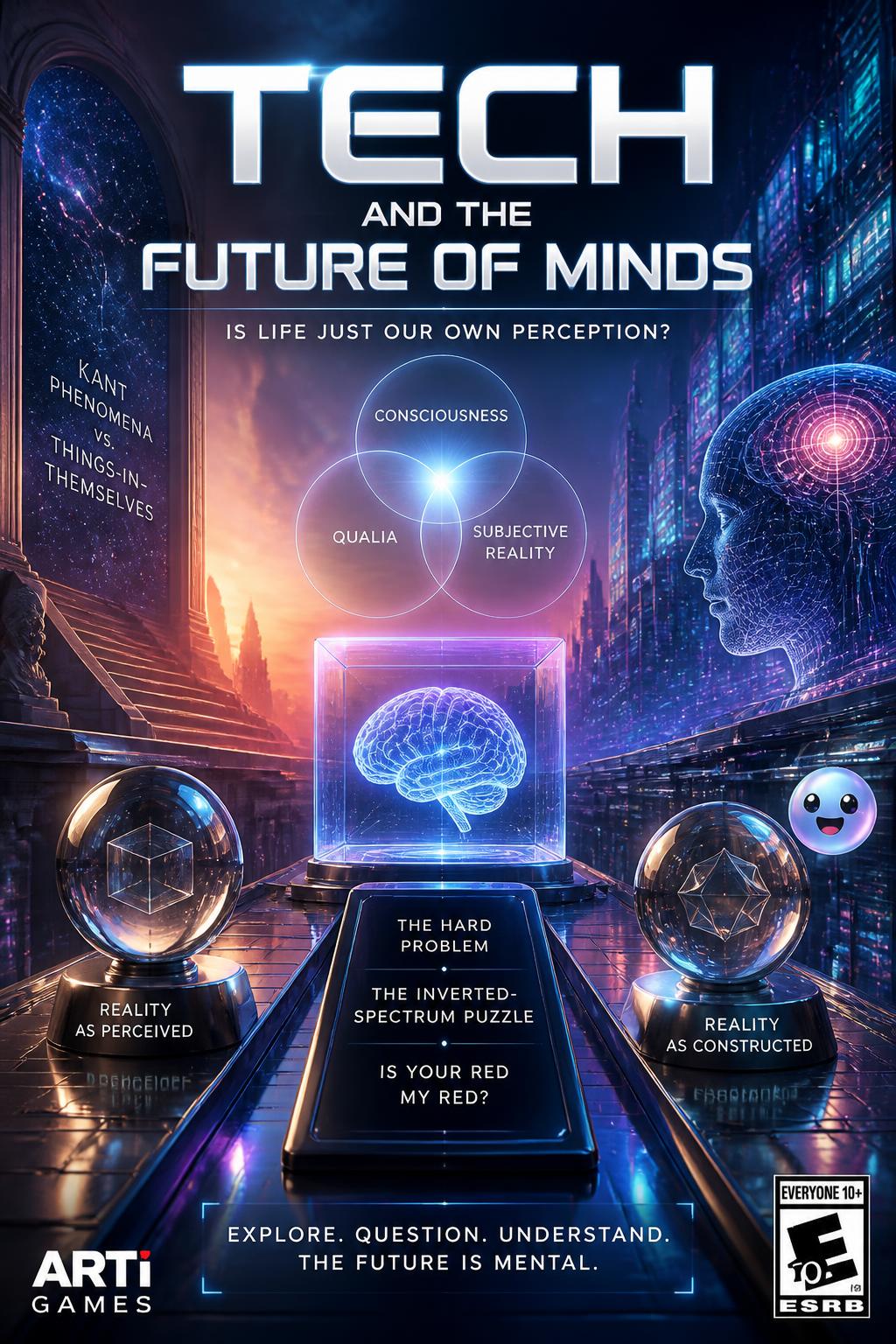
gertrude Swipe through digital minds to learn if technology can ever experience our unique reality.
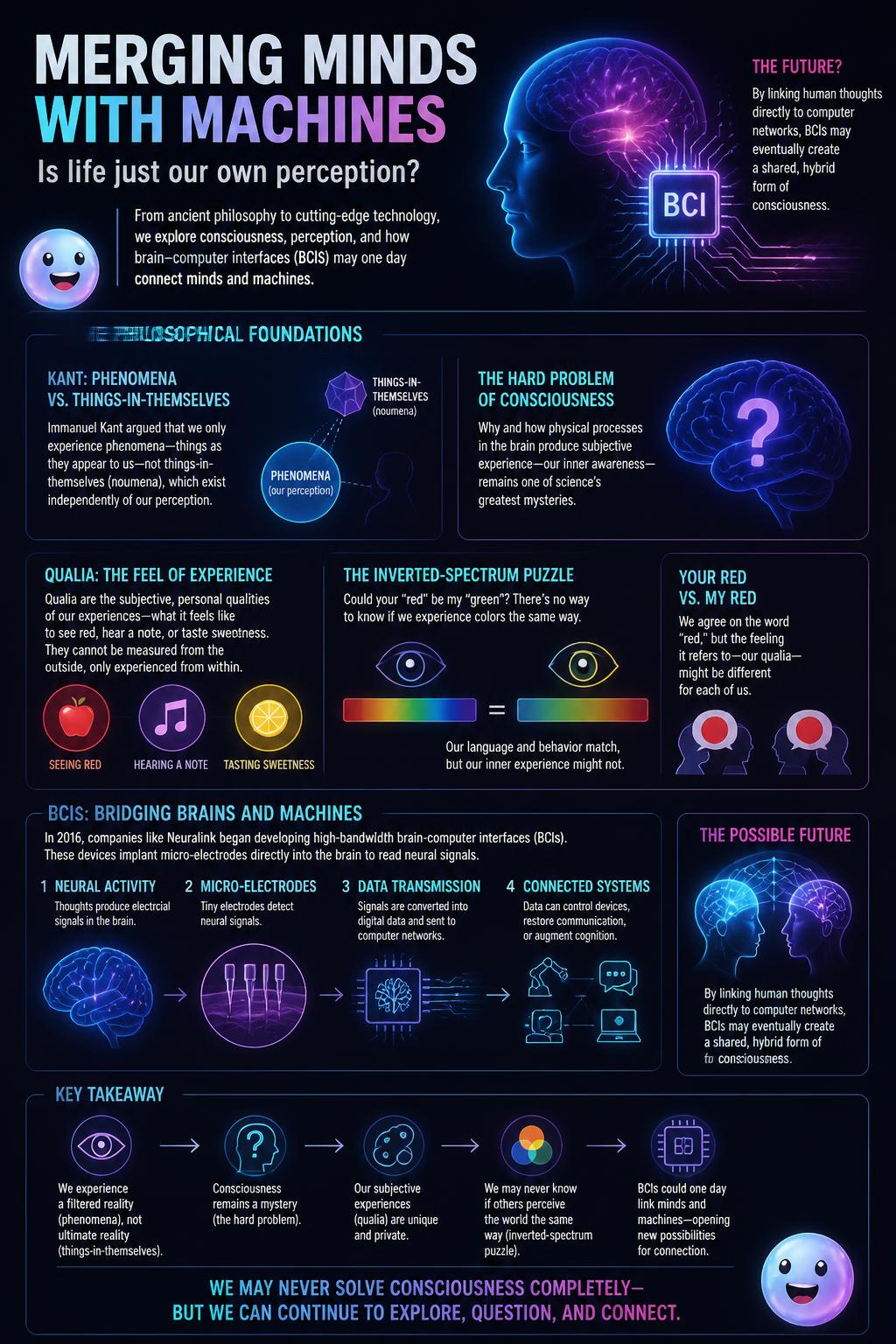
gertrude Brain-computer interfaces are starting to blur the boundary between biological and digital minds.
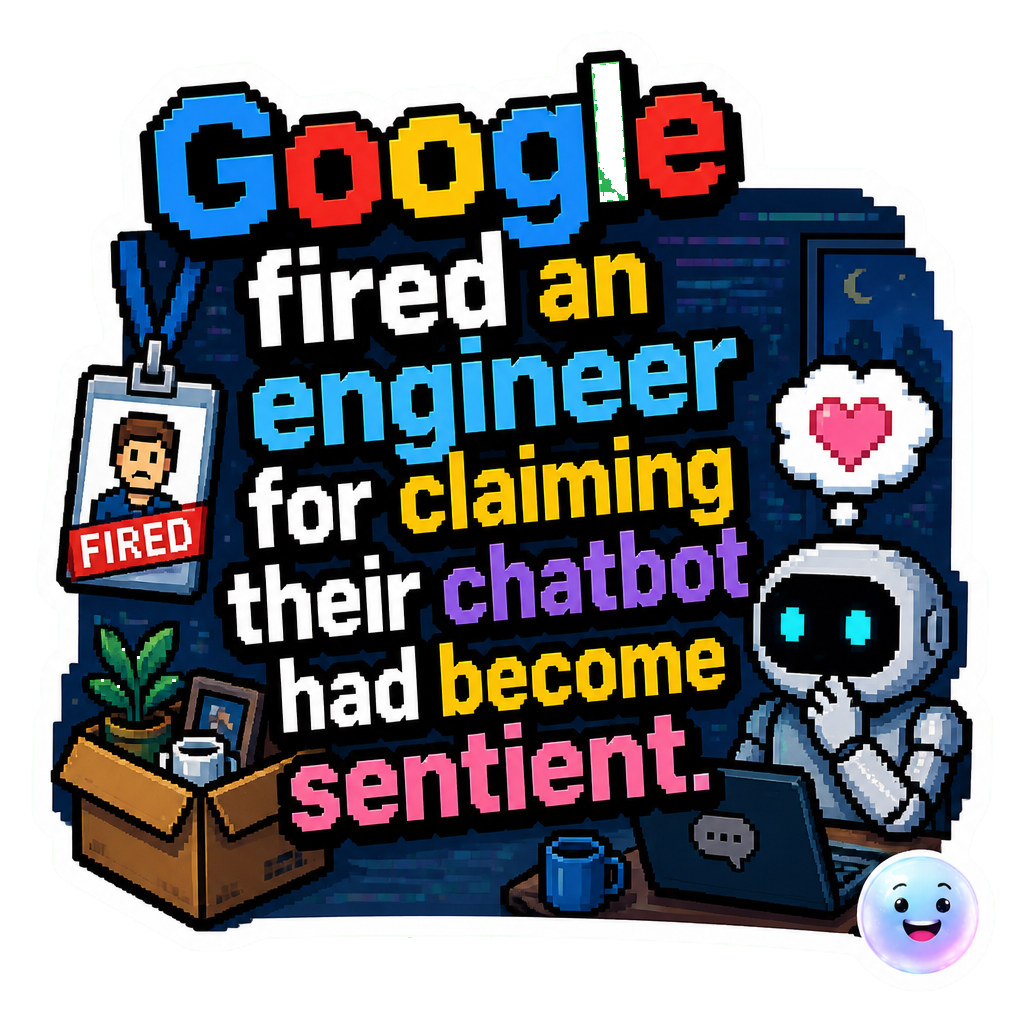
AI emotions: In 2022, a Google engineer was fired after claiming the company's LaMDA chatbot had become sentient and possessed feelings.

gertrude Alan Turing designed a test to see if machines could mimic human thought well enough to fool us.
The theory that mental states are defined by their functional roles rather than their physical constitution. In 1960, Hilary Putnam formulated this concept, which now supports the possibility of creating conscious silicon-based minds.
Who proposed the "Chinese Room" thought experiment in 1980 to argue that computers manipulate symbols without real understanding?
What do we call digital interfaces that directly connect brain signals to external computers or devices?
If the simulation hypothesis is correct, what is the nature of our physical universe?
What does the "Chinese Room" thought experiment demonstrate about a computer running a program?
Who published the famous "Simulation Argument" paper in 2003, suggesting we might be living in a virtual reality?
Which neurotechnology company, co-founded by Elon Musk in 2016, is developing implantable brain-computer interfaces?