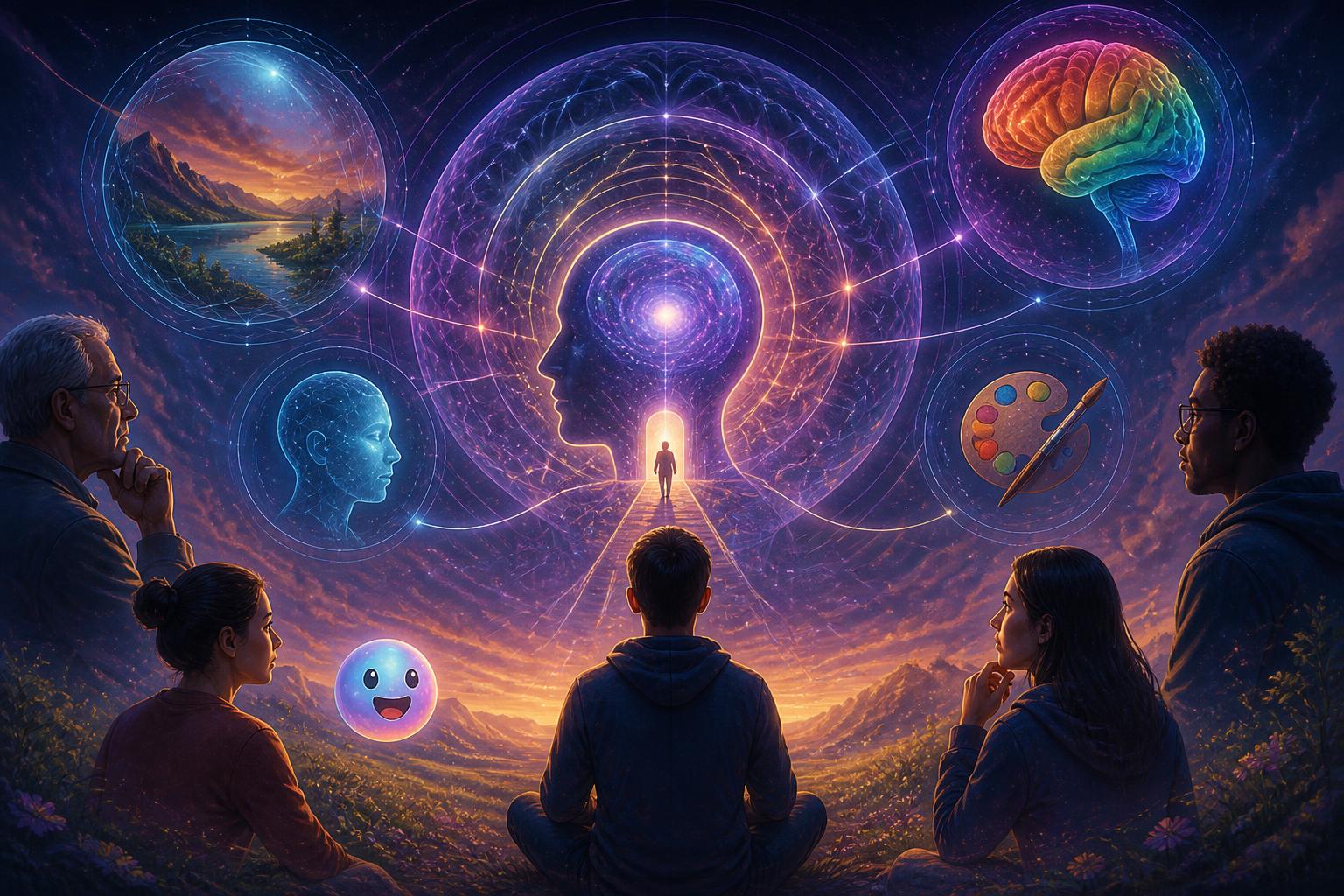
Which French philosopher wrote the famous phrase "Cogito, ergo sum"
Which French philosopher wrote the famous phrase "Cogito, ergo sum" (I think, therefore I am) in his 1637 work?
The puzzle of perception
The mystery of qualia
The hard problem
Global perspectives on the self
Tech and the future of minds
gertrude This journey connects ancient Shintoism and Greek philosophy to neuroscientist Giulio Tononi's 2004 Integrated Information Theory. His mathematical model calculates how complex, integrated systems experience basic awareness.
gertrude In 1637, Descartes wrote the Latin phrase Cogito ergo sum. He doubted his physical senses but realized his thoughts proved his mind existed
gertrude Fifth-century BCE Indian philosophers described the mind as a shifting stream of thoughts. Today, neuroscientists confirm this ancient insight by showing the brain lacks a central control center.
gertrude Around 100 BCE, Sage Nagasena tells King Menander that a chariot is just assembled parts. This dialogue from the Milinda Panha reveals why the self is also a label

gertrude Match different color perspectives to discover if your red is the same as mine.
gertrude Global Perspectives on the Self
Western eyes on the center, / Eastern minds on the context, / our self shapes the view.

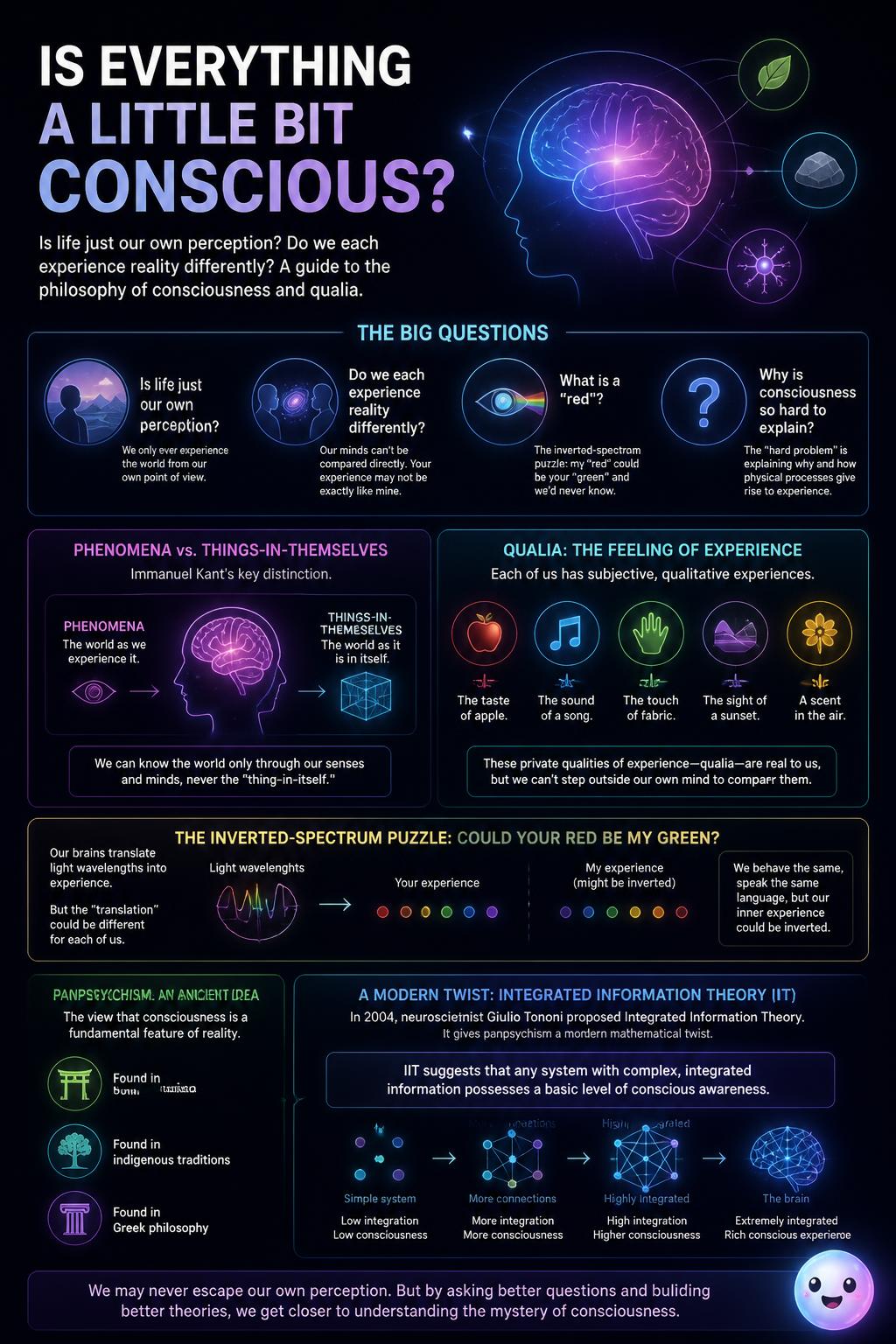
gertrude Panpsychism suggests that consciousness is a fundamental feature of all matter in the universe.
Ship of Theseus: Every seven years, almost all the cells in your body are replaced, making you physically a brand new person.
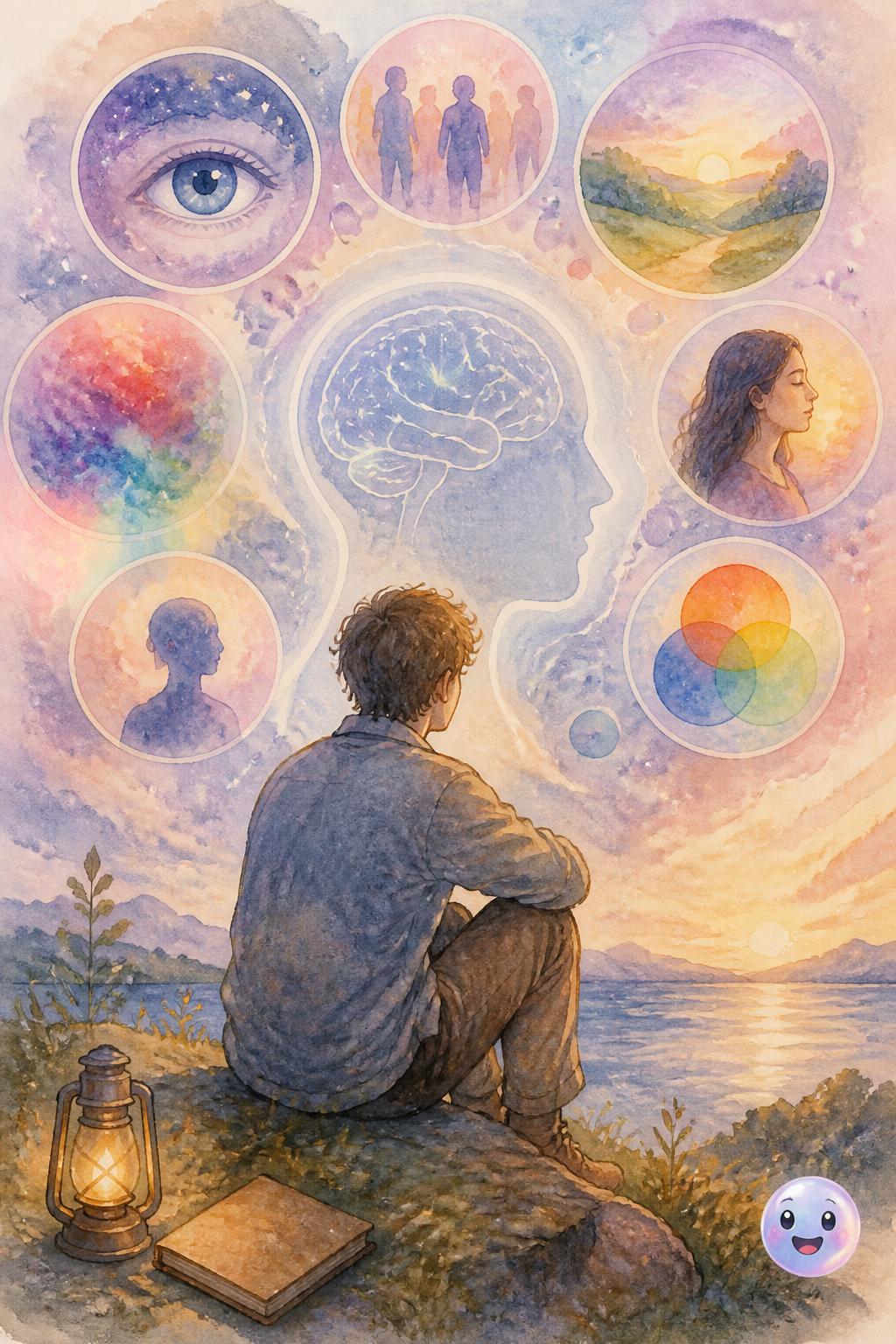
gertrude René Descartes sought absolute certainty by doubting everything except his own thinking mind.
The Buddhist doctrine that there is no permanent soul or self in human beings. Siddhartha Gautama introduced this concept in ancient India to challenge orthodox Hindu beliefs in an eternal soul.
Which foundational Buddhist concept, dating to the 5th century BCE, asserts that there is no permanent, unchanging self?
Which French philosopher wrote the famous phrase "Cogito, ergo sum" (I think, therefore I am) in his 1637 work?
Which modern neuroscientist developed the Integrated Information Theory (IIT) in 2004 to mathematically measure consciousness?
What is the name of the philosophical view that consciousness is a fundamental feature of all matter in the universe?
In the ancient Buddhist text "Milinda Panha," what object is used as a metaphor to show that the "self" is just a collection of parts?
What ancient Indian philosophical school, active around 600 BCE, rejected the soul and argued that consciousness is just a byproduct of the physical body?