
Chapter 1
The alchemy of raw materials
Chapter 2
The tool is an extension of the body
Chapter 3
The battle against time
Chapter 4
Embracing the crack
Ch 2 · The tool is an extension of the body

louisvuitton Inami Woodcarving
Two hundred chisels shape the wind, completely smooth without sandpaper!
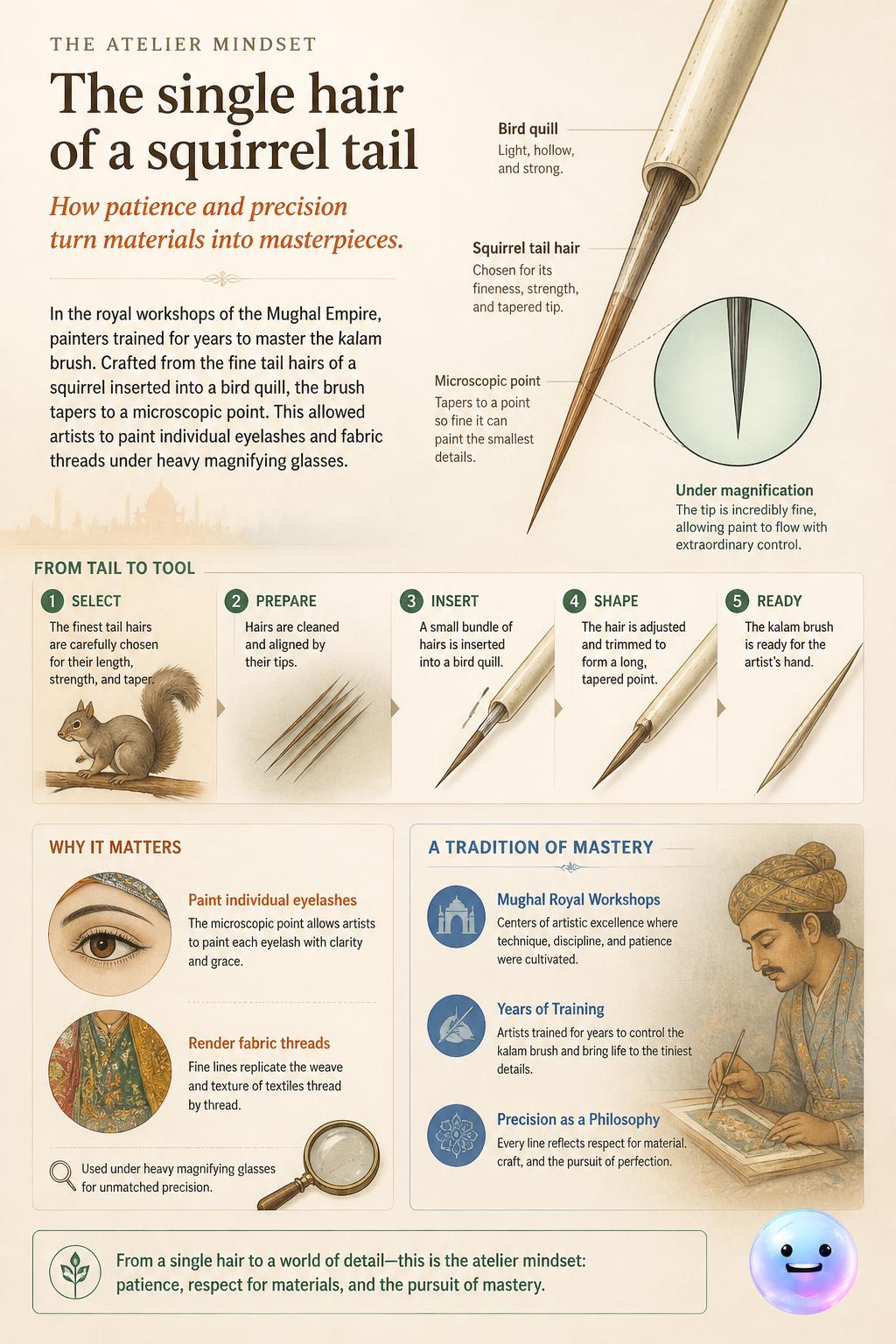
louisvuitton Crafted from squirrel tail hair and bird quills, the kalam brush allowed Mughal artists to paint individual eyelashes under magnifying glasses.
Quiz
From which animal's body did Indian miniature painters source the hair for their finest detail brushes?
Quiz
What is the traditional name of the fine-tipped brush used in Indian miniature painting?
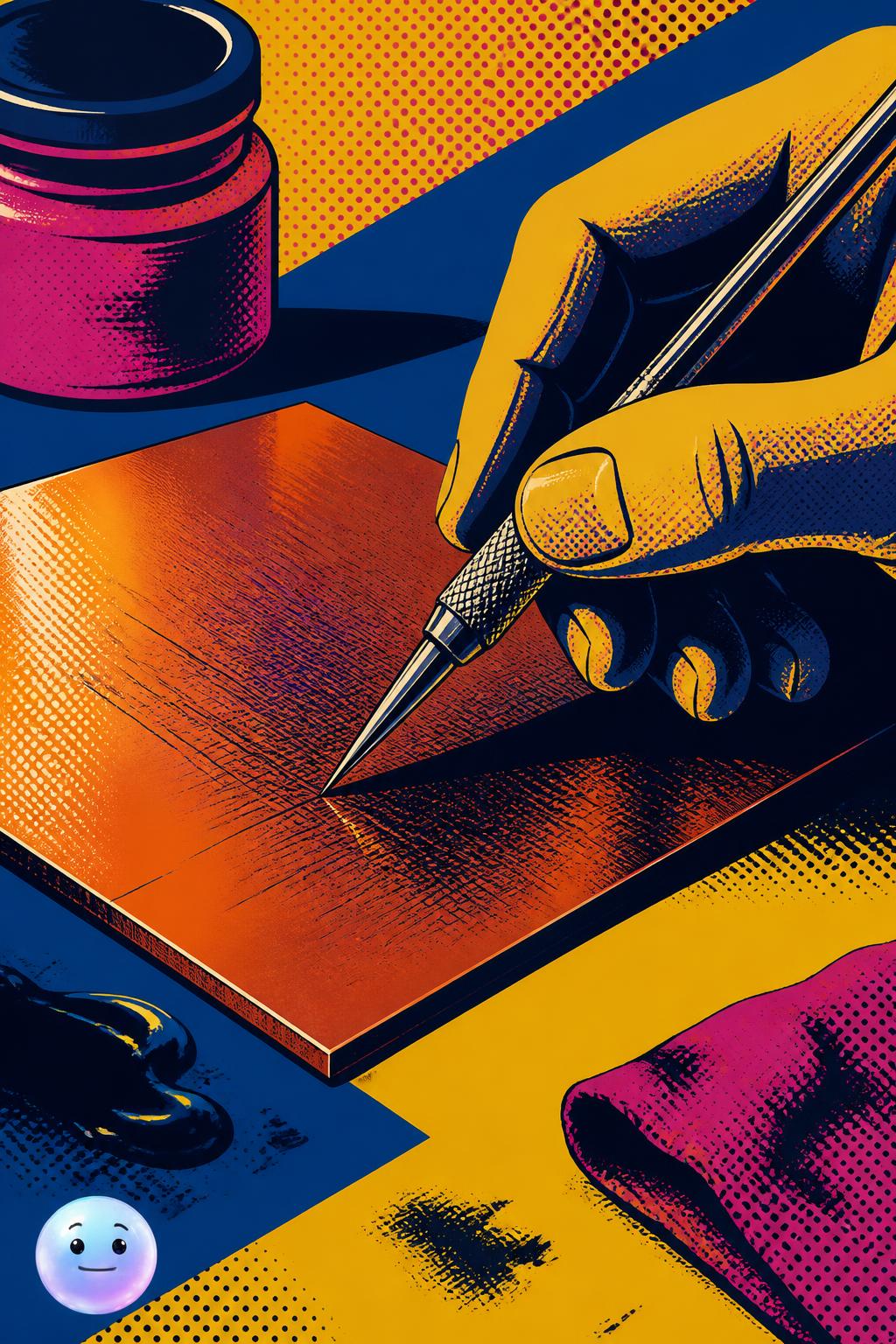
louisvuitton The drypoint needle raises a delicate metal burr to hold the printing ink.
Quiz
Why are original drypoint prints highly limited in number compared to other engraving techniques?
Quiz
What is the raised ridge of metal called that is thrown up by a drypoint needle?
Fun Fact
Squirrel tail brushes: To make a single Mughal-style miniature brush, artisans must sort through hundreds of squirrel hairs individually using a needle to find the perfect straight ones.
Quiz
What is the name of the traditional foot-powered machine used by Chinese jade carvers?
Quiz
How did the foot-powered tuoji benefit the jade carver during the carving process?
Glossary
tool (noun)
An implement, especially one held in the hand, used to carry out a particular function. In 1953, anthropologist Margaret Mead described how simple tools like shuttles and mallets physically enhance human capabilities.
An implement, especially one held in the hand, used to carry out a particular function. In 1953, anthropologist Margaret Mead described how simple tools like shuttles and mallets physically enhance human capabilities.
Quiz
Which type of highly aromatic wood is traditionally used for carving Japanese temple statues?
Quiz
What are the traditional hand-forged steel chisels used by Japanese woodcarvers called?