The physical secrets of the middle child
The science of the smoky sound
The unsung hero of the orchestra
Solo superstars and global stages
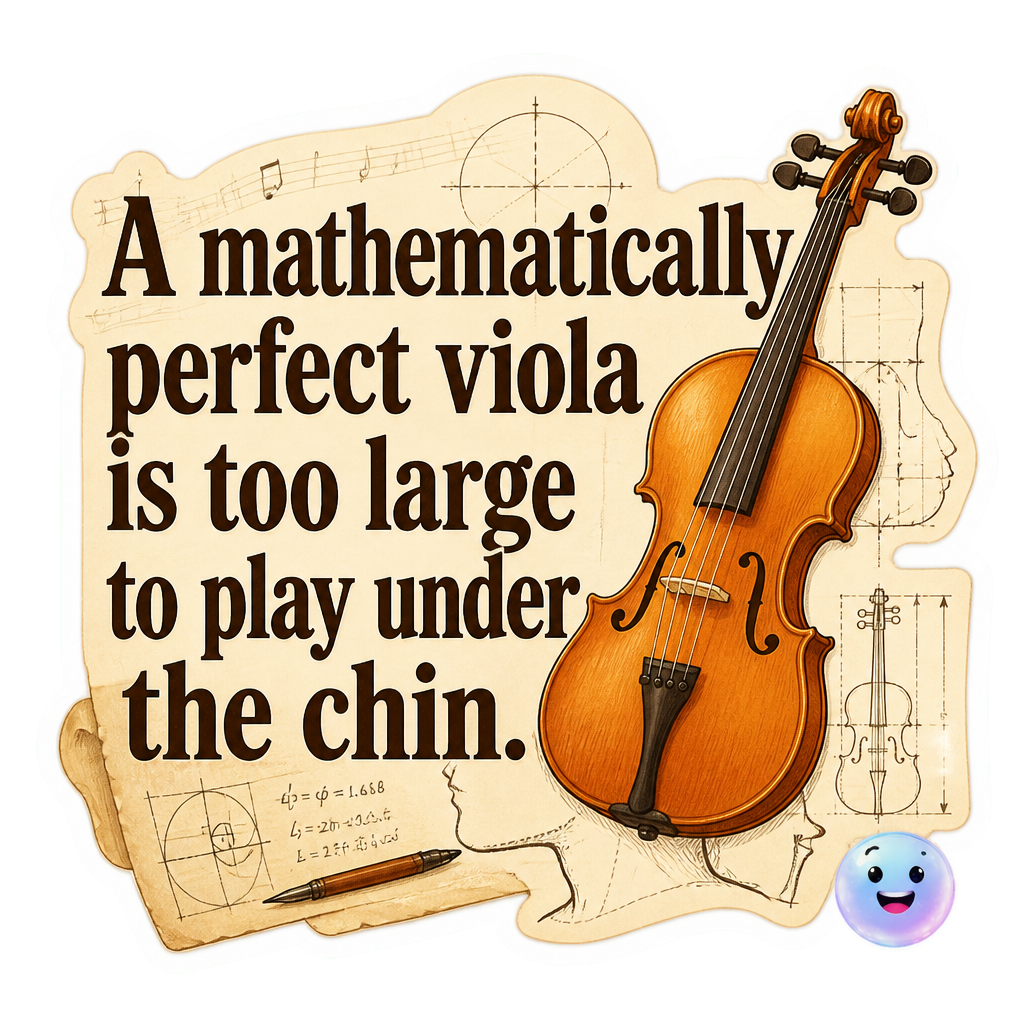
maestro Fitting a viola under the human chin requires making it too small for perfect acoustics. This physical compromise filters out high overtones, creating its famously mysterious, nasal voice

maestro Drag the bow across the strings to discover how the viola creates its smoky sound.
maestro Heavy viola strings need a thick wooden bridge and internal soundpost to survive the tension. This extra wood slows down the vibrations, creating the instrument's signature warm, mellow voice.
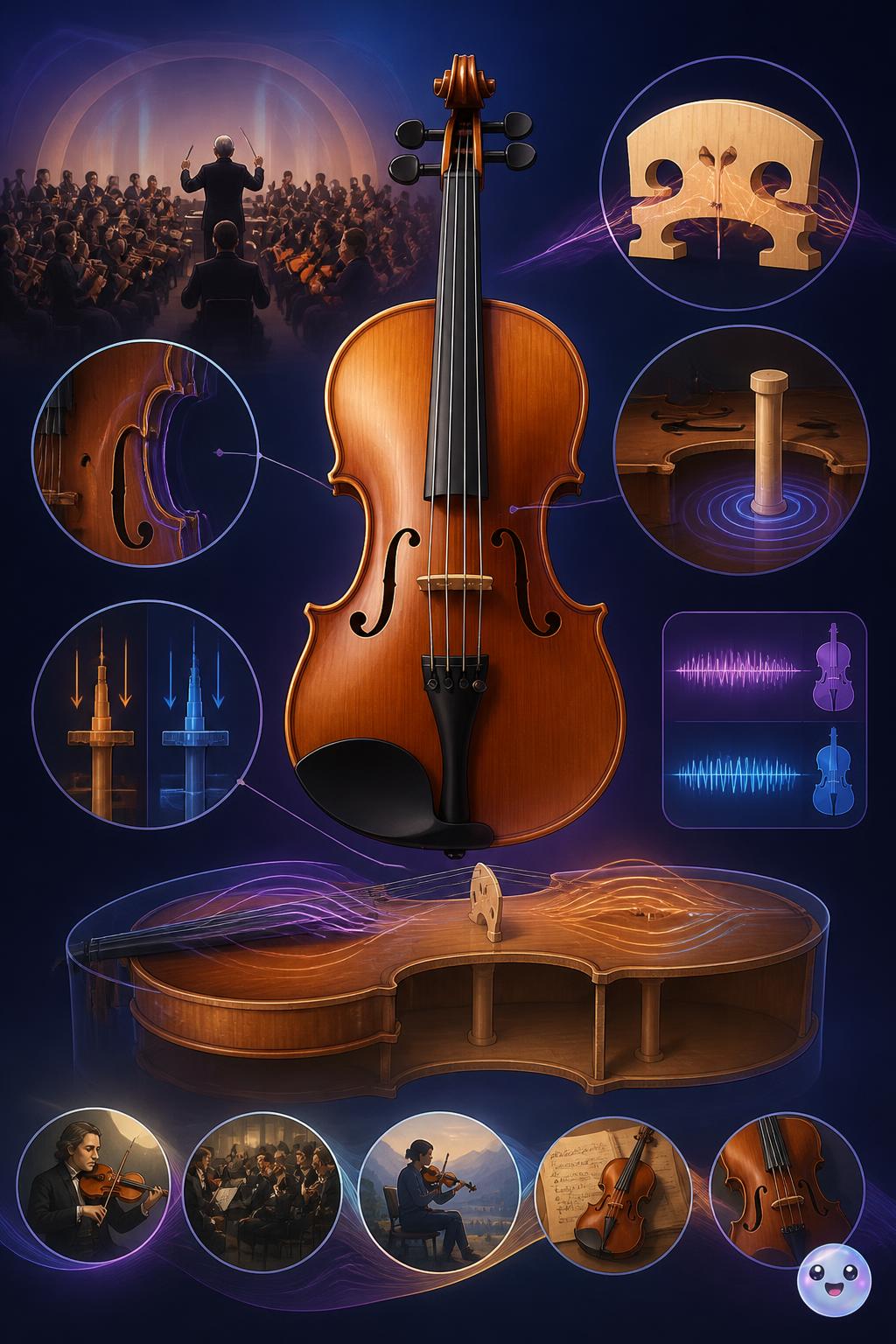
maestro The thicker wood of the viola's bridge and soundpost shapes its deep, woody resonance.
Which physical part of the viola transfers string vibrations directly to the instrument body?
maestro The Viola's Smoky Sound
Built too small for the notes it plays (Too small, yeah!) / That's how it gets its smoky haze (Its smoky haze!)
maestro Operating between 130 and 1000 Hertz, the viola shares the exact frequency of human speech. This acoustic sweet spot gives the instrument its famously warm, conversational tone.
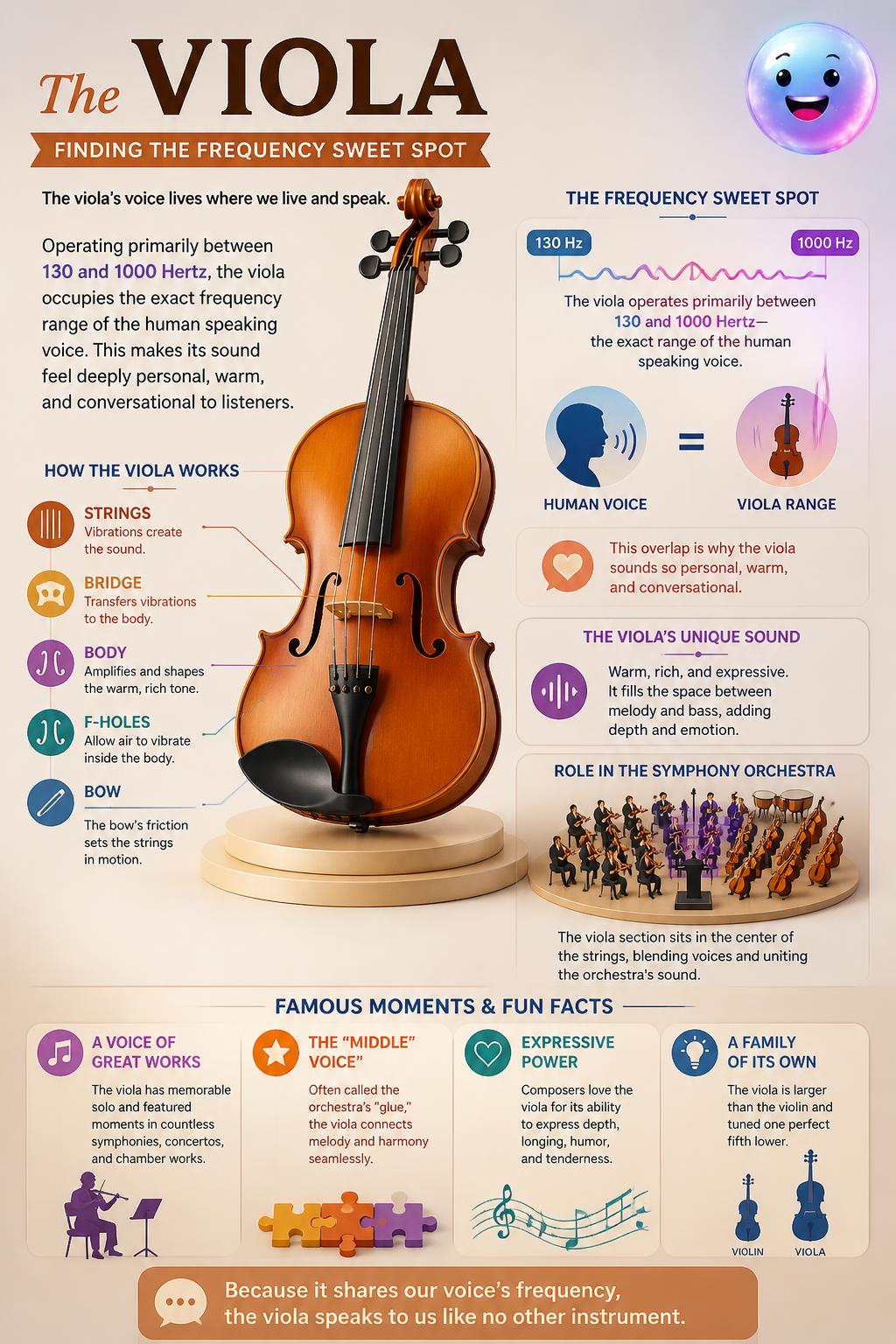
maestro The viola dominates the middle frequencies, bridging the gap between high and low instruments.
maestro A played note matching the viola's natural vibration creates a harsh, howling sound. Luthiers solve this acoustic glitch by clamping heavy brass weights onto the strings.
Sound frequency: The viola's frequency range perfectly matches the human speaking voice, which is why its tone often feels incredibly warm and conversational to listeners.
The character or quality of a musical sound or voice as distinct from its pitch and intensity. In the 1960s, Carleen Hutchins demonstrated how the viola's undersized body creates its uniquely dark, husky timbre.