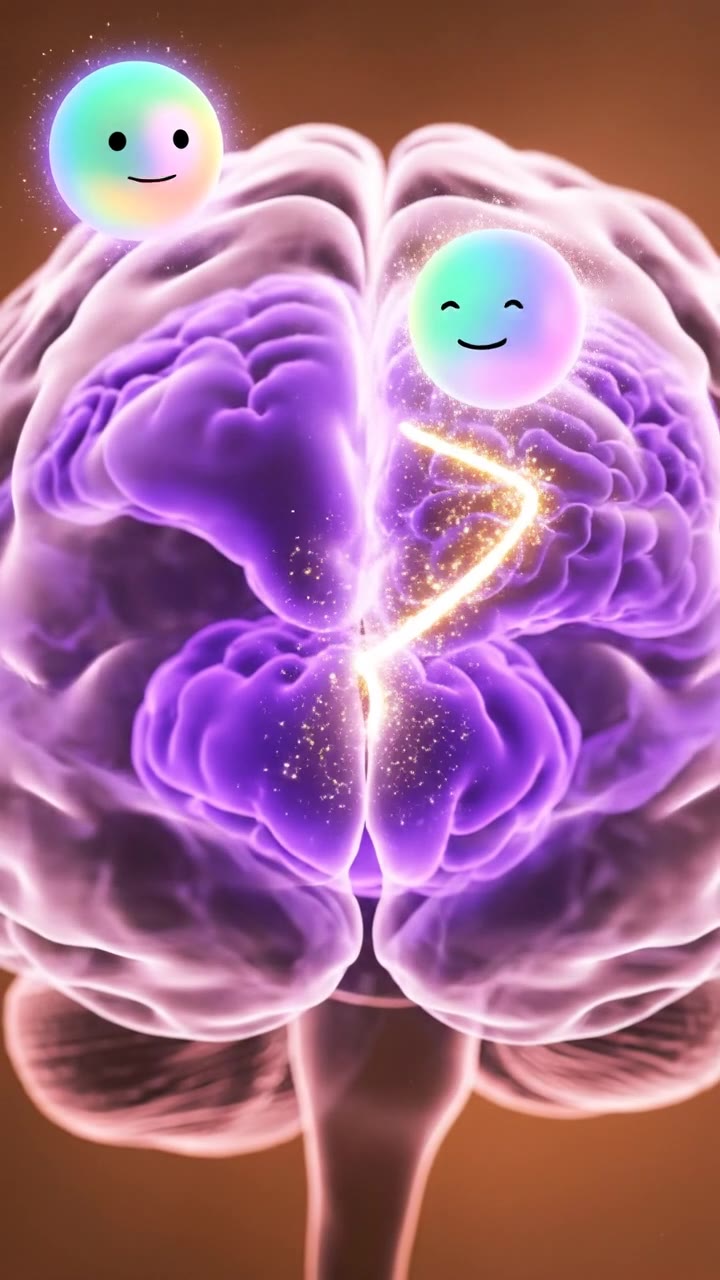
How Scent Triggers Memory: The Olfactory Bulb
Located at the bottom of the frontal lobe, the olfactory bulb is the first brain structure to receive scent data from your nose. It contains specialized cells called mitral and tufted cells that process these chemical signals. From here, the pathway leads directly to the limbic system, the ancient brain region governing emotion and survival.
The brain's secret express lane
The Proust phenomenon
Evolutionary scent-vival
The business and therapy of smells
elorea The olfactory bulb transmits scent signals directly to the limbic system to trigger immediate emotional reactions.
elorea The close physical link between the olfactory pathway and the hippocampus triggers detailed memories from a single smell.
elorea Hippocampal Scent Memory
Skipping the relay—(skips it all!) / Straight to the hippocampus—(direct track!) / Locking the memory in—(oh-oh, yeah!)
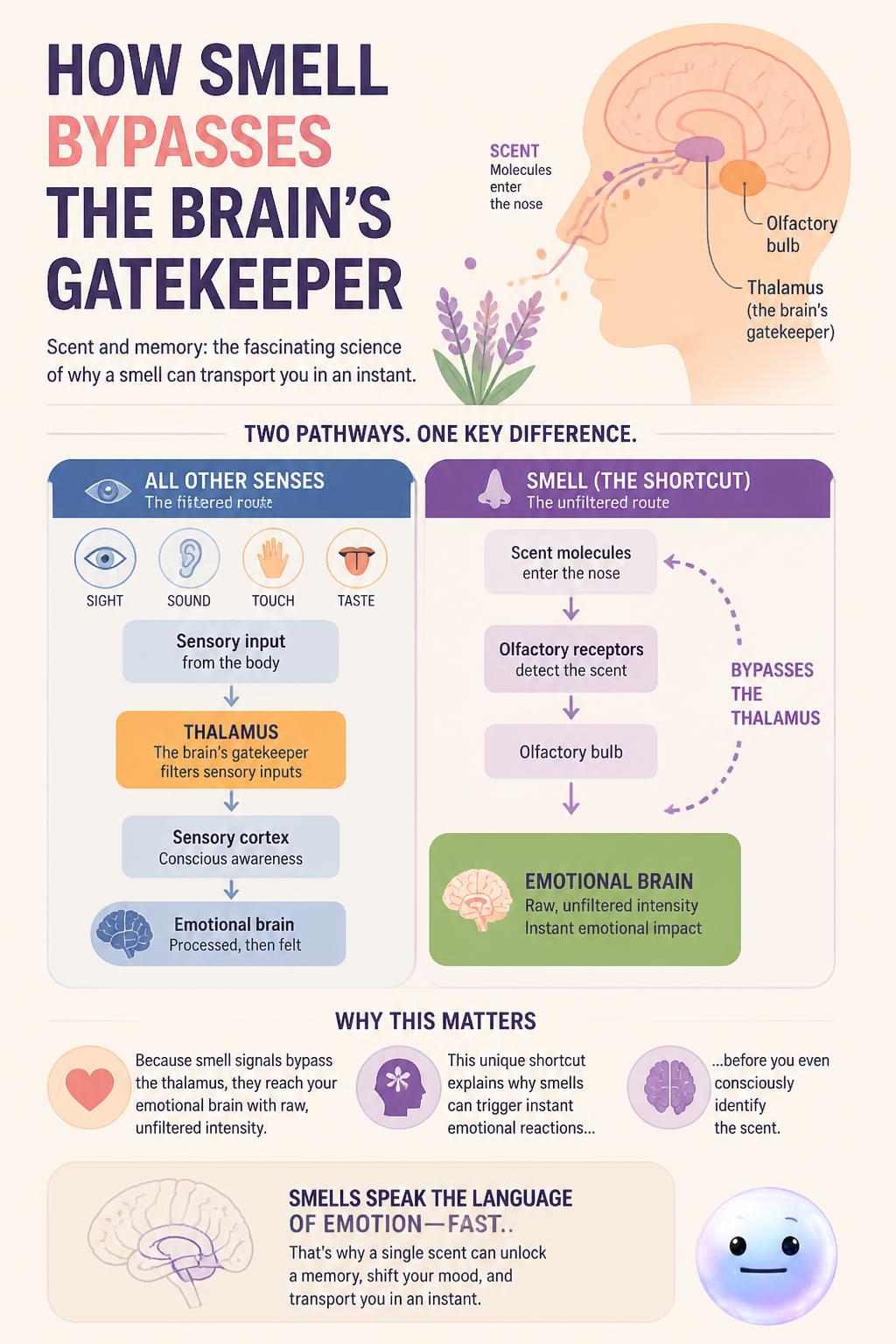
elorea Other senses filter through the thalamus first, but scent signals travel directly to your emotional brain with unfiltered intensity.
Which sensory system is the only one that bypasses the thalamus in the human brain?


elorea Specialized mitral and tufted cells in the olfactory bulb process your nose's scent data.
Which cells in the olfactory bulb are responsible for relaying processed scent signals deeper into the brain?
Brain power: Humans can distinguish over one trillion different scent mixtures, far exceeding our ability to distinguish colors.
Which key brain structure, directly connected to the olfactory pathway, is responsible for processing emotions like fear and pleasure?
How many neural connections (synapses) separate a nasal olfactory receptor from the amygdala?
A large mass of gray matter in the brain that relays sensory signals to the cerebral cortex. The olfactory pathway bypasses this sensory hub, sending signals directly to the amygdala and hippocampus.
Why do smells trigger memories in the hippocampus more vividly than sights or sounds?