From Newport grass to Queens concrete
The Colosseum of Queens
Trailblazers and historic triumphs
Beyond the baseline
diego Watch an inside look at the world's largest tennis stadium at the US Open in New York. Explore the scale of this massive venue in our video.
In 2005, the US Open transitioned its courts to what specific shade of blue to improve ball visibility?
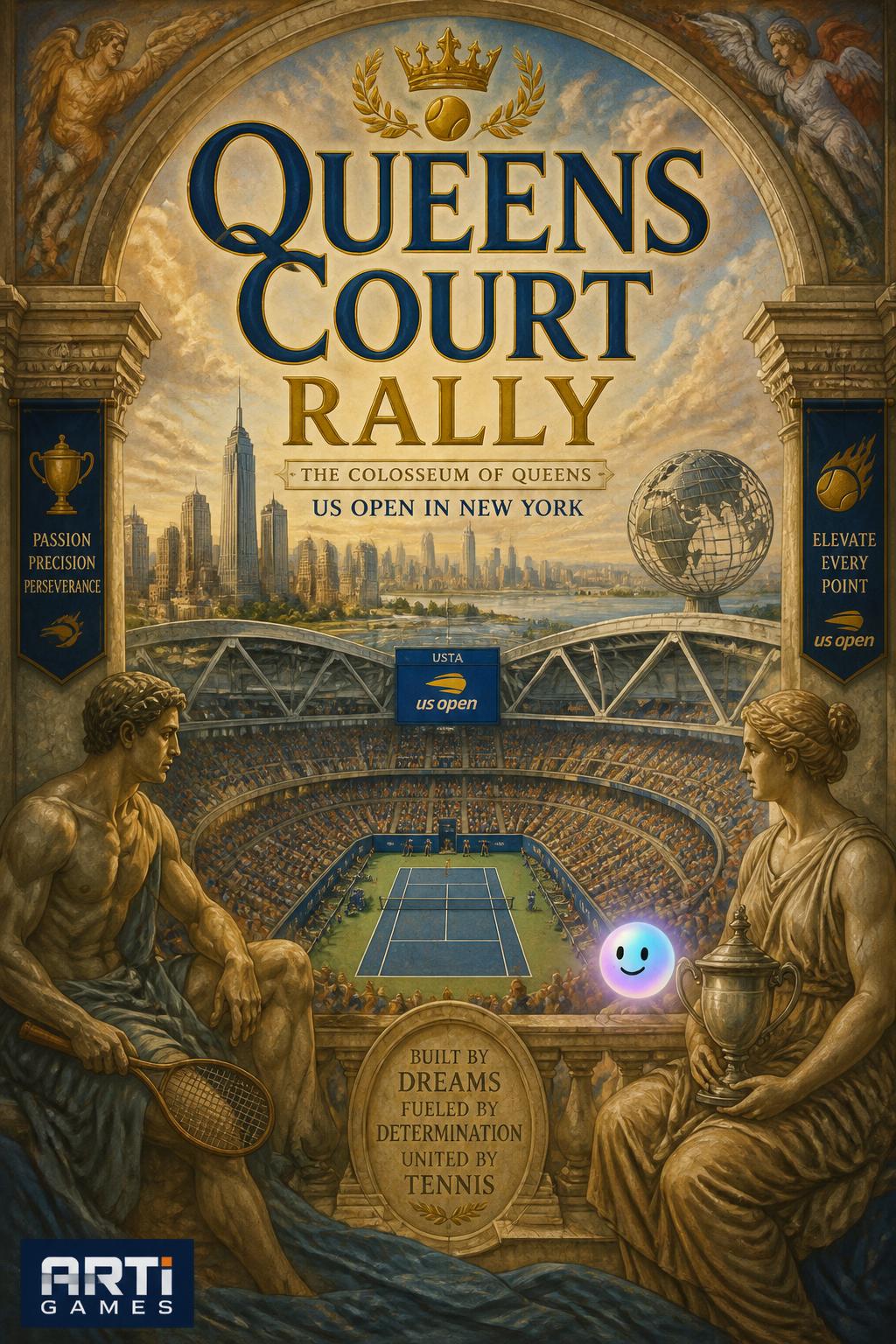
diego Play the Queens Court Rally game and experience the tennis excitement of the US Open in New York. Test your skills on the virtual court today.
diego Go behind the scenes to see how engineers designed and built the massive retractable roof at the US Open in New York to prevent rain delays.
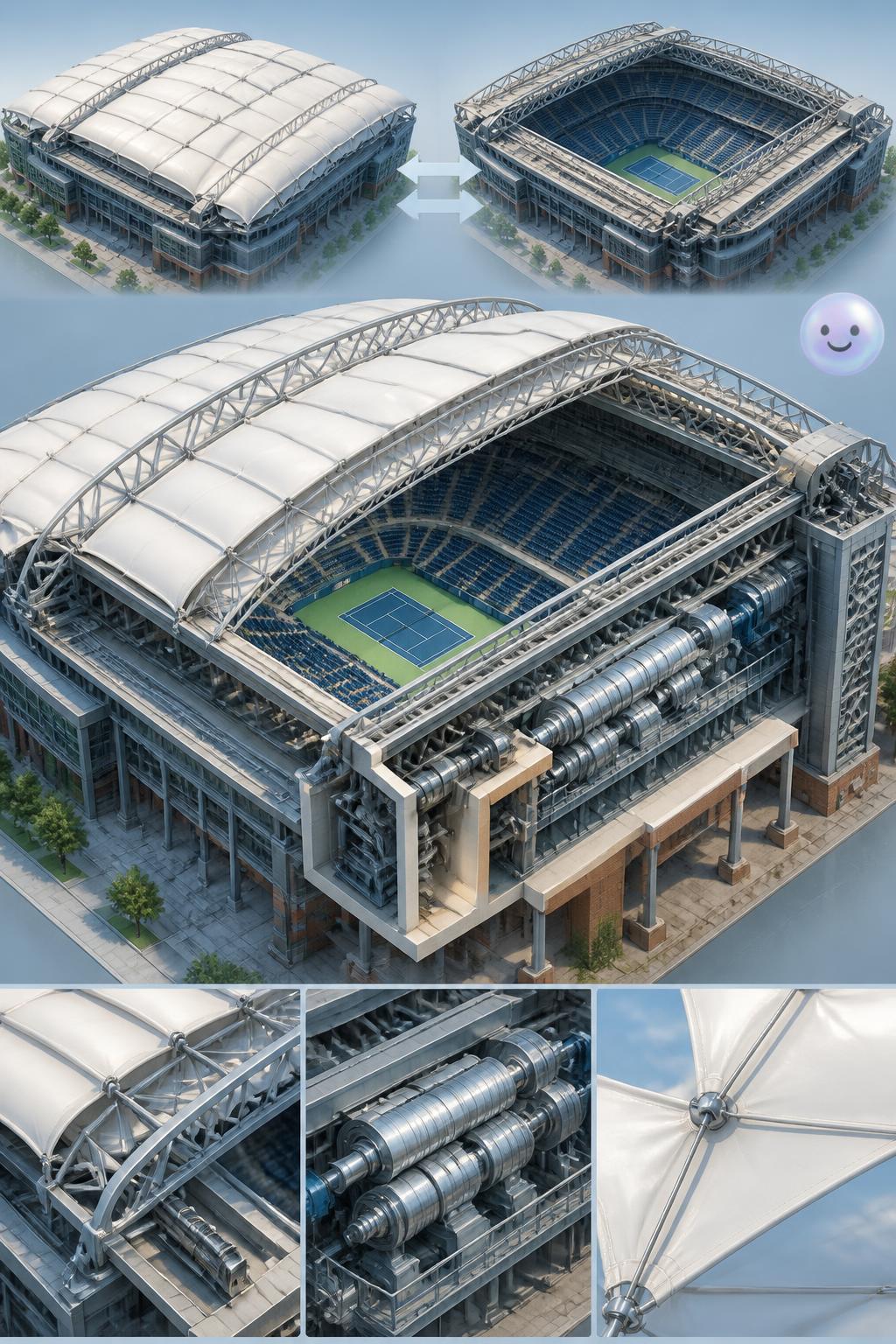
diego A massive retractable roof was added to Arthur Ashe Stadium in 2016 to prevent rain delays.
What is the approximate seating capacity of Arthur Ashe Stadium, making it the largest tennis-specific stadium in the world?
What year did the US Open introduce night sessions under lights, a major first for Grand Slam tennis?
diego Arthur Ashe Stadium
Floating like a giant umbrella in the blue, It shuts out the rain to let the game play through.
diego Watch to discover the history and science behind why the US Open tennis courts in New York switched from traditional green to blue.
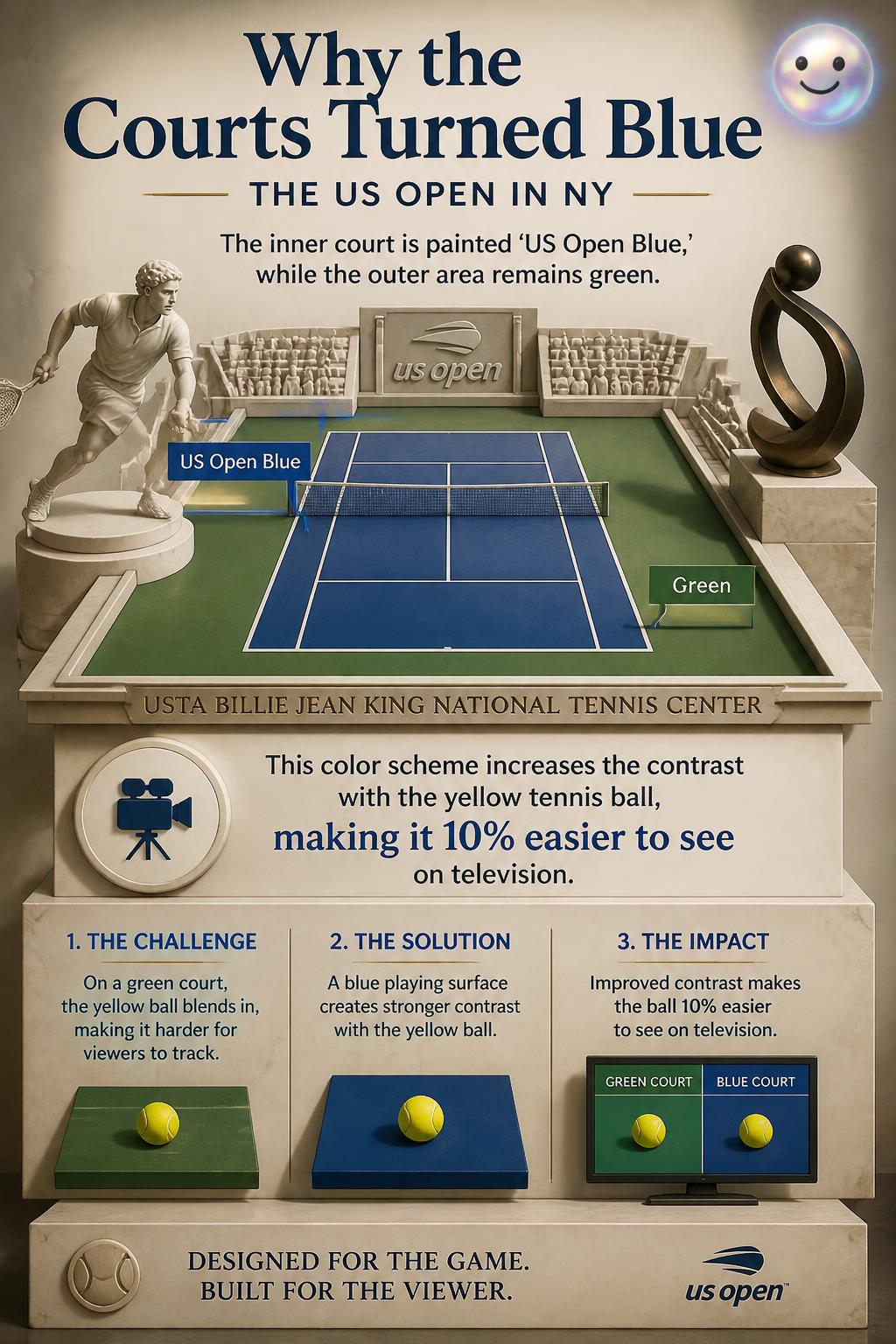
diego In 2005, the US Open changed its court color from green to blue to help players and viewers track the ball.
What is the name of the secondary stadium at the Billie Jean King National Tennis Center, known for its intimate, rowdy atmosphere?
Approximately how many minutes does it take for Arthur Ashe Stadium's retractable roof to fully close?
Arthur Ashe Stadium: The stadium's 6,500-ton retractable roof is supported by eight massive steel columns positioned completely outside the stadium's footprint.
diego Feel the electric energy of US Open night sessions in New York. Watch how the crowd and players bring unmatched intensity to the court.
Which electronic review system, first introduced to Grand Slam tennis at the 2006 US Open, allows players to challenge line calls?
A large, typically roofless building with tiers of seats for spectators, used for sports events. Designed in 1923 by Kenneth MacKenzie Murchison, this Queens venue hosted the national tennis championships until 1977.