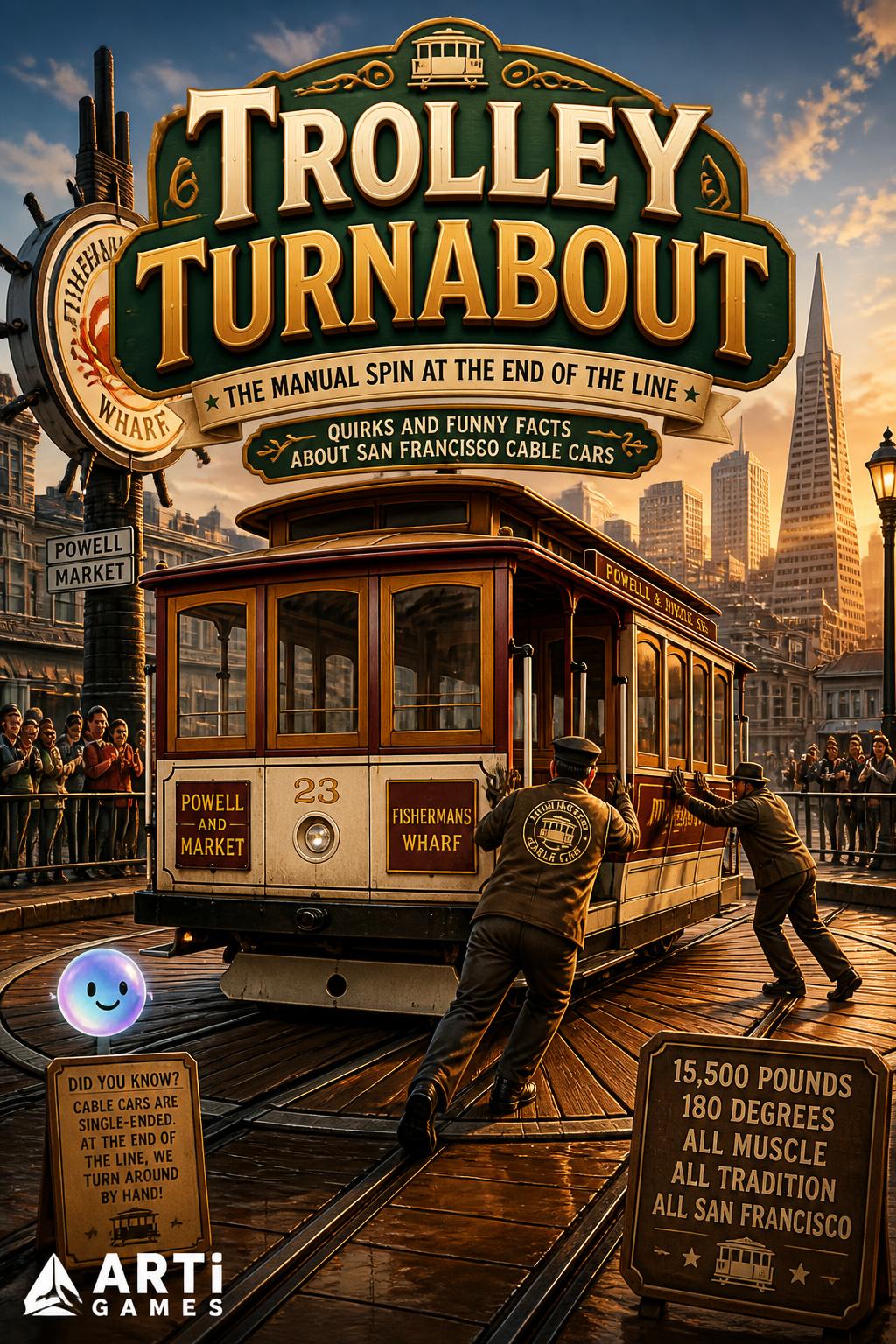
BETA
jj444 Drag the grip lever to learn how an invisible underground cable pulls the cars.
sonia Inside the 1887 Cable Car Barn at Washington and Mason, four engines spin 14-foot-wide wheels. These steel sheaves pull underground cables at 9.5 miles per hour.
What device does the operator use to physically attach the cable car to the underground cable?
sonia San Francisco Cable Cars
Under the street, under the street, A steel rope pulls us along.
sonia A gripman pulls a heavy steel lever to clamp onto a continuously running underground cable. Releasing this grip and applying the brakes stops the massive streetcar.

sonia Cable cars have no engines; they move by literally clamping onto a moving underground rope.
Cable car longevity: The oldest active cable car, Car 19, has been carrying passengers since 1883.
sonia At crossing tracks, the gripman releases the underground cable at a precise mark. The car coasts across the intersection on momentum before grabbing the line on the other side.
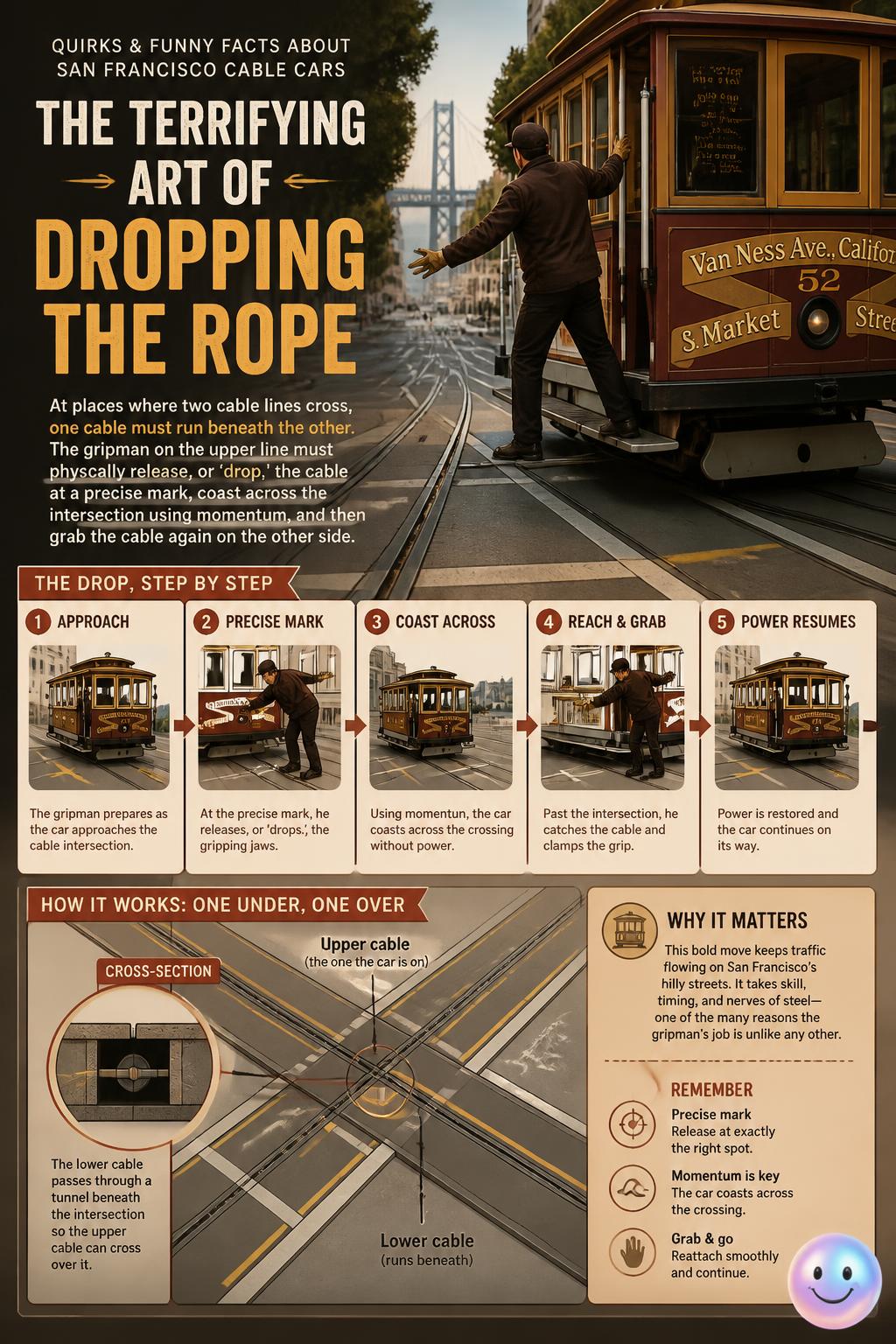
sonia Operators must completely release the cable at flat street crossings to avoid snapping the lines.
sonia Giant electric motors in the central powerhouse spin the cables at exactly 9.5 miles per hour, keeping cable cars at one speed even on steep Hyde Street.