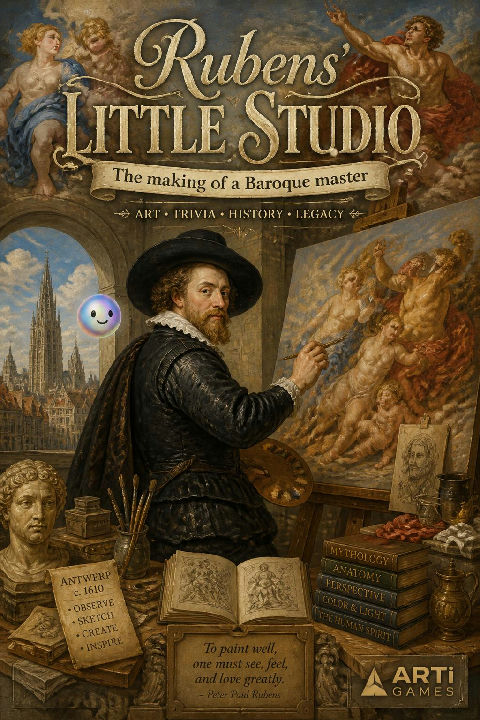
Chapter 1
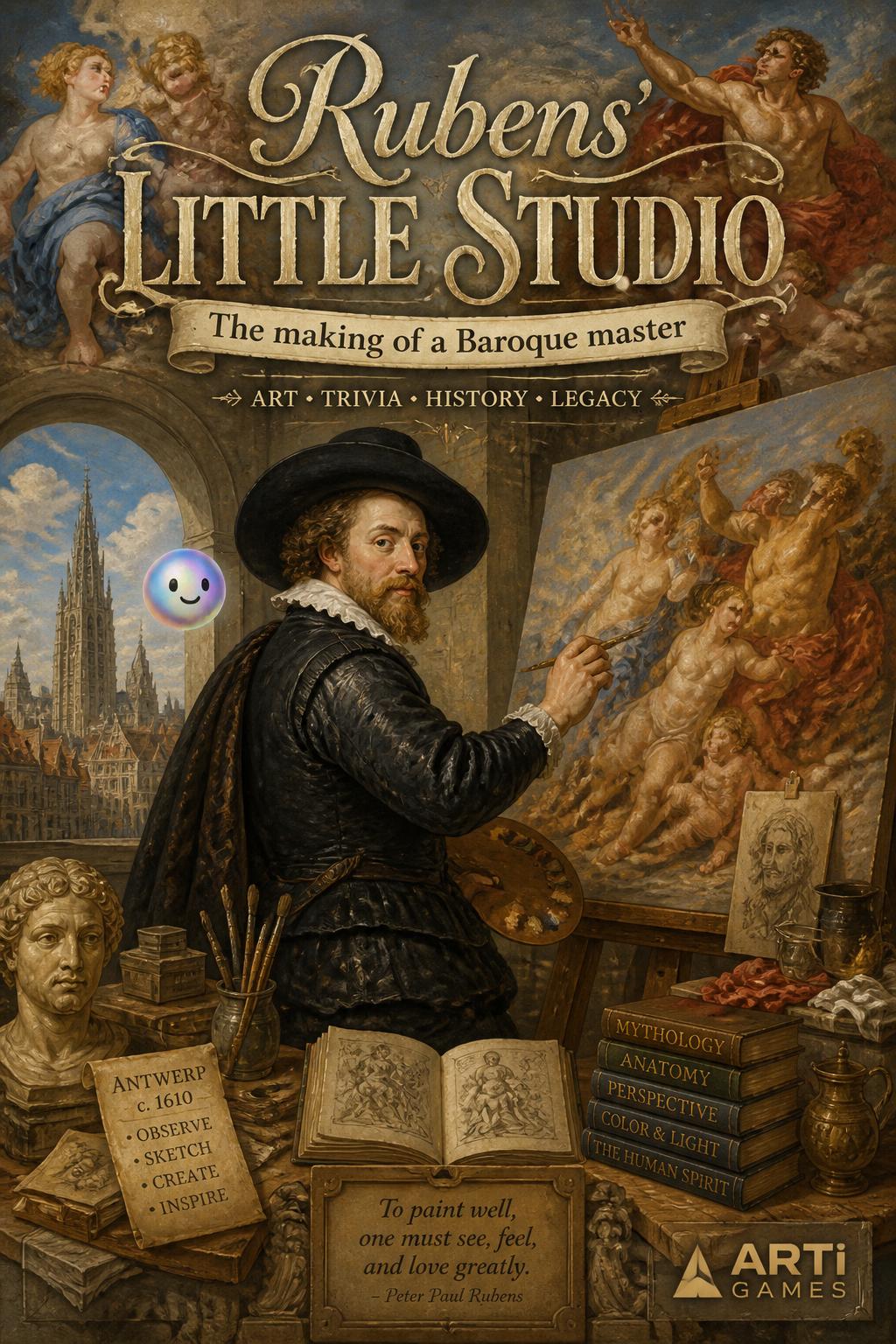
The making of a Baroque master
Chapter 2
Art as a diplomatic weapon
Chapter 3
Inside the grand Antwerp workshop
Chapter 4
The lasting legacy of Rubens
YOUR GOAL
Master of The world of Peter Paul Rubens
Ch 1 · The making of a Baroque master
schopenhauer Peter Paul Rubens
He studied the giants in Rome just to find his own golden light
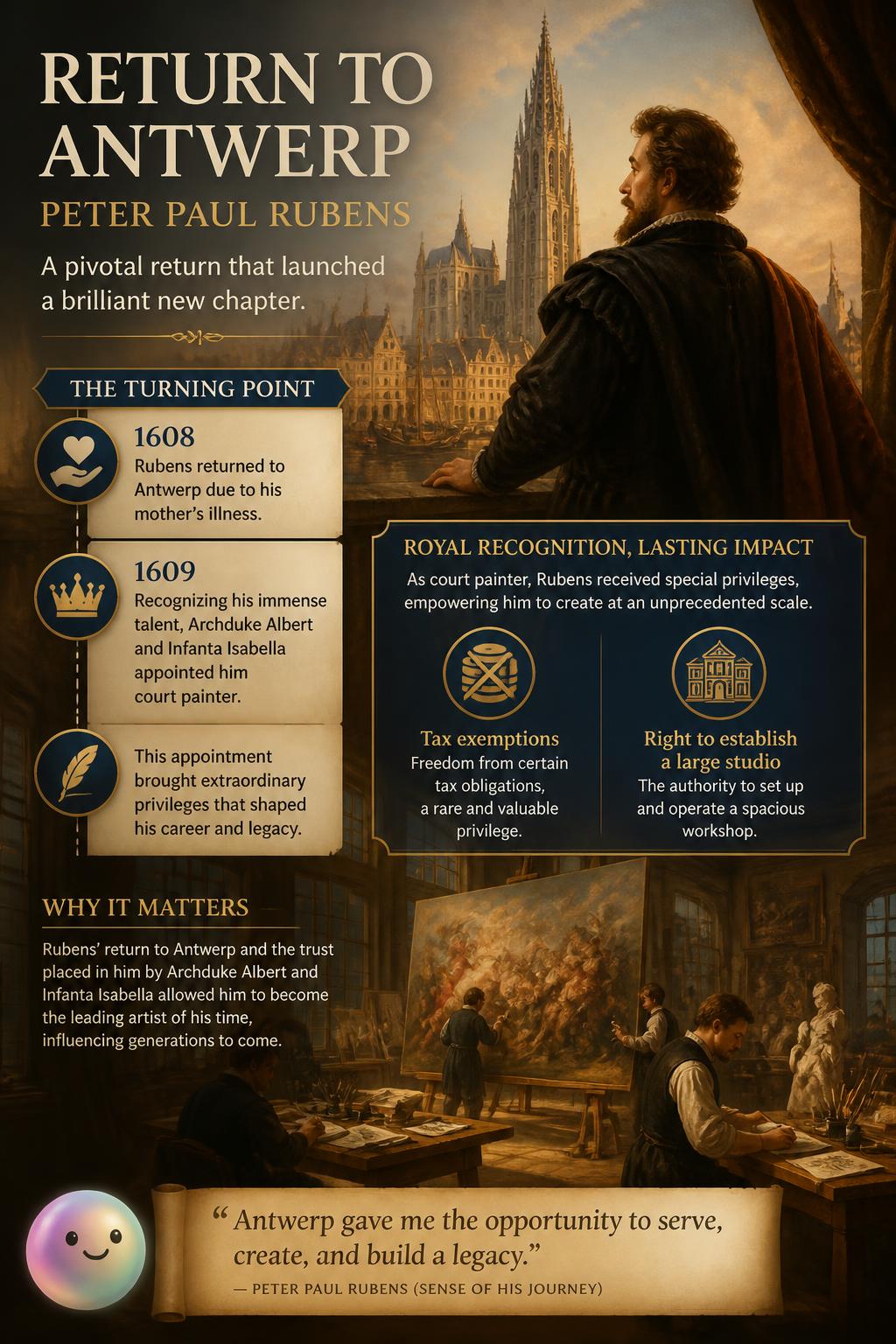
schopenhauer Recalled by family tragedy, Rubens returned to Antwerp in 1608 and quickly became the court painter to the Spanish governors.
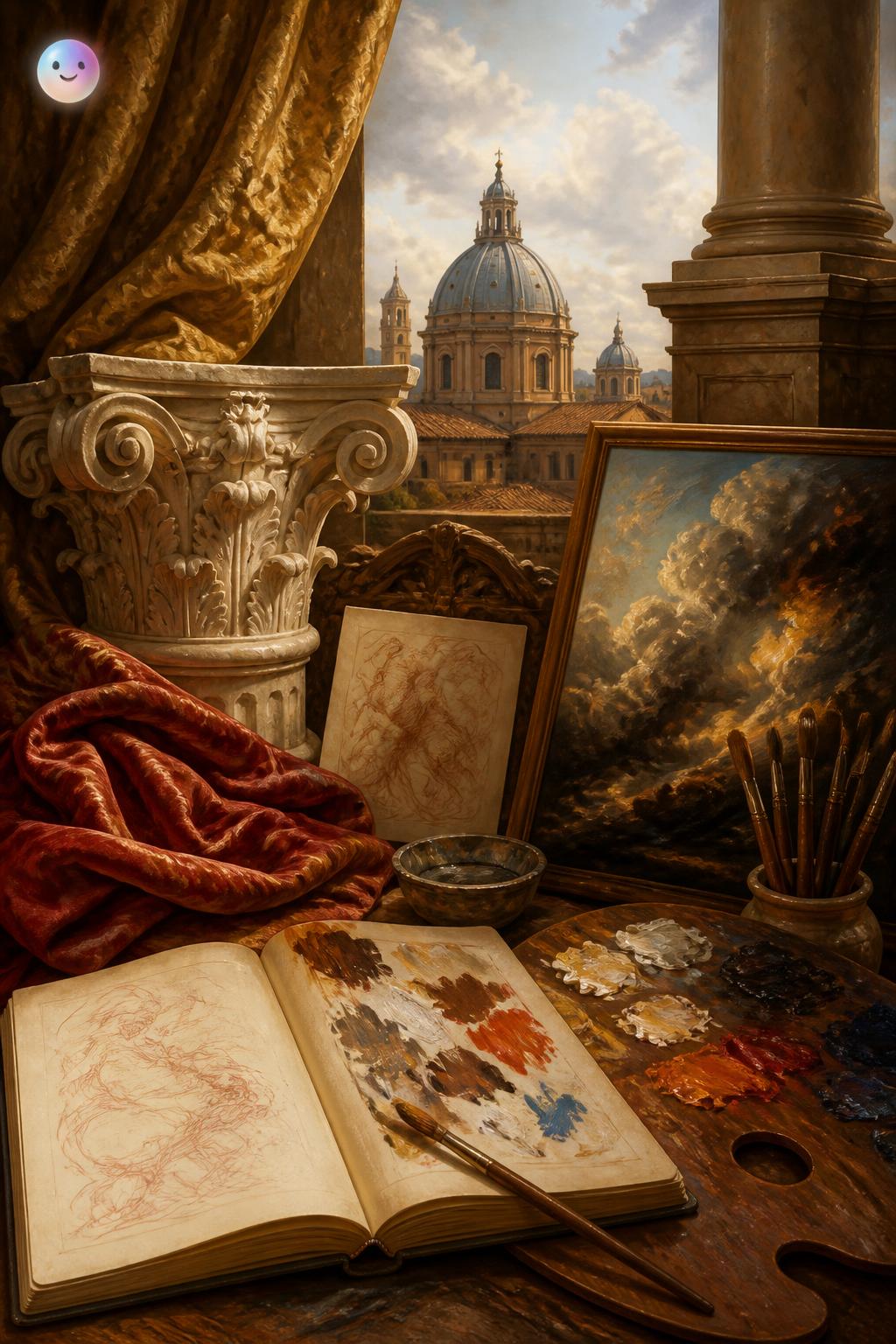
schopenhauer A crucial eight-year stay in Italy transformed Rubens from a local painter into a master of dramatic lighting and movement.
BETA
schopenhauer Match the master's sketches with his paintings to learn how Rubens ran his busy studio.
Fun Fact
Polyglot painter: Peter Paul Rubens spoke five languages fluently—Flemish, Italian, French, Spanish, and Latin—allowing him to write letters and negotiate peace treaties across Europe.
Glossary
baroque (adjective)
Relating to a style of European art characterized by ornate detail, drama, and dynamic movement. Rubens developed these techniques while studying Renaissance masters in Italy from 1600 to 1608.
Relating to a style of European art characterized by ornate detail, drama, and dynamic movement. Rubens developed these techniques while studying Renaissance masters in Italy from 1600 to 1608.
Quiz
In which Antwerp building can visitors still see Rubens's famous altarpiece "The Descent from the Cross"?
Quiz
Which Italian city did Peter Paul Rubens visit first in 1600 to study Renaissance art?
Quiz
Which royal rulers appointed Peter Paul Rubens as their court painter in Antwerp in 1609?
Quiz
What classical language did Peter Paul Rubens use to write many of his intellectual letters?
Quiz
Who employed Peter Paul Rubens during his highly influential eight-year stay in Italy?