
Chapter 1
The roof of the world
View / Create
Answer
Chapter 2
Measuring peaks from different angles
View / Create
Answer
Chapter 3
Extreme summits of the continents
View / Create
Answer
Chapter 4
Sacred heights and cultural peaks
View / Create
Answer
YOUR GOAL
Master of The world's highest peaks
Ch 4 · Sacred heights and cultural peaks
schopenhauer Mount Kangchenjunga
We climb the giant mountain but we leave the top alone, To keep the sacred summit on its quiet snowy throne.
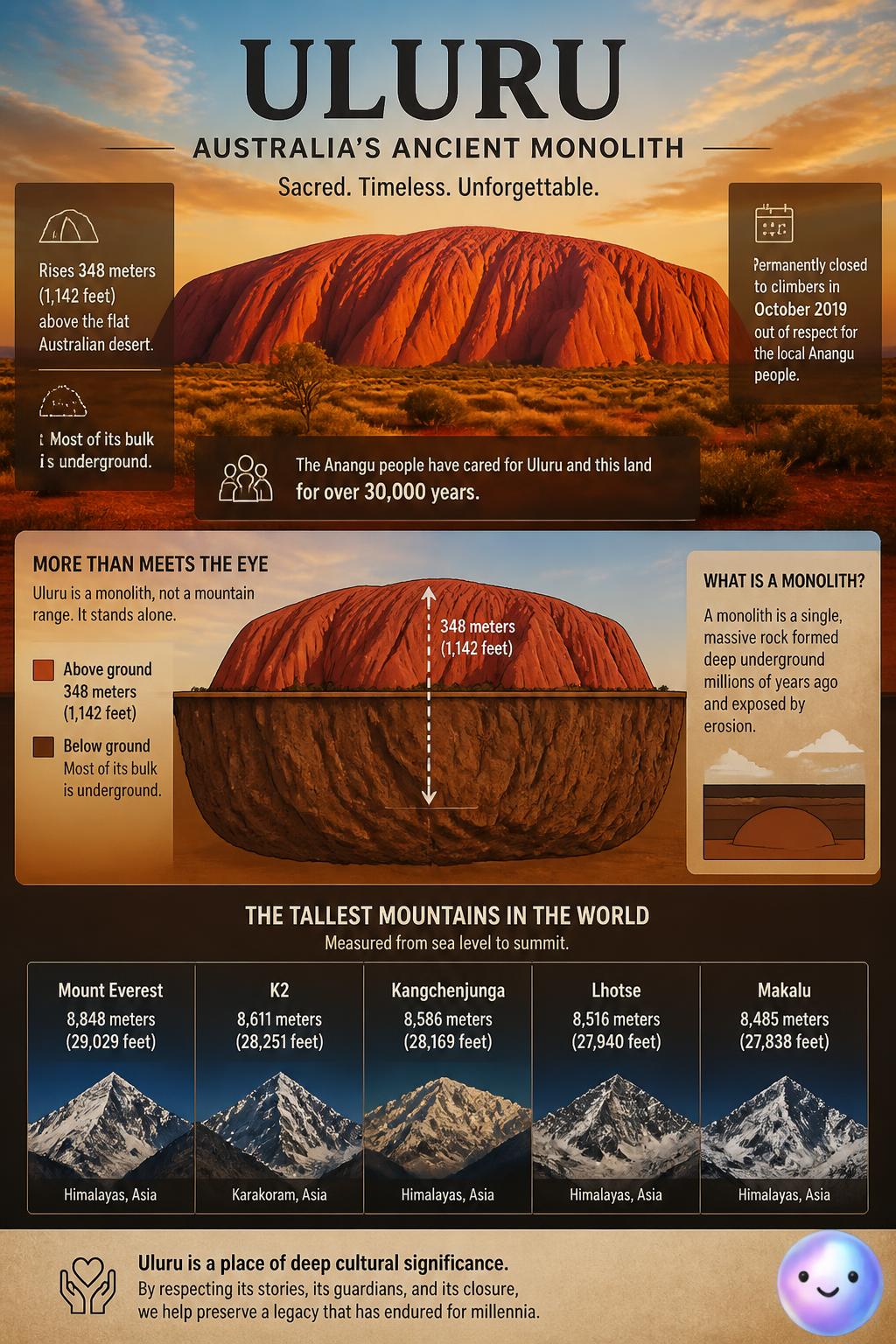
schopenhauer Uluru is a massive sandstone monolith deeply sacred to the Indigenous Anangu people.
Fun Fact
Fuji's private summit: The top section of Mount Fuji is actually private property, owned by the Fujisan Hongu Sengen Taisha shrine since 1606.
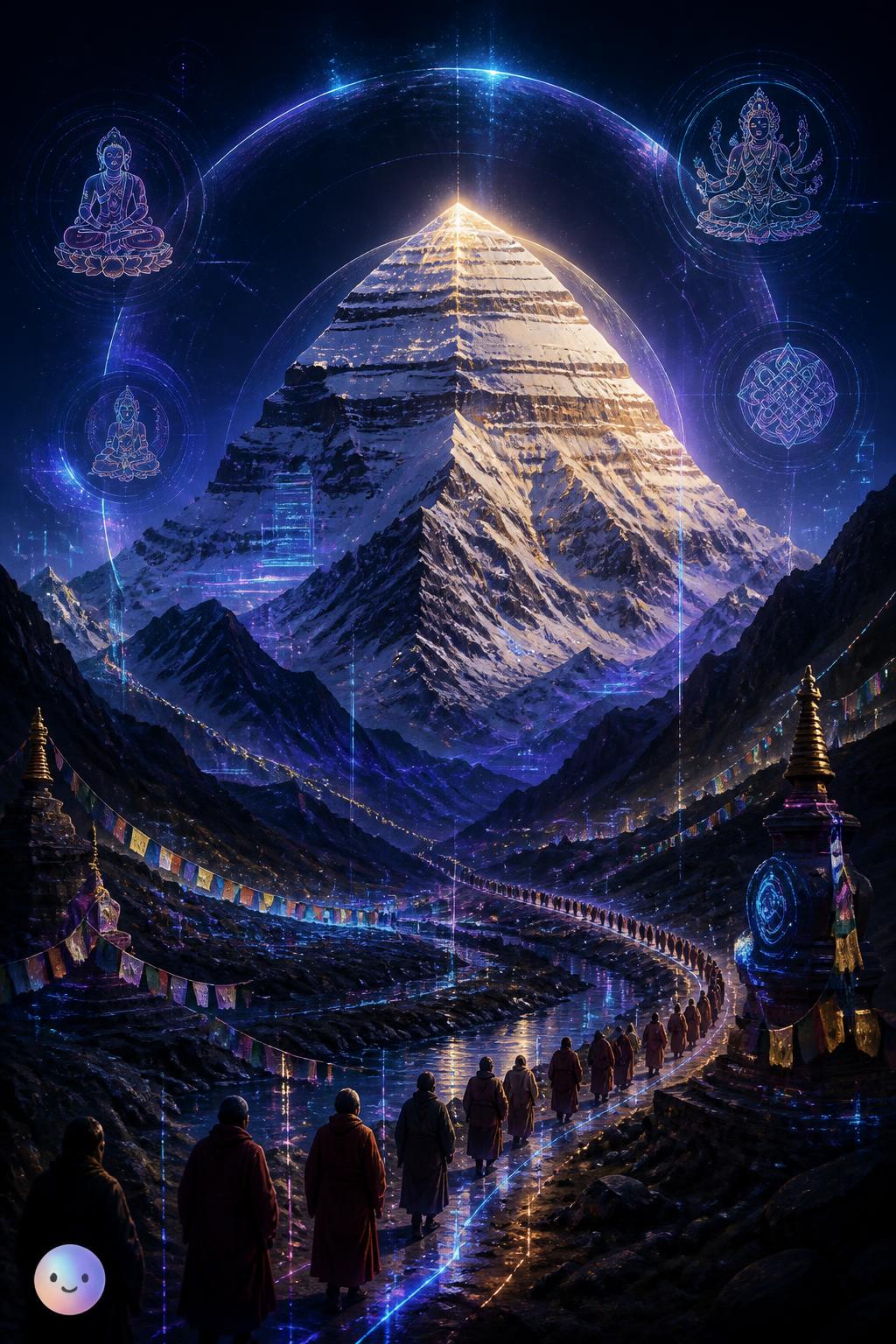
schopenhauer Mount Kailash is a sacred peak in the Himalayas that remains strictly off-limits to climbers.
Glossary
pilgrimage (noun)
A journey to a sacred place or shrine undertaken as an act of religious devotion. Each year, thousands of Hindus and Buddhists make this spiritual trek to Tibet's revered Mount Kailash.
A journey to a sacred place or shrine undertaken as an act of religious devotion. Each year, thousands of Hindus and Buddhists make this spiritual trek to Tibet's revered Mount Kailash.
Quiz
For which of the following religions is the unclimbed Mount Kailash considered sacred?
Gossip
Should climbing sacred mountains be banned globally out of cultural respect?
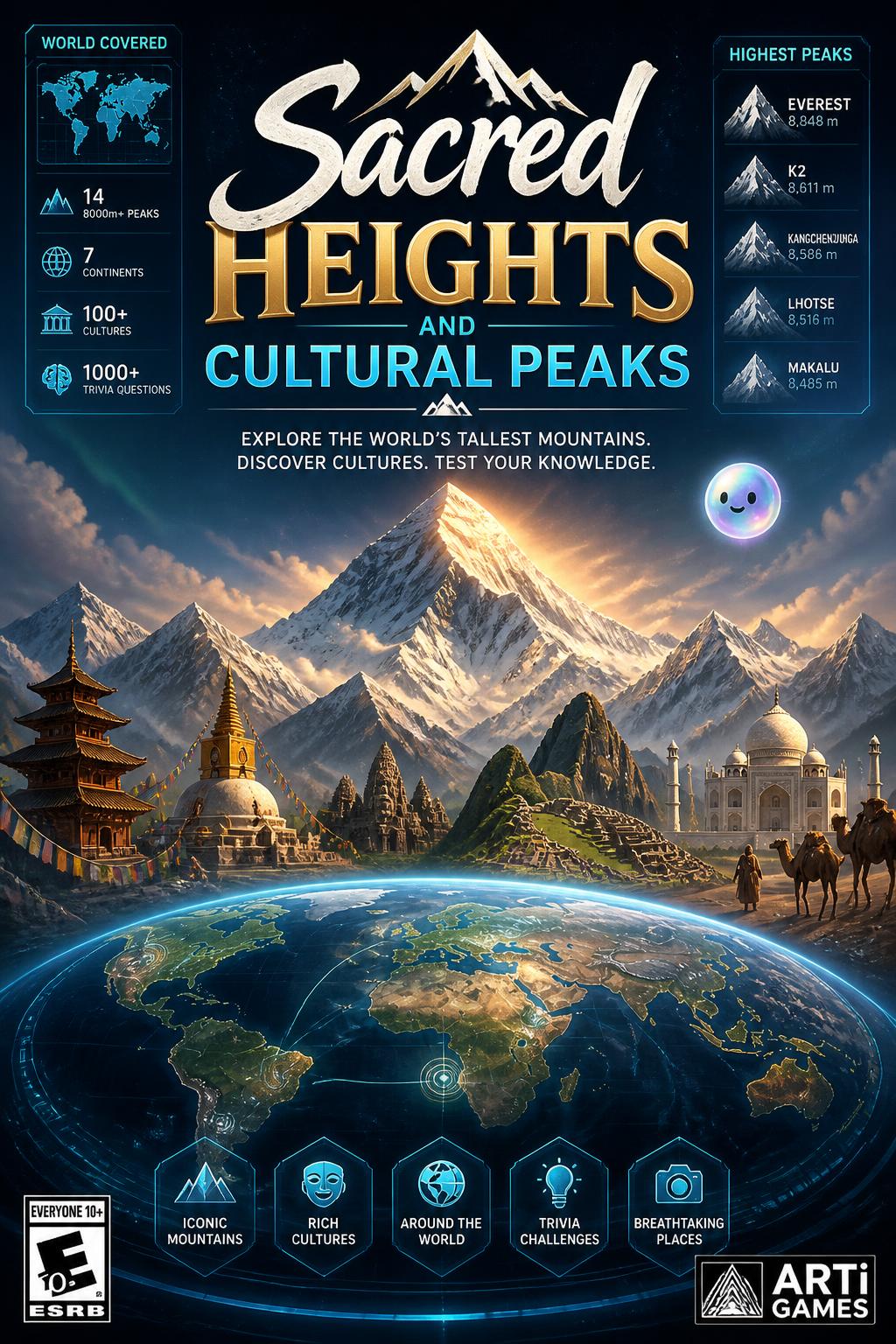
schopenhauer Match global peaks with their stories to discover why ancient cultures worshiped these sacred heights.
Quiz
Who created the famous 19th-century woodblock print series 'Thirty-Six Views of Mount Fuji'?
Quiz
How many holy mountains, including Mount Fuji, are recognized in Japanese tradition?
Quiz
In what year was the highest peak of Mount Olympus first officially scaled by climbers?
Quiz
How many years have the Indigenous Anangu people cared for the sacred site of Uluru?
Quiz
What is the traditional name for the 52-kilometer pilgrim walk around the base of Mount Kailash?
Quiz
In what year was Uluru permanently closed to climbers out of respect for the Indigenous Anangu people?