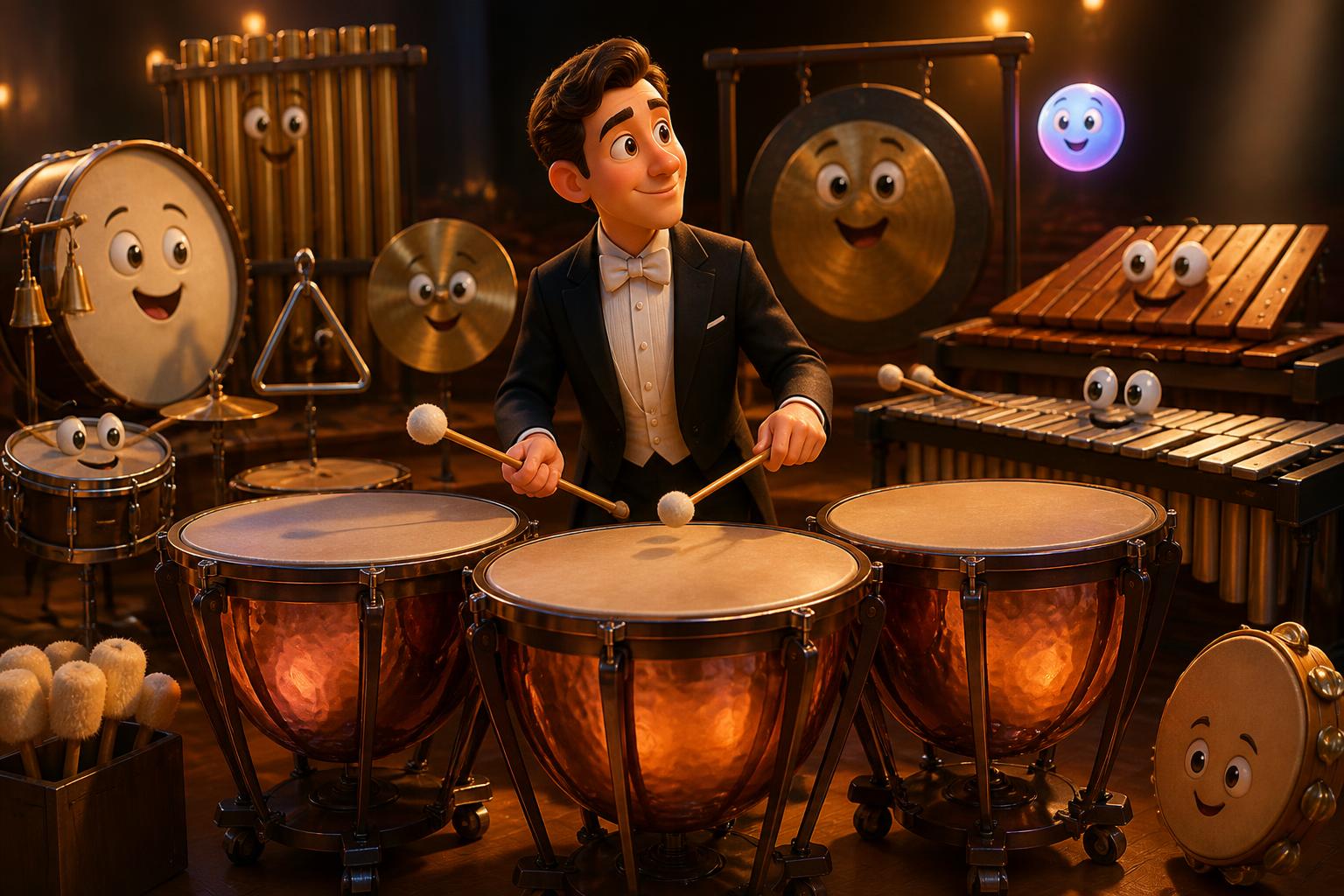
timpani
timpani: (noun) A set of kettle-shaped drums of adjustable pitch, typically played by one performer in an orchestra.
The kings of the kitchen
The mighty kettles that sing
From battlefield to concert hall
The physics of making a racket
Stealing the spotlight
maestro The French composer added military kettledrums to his 1675 opera Thesee. This bold move paired trumpets with timpani, creating a powerful sound that shaped orchestra music for a century.
maestro In 1457, King Ladislaus V of Hungary sent horseback kettledrummers to France. Captivated European nobles quickly banned commoners from owning these loud instruments, forming exclusive royal guilds.
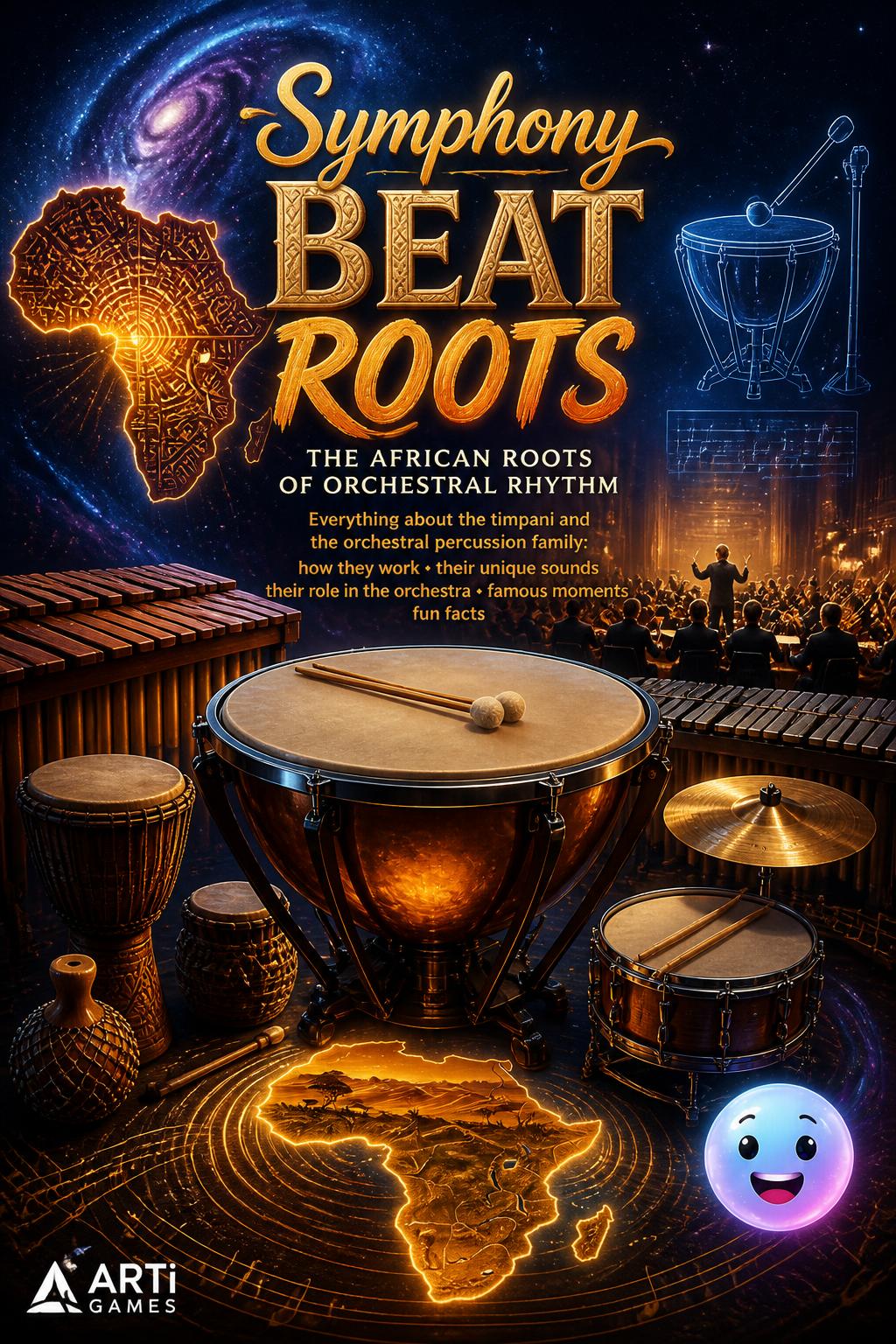
maestro Tune the timpani to discover how these massive drums change pitch and drive the orchestra.

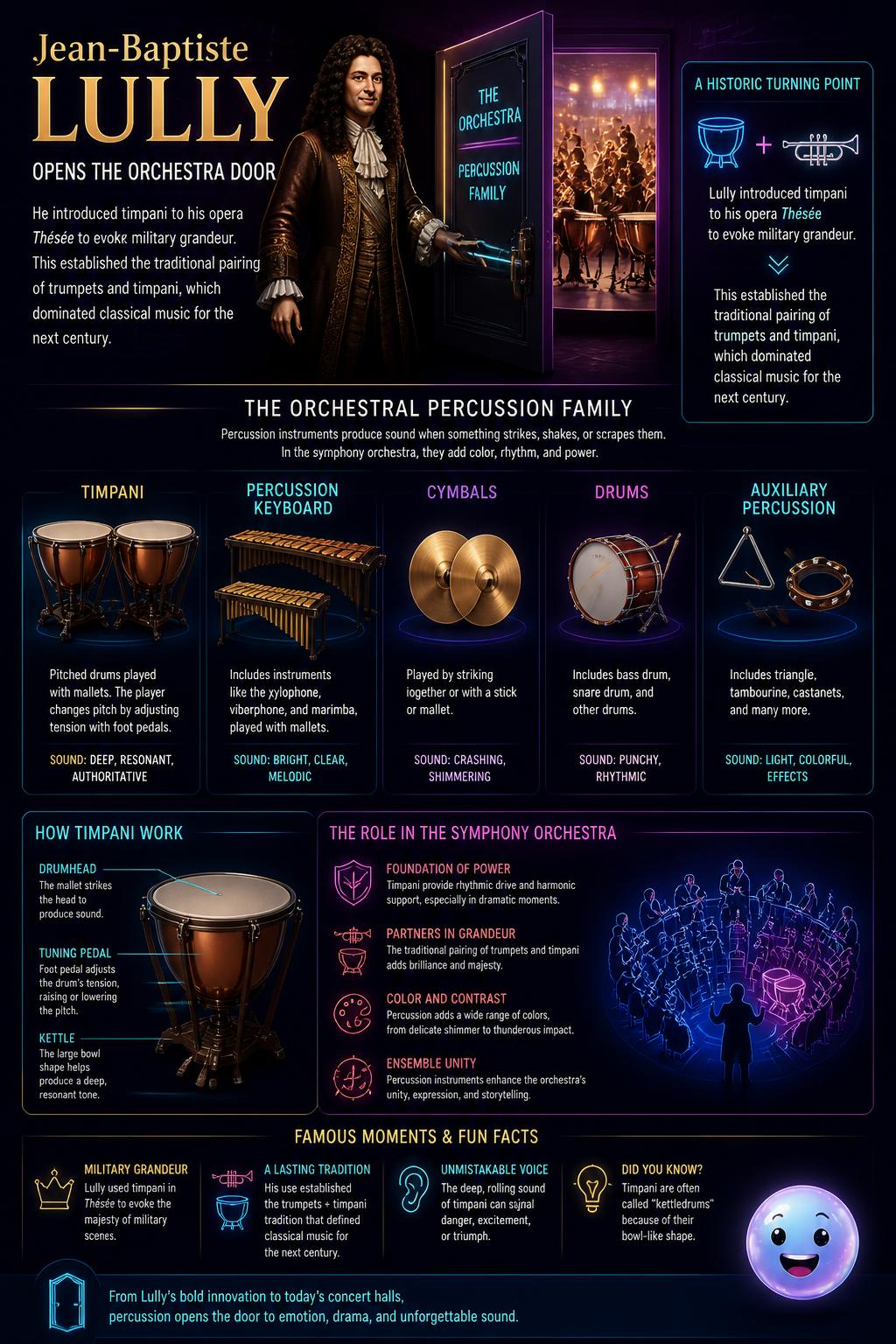
maestro Jean-Baptiste Lully opens a door, revealing timpani and orchestral percussion instruments.
Drumming laws: In 16th-century Germany, playing the kettledrums was a royal privilege, and unauthorized players could have their instruments confiscated by the state.
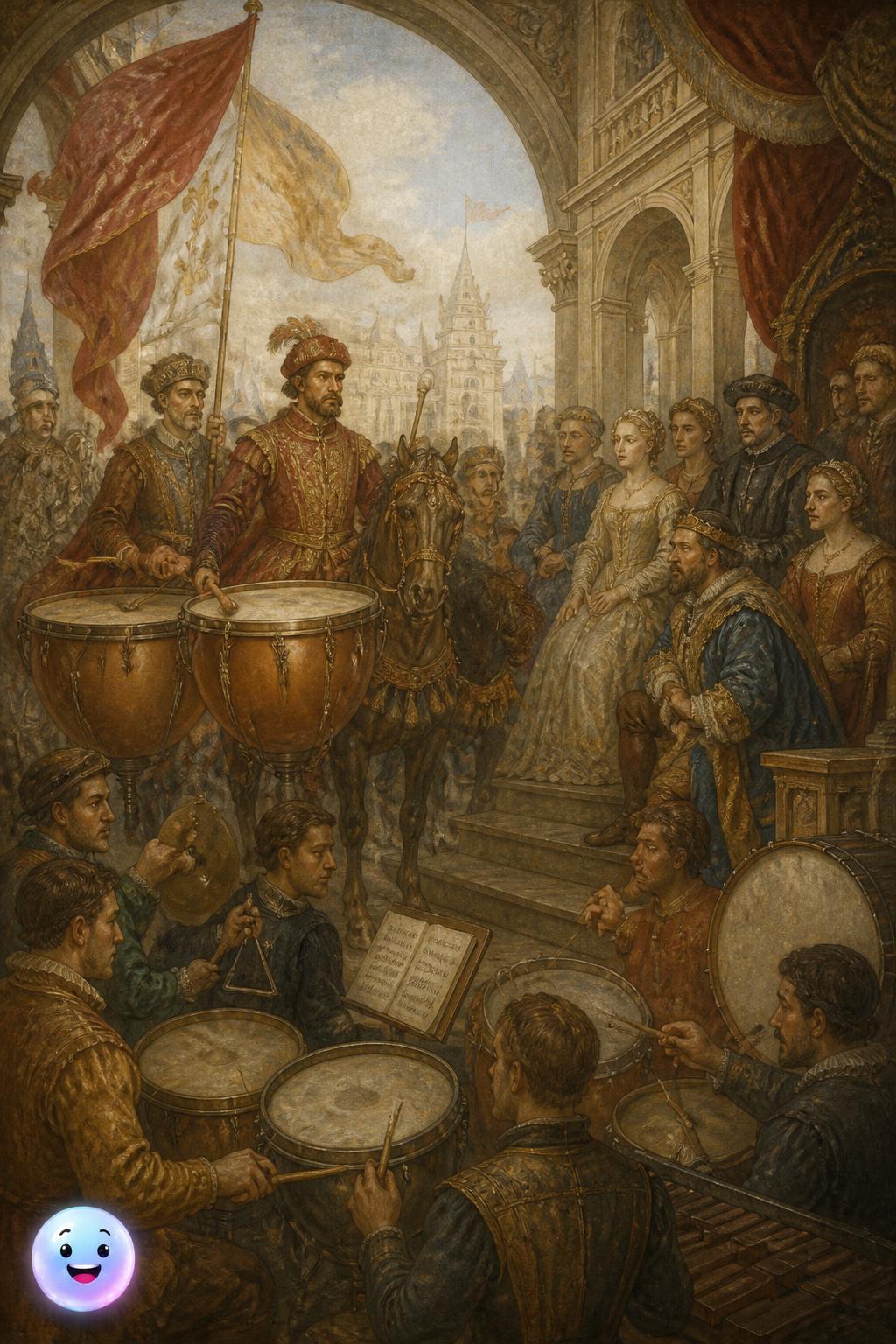
maestro Horseback musicians play kettledrums before French aristocrats in a luminous Renaissance fresco.
A set of kettle-shaped drums of adjustable pitch, typically played by one performer in an orchestra. Once used as military signals, composer Jean-Baptiste Lully brought these drums into the orchestra in 1675.
In which century did European royalty first start adopting horseback kettledrums from diplomatic missions?
Which brass instrument was historically paired with the timpani to signify royalty and military triumph?
Which military bands of the Ottoman Empire popularized mounted kettledrums that eventually evolved into timpani?
Which melodic percussion instrument originated in Africa before developing in Central America and joining the orchestra?
What is the name of the shallow, single-headed drum family that includes the Irish bodhrán and Arabic riq?