The Moon Jar: Korea's perfectly imperfect icon
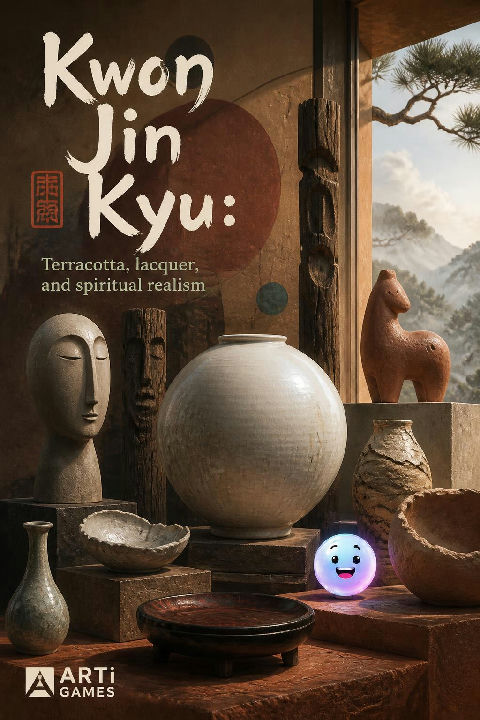
Kwon Jin Kyu: Terracotta, lacquer, and spiritual realism
Kim Yun Shin: Chainsaws, wood, and the unity of opposites
Shin Sang Ho: Clay paintings and architectural dreams
YOUR GOAL
Master of Unearthing the soul of Korean sculpture and ceramics
매운김치 Faces of Silent Contemplation
We fire the raw clay / to strip the vanity away / to find the soul that remains
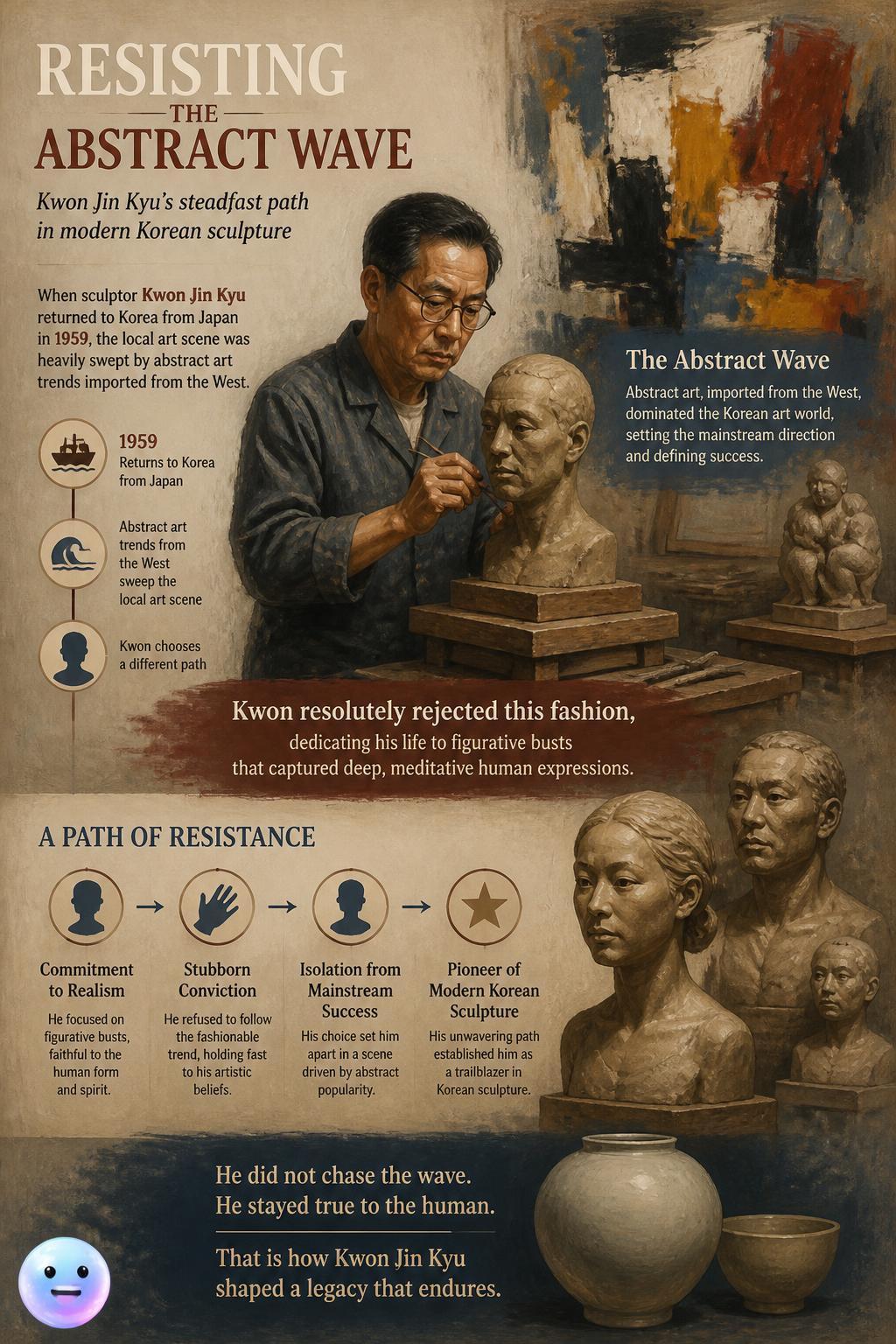
매운김치 His stubborn commitment to figurative busts isolated him from the mainstream art scene after he returned from Japan.
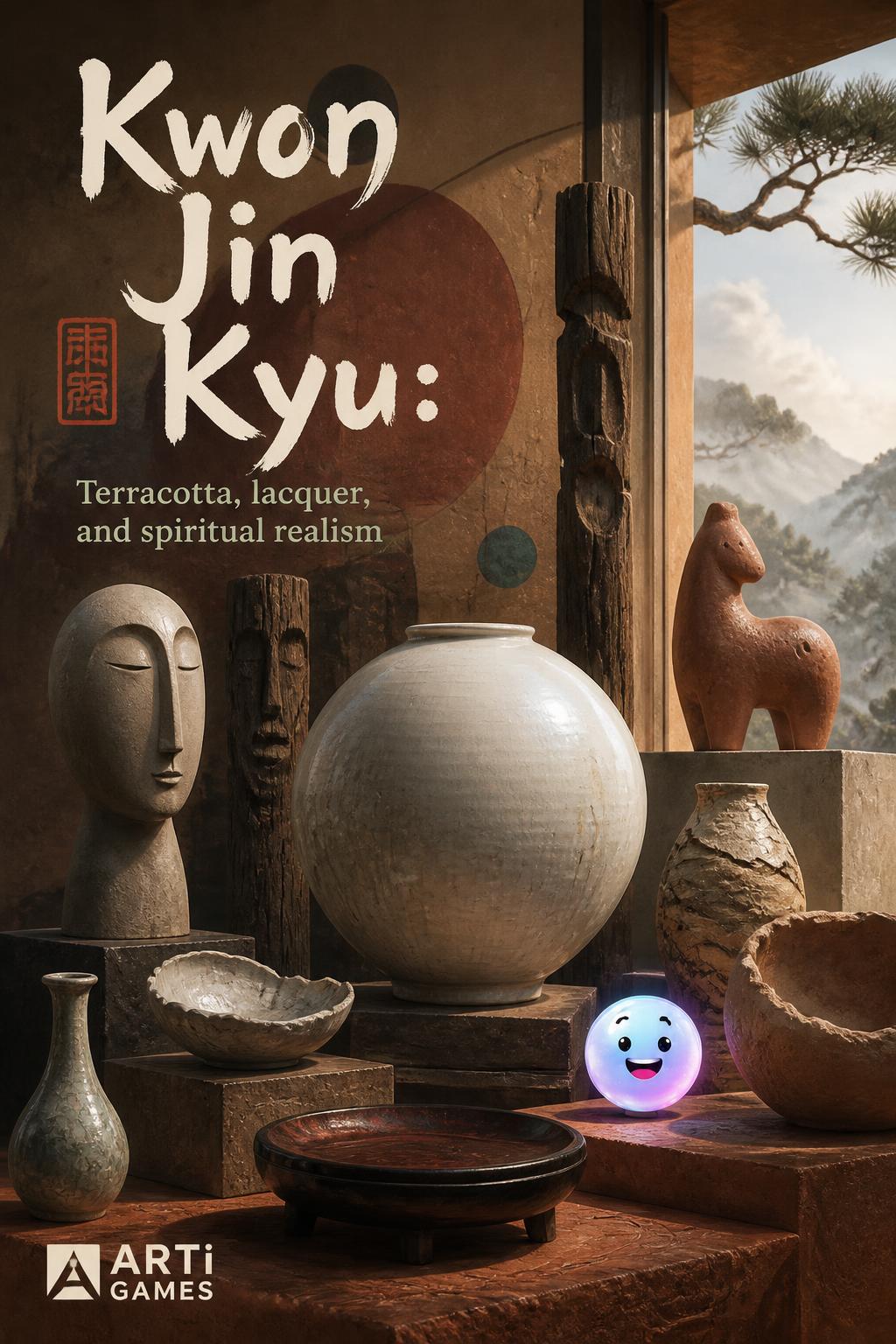
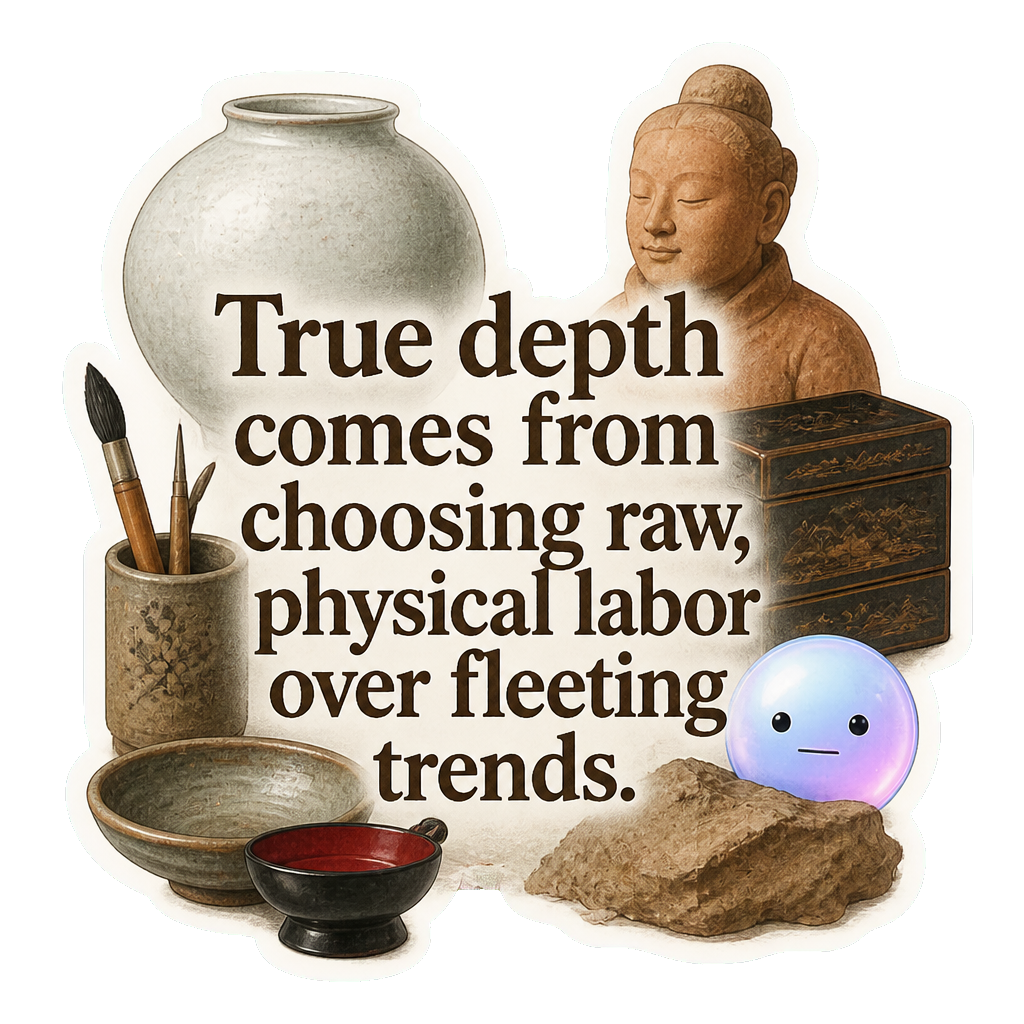
Artisan pride: Kwon Jin Kyu rejected the lofty title of 'artist' and preferred to call himself an 'artisan,' emphasizing the physical, manual labor of his craft.
A glazed or unglazed fired clay used primarily for pottery, statuary, and architectural elements. In 1964, South Korean sculptor Kwon Jin Kyu renovated his Seoul kiln to create pioneering terracotta works.
In which country did sculptor Kwon Jin Kyu study modern sculpture before returning to Korea in 1959?
Why did Kwon Jin Kyu stand apart from his contemporary Korean sculptors during the 1960s?
What does the Italian term 'terracotta,' the primary medium favored by sculptor Kwon Jin Kyu, literally mean?
Which physical property made terracotta particularly appealing to Kwon Jin Kyu for his long-lasting sculptures?
What did Kwon Jin Kyu mix into his lacquer adhesive to give his sculpture 'Priestess' its signature rough, primal texture?
What material did Kwon Jin Kyu soak in natural lacquer to build up the layers of his 'geonchil' sculptures?
What is the popular Korean name for Kwon Jin Kyu's iconic 1967 terracotta masterpiece officially cataloged as 'Bust Z'?