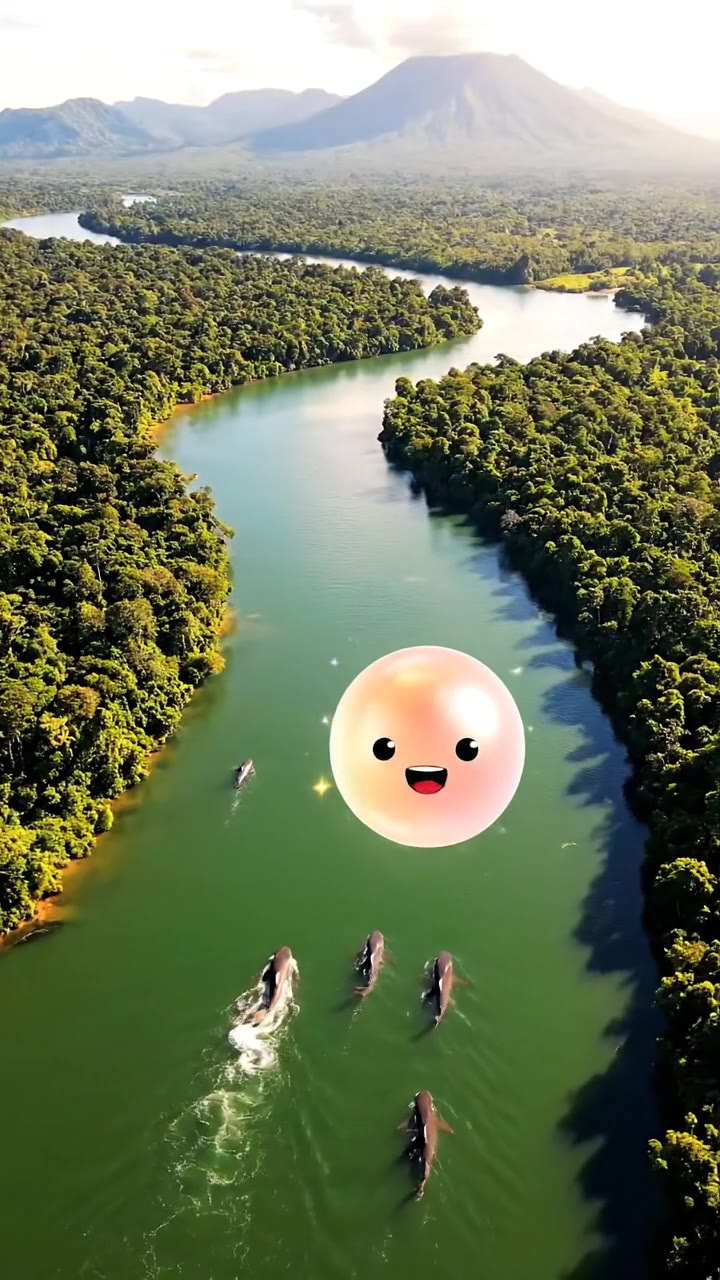
Freshwater Sharks of Lake Nicaragua
Lake Nicaragua, covering 8,264 square kilometers, is the largest lake in Central America. Historically, scientists thought its bull sharks were a landlocked species, but researchers in the late 1960s discovered they leap up the San Juan River from the Caribbean Sea like salmon.
Moving earth and rising waters
Engineering the impossible
Biogeography and evolutionary oddities
The cultural geography of languages and borders

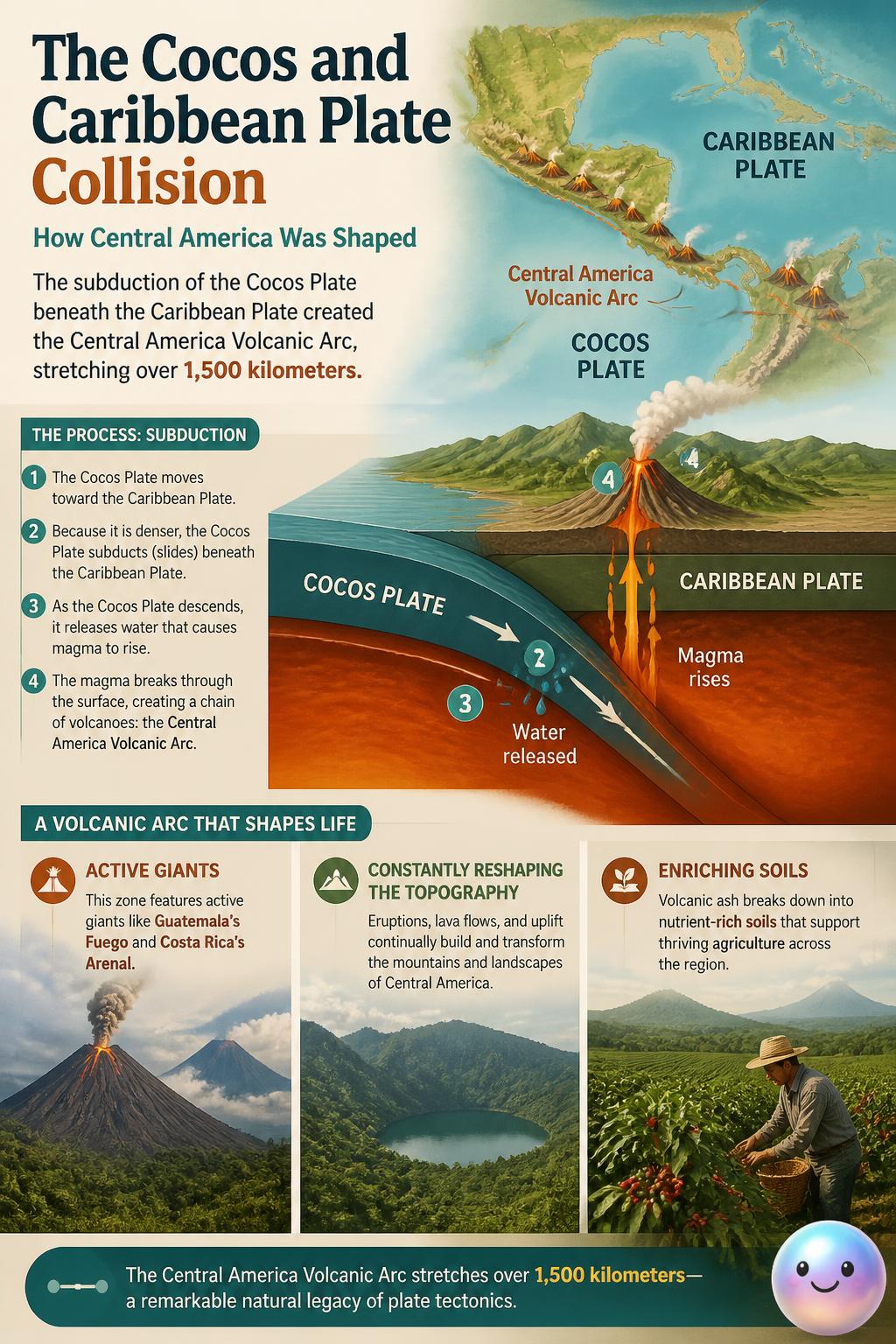
schopenhauer Intense tectonic movements shape the dramatic volcanic landscape of Central America.
Boiling lake: Dominica's Boiling Lake is so hot that scientists cannot measure its center temperature directly without extreme danger.
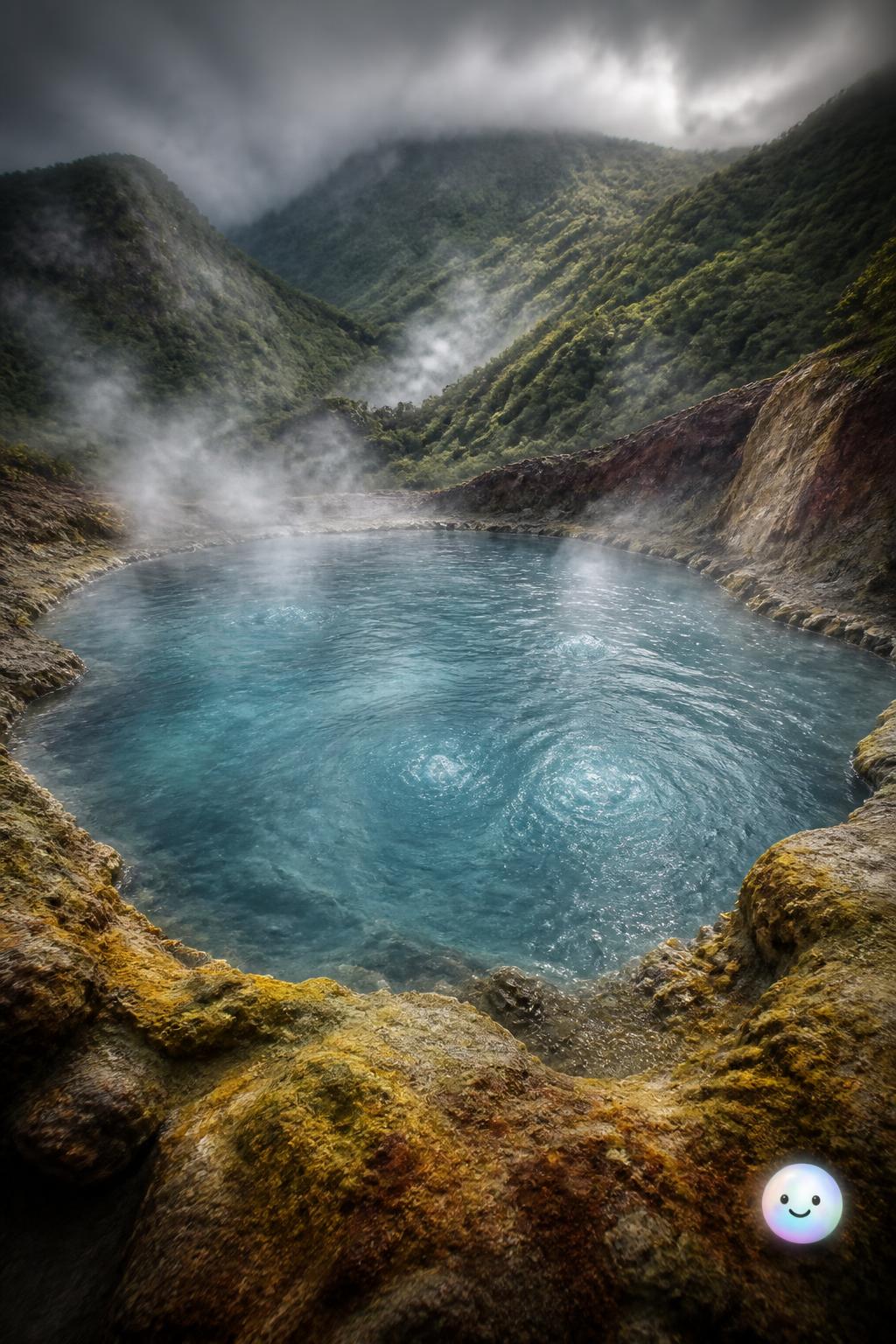
schopenhauer The world's second-largest hot spring sits in Dominica, constantly shrouded in steam.
A giant ocean wave caused by an underwater earthquake, volcanic eruption, or landslide. In 1946, a Dominican Republic earthquake triggered a tsunami that devastated the coastal town of Matanzas.
Why did scientists initially think Lake Nicaragua's sharks were unique before the late 1960s?
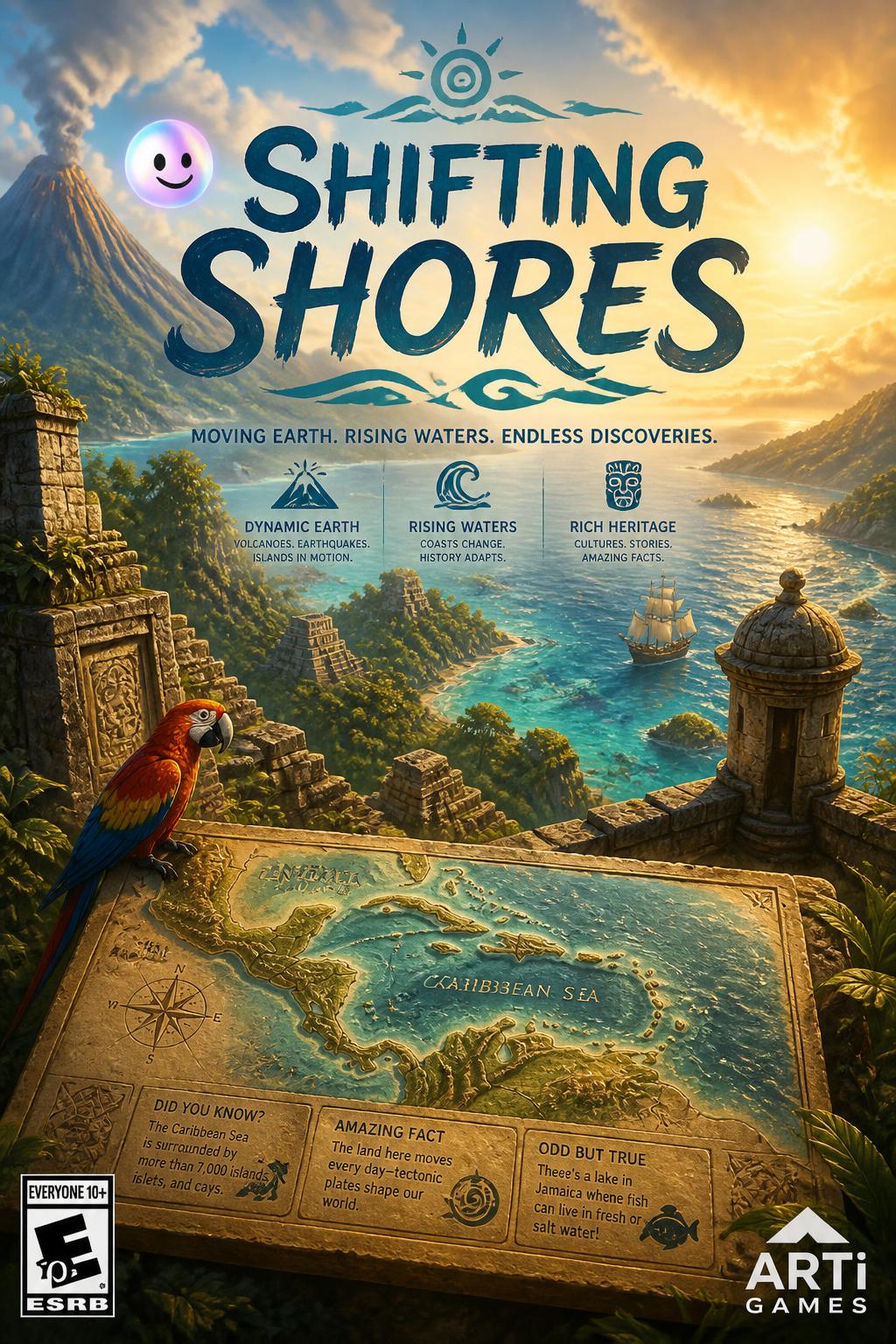
schopenhauer Drag shifting coastlines into place to discover the geography secrets of the Caribbean.
What surprising sea creature adapted to travel up the San Juan River into Lake Nicaragua?
What did famous oceanographer Jacques Cousteau discover inside the Great Blue Hole of Belize?
How long is the Central America Volcanic Arc created by tectonic plate subduction?
Which tectonic plate is sliding beneath the Caribbean Plate, causing Central America's volcanic activity?